
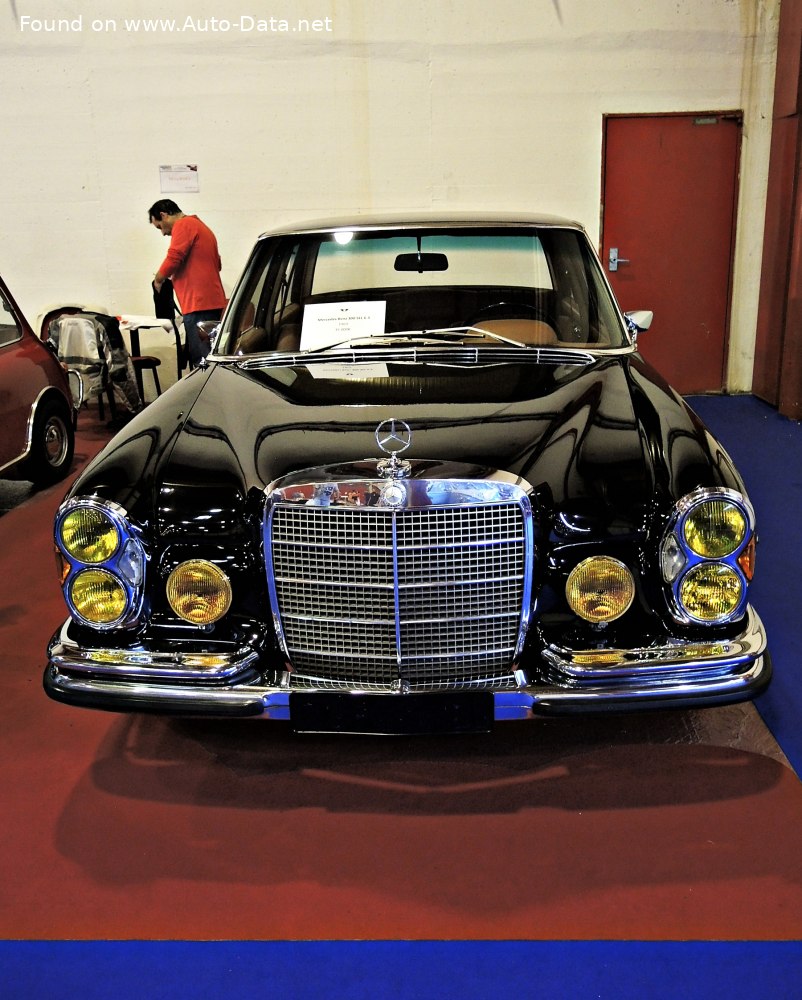
The Mercedes-Benz W109 was a flagship sedan produced from 1965 to 1972, representing the pinnacle of German engineering and luxury during that era. The 300 SEL 6.3 variant, produced from December 1967 to September 1972, stands out as the most potent and exclusive version of the W109. Often considered the precursor to the high-performance Mercedes-AMG models, the 300 SEL 6.3 combined grand touring comfort with impressive speed, establishing a benchmark for luxury performance sedans. This vehicle was never officially sold in the United States, but found a niche among European executives and enthusiasts seeking a sophisticated and powerful automobile.
The Mercedes-Benz W109 SEL 300 SEL 6.3: A Legacy of Performance
The W109 series replaced the W111 “Fintail” models, offering a more contemporary design and enhanced refinement. The SEL designation indicated the “Sonderklasse” (Special Class) – Mercedes-Benz’s top-of-the-line offering. While various engine options were available throughout the W109’s production run, the 6.3-liter V8 engine transformed the SEL into a true performance machine. This engine, derived from the Mercedes-Benz 300SL Gullwing’s powerplant, was significantly upgraded and became the defining feature of this model.
Engine & Performance
The heart of the 300 SEL 6.3 is its 6.3-liter (386.4 cubic inch) M 100 E 63 V8 engine. Producing 250 horsepower at 4000 rpm and 500 Nm (368.78 lb-ft) of torque at 2800 rpm, this engine delivered substantial power for its time. The engine featured multi-port manifold fuel injection and a 9:1 compression ratio. Its longitudinal front engine layout contributed to a balanced weight distribution. The power-to-weight ratio of 7.1 kg/Hp and torque-to-weight ratio of 3.6 kg/Nm further highlight the car’s performance capabilities. Acceleration from 0 to 60 mph was achieved in approximately 6.2 seconds, and the car could reach a top speed of 220 km/h (136.7 mph). The engine’s specific output of 39.5 hp per liter was remarkable for a naturally aspirated V8 of that era.
Design & Features
The 300 SEL 6.3 retained the elegant sedan body style of the W109 series, characterized by clean lines and a sophisticated aesthetic. The car offered seating for five passengers and featured four doors. However, subtle visual cues distinguished the 6.3 from its lesser siblings, including a more prominent grille and revised trim. The interior was lavishly appointed with high-quality materials, including leather upholstery and wood veneer. Crucially, the 6.3 was equipped with disc brakes on all four wheels, a significant advancement in braking technology for the late 1960s. The suspension system utilized double wishbones with air suspension at the front and air suspension with a trailing arm setup at the rear, providing a remarkably smooth and comfortable ride. Power steering was standard, enhancing the driving experience. The car’s dimensions – 5000 mm (196.85 in) in length, 1810 mm (71.26 in) in width, and 1420 mm (55.91 in) in height – reflected its status as a large, luxurious sedan.
Technological Innovations
Beyond its powerful engine, the 300 SEL 6.3 incorporated several advanced technologies for its time. The air suspension system, for example, provided a self-leveling ride, maintaining a consistent ride height regardless of load. The hydraulic power steering offered precise and effortless control. The four-wheel disc brakes ensured confident stopping power. These features, combined with the car’s robust construction and attention to detail, made the 300 SEL 6.3 a truly exceptional automobile.
Technical Specifications
| Brand | Mercedes-Benz |
| Model | W109 |
| Generation | W109 SEL |
| Type (Engine) | 300 SEL 6.3 V8 (250 Hp) Automatic |
| Start of production | December, 1967 |
| End of production | September, 1972 |
| Powertrain Architecture | Internal Combustion engine |
| Body type | Sedan |
| Seats | 5 |
| Doors | 4 |
| Fuel consumption (combined) | 15.5 l/100 km |
| Fuel consumption (US mpg) | 15.2 US mpg |
| Fuel consumption (UK mpg) | 18.2 UK mpg |
| Fuel consumption (km/l) | 6.5 km/l |
| Fuel Type | Petrol (Gasoline) |
| Acceleration 0 – 100 km/h | 6.5 sec |
| Acceleration 0 – 62 mph | 6.5 sec |
| Acceleration 0 – 60 mph | 6.2 sec |
| Maximum speed | 220 km/h (136.7 mph) |
| Weight-to-power ratio | 7.1 kg/Hp |
| Weight-to-torque ratio | 3.6 kg/Nm |
| Power | 250 Hp @ 4000 rpm |
| Power per litre | 39.5 Hp/l |
| Torque | 500 Nm @ 2800 rpm (368.78 lb.-ft. @ 2800 rpm) |
| Engine layout | Front, Longitudinal |
| Engine Model/Code | M 100 E 63 / 100.981 |
| Engine displacement | 6332 cm3 (386.4 cu. in.) |
| Number of cylinders | 8 |
| Engine configuration | V-engine |
| Cylinder Bore | 103 mm (4.06 in.) |
| Piston Stroke | 95 mm (3.74 in.) |
| Compression ratio | 9:1 |
| Number of valves per cylinder | 2 |
| Fuel injection system | Multi-port manifold injection |
| Engine aspiration | Naturally aspirated engine |
| Valvetrain | SOHC |
| Kerb Weight | 1780 kg (3924.23 lbs.) |
| Max. weight | 2280 kg (5026.54 lbs.) |
| Max load | 500 kg (1102.31 lbs.) |
| Fuel tank capacity | 105 l (27.74 US gal | 23.1 UK gal) |
| Length | 5000 mm (196.85 in.) |
| Width | 1810 mm (71.26 in.) |
| Height | 1420 mm (55.91 in.) |
| Wheelbase | 2850 mm (112.2 in.) |
| Front track | 1490 mm (58.66 in.) |
| Rear track | 1485 mm (58.46 in.) |
| Drivetrain Architecture | Rear wheel drive |
| Number of gears and type of gearbox | 4 gears, automatic transmission |
| Front suspension | Double wishbone, Air suspension |
| Rear suspension | Air suspension, Trailing arm |
| Front brakes | Disc |
| Rear brakes | Disc |
| Steering type | Cone worm with recirculation balls |
| Power steering | Hydraulic Steering |
| Wheel rims size | 6.5J x 14 |
The Mercedes-Benz 300 SEL 6.3 remains a highly sought-after classic car, celebrated for its blend of luxury, performance, and engineering excellence. It represents a pivotal moment in Mercedes-Benz history, foreshadowing the company’s future focus on high-performance vehicles and solidifying its reputation as a leader in automotive innovation.
