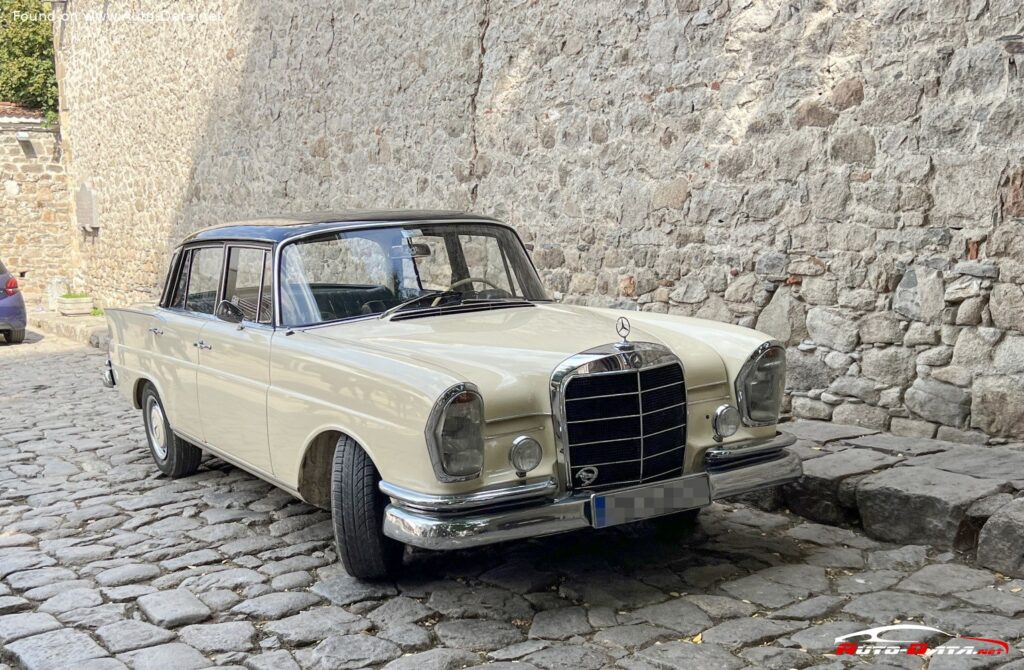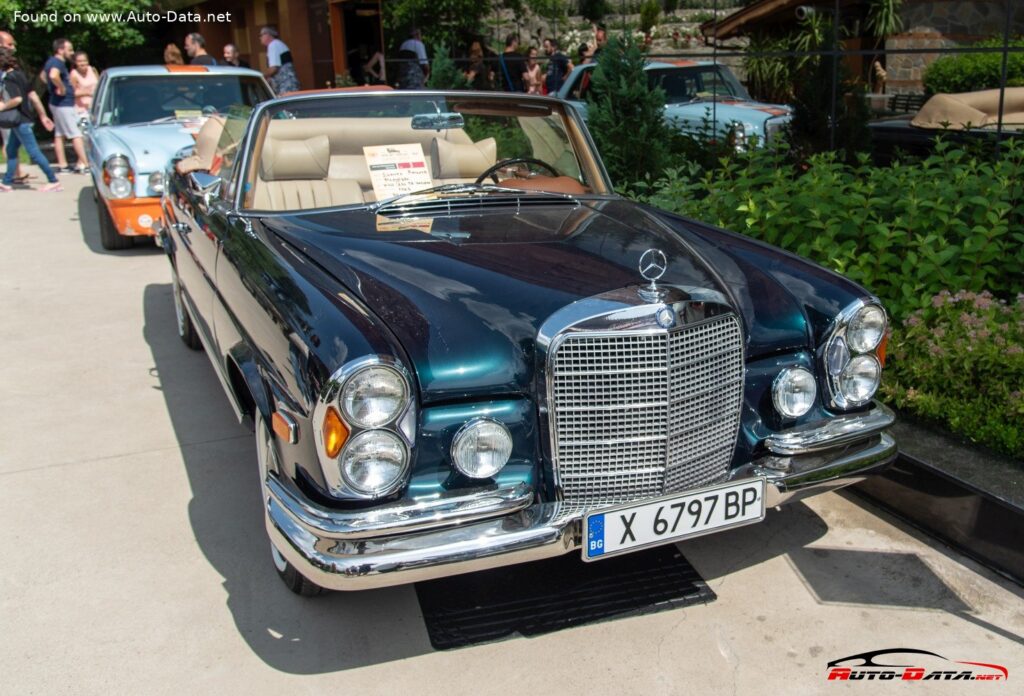
The Mercedes-Benz W111 Cabriolet 220 SEb represents a pinnacle of 1960s German engineering and luxury. Produced between September 1961 and October 1965, this model is a highly sought-after variant of the W111 “Fintail” series, known for its elegant styling and advanced features for its time. The 220 SEb specifically denotes the fuel-injected, six-cylinder engine, offering a refined driving experience. While not initially a high-volume seller in the United States, the W111 Cabriolet has become a classic among American collectors, appreciated for its build quality, timeless design, and historical significance.
The Mercedes-Benz W111 Cabriolet 220 SEb
The W111 series, launched in 1959, was intended as a successor to the W180 “Ponton” models. The “Fintail” nickname derives from the distinctive, fin-like rear wings that characterized the design. The Cabriolet version, introduced later, offered open-air motoring with the same level of luxury and engineering excellence as the sedan and coupe models. The 220 SEb, introduced in 1961, was a significant upgrade, featuring Bosch mechanical fuel injection – a relatively advanced technology for the era – which boosted power and improved drivability. This model occupied the upper-middle class segment, competing with vehicles like the Jaguar E-Type and other premium European grand tourers.
Engine & Performance
The heart of the 220 SEb is its 2.2-liter (2195 cm3) inline-six cylinder engine, designated the M 127 V / 127.984. This engine produces 120 horsepower at 4800 rpm and 189 Nm (139.4 lb.-ft.) of torque at 3900 rpm. The power-to-weight ratio of 12.6 kg/Hp (79.5 Hp/tonne) and torque-to-weight ratio of 8 kg/Nm (125.2 Nm/tonne) provided respectable, though not overtly sporty, performance for a luxury car of the period. The engine features a single overhead camshaft (SOHC) valvetrain and a compression ratio of 8.7:1. Bosch mechanical multi-port fuel injection was a key feature, contributing to smoother operation and increased power output compared to carbureted engines. Power is delivered to the rear wheels through a four-speed manual transmission. Acceleration from 0 to 100 km/h (0-62 mph) takes approximately 13.7 seconds, and the car has a top speed of 170 km/h (105.63 mph). Fuel consumption is rated at 11.2 l/100 km (21 US mpg, 25.2 UK mpg, 8.9 km/l).
Design & Features
The W111 Cabriolet is a two-door, five-seat convertible. Its design is characterized by clean lines, a relatively low profile, and the aforementioned “fintail” rear wings. The body construction utilizes a robust chassis and steel panels, providing a solid and durable feel. The interior is appointed with high-quality materials, including leather upholstery and wood trim, reflecting the car’s luxury positioning.
Safety features, while limited by the standards of the time, included robust construction and effective drum brakes on the rear wheels, paired with disc brakes on the front. The steering system is a cone worm with recirculation balls, providing a relatively precise driving experience. The car’s suspension utilizes a double wishbone setup at the front and a trailing arm configuration at the rear, offering a comfortable ride. Practicality is addressed with a trunk capacity of 530 liters (18.72 cu. ft.) and a fuel tank capacity of 65 liters (17.17 US gal).
Technical Specifications
| Brand | Mercedes-Benz |
| Model | W111 |
| Generation | W111 Cabriolet |
| Type (Engine) | 220 SEb (120 Hp) |
| Start of production | September, 1961 |
| End of production | October, 1965 |
| Powertrain Architecture | Internal Combustion engine |
| Body type | Cabriolet |
| Seats | 5 |
| Doors | 2 |
| Fuel consumption (combined) | 11.2 l/100 km |
| Fuel consumption (US mpg) | 21 US mpg |
| Fuel consumption (UK mpg) | 25.2 UK mpg |
| Fuel consumption (km/l) | 8.9 km/l |
| Fuel Type | Petrol (Gasoline) |
| Acceleration 0 – 100 km/h | 13.7 sec |
| Acceleration 0 – 62 mph | 13.7 sec |
| Acceleration 0 – 60 mph | 13 sec |
| Maximum speed | 170 km/h (105.63 mph) |
| Weight-to-power ratio | 12.6 kg/Hp |
| Power per tonne | 79.5 Hp/tonne |
| Weight-to-torque ratio | 8 kg/Nm |
| Torque per tonne | 125.2 Nm/tonne |
| Power | 120 Hp @ 4800 rpm |
| Power per litre | 54.7 Hp/l |
| Torque | 189 Nm @ 3900 rpm (139.4 lb.-ft. @ 3900 rpm) |
| Engine layout | Front, Longitudinal |
| Engine Model/Code | M 127 V / 127.984 |
| Engine displacement | 2195 cm3 (133.95 cu. in.) |
| Number of cylinders | 6 |
| Engine configuration | Inline |
| Cylinder Bore | 80 mm (3.15 in.) |
| Piston Stroke | 72.8 mm (2.87 in.) |
| Compression ratio | 8.7:1 |
| Number of valves per cylinder | 2 |
| Fuel injection system | Multi-port manifold injection |
| Engine aspiration | Naturally aspirated engine |
| Valvetrain | SOHC |
| Kerb Weight | 1510 kg (3328.98 lbs.) |
| Max. weight | 1980 kg (4365.15 lbs.) |
| Max load | 470 kg (1036.17 lbs.) |
| Trunk (boot) space – minimum | 530 l (18.72 cu. ft.) |
| Fuel tank capacity | 65 l (17.17 US gal | 14.3 UK gal) |
| Permitted trailer load with brakes (12%) | 1200 kg (2645.55 lbs.) |
| Permitted trailer load without brakes | 750 kg (1653.47 lbs.) |
| Length | 4880 mm (192.13 in.) |
| Width | 1845 mm (72.64 in.) |
| Height | 1445 mm (56.89 in.) |
| Wheelbase | 2750 mm (108.27 in.) |
| Front track | 1482 mm (58.35 in.) |
| Rear (Back) track | 1485 mm (58.46 in.) |
| Minimum turning circle (turning diameter) | 11.9 m (39.04 ft.) |
| Drivetrain Architecture | Rear wheel drive |
| Number of gears and type of gearbox | 4 gears, manual transmission |
| Front suspension | Double wishbone |
| Rear suspension | Trailing arm |
| Front brakes | Disc |
| Rear brakes | Drum |
| Steering type | Cone worm with recirculation balls |
The Mercedes-Benz W111 Cabriolet 220 SEb remains a highly desirable classic car, representing a blend of sophisticated engineering, elegant design, and enduring quality. Its historical significance as a symbol of post-war German luxury continues to attract enthusiasts and collectors worldwide.