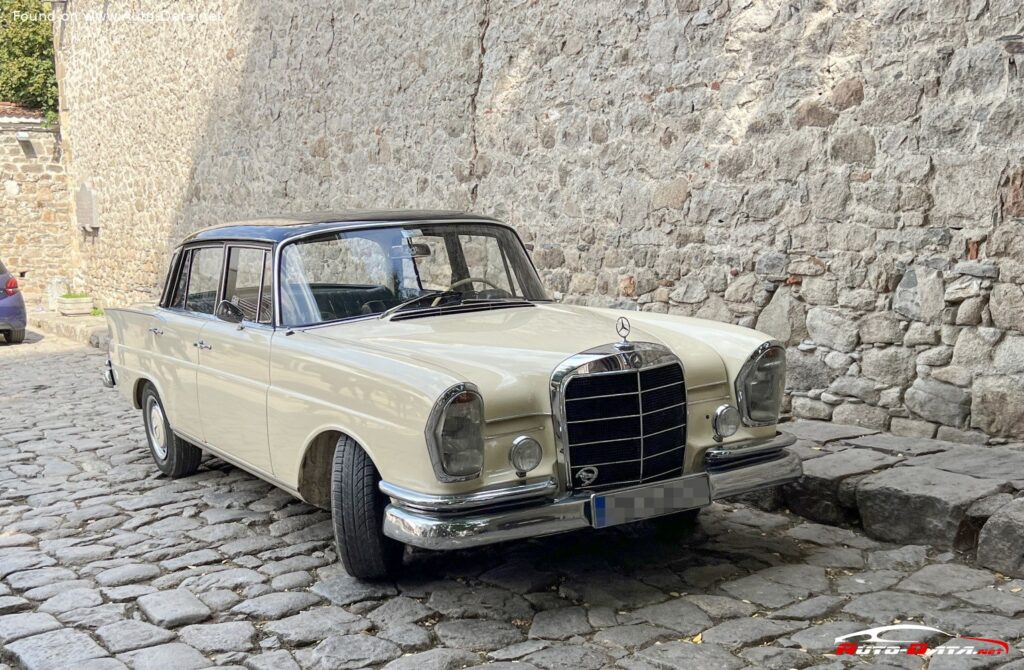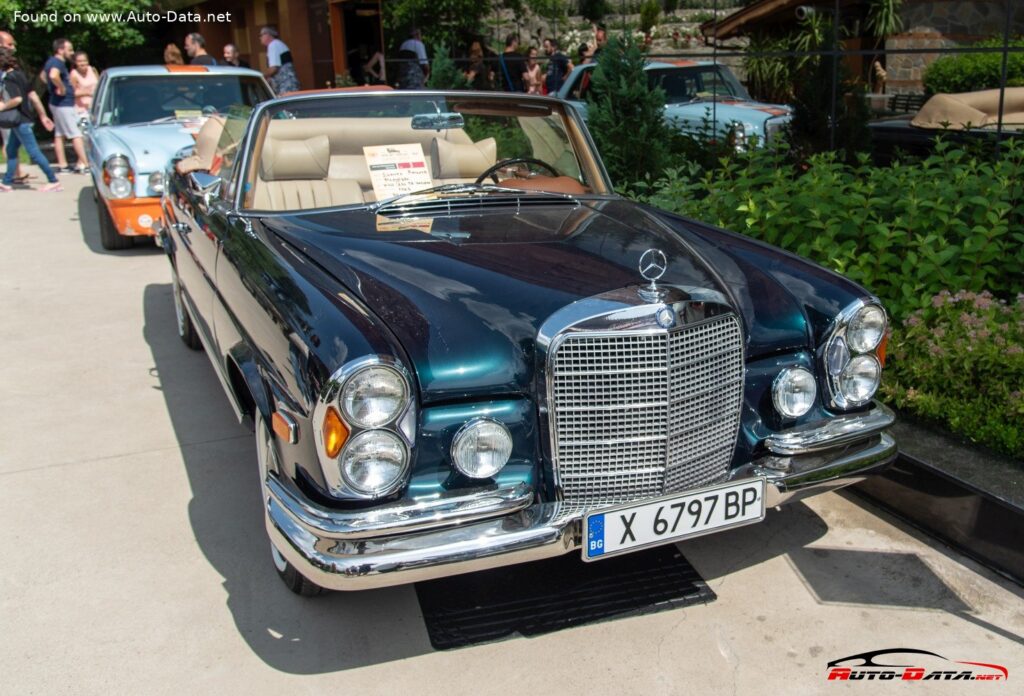
The Mercedes-Benz W111 Cabriolet 250 SE represents the pinnacle of open-top luxury from the German automaker during the mid-1960s. Produced between August 1965 and December 1967, this model is part of the larger W111 series, which encompassed saloons and coupés. The 250 SE Cabriolet, distinguished by its elegant styling and refined engineering, catered to a discerning clientele seeking a sophisticated grand tourer. It occupied a premium segment, competing with other luxury convertibles of the era, and remains a highly sought-after classic today.
The Mercedes-Benz W111 Cabriolet 250 SE
The W111 series, introduced in 1959, was a significant step forward for Mercedes-Benz, replacing the earlier W180 “Fintail” models. The Cabriolet and Coupé versions, introduced later, were particularly exclusive. The 250 SE, introduced in 1965, represented an upgrade over previous iterations, featuring a larger engine and improved performance. While not initially a high-volume seller like its saloon counterparts, the 250 SE Cabriolet established itself as a symbol of status and automotive excellence.
Engine & Performance
The heart of the 250 SE Cabriolet is its 2.5-liter inline-six cylinder engine, designated the M 129 I / 129.980. This naturally aspirated engine produces 150 horsepower at 5500 rpm and 216 Nm (159.31 lb.-ft.) of torque at 4200 rpm. The engine utilizes multi-port manifold fuel injection, a relatively advanced technology for the time, contributing to smooth power delivery and improved fuel efficiency. Power is transmitted to the rear wheels via a four-speed automatic transmission. Acceleration from 0 to 60 mph takes approximately 11.4 seconds, and the vehicle achieves a top speed of 185 km/h (114.95 mph). The weight-to-power ratio of 10.5 kg/Hp and a weight-to-torque ratio of 7.3 kg/Nm provide a respectable, albeit not overtly sporty, driving experience focused on comfortable cruising.
Design & Features
The W111 Cabriolet boasts a classic, elegant design characterized by its long hood, flowing lines, and relatively restrained styling. The two-door, five-seat configuration offers a spacious interior for a vehicle of its era. The fully retractable soft top provides open-air enjoyment, while maintaining a refined appearance when closed. The interior is typically appointed with high-quality materials, including leather upholstery and wood trim. Safety features, while limited by the standards of the 1960s, included disc brakes on all four wheels, a notable advancement for the time. The car’s dimensions – 4880 mm (192.13 in) in length, 1845 mm (72.64 in) in width, and 1435 mm (56.5 in) in height – contribute to its imposing yet graceful presence. Trunk space is a generous 530 liters (18.72 cu. ft.).
Technical Specifications
| Brand | Mercedes-Benz |
| Model | W111 |
| Generation | W111 Cabriolet |
| Type (Engine) | 250 SE (150 Hp) Automatic |
| Start of production | August, 1965 |
| End of production | December, 1967 |
| Powertrain Architecture | Internal Combustion engine |
| Body type | Cabriolet |
| Seats | 5 |
| Doors | 2 |
| Fuel consumption (combined) | 11.7 l/100 km |
| Fuel consumption (US mpg) | 20.1 US mpg |
| Fuel consumption (UK mpg) | 24.1 UK mpg |
| Fuel consumption (km/l) | 8.5 km/l |
| Fuel Type | Petrol (Gasoline) |
| Acceleration 0 – 100 km/h | 12 sec |
| Acceleration 0 – 62 mph | 12 sec |
| Acceleration 0 – 60 mph | 11.4 sec |
| Maximum speed | 185 km/h (114.95 mph) |
| Weight-to-power ratio | 10.5 kg/Hp |
| Hp/tonne | 95.2 Hp/tonne |
| Weight-to-torque ratio | 7.3 kg/Nm |
| Nm/tonne | 137.1 Nm/tonne |
| Power | 150 Hp @ 5500 rpm |
| Power per litre | 60.1 Hp/l |
| Torque | 216 Nm @ 4200 rpm (159.31 lb.-ft. @ 4200 rpm) |
| Engine layout | Front, Longitudinal |
| Engine Model/Code | M 129 I / 129.980 |
| Engine displacement | 2496 cm3 (152.32 cu. in.) |
| Number of cylinders | 6 |
| Engine configuration | Inline |
| Cylinder Bore | 82 mm (3.23 in.) |
| Piston Stroke | 78.8 mm (3.1 in.) |
| Compression ratio | 9.3:1 |
| Number of valves per cylinder | 2 |
| Fuel injection system | Multi-port manifold injection |
| Engine aspiration | Naturally aspirated engine |
| Valvetrain | SOHC |
| Kerb Weight | 1575 kg (3472.28 lbs.) |
| Max. weight | 2045 kg (4508.45 lbs.) |
| Max load | 470 kg (1036.17 lbs.) |
| Trunk (boot) space – minimum | 530 l (18.72 cu. ft.) |
| Fuel tank capacity | 82 l (21.66 US gal | 18.04 UK gal) |
| Permitted trailer load with brakes (12%) | 1200 kg (2645.55 lbs.) |
| Permitted trailer load without brakes | 750 kg (1653.47 lbs.) |
| Length | 4880 mm (192.13 in.) |
| Width | 1845 mm (72.64 in.) |
| Height | 1435 mm (56.5 in.) |
| Wheelbase | 2750 mm (108.27 in.) |
| Front track | 1482 mm (58.35 in.) |
| Rear (Back) track | 1485 mm (58.46 in.) |
| Minimum turning circle (turning diameter) | 11.8 m (38.71 ft.) |
| Drivetrain Architecture | The Internal combustion engine (ICE) drives the rear wheels of the vehicle. |
| Drive wheel | Rear wheel drive |
| Number of gears and type of gearbox | 4 gears, automatic transmission |
| Front suspension | Double wishbone |
| Rear suspension | Trailing arm |
| Front brakes | Disc |
| Rear brakes | Disc |
| Steering type | Cone worm with recirculation balls |
The Mercedes-Benz W111 Cabriolet 250 SE remains a highly desirable classic car, appreciated for its elegant design, refined engineering, and comfortable driving experience. Its enduring appeal lies in its ability to evoke a sense of timeless luxury and sophistication.