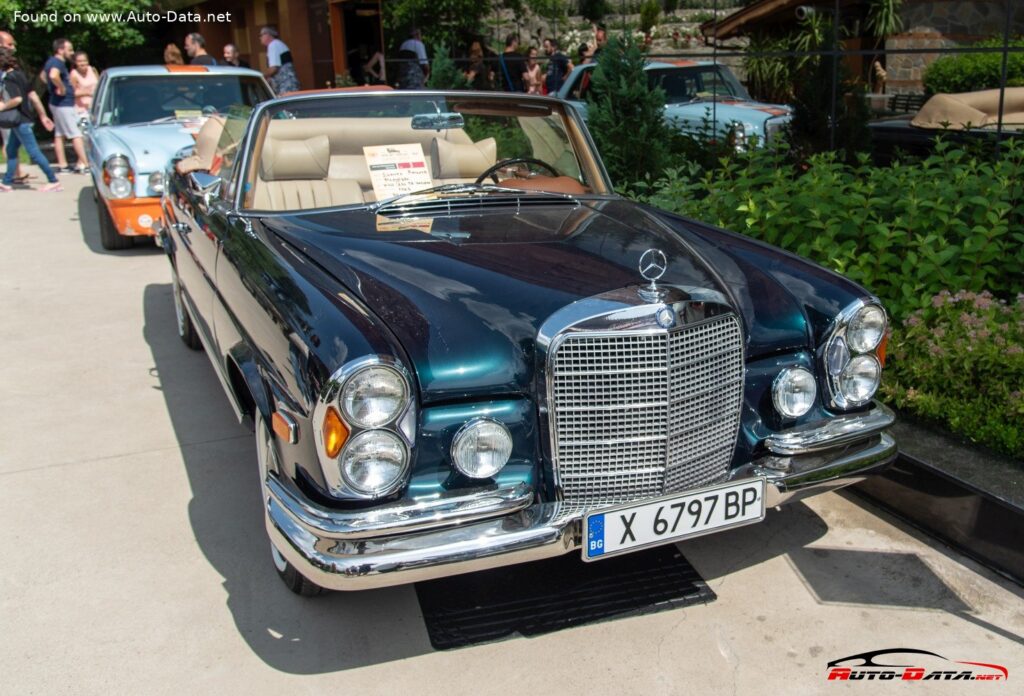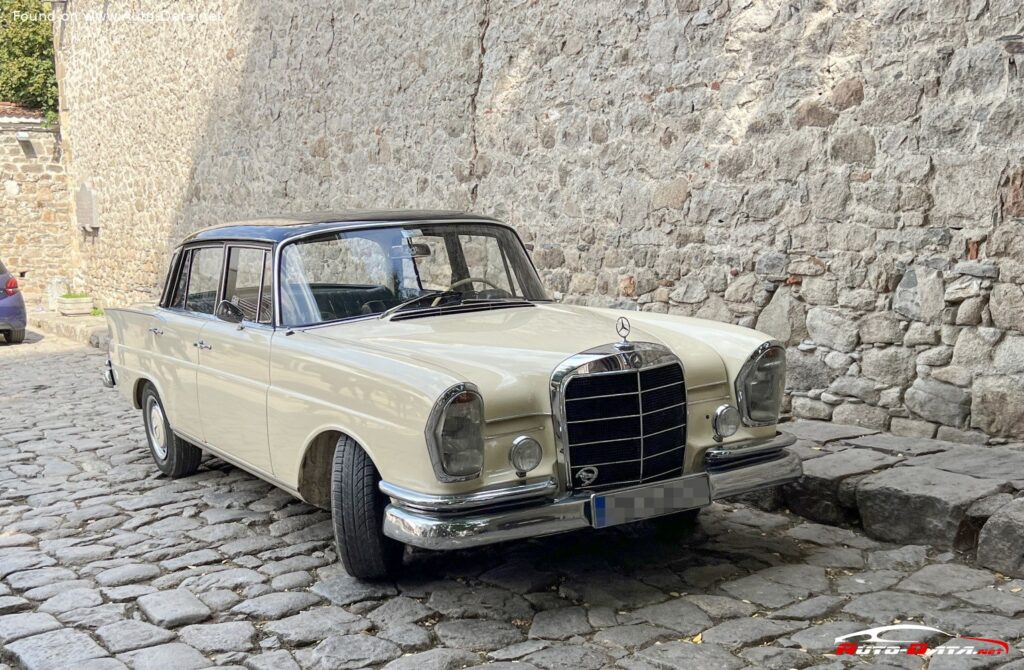
The Mercedes-Benz W111 Coupe 220 SEb, produced between 1960 and 1965, represents a pinnacle of post-war German automotive engineering and design. Part of the larger W111 family – encompassing saloons and cabriolets – the Coupe offered a more sporting and elegant alternative to the four-door models. Positioned in the luxury car segment, the 220 SEb was aimed at discerning buyers who appreciated sophisticated styling, robust build quality, and a refined driving experience. It served as a halo vehicle for Mercedes-Benz, showcasing their technological prowess and commitment to excellence. While not initially a high-volume seller compared to the saloon versions, the W111 Coupe has become a highly sought-after classic, prized for its timeless aesthetics and mechanical durability.
The Mercedes-Benz W111 Coupe: A Legacy of Engineering
The W111 series, introduced in 1959, was a significant departure from its predecessor, the W180 “Ponton” series. The W111 featured a more modern, spacious interior, improved suspension, and a wider range of engine options. The “SEb” designation signifies the “Sonderausführung b” (Special Edition b), denoting an upgraded version of the 220 SE. This upgrade primarily involved the adoption of a mechanical multi-port fuel injection system, a relatively advanced feature for the time, enhancing both performance and fuel efficiency. The Coupe, with its two-door configuration and flowing lines, further emphasized the car’s elegant character.
Engine & Performance
The heart of the 220 SEb Coupe is its 2.2-liter (2195 cm³) inline-six cylinder engine, designated M 127 V / 127.984. This engine, producing 120 horsepower at 4800 rpm and 189 Nm (139.4 lb.-ft.) of torque at 3900 rpm, provided a smooth and responsive driving experience. The engine’s power-to-weight ratio of 11.8 kg/Hp and torque-to-weight ratio of 7.5 kg/Nm contributed to respectable, though not overtly sporty, performance for the era. The engine featured a single overhead camshaft (SOHC) valvetrain and a compression ratio of 8.7:1. The multi-port fuel injection system, a key differentiator of the “SEb” models, allowed for precise fuel delivery, improving both power output and fuel economy. Power per liter was a respectable 54.7 Hp/l. Power was delivered to the rear wheels via a four-speed automatic transmission, offering a comfortable and effortless driving experience. Acceleration from 0 to 100 km/h (0-62 mph) took approximately 12.7 seconds, while 0-60 mph was achieved in around 12.1 seconds. The top speed was rated at 165 km/h (102.53 mph).
Design & Features
The W111 Coupe’s design is characterized by its elegant proportions, flowing lines, and understated luxury. The two-door coupe body style, with its low roofline and elongated hood, created a visually striking silhouette. Large windows provided excellent visibility, while the spacious interior offered comfortable seating for five passengers. The interior was typically appointed with high-quality materials, including leather upholstery, wood trim, and polished metal accents.
Safety features, while not as comprehensive as those found in modern vehicles, were relatively advanced for the early 1960s. The car featured disc brakes on the front wheels and drum brakes on the rear, providing adequate stopping power. The steering system employed a cone worm with recirculation balls, offering precise and responsive handling. The suspension, consisting of double wishbones with a transverse stabilizer at the front and a trailing arm setup at the rear, provided a comfortable and controlled ride. The car’s robust construction and attention to detail contributed to its reputation for reliability and durability. The fuel tank capacity was 65 liters (17.17 US gallons).
Technical Specifications
| Brand | Mercedes-Benz |
| Model | W111 |
| Generation | W111 Coupe |
| Type (Engine) | 220 SEb (120 Hp) Automatic |
| Start of production | September, 1960 |
| End of production | October, 1965 |
| Powertrain Architecture | Internal Combustion engine |
| Body type | Coupe |
| Seats | 5 |
| Doors | 2 |
| Fuel consumption (combined) | 10.7 l/100 km |
| Fuel consumption (US mpg) | 22 US mpg |
| Fuel consumption (UK mpg) | 26.4 UK mpg |
| Fuel consumption (km/l) | 9.3 km/l |
| Fuel Type | Petrol (Gasoline) |
| Acceleration 0 – 100 km/h | 12.7 sec |
| Acceleration 0 – 62 mph | 12.7 sec |
| Acceleration 0 – 60 mph | 12.1 sec |
| Maximum speed | 165 km/h (102.53 mph) |
| Weight-to-power ratio | 11.8 kg/Hp |
| Weight-to-torque ratio | 7.5 kg/Nm |
| Power | 120 Hp @ 4800 rpm |
| Power per litre | 54.7 Hp/l |
| Torque | 189 Nm @ 3900 rpm (139.4 lb.-ft. @ 3900 rpm) |
| Engine layout | Front, Longitudinal |
| Engine Model/Code | M 127 V / 127.984 |
| Engine displacement | 2195 cm3 (133.95 cu. in.) |
| Number of cylinders | 6 |
| Engine configuration | Inline |
| Cylinder Bore | 80 mm (3.15 in.) |
| Piston Stroke | 72.8 mm (2.87 in.) |
| Compression ratio | 8.7:1 |
| Number of valves per cylinder | 2 |
| Fuel injection system | Multi-port manifold injection |
| Engine aspiration | Naturally aspirated engine |
| Valvetrain | SOHC |
| Kerb Weight | 1410 kg (3108.52 lbs.) |
| Max. weight | 1880 kg (4144.69 lbs.) |
| Max load | 470 kg (1036.17 lbs.) |
| Fuel tank capacity | 65 l (17.17 US gal | 14.3 UK gal) |
| Length | 4880 mm (192.13 in.) |
| Width | 1845 mm (72.64 in.) |
| Height | 1445 mm (56.89 in.) |
| Wheelbase | 2750 mm (108.27 in.) |
| Front track | 1482 mm (58.35 in.) |
| Rear track | 1485 mm (58.46 in.) |
| Drivetrain Architecture | Rear wheel drive |
| Number of gears and type of gearbox | 4 gears, automatic transmission |
| Front suspension | Double wishbone, Transverse stabilizer |
| Rear suspension | Trailing arm |
| Front brakes | Disc |
| Rear brakes | Drum |
| Steering type | Cone worm with recirculation balls |
| Wheel rims size | 5J x 13 |