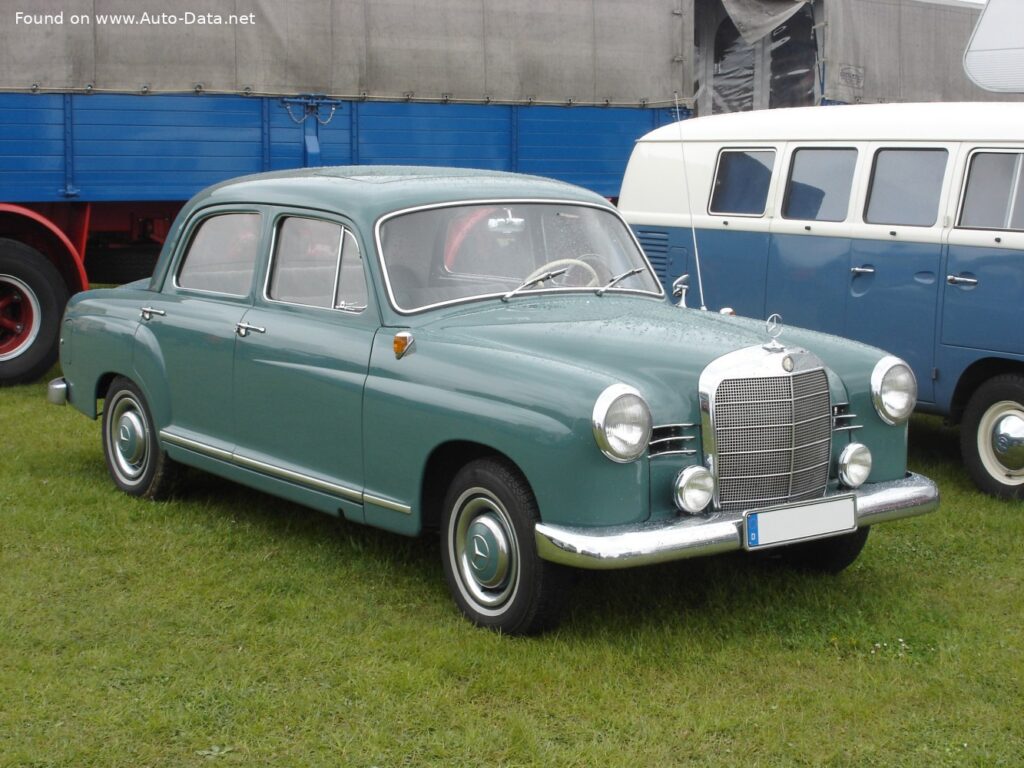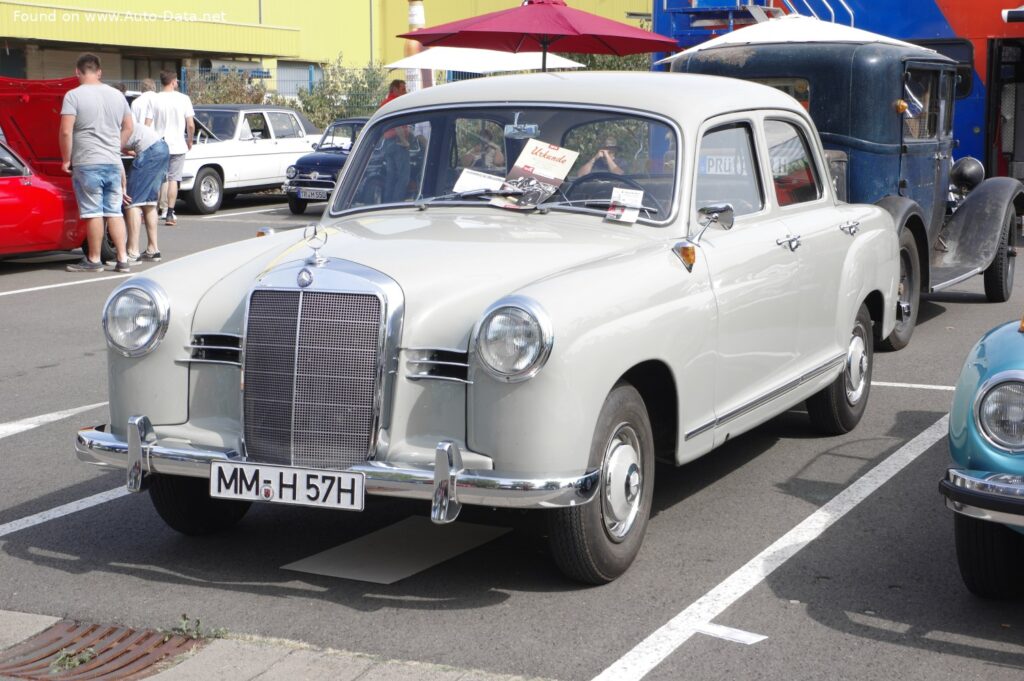
The Mercedes-Benz W120 Sedan, commonly known as the Ponton, represents a pivotal moment in the post-war resurgence of German automotive engineering. Produced from September 1955 to July 1959, the W120 was Mercedes-Benz’s entry-level model, designed to offer the brand’s renowned quality and durability to a wider market. The 180 D variant, powered by a 1.8-liter diesel engine, was a particularly significant model, offering fuel economy and longevity that appealed to a practical-minded clientele. This vehicle marked a departure from the pre-war designs, embracing a more modern, streamlined aesthetic – hence the “Ponton” (meaning pontoon) nickname, referencing its rounded, boat-like shape. The W120 established many of the design cues and engineering principles that would define Mercedes-Benz passenger cars for decades to come.
Mercedes-Benz W120 Sedan 180 D: A Detailed Overview
The W120 series was a crucial step in democratizing the Mercedes-Benz experience. Prior to the Ponton, Mercedes-Benz vehicles were largely luxury items, inaccessible to the average consumer. The W120 aimed to change that, offering a well-built, reliable, and comfortable sedan at a more affordable price point. While not a performance car by modern standards, the 180 D prioritized efficiency and robustness. It was a vehicle built to withstand the rigors of daily use and provide years of dependable service. The Ponton was primarily sold in Europe, and while not officially imported in large numbers to the United States during its production run, it laid the groundwork for the brand’s eventual success in the American market.
Engine & Performance
The heart of the 180 D is its 1.8-liter (1767 cm3) inline-four cylinder diesel engine, designated OM 636 VII / 636.930. This engine produced a modest 43 horsepower at 3500 rpm and 101 Nm (74.49 lb.-ft.) of torque at 2000 rpm. While the horsepower figure seems low by today’s standards, the diesel engine’s torque characteristics provided adequate performance for the time, particularly for cruising on European roads. The engine featured precombustion chamber injection, a common diesel technology of the era, and a relatively high compression ratio of 19:1. The engine’s power-to-weight ratio was 27.9 kg/Hp, and its torque-to-weight ratio was 11.9 kg/Nm. Acceleration from 0 to 100 km/h (0-62 mph) took approximately 39 seconds, and 0 to 60 mph was achieved in around 37.1 seconds. The top speed was limited to 110 km/h (68.35 mph). Fuel consumption was a respectable 6.3 l/100 km (37.3 US mpg, 44.8 UK mpg, 15.9 km/l) for a vehicle of its era.
Design & Features
The W120 Sedan’s design was a significant departure from the more traditionally styled Mercedes-Benz models that preceded it. The “Ponton” styling featured a unibody construction – a relatively new technology at the time – which contributed to the car’s strength and rigidity. The body was low and wide, with rounded lines and a prominent grille. The four-door sedan configuration offered seating for five passengers. The interior was functional and well-appointed for its price point, featuring comfortable seating and a straightforward dashboard layout. Safety features were relatively basic by modern standards, but the W120 incorporated robust construction and reliable brakes for the time. The car’s relatively simple design and durable components contributed to its longevity and reputation for reliability. The 180 D’s focus was on providing practical transportation, and its features reflected that ethos.
Technical Specifications
| Brand | Mercedes-Benz |
| Model | Ponton |
| Generation | W120 Sedan |
| Type (Engine) | 180 D (43 Hp) |
| Start of production | September, 1955 |
| End of production | July, 1959 |
| Powertrain Architecture | Internal Combustion engine |
| Body type | Sedan |
| Seats | 5 |
| Doors | 4 |
| Fuel consumption (combined) | 6.3 l/100 km |
| Fuel consumption (US mpg) | 37.3 US mpg |
| Fuel consumption (UK mpg) | 44.8 UK mpg |
| Fuel consumption (km/l) | 15.9 km/l |
| Fuel Type | Diesel |
| Acceleration 0 – 100 km/h | 39 sec |
| Acceleration 0 – 62 mph | 39 sec |
| Acceleration 0 – 60 mph | 37.1 sec |
| Maximum speed | 110 km/h (68.35 mph) |
| Weight-to-power ratio | 27.9 kg/Hp |
| Hp/tonne | 35.8 Hp/tonne |
| Weight-to-torque ratio | 11.9 kg/Nm |
| Nm/tonne | 84.2 Nm/tonne |
| Power | 43 Hp @ 3500 rpm |
| Power per litre | 24.3 Hp/l |
| Torque | 101 Nm @ 2000 rpm (74.49 lb.-ft. @ 2000 rpm) |
| Engine layout | Front, Longitudinal |
| Engine Model/Code | OM 636 VII / 636.930 |
| Engine displacement | 1767 cm3 (107.83 cu. in.) |
| Number of cylinders | 4 |
| Engine configuration | Inline |
| Cylinder Bore | 75 mm (2.95 in.) |
| Piston Stroke | 100 mm (3.94 in.) |
| Compression ratio | 19:1 |
| Number of valves per cylinder | 2 |
| Fuel injection system | Precombustion chamber injection |
| Engine aspiration | Naturally aspirated |
| Valvetrain | OHV |
| Engine oil capacity | 4 l (4.23 US qt | 3.52 UK qt) |
| Kerb Weight | 1200 kg (2645.55 lbs.) |
| Max. weight | 1650 kg (3637.63 lbs.) |
| Max load | 450 kg (992.08 lbs.) |
| Fuel tank capacity | 56 l (14.79 US gal | 12.32 UK gal) |
| Length | 4460 mm (175.59 in.) |
| Width | 1740 mm (68.5 in.) |
| Height | 1560 mm (61.42 in.) |
| Wheelbase | 2650 mm (104.33 in.) |
| Front track | 1420 mm (55.91 in.) |
| Rear track | 1460 mm (57.48 in.) |
| Drivetrain Architecture | Rear wheel drive |
| Number of gears | 4 gears, manual transmission |
| Front suspension | Double wishbone, Transverse stabilizer |
| Rear suspension | Trailing arm |
| Front brakes | Drum |
| Rear brakes | Drum |
| Steering type | Cone worm with recirculation balls |
The Mercedes-Benz W120 Sedan 180 D, while not a high-performance vehicle, remains a significant model in the company’s history. It represented a crucial step towards making the Mercedes-Benz brand accessible to a broader audience, and its robust engineering and durable construction ensured its longevity and enduring appeal. The Ponton’s design and engineering principles laid the foundation for many of the features and qualities that would come to define Mercedes-Benz automobiles for generations.