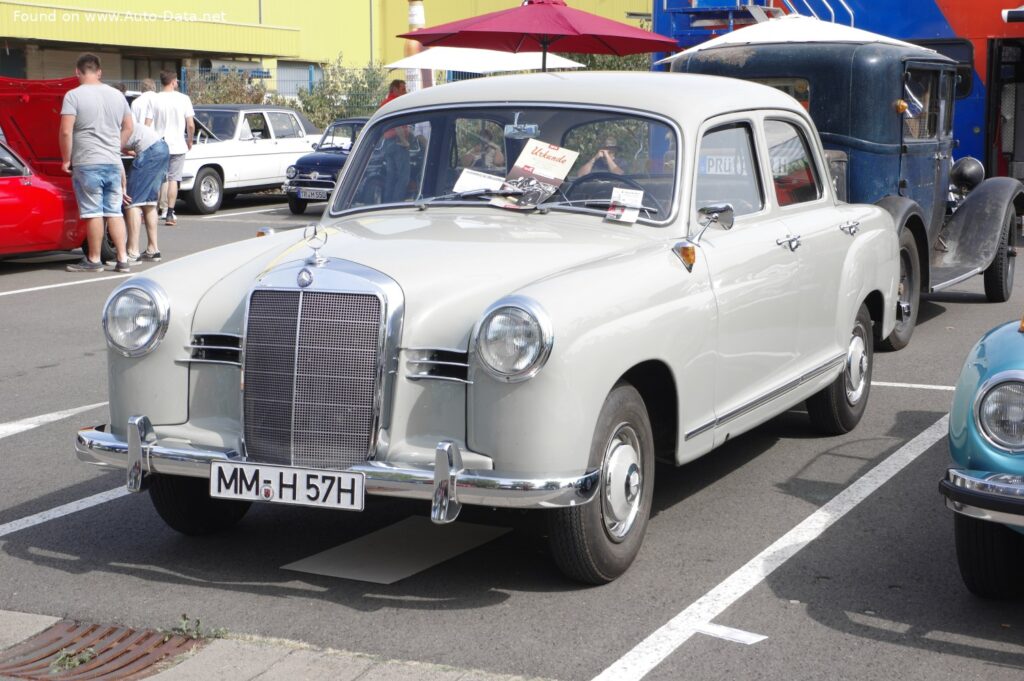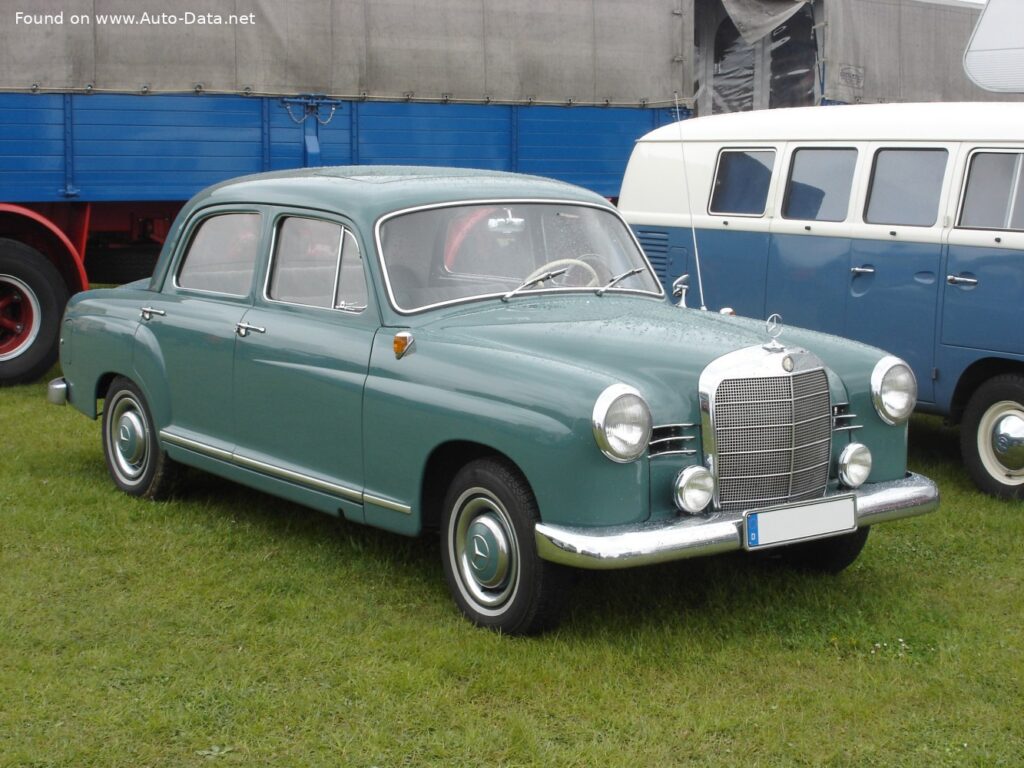
The Mercedes-Benz W120 Sedan, particularly the 180 b variant produced from 1959 to 1961, represents a pivotal moment in the post-war democratization of automotive luxury. Often referred to as the “Ponton” due to its pontoon-like, integrated body style, the W120 was Mercedes-Benz’s entry-level model, designed to appeal to a broader market than its more expensive siblings. This generation, and specifically the facelifted 1959 model, offered a blend of comfort, durability, and understated elegance, establishing a new standard for mid-size sedans. While not initially a major seller in the United States, the W120 laid the groundwork for Mercedes-Benz’s eventual success in the American market.
The Mercedes-Benz W120 Sedan: A Detailed Overview
The W120 series, launched in 1956, was a significant departure from the pre-war Mercedes-Benz designs. It embraced unibody construction – a relatively new technique at the time – which resulted in a lighter and more rigid chassis compared to traditional body-on-frame designs. The 180 b, introduced in 1959 as part of a facelift, featured subtle styling updates and a slightly more powerful engine. This model aimed to provide a refined driving experience without the high price tag associated with the larger, more opulent Mercedes-Benz models.
Engine & Performance
The heart of the 180 b is its 1.9-liter (1897 cc) inline-four cylinder engine, designated the M 121 B IV b / 121.923. This naturally aspirated engine produced 68 horsepower at 4400 rpm and 129 Nm (95.15 lb.-ft.) of torque at 2500 rpm. While these figures may seem modest by modern standards, they were respectable for the late 1950s, providing adequate power for comfortable cruising. The engine featured a single overhead camshaft (SOHC) valvetrain and utilized a carburetor for fuel delivery. Power per liter was 35.8 Hp/l. The engine’s longitudinal front-engine layout and rear-wheel drive configuration were typical for European cars of the era. Acceleration from 0 to 100 km/h (0-62 mph) took approximately 21 seconds, and 0 to 60 mph was achieved in around 20 seconds. The top speed was 135 km/h (83.89 mph). The weight-to-power ratio of 15.7 kg/Hp and weight-to-torque ratio of 8.3 kg/Nm reflect the car’s relatively light weight for its size.
Design & Features
The W120 Sedan’s design was characterized by its clean lines and integrated bodywork, earning it the “Ponton” nickname. The five-door sedan body style offered seating for five passengers. The 1959 facelift brought minor cosmetic changes, including revised grille detailing and updated trim. Inside, the 180 b offered a comfortable and well-appointed cabin for its class. While not lavishly equipped, it featured comfortable seating and a functional dashboard layout. Safety features were relatively basic by today’s standards, consisting primarily of robust construction and reliable braking. The car’s dimensions – 4500 mm (177.17 in) in length, 1740 mm (68.5 in) in width, and 1560 mm (61.42 in) in height – positioned it as a mid-size sedan, suitable for both city driving and longer journeys. The wheelbase measured 2650 mm (104.33 in). The fuel tank capacity was 56 liters (14.79 US gal).
Technical Specifications
| Brand | Mercedes-Benz |
| Model | Ponton |
| Generation | W120 Sedan (facelift 1959) |
| Type (Engine) | 180 b (68 Hp) |
| Start of production | July, 1959 |
| End of production | August, 1961 |
| Powertrain Architecture | Internal Combustion engine |
| Body type | Sedan |
| Seats | 5 |
| Doors | 5 |
| Fuel consumption (combined) | 10.9 l/100 km |
| Fuel consumption (US mpg) | 21.6 US mpg |
| Fuel consumption (UK mpg) | 25.9 UK mpg |
| Fuel consumption (km/l) | 9.2 km/l |
| Fuel Type | Petrol (Gasoline) |
| Acceleration 0 – 100 km/h | 21 sec |
| Acceleration 0 – 62 mph | 21 sec |
| Acceleration 0 – 60 mph | 20 sec |
| Maximum speed | 135 km/h (83.89 mph) |
| Weight-to-power ratio | 15.7 kg/Hp |
| Weight-to-torque ratio | 8.3 kg/Nm |
| Power | 68 Hp @ 4400 rpm |
| Power per litre | 35.8 Hp/l |
| Torque | 129 Nm @ 2500 rpm (95.15 lb.-ft. @ 2500 rpm) |
| Engine layout | Front, Longitudinal |
| Engine Model/Code | M 121 B IV b / 121.923 |
| Engine displacement | 1897 cm3 (115.76 cu. in.) |
| Number of cylinders | 4 |
| Engine configuration | Inline |
| Cylinder Bore | 85 mm (3.35 in.) |
| Piston Stroke | 83.6 mm (3.29 in.) |
| Compression ratio | 7:1 |
| Number of valves per cylinder | 2 |
| Fuel injection system | Carburettor |
| Engine aspiration | Naturally aspirated engine |
| Valvetrain | SOHC |
| Kerb Weight | 1065 kg (2347.92 lbs.) |
| Max. weight | 1615 kg (3560.47 lbs.) |
| Max load | 550 kg (1212.54 lbs.) |
| Fuel tank capacity | 56 l (14.79 US gal | 12.32 UK gal) |
| Length | 4500 mm (177.17 in.) |
| Width | 1740 mm (68.5 in.) |
| Height | 1560 mm (61.42 in.) |
| Wheelbase | 2650 mm (104.33 in.) |
| Front track | 1430 mm (56.3 in.) |
| Rear track | 1475 mm (58.07 in.) |
| Drivetrain Architecture | The Internal combustion engine (ICE) drives the rear wheels of the vehicle. |
| Drive wheel | Rear wheel drive |
| Number of gears and type of gearbox | 4 gears, manual transmission |
| Front suspension | Double wishbone, Transverse stabilizer |
| Rear suspension | Trailing arm |
| Front brakes | Drum |
| Rear brakes | Drum |
| Steering type | Cone worm with recirculation balls |
The Mercedes-Benz W120 Sedan, and the 180 b variant in particular, represents a significant chapter in the company’s history. It was a car that brought Mercedes-Benz quality and engineering to a wider audience, paving the way for the brand’s future success. Its robust construction, comfortable ride, and understated elegance continue to appeal to enthusiasts and collectors today.