
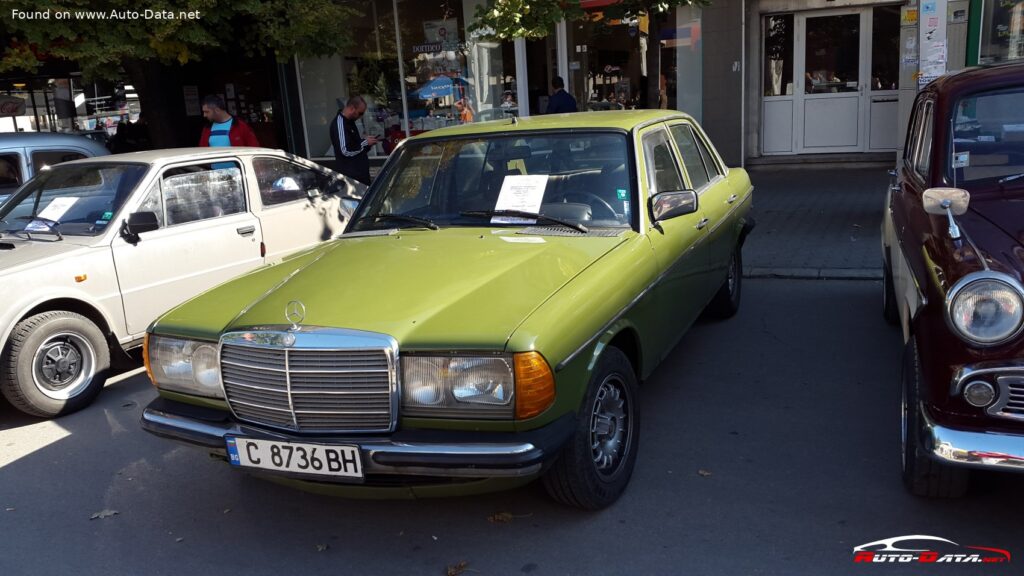
The Mercedes-Benz W123 represents a pivotal era for the German automaker, produced from July 1975 to August 1980. This model, specifically the 200 variant with its 94 horsepower engine and automatic transmission, solidified Mercedes-Benz’s reputation for building durable, comfortable, and technologically advanced automobiles. The W123 was a direct successor to the W114/W115 series and served as a bridge to the more technologically complex W124. It was primarily marketed in Europe, but gained a following in other markets due to its build quality and engineering. The W123 established many of the safety features and design cues that would become hallmarks of Mercedes-Benz vehicles for decades to come.
Mercedes-Benz W123 200: A Detailed Overview
The W123 was offered in a variety of body styles, including sedan, coupe, and station wagon (estate), catering to a broad range of customer needs. The 200 model, powered by a 2.0-liter inline-four engine, was positioned as the entry-level offering in the W123 range. While not the most powerful variant, it provided a balance of fuel efficiency and adequate performance for everyday driving. The automatic transmission option, as featured in this model, enhanced the driving experience by providing smooth and effortless gear changes.
Engine & Performance
The heart of the W123 200 is its M 115 V 20 engine, a 1,988 cc (121.32 cu. in.) inline-four cylinder powerplant. This naturally aspirated engine produces 94 horsepower at 4800 rpm and 158 Nm (116.53 lb.-ft.) of torque at 3000 rpm. The engine features a single overhead camshaft (SOHC) valvetrain with two valves per cylinder and utilizes a carburetor fuel injection system – a common setup for the era. While acceleration figures are modest by modern standards – 0 to 100 km/h (0-62 mph) in 16.3 seconds and 0 to 60 mph in 15.5 seconds – the engine is known for its reliability and longevity. The power-to-weight ratio stands at 14.3 kg/Hp, or 70.1 Hp/tonne, reflecting the car’s substantial weight of 1340 kg (2954.19 lbs). Top speed is rated at 155 km/h (96.31 mph). Fuel economy is rated at 14.6 l/100 km (16.1 US mpg) in urban conditions and 10 l/100 km (23.5 US mpg) on the open road.
Design & Features
The W123 sedan is a classic example of 1970s German automotive design – understated elegance and functional practicality. Its four-door, five-seat configuration provides ample space for passengers and luggage. The body’s clean lines and relatively boxy shape prioritize interior space and aerodynamic efficiency. Safety was a key consideration in the W123’s design. It featured crumple zones in the front and rear, a reinforced passenger cell, and disc brakes on all four wheels – advancements for the time. The interior was characterized by high-quality materials and a focus on comfort. Features included comfortable seating, a well-appointed dashboard, and a relatively quiet cabin. While not equipped with the advanced electronic features found in modern vehicles, the W123 offered a level of refinement and build quality that set it apart from many of its competitors. The suspension system, comprised of double wishbones at the front and a trailing arm setup at the rear, provided a comfortable and controlled ride.
Technical Specifications
| Brand | Mercedes-Benz |
| Model | W123 |
| Generation | W123 |
| Type (Engine) | 200 (94 Hp) Automatic |
| Start of production | July, 1975 |
| End of production | August, 1980 |
| Powertrain Architecture | Internal Combustion engine |
| Body type | Sedan |
| Seats | 5 |
| Doors | 4 |
| Fuel consumption (urban) | 14.6 l/100 km (16.1 US mpg) |
| Fuel consumption (extra urban) | 10 l/100 km (23.5 US mpg) |
| Fuel Type | Petrol (Gasoline) |
| Acceleration 0 – 100 km/h | 16.3 sec |
| Acceleration 0 – 62 mph | 16.3 sec |
| Acceleration 0 – 60 mph | 15.5 sec |
| Maximum speed | 155 km/h (96.31 mph) |
| Weight-to-power ratio | 14.3 kg/Hp |
| Weight-to-torque ratio | 8.5 kg/Nm |
| Power | 94 Hp @ 4800 rpm |
| Torque | 158 Nm @ 3000 rpm (116.53 lb.-ft. @ 3000 rpm) |
| Engine layout | Front, Longitudinal |
| Engine Model/Code | M 115 V 20 / 115.938 |
| Engine displacement | 1988 cm3 (121.32 cu. in.) |
| Number of cylinders | 4 |
| Engine configuration | Inline |
| Cylinder Bore | 87 mm (3.43 in.) |
| Piston Stroke | 83.6 mm (3.29 in.) |
| Compression ratio | 9:1 |
| Number of valves per cylinder | 2 |
| Fuel injection system | Carburettor |
| Engine aspiration | Naturally aspirated |
| Valvetrain | SOHC |
| Engine oil capacity | 6 l (6.34 US qt | 5.28 UK qt) |
| Coolant capacity | 10 l (10.57 US qt | 8.8 UK qt) |
| Kerb Weight | 1340 kg (2954.19 lbs.) |
| Max. weight | 1860 kg (4100.6 lbs.) |
| Max load | 520 kg (1146.4 lbs.) |
| Fuel tank capacity | 65 l (17.17 US gal | 14.3 UK gal) |
| Length | 4725 mm (186.02 in.) |
| Width | 1786 mm (70.31 in.) |
| Height | 1438 mm (56.61 in.) |
| Wheelbase | 2795 mm (110.04 in.) |
| Front track | 1488 mm (58.58 in.) |
| Rear track | 1446 mm (56.93 in.) |
| Drivetrain Architecture | Rear wheel drive |
| Drive wheel | Rear wheel drive |
| Number of gears | 4 gears, automatic transmission |
| Front suspension | Double wishbone |
| Rear suspension | Trailing arm |
| Front brakes | Disc |
| Rear brakes | Disc |
| Steering type | Cone worm with recirculation balls |
| Tires size | 185/65 R14 |
| Wheel rims size | Front wheel rims: 5.5J x 15Rear wheel rims: 5.5J x 15 |
The Mercedes-Benz W123 200, while not a performance icon, remains a highly regarded classic car. Its combination of durability, comfort, and understated elegance has ensured its continued popularity among enthusiasts and collectors. The W123 represents a high point in Mercedes-Benz engineering and a testament to the brand’s commitment to quality and innovation.
