
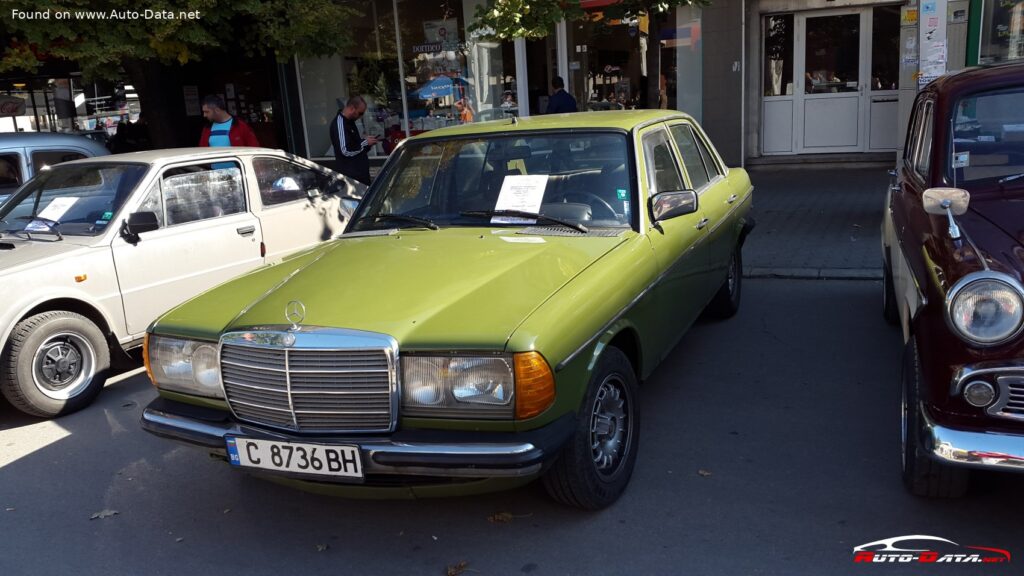
The Mercedes-Benz W123 represents a pivotal era for the German automaker, solidifying its reputation for building durable, comfortable, and safe mid-size automobiles. Produced from July 1975 to August 1980, the W123 was the successor to the W114/W115 series and served as a bridge to the more technologically advanced W201. The 230 model, equipped with a 2.3-liter engine and automatic transmission, was a popular choice within the range, offering a balance of performance and refinement. The W123 was not initially sold in the United States, but its later iterations, including the diesel models, would become iconic in the North American market due to their longevity and fuel efficiency.
Mercedes-Benz W123 230: A Legacy of Engineering
The W123 was a significant departure from its predecessors, introducing improved safety features, a more refined interior, and a wider range of engine options. It established a new benchmark for mid-size luxury cars, influencing automotive design and engineering for years to come. The 230 variant, while not the most powerful in the lineup, offered a smooth and reliable driving experience, making it a favored choice for discerning buyers seeking a comfortable and well-engineered vehicle.
Engine & Performance
The heart of the W123 230 is its 2.3-liter (2307 cm3 or 140.78 cu. in.) inline-four cylinder engine, designated the M 115 V 23 / 115.954. This naturally aspirated engine produces 109 horsepower at 4800 rpm and 186 Nm (137.19 lb.-ft.) of torque at 3000 rpm. While these figures may seem modest by modern standards, the engine’s robust construction and smooth power delivery were highly regarded at the time. Power per liter is rated at 47.2 Hp/l. The engine utilizes a carburetor fuel injection system and a single overhead camshaft (SOHC) valvetrain with two valves per cylinder. Power is delivered to the rear wheels via a four-speed automatic transmission. Acceleration from 0 to 100 km/h (0-62 mph) takes 13.9 seconds, while 0 to 60 mph is achieved in approximately 13.2 seconds. The W123 230 has a maximum speed of 165 km/h (102.53 mph). The weight-to-power ratio is 12.4 kg/Hp, and the weight-to-torque ratio is 7.3 kg/Nm.
Design & Features
The W123 is instantly recognizable for its elegant and understated design. The sedan body style, with its four doors and five-seat configuration, was the most common. The car’s long hood, short rear deck, and relatively upright stance contribute to its classic proportions. The interior of the W123 230 is characterized by its high-quality materials and attention to detail. While not lavishly equipped by today’s standards, the car offered a comfortable and refined driving experience. Safety was a key consideration in the W123’s design, with features such as crumple zones and a robust passenger safety cell. The suspension system, featuring double wishbones at the front and a trailing arm setup at the rear, provided a comfortable ride and predictable handling. Braking duties are handled by drum brakes at the front and disc brakes at the rear. The steering system utilizes a cone worm with recirculation balls.
Technical Specifications
| Brand | Mercedes-Benz |
| Model | W123 |
| Generation | W123 |
| Type (Engine) | 230 (109 Hp) Automatic |
| Start of production | July, 1975 |
| End of production | August, 1980 |
| Powertrain Architecture | Internal Combustion engine |
| Body type | Sedan |
| Seats | 5 |
| Doors | 4 |
| Fuel consumption (urban) | 15.3 l/100 km (15.4 US mpg / 18.5 UK mpg / 6.5 km/l) |
| Fuel consumption (extra urban) | 10.2 l/100 km (23.1 US mpg / 27.7 UK mpg / 9.8 km/l) |
| Fuel Type | Petrol (Gasoline) |
| Acceleration 0 – 100 km/h | 13.9 sec |
| Acceleration 0 – 62 mph | 13.9 sec |
| Acceleration 0 – 60 mph | 13.2 sec |
| Maximum speed | 165 km/h (102.53 mph) |
| Weight-to-power ratio | 12.4 kg/Hp |
| Weight-to-torque ratio | 7.3 kg/Nm |
| Power | 109 Hp @ 4800 rpm |
| Power per litre | 47.2 Hp/l |
| Torque | 186 Nm @ 3000 rpm (137.19 lb.-ft. @ 3000 rpm) |
| Engine layout | Front, Longitudinal |
| Engine Model/Code | M 115 V 23 / 115.954 |
| Engine displacement | 2307 cm3 (140.78 cu. in.) |
| Number of cylinders | 4 |
| Engine configuration | Inline |
| Cylinder Bore | 93.75 mm (3.69 in.) |
| Piston Stroke | 83.6 mm (3.29 in.) |
| Compression ratio | 9:1 |
| Number of valves per cylinder | 2 |
| Fuel injection system | Carburettor |
| Engine aspiration | Naturally aspirated engine |
| Valvetrain | SOHC |
| Engine oil capacity | 6 l (6.34 US qt | 5.28 UK qt) |
| Coolant | 10 l (10.57 US qt | 8.8 UK qt) |
| Kerb Weight | 1350 kg (2976.24 lbs.) |
| Max. weight | 1870 kg (4122.64 lbs.) |
| Max load | 520 kg (1146.4 lbs.) |
| Fuel tank capacity | 65 l (17.17 US gal | 14.3 UK gal) |
| Length | 4725 mm (186.02 in.) |
| Width | 1786 mm (70.31 in.) |
| Height | 1438 mm (56.61 in.) |
| Wheelbase | 2795 mm (110.04 in.) |
| Front track | 1488 mm (58.58 in.) |
| Rear track | 1446 mm (56.93 in.) |
| Drivetrain Architecture | Rear wheel drive |
| Number of gears and type of gearbox | 4 gears, automatic transmission |
| Front suspension | Double wishbone |
| Rear suspension | Trailing arm |
| Front brakes | Drum |
| Rear brakes | Disc |
| Steering type | Cone worm with recirculation balls |
| Wheel rims size | Front wheel rims: 5.5J x 14 Rear wheel rims: 5.5J x 14 |
The Mercedes-Benz W123 230 remains a highly sought-after classic car, appreciated for its build quality, reliability, and timeless design. It represents a high point in Mercedes-Benz engineering and continues to provide a comfortable and enjoyable driving experience for enthusiasts around the world.
