
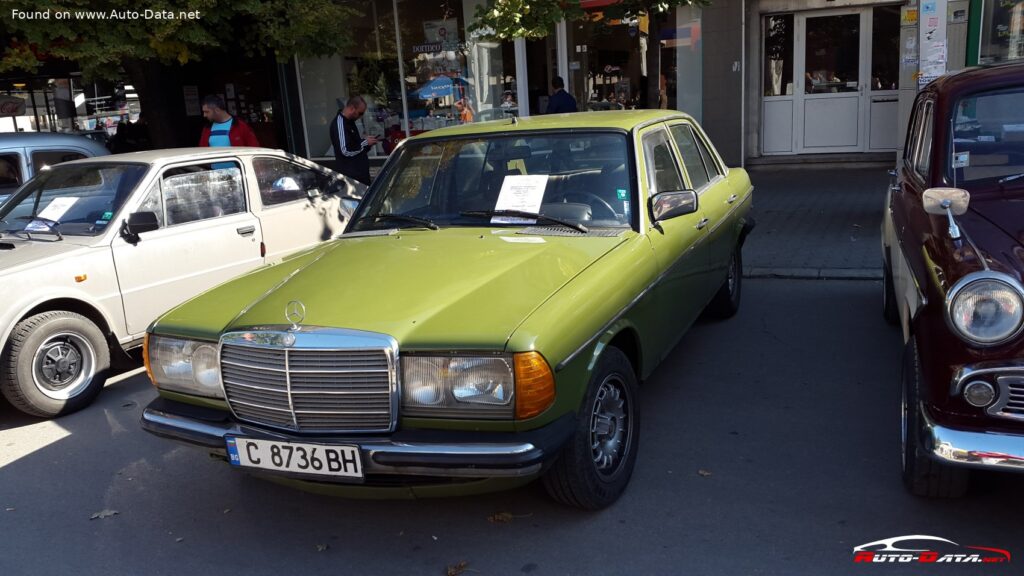
The Mercedes-Benz W123, produced from 1976 to 1985, represents a pivotal generation in the lineage of the Mercedes-Benz E-Class. Specifically, the 240 D model, manufactured between 1975 and 1978, was a cornerstone of the W123 range, embodying the brand’s commitment to robust engineering and understated luxury. Positioned in the mid-size executive car segment, the W123 was designed to succeed the W114 and W115 models, offering improved safety, comfort, and build quality. The 240 D, powered by a diesel engine, was particularly popular in Europe where fuel economy and durability were highly valued. While not officially sold in large numbers in the United States during its initial production run, the W123 later gained a strong following among American enthusiasts due to its longevity and relatively simple mechanical design.
The Mercedes-Benz W123 240 D: A Legacy of Engineering
The W123 series marked a significant advancement in automotive safety standards for Mercedes-Benz. It was the first series to be designed from the outset as a cohesive range, with a unified styling language and a focus on passenger protection. The 240 D, in particular, benefited from these advancements, offering a solid and dependable platform for everyday use. Its enduring reputation is a testament to the quality of materials and the precision of its construction. The model’s success stemmed from its ability to blend practicality with a degree of sophistication that was uncommon in its class at the time.
Engine & Performance
The heart of the W123 240 D is its OM 616 D 24 inline-four cylinder diesel engine, displacing 2.4 liters (146.7 cubic inches). This naturally aspirated engine produced 65 horsepower at 4200 rpm and 137 Nm (101.05 lb.-ft.) of torque at 2400 rpm. While not a performance-oriented vehicle, the 240 D prioritized fuel efficiency and longevity. The engine utilized precombustion chamber injection, a common diesel technology of the era, to improve combustion efficiency. Power delivery is characterized by a strong low-end torque curve, making it well-suited for hauling passengers and navigating varied terrain. Acceleration from 0 to 100 km/h (0-62 mph) takes approximately 24.6 seconds, and 0 to 60 mph is achieved in around 23.4 seconds. The top speed is rated at 143 km/h (88.86 mph). The engine’s robust construction and relatively simple design contributed to its legendary reliability. The drivetrain is rear-wheel drive, coupled with a 4-speed manual transmission.
Design & Features
The W123 240 D is a four-door sedan with a classic, understated design. Its body lines are clean and elegant, reflecting the design philosophy of the 1970s. The interior is functional and well-appointed, with comfortable seating for five passengers. While not lavishly equipped by modern standards, the 240 D offered a respectable level of comfort and convenience for its time. Features included disc brakes on all four wheels, a significant safety improvement over earlier drum brake systems. The suspension utilizes a double wishbone setup at the front and a trailing arm configuration at the rear, providing a comfortable ride and predictable handling. The steering system employs a cone worm with recirculation balls. The emphasis in the W123’s design was on creating a durable, safe, and comfortable vehicle that could withstand the rigors of daily use. The car’s relatively simple construction also made it easier to maintain and repair, contributing to its long-term appeal.
Technical Specifications
| Brand | Mercedes-Benz |
| Model | W123 |
| Generation | W123 |
| Type (Engine) | 240 D (65 Hp) |
| Start of production | July, 1975 |
| End of production | August, 1978 |
| Powertrain Architecture | Internal Combustion engine |
| Body type | Sedan |
| Seats | 5 |
| Doors | 4 |
| Fuel consumption (urban) | 9.5 l/100 km (24.8 US mpg) |
| Fuel consumption (extra urban) | 7.4 l/100 km (31.8 US mpg) |
| Fuel Type | Diesel |
| Acceleration 0 – 100 km/h | 24.6 sec |
| Acceleration 0 – 62 mph | 24.6 sec |
| Acceleration 0 – 60 mph | 23.4 sec |
| Maximum speed | 143 km/h (88.86 mph) |
| Weight-to-power ratio | 21.5 kg/Hp |
| Weight-to-torque ratio | 10.2 kg/Nm |
| Power | 65 Hp @ 4200 rpm |
| Torque | 137 Nm @ 2400 rpm (101.05 lb.-ft. @ 2400 rpm) |
| Engine layout | Front, Longitudinal |
| Engine Model/Code | OM 616 D 24 / 616.912 |
| Engine displacement | 2404 cm3 (146.7 cu. in.) |
| Number of cylinders | 4 |
| Engine configuration | Inline |
| Cylinder Bore | 91 mm (3.58 in.) |
| Piston Stroke | 92.4 mm (3.64 in.) |
| Compression ratio | 21.5:1 |
| Number of valves per cylinder | 2 |
| Fuel injection system | Precombustion chamber injection |
| Engine aspiration | Naturally aspirated |
| Valvetrain | SOHC |
| Engine oil capacity | 7.5 l (7.93 US qt | 6.6 UK qt) |
| Coolant capacity | 10 l (10.57 US qt | 8.8 UK qt) |
| Kerb Weight | 1395 kg (3075.45 lbs.) |
| Max. weight | 1915 kg (4221.85 lbs.) |
| Max load | 520 kg (1146.4 lbs.) |
| Fuel tank capacity | 65 l (17.17 US gal | 14.3 UK gal) |
| Length | 4725 mm (186.02 in.) |
| Width | 1786 mm (70.31 in.) |
| Height | 1438 mm (56.61 in.) |
| Wheelbase | 2795 mm (110.04 in.) |
| Front track | 1488 mm (58.58 in.) |
| Rear track | 1446 mm (56.93 in.) |
| Drive wheel | Rear wheel drive |
| Number of gears | 4 gears, manual transmission |
| Front suspension | Double wishbone |
| Rear suspension | Trailing arm |
| Front brakes | Disc |
| Rear brakes | Disc |
| Steering type | Cone worm with recirculation balls |
| Wheel rims size | Front/Rear: 5.5J x 14 |
The Mercedes-Benz W123 240 D remains a highly regarded classic car, appreciated for its durability, simplicity, and timeless design. Its enduring popularity is a testament to the engineering prowess of Mercedes-Benz and its commitment to building vehicles that stand the test of time.
