
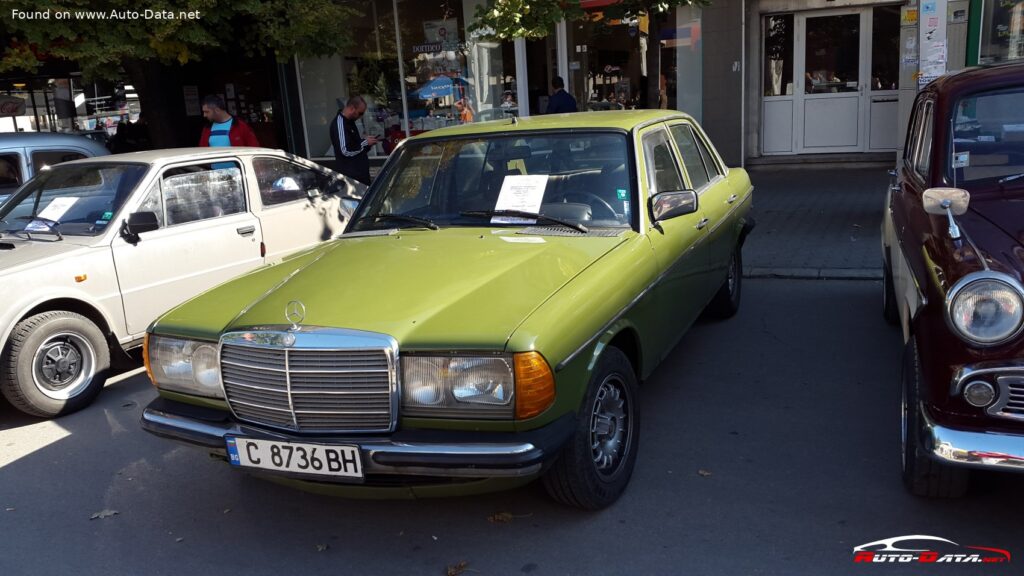
The Mercedes-Benz W123, produced from 1976 to 1985, represents a pivotal generation in the lineage of the Mercedes-Benz E-Class. Specifically, the 240 D model, equipped with a diesel engine and automatic transmission, was a cornerstone of the W123’s success, particularly in Europe where diesel-powered vehicles were favored for their fuel economy. This sedan, known for its robust build quality and longevity, established Mercedes-Benz as a purveyor of reliable, comfortable, and safe automobiles. The W123 was a significant departure from its predecessor, the W114/W115, offering improved safety features, a more refined interior, and a wider range of engine options.
The Mercedes-Benz W123 240 D: A Detailed Overview
The W123 series was designed to address growing concerns about safety and emissions while maintaining the brand’s reputation for luxury and engineering excellence. The 240 D, introduced in August 1978 and continuing through November 1985, was a popular choice for those seeking a durable and economical vehicle. It was not officially sold in the United States due to stricter emissions regulations at the time, but it found a strong following in Europe, Asia, and other markets. The 240 D’s appeal stemmed from its fuel efficiency, reliability, and the inherent robustness of its diesel engine.
Engine & Performance
The heart of the W123 240 D is its 2.4-liter (2399 cm3 or 146.4 cu. in.) inline-four cylinder diesel engine, designated the OM 616 D 24 / 616.912. This naturally aspirated engine produces 72 horsepower at 4400 rpm and 137 Nm (101.05 lb.-ft.) of torque at 2400 rpm. While not a performance-oriented vehicle, the 240 D offered sufficient power for comfortable cruising and everyday driving. The engine utilizes precombustion chamber injection, a common diesel technology of the era, to improve combustion efficiency. Acceleration from 0 to 100 km/h (0-62 mph) takes approximately 24.7 seconds, and 0 to 60 mph is achieved in around 23.5 seconds. The top speed is rated at 138 km/h (85.75 mph). The engine’s power-to-weight ratio is 19.4 kg/Hp, or 51.6 Hp/tonne, and the torque-to-weight ratio is 10.2 kg/Nm, or 98.2 Nm/tonne. Fuel economy is a strong point, achieving approximately 9.5 l/100 km (24.8 US mpg) in urban driving and 7.7 l/100 km (30.5 US mpg) on the open road.
Design & Features
The W123 240 D is a four-door sedan with a classic, understated design. Its body is characterized by clean lines, a relatively upright stance, and a focus on practicality. The interior is spacious and well-appointed for its time, offering seating for five passengers. Safety was a key consideration in the W123’s design, featuring crumple zones in the front and rear, side impact protection, and a robust passenger safety cell. The car’s suspension – double wishbone at the front and a trailing arm setup at the rear – provides a comfortable ride. Braking is handled by disc brakes on all four wheels. The steering system employs a cone worm with recirculation balls. The 240 D’s features, while not extravagant by modern standards, were considered luxurious for the late 1970s and early 1980s. The focus was on providing a durable, reliable, and comfortable driving experience. Wheel rims are 5.5J x 14 on both the front and rear axles.
Technical Specifications
| Brand | Mercedes-Benz |
| Model | W123 |
| Generation | W123 |
| Type (Engine) | 240 D (72 Hp) Automatic |
| Start of production | August, 1978 |
| End of production | November, 1985 |
| Powertrain Architecture | Internal Combustion engine |
| Body type | Sedan |
| Seats | 5 |
| Doors | 4 |
| Fuel consumption (urban) | 9.5 l/100 km (24.8 US mpg) |
| Fuel consumption (extra urban) | 7.7 l/100 km (30.5 US mpg) |
| Fuel Type | Diesel |
| Acceleration 0 – 100 km/h | 24.7 sec |
| Acceleration 0 – 62 mph | 24.7 sec |
| Acceleration 0 – 60 mph | 23.5 sec |
| Maximum speed | 138 km/h (85.75 mph) |
| Weight-to-power ratio | 19.4 kg/Hp |
| Weight-to-torque ratio | 10.2 kg/Nm |
| Power | 72 Hp @ 4400 rpm |
| Torque | 137 Nm @ 2400 rpm (101.05 lb.-ft. @ 2400 rpm) |
| Engine layout | Front, Longitudinal |
| Engine Model/Code | OM 616 D 24 / 616.912 |
| Engine displacement | 2399 cm3 (146.4 cu. in.) |
| Number of cylinders | 4 |
| Engine configuration | Inline |
| Cylinder Bore | 90.9 mm (3.58 in.) |
| Piston Stroke | 92.4 mm (3.64 in.) |
| Compression ratio | 21.5:1 |
| Number of valves per cylinder | 2 |
| Fuel injection system | Precombustion chamber injection |
| Engine aspiration | Naturally aspirated |
| Valvetrain | SOHC |
| Engine oil capacity | 8 l (8.45 US qt | 7.04 UK qt) |
| Coolant capacity | 10 l (10.57 US qt | 8.8 UK qt) |
| Kerb Weight | 1395 kg (3075.45 lbs.) |
| Max. weight | 1915 kg (4221.85 lbs.) |
| Max load | 520 kg (1146.4 lbs.) |
| Fuel tank capacity | 65 l (17.17 US gal | 14.3 UK gal) |
| Length | 4725 mm (186.02 in.) |
| Width | 1786 mm (70.31 in.) |
| Height | 1438 mm (56.61 in.) |
| Wheelbase | 2795 mm (110.04 in.) |
| Front track | 1488 mm (58.58 in.) |
| Rear track | 1446 mm (56.93 in.) |
| Drivetrain | Rear wheel drive |
| Number of gears | 4 |
| Gearbox type | Automatic transmission |
| Front suspension | Double wishbone |
| Rear suspension | Trailing arm |
| Front brakes | Disc |
| Rear brakes | Disc |
The Mercedes-Benz W123 240 D remains a highly regarded vehicle among enthusiasts, celebrated for its durability, simplicity, and timeless design. Its legacy continues to influence Mercedes-Benz’s commitment to building high-quality, long-lasting automobiles.
