
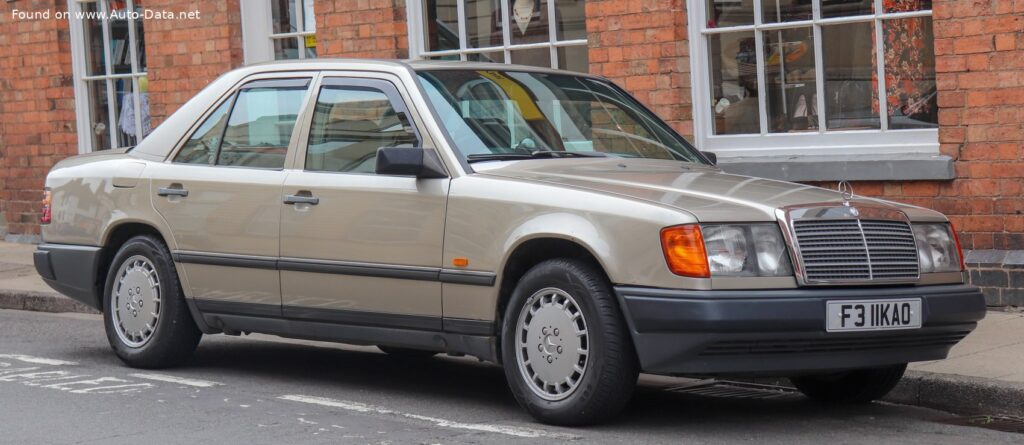
The Mercedes-Benz W124 230 E, produced between 1985 and 1989, represents a pivotal generation in the storied history of the Mercedes-Benz E-Class lineage. Positioned firmly in the mid-size executive car segment, the W124 was designed as a successor to the W201 (190E) and W116 models, offering a blend of luxury, durability, and advanced engineering for its time. The 230 E variant, powered by a 2.3-liter inline-four engine, served as a popular entry point into the W124 range, balancing performance with fuel efficiency. It quickly gained a reputation for robust build quality and became a common sight on European roads, establishing a benchmark for its class.
The Mercedes-Benz W124 230 E: A Legacy of Engineering
The W124 series was a significant departure from its predecessors, introducing a more modern and aerodynamic design. Mercedes-Benz invested heavily in research and development, focusing on improving safety, comfort, and overall driving experience. The 230 E, in particular, was lauded for its refined engine and comfortable ride. While not the most powerful variant in the W124 lineup, it offered a compelling package for buyers seeking a well-engineered and reliable vehicle. The W124’s design language, characterized by its clean lines and understated elegance, influenced Mercedes-Benz styling for years to come.
Engine & Performance
The heart of the W124 230 E is the M102 2.3-liter inline-four cylinder engine. This naturally aspirated powerplant delivers 145 horsepower, providing adequate performance for comfortable cruising and everyday driving. The engine is longitudinally mounted at the front of the vehicle, driving the rear wheels. Acceleration from 0 to 60 mph is achieved in approximately 10.1 seconds, while top speed is electronically limited to 136.7 mph (220 km/h). The 230 E’s fuel consumption is rated at 8.8 liters per 100 kilometers (26.7 US mpg), a respectable figure for a vehicle of its size and era. A five-speed manual transmission is standard, offering precise gear changes and a more engaging driving experience. The engine oil capacity is 4.5 liters (4.76 US qt), and requires a specification detailed in the service manual.
Design & Features
The W124 230 E is a four-door sedan with a classic three-box design. Its body is constructed with a focus on rigidity and crash safety, incorporating reinforced passenger cell. The interior is spacious and well-appointed, offering comfortable seating for five passengers. Key features include hydraulic power steering, ventilated front disc brakes, and disc brakes on the rear axle. The inclusion of ABS (Anti-lock Braking System) was a significant safety advancement for the time, enhancing braking performance and stability. The trunk offers a generous 520 liters (18.36 cu. ft.) of storage space. The W124’s suspension utilizes a wishbone setup at the front and coil springs at the rear, providing a comfortable and controlled ride. The vehicle’s dimensions are 5000 mm (196.85 in.) in length, 1750 mm (68.9 in.) in width, and 1431 mm (56.34 in.) in height, with a wheelbase of 2800 mm (110.24 in.).
Technical Specifications
| Brand | Mercedes-Benz |
| Model | W124 |
| Generation | W124 |
| Type (Engine) | 230 E (145 Hp) |
| Start of production | 1985 |
| End of production | 1989 |
| Powertrain Architecture | Internal Combustion engine |
| Body type | Sedan |
| Seats | 5 |
| Doors | 4 |
| Fuel consumption (combined) | 8.8 l/100 km |
| Fuel consumption (US mpg) | 26.7 US mpg |
| Fuel consumption (UK mpg) | 32.1 UK mpg |
| Fuel consumption (km/l) | 11.4 km/l |
| Fuel Type | Petrol (Gasoline) |
| Acceleration 0 – 100 km/h | 10.6 sec |
| Acceleration 0 – 62 mph | 10.6 sec |
| Acceleration 0 – 60 mph | 10.1 sec |
| Maximum speed | 220 km/h (136.7 mph) |
| Weight-to-power ratio | 10.1 kg/Hp |
| Power | 145 Hp |
| Engine layout | Front, Longitudinal |
| Engine Model/Code | M 102 |
| Number of cylinders | 4 |
| Engine configuration | Inline |
| Engine aspiration | Naturally aspirated engine |
| Engine oil capacity | 4.5 l (4.76 US qt | 3.96 UK qt) |
| Coolant capacity | 9.5 l (10.04 US qt | 8.36 UK qt) |
| Kerb Weight | 1460 kg (3218.75 lbs.) |
| Max. weight | 1960 kg (4321.06 lbs.) |
| Max load | 500 kg (1102.31 lbs.) |
| Trunk (boot) space – minimum | 520 l (18.36 cu. ft.) |
| Fuel tank capacity | 70 l (18.49 US gal | 15.4 UK gal) |
| Length | 5000 mm (196.85 in.) |
| Width | 1750 mm (68.9 in.) |
| Height | 1431 mm (56.34 in.) |
| Wheelbase | 2800 mm (110.24 in.) |
| Front track | 1501 mm (59.09 in.) |
| Rear track | 1491 mm (58.7 in.) |
| Drivetrain Architecture | Rear wheel drive |
| Number of gears and type of gearbox | 5 gears, manual transmission |
| Front suspension | Wishbone |
| Rear suspension | Coil spring |
| Front brakes | Ventilated discs |
| Rear brakes | Disc |
| Assisting systems | ABS (Anti-lock braking system) |
| Power steering | Hydraulic Steering |
| Tires size | 195/65 R15 |
| Wheel rims size | 15 |
The Mercedes-Benz W124 230 E remains a highly regarded classic car, appreciated for its build quality, reliability, and timeless design. It represents a high point in Mercedes-Benz engineering and continues to provide a comfortable and rewarding driving experience for enthusiasts today. Its enduring popularity is a testament to the quality and foresight of its original design and engineering.
