
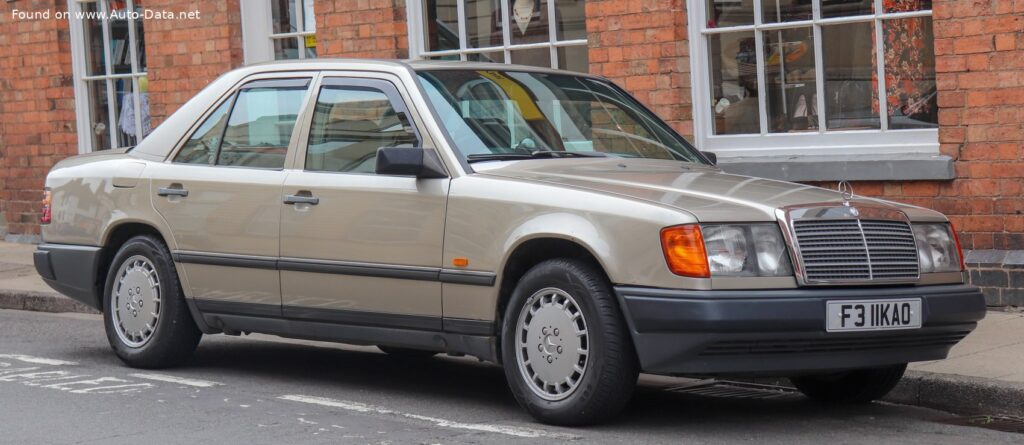
The Mercedes-Benz W124 230 E, produced between 1985 and 1989, represents a pivotal generation for the German automaker. Falling into the mid-size executive car segment, the W124 was designed as a successor to the W201 (190E) and W116 models, aiming to combine luxury, durability, and advanced engineering. The 230 E variant, equipped with a 2.3-liter inline-four engine and automatic transmission, was a popular choice for buyers seeking a refined and reliable vehicle. The W124 established a new benchmark for passive safety and build quality, becoming a symbol of German automotive excellence during its production run.
The Mercedes-Benz W124 230 E: A Legacy of Engineering
The W124 series was a significant departure from its predecessors, emphasizing improved aerodynamics, a more spacious interior, and enhanced safety features. The 230 E specifically, offered a balance between performance and fuel efficiency, making it suitable for both city driving and long-distance journeys. While not the most powerful variant in the W124 lineup, the 230 E’s robust engine and smooth-shifting automatic transmission provided a comfortable and capable driving experience. The W124, in general, was a global success, though its market presence varied. In North America, it competed with BMW’s 3-Series and 5-Series, as well as offerings from Lexus and Acura. In Europe, it was a dominant force in the executive car class, known for its longevity and relatively low running costs.
Engine & Performance
The heart of the W124 230 E is its M102 inline-four cylinder, 2.3-liter (2299 cc) naturally aspirated gasoline engine. This engine produced 145 horsepower, providing adequate power for the vehicle’s weight and size. The engine featured Bosch K-Jetronic fuel injection, a sophisticated system for its time, contributing to relatively good fuel economy and smooth operation. Power is delivered to the rear wheels via a four-speed automatic transmission. Acceleration from 0 to 60 mph was achieved in approximately 10.1 seconds, and the vehicle had a top speed of 136.7 mph (220 km/h). The weight-to-power ratio of 10.1 kg/Hp allowed for a reasonably responsive driving experience, although it wasn’t designed for outright performance. Fuel consumption was rated at 8.8 liters per 100 kilometers (26.7 US mpg), a respectable figure for a vehicle of this class in the late 1980s.
Design & Features
The W124 230 E is a four-door sedan with a classic, understated design. Its body lines are characterized by clean surfaces and a relatively boxy silhouette, typical of the era. The interior is spacious and well-appointed, with comfortable seating for five passengers. Key features included power steering, ventilated front disc brakes, and an anti-lock braking system (ABS), which was a significant safety advancement at the time. The W124 was renowned for its build quality and attention to detail, with durable materials and robust construction. The trunk offered a generous 520 liters (18.36 cubic feet) of storage space. The W124’s design prioritized safety, incorporating a reinforced passenger cell and crumple zones to absorb impact energy in the event of a collision. The suspension, featuring wishbone front suspension and coil springs in the rear, provided a comfortable and controlled ride.
Technical Specifications
| Brand | Mercedes-Benz |
| Model | W124 |
| Generation | W124 |
| Type (Engine) | 230 E (145 Hp) Automatic |
| Start of production | 1985 |
| End of production | 1989 |
| Powertrain Architecture | Internal Combustion engine |
| Body type | Sedan |
| Seats | 5 |
| Doors | 4 |
| Fuel consumption (combined) | 8.8 l/100 km |
| Fuel consumption (US mpg) | 26.7 US mpg |
| Fuel consumption (UK mpg) | 32.1 UK mpg |
| Fuel consumption (km/l) | 11.4 km/l |
| Fuel Type | Petrol (Gasoline) |
| Acceleration 0 – 100 km/h | 10.6 sec |
| Acceleration 0 – 62 mph | 10.6 sec |
| Acceleration 0 – 60 mph | 10.1 sec |
| Maximum speed | 220 km/h (136.7 mph) |
| Weight-to-power ratio | 10.1 kg/Hp |
| Power | 145 Hp |
| Engine layout | Front, Longitudinal |
| Engine Model/Code | M 102 |
| Number of cylinders | 4 |
| Engine configuration | Inline |
| Engine aspiration | Naturally aspirated engine |
| Engine oil capacity | 4.5 l (4.76 US qt | 3.96 UK qt) |
| Coolant capacity | 9.5 l (10.04 US qt | 8.36 UK qt) |
| Kerb Weight | 1460 kg (3218.75 lbs) |
| Max. weight | 1960 kg (4321.06 lbs) |
| Max load | 500 kg (1102.31 lbs) |
| Trunk (boot) space – minimum | 520 l (18.36 cu. ft) |
| Fuel tank capacity | 70 l (18.49 US gal | 15.4 UK gal) |
| Length | 5000 mm (196.85 in) |
| Width | 1750 mm (68.9 in) |
| Height | 1431 mm (56.34 in) |
| Wheelbase | 2800 mm (110.24 in) |
| Front track | 1501 mm (59.09 in) |
| Rear track | 1491 mm (58.7 in) |
| Drivetrain Architecture | ICE, Rear wheel drive |
| Drive wheel | Rear wheel drive |
| Number of gears and type of gearbox | 4 gears, automatic transmission |
| Front suspension | Wishbone |
| Rear suspension | Coil spring |
| Front brakes | Ventilated discs |
| Rear brakes | Disc |
| Assisting systems | ABS (Anti-lock braking system), Hydraulic Power Steering |
| Tires size | 195/65 R15 |
The Mercedes-Benz W124 230 E remains a highly regarded vehicle among enthusiasts and collectors. Its combination of engineering excellence, durability, and classic styling has ensured its place as a significant model in the history of Mercedes-Benz and the automotive industry as a whole. The W124’s influence can still be seen in modern Mercedes-Benz vehicles, particularly in its emphasis on build quality and passenger comfort.
