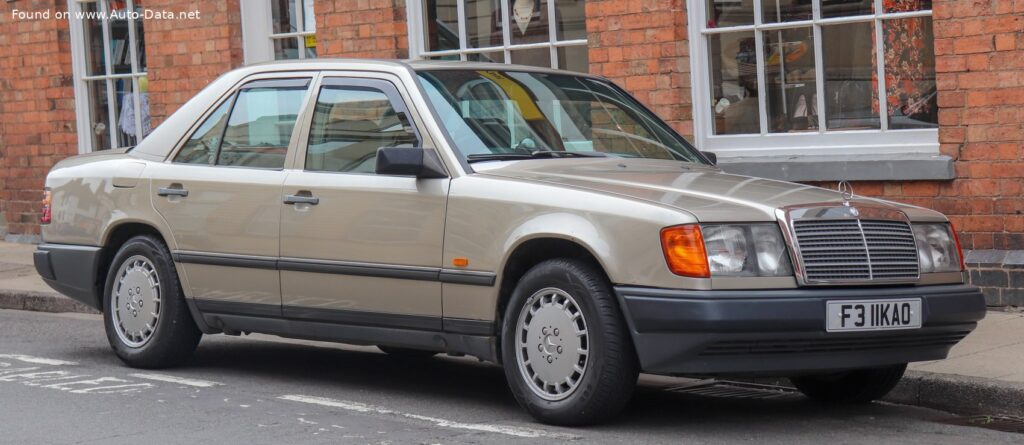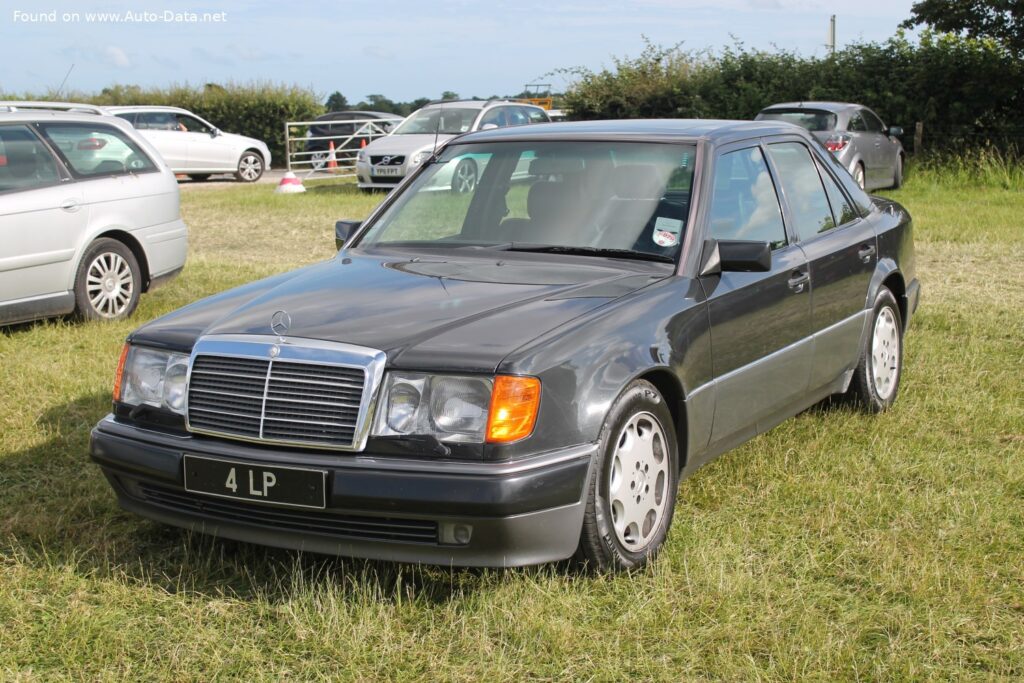
The Mercedes-Benz W124, particularly the 200 E model produced from 1989 to 1992, represents a pivotal point in the manufacturer’s mid-size sedan lineage. Positioned as a successor to the W201 (190E), the W124 aimed to bridge the gap between the compact 190E and the larger, more luxurious W126 S-Class. The 200 E, with its 2.0-liter engine producing 118 horsepower, was a popular choice in European markets, offering a balance of performance, fuel efficiency, and the renowned Mercedes-Benz build quality. While not initially a major seller in the United States (where larger engine options were favored), the W124 established a reputation for durability and engineering excellence that continues to resonate with enthusiasts today.
The Mercedes-Benz W124: A Legacy of Engineering
The W124 series, introduced in 1985, was a significant departure from its predecessor, focusing on improved safety, comfort, and build quality. The 1989 facelift brought subtle but important revisions to the exterior styling, including revised headlights and taillights, and a more refined interior. The 200 E, specifically, was designed to appeal to buyers seeking a more economical option within the W124 range. It served as an entry point into the Mercedes-Benz brand, offering the prestige and engineering of the marque at a relatively accessible price point. Its success was particularly notable in Germany and other European countries where fuel economy and smaller engine displacements were prioritized.
Engine & Performance
The heart of the 200 E is the M102 E 20 engine, a 1,996 cc (121.8 cu. in.) inline-four cylinder powerplant. This engine, producing 118 horsepower at 5,200 rpm and 172 Nm (126.86 lb.-ft.) of torque at 3,500 rpm, utilized multi-port manifold fuel injection and a single overhead camshaft (SOHC) valvetrain. While not a performance powerhouse, the M102 offered smooth and reliable operation, characteristic of Mercedes-Benz engineering. Acceleration from 0 to 100 km/h (0-62 mph) took approximately 12 seconds, with a top speed of 193 km/h (119.92 mph). The engine’s power-to-weight ratio of 11.4 kg/Hp and torque-to-weight ratio of 7.8 kg/Nm contributed to a reasonably responsive driving experience. Fuel economy was a strong point, achieving approximately 11.4 l/100 km (20.6 US mpg) in urban driving and 6.3 l/100 km (37.3 US mpg) on the open road.
Design & Features
The W124 200 E is a four-door sedan with a classic, understated design. Its body style reflects the design language of the late 1980s and early 1990s, characterized by clean lines and a focus on aerodynamic efficiency. The interior was designed for comfort and practicality, offering seating for five passengers. Key features included a robust heating and ventilation system, comfortable seating, and a well-appointed dashboard. Crucially, the W124 incorporated significant safety advancements for its time, including Anti-lock Braking System (ABS) as standard equipment. The chassis featured independent multi-link rear suspension and a wishbone front suspension, providing a comfortable ride and predictable handling. The steering system employed a cone worm with recirculation balls, coupled with hydraulic power steering for ease of maneuverability. The 200 E came equipped with 195/65 R15 tires on 6.5J x 15 inch wheel rims.
Technical Specifications
| Brand | Mercedes-Benz |
| Model | W124 |
| Generation | W124 (facelift 1989) |
| Type (Engine) | 200 E (118 Hp) |
| Start of production | September, 1989 |
| End of production | October, 1992 |
| Powertrain Architecture | Internal Combustion engine |
| Body type | Sedan |
| Seats | 5 |
| Doors | 4 |
| Fuel consumption (urban) | 11.4 l/100 km (20.6 US mpg) |
| Fuel consumption (extra urban) | 6.3 l/100 km (37.3 US mpg) |
| Fuel Type | Petrol (Gasoline) |
| Acceleration 0 – 100 km/h | 12 sec |
| Acceleration 0 – 62 mph | 12 sec |
| Acceleration 0 – 60 mph | 11.4 sec |
| Maximum speed | 193 km/h (119.92 mph) |
| Weight-to-power ratio | 11.4 kg/Hp |
| Weight-to-torque ratio | 7.8 kg/Nm |
| Power | 118 Hp @ 5200 rpm |
| Torque | 172 Nm @ 3500 rpm (126.86 lb.-ft. @ 3500 rpm) |
| Engine layout | Front, Longitudinal |
| Engine Model/Code | M 102 E 20 / 102.963 |
| Engine displacement | 1996 cm3 (121.8 cu. in.) |
| Number of cylinders | 4 |
| Engine configuration | Inline |
| Cylinder Bore | 89 mm (3.5 in.) |
| Piston Stroke | 80.2 mm (3.16 in.) |
| Compression ratio | 9.1:1 |
| Number of valves per cylinder | 2 |
| Fuel injection system | Multi-port manifold injection |
| Engine aspiration | Naturally aspirated |
| Valvetrain | SOHC |
| Engine oil capacity | 5 l (5.28 US qt | 4.4 UK qt) |
| Coolant capacity | 8.5 l (8.98 US qt | 7.48 UK qt) |
| Kerb Weight | 1340 kg (2954.19 lbs.) |
| Max. weight | 1910 kg (4210.83 lbs.) |
| Max load | 570 kg (1256.63 lbs.) |
| Fuel tank capacity | 70 l (18.49 US gal | 15.4 UK gal) |
| Length | 4740 mm (186.61 in.) |
| Width | 1740 mm (68.5 in.) |
| Height | 1428 mm (56.22 in.) |
| Wheelbase | 2800 mm (110.24 in.) |
| Front track | 1501 mm (59.09 in.) |
| Rear track | 1491 mm (58.7 in.) |
| Drivetrain | Rear wheel drive |
| Number of gears | 5 gears, manual transmission |
| Front suspension | Wishbone |
| Rear suspension | Independent multi-link suspension |
| Front brakes | Disc |
| Rear brakes | Disc |
| Assisting systems | ABS (Anti-lock braking system) |
| Steering type | Cone worm with recirculation balls |
| Power steering | Hydraulic |
| Tires size | 195/65 R15 |
| Wheel rims size | 6.5J x 15 |
The Mercedes-Benz W124 200 E, while perhaps not the most powerful or glamorous variant of the W124 series, remains a highly regarded vehicle. Its combination of robust engineering, comfortable ride, and relatively affordable price point made it a popular choice for discerning buyers. Today, well-maintained examples are sought after by collectors and enthusiasts who appreciate the enduring quality and timeless design of this iconic Mercedes-Benz.