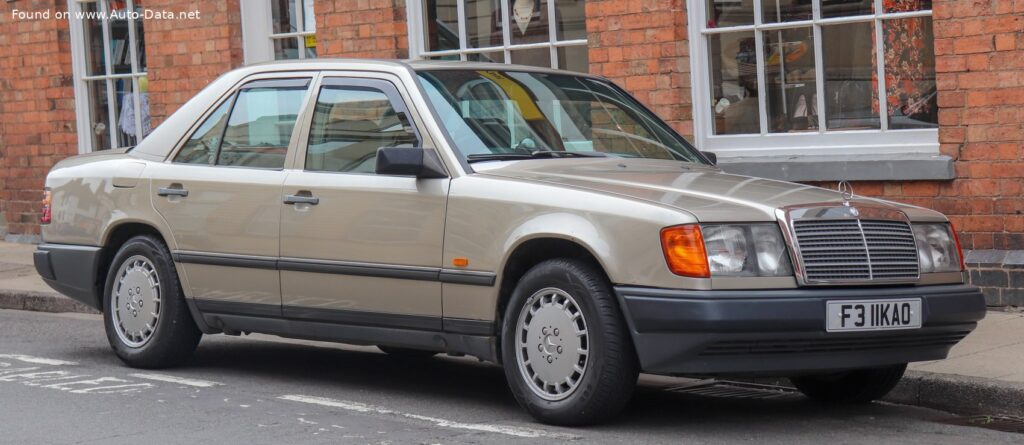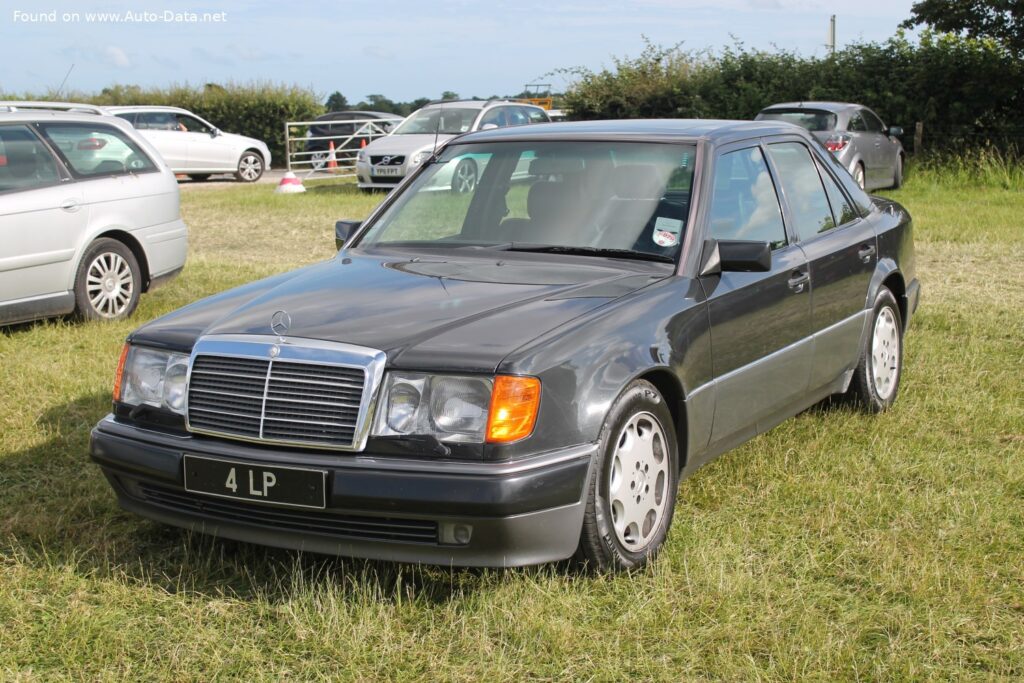
The Mercedes-Benz W124, particularly the 230 E variant produced from 1989 to 1992, represents a pivotal moment in the German automaker’s history. Positioned firmly in the mid-size executive car segment, the W124 was designed as a successor to the W201 (190E) and W116 models, offering a blend of luxury, durability, and advanced engineering. The 1989 facelift brought subtle but significant improvements to the design and mechanicals, solidifying the W124’s reputation as a benchmark for its class. This model was primarily sold in Europe, but found a niche following among enthusiasts in other markets who appreciated its build quality and timeless design.
The Mercedes-Benz W124 230 E: A Legacy of Engineering
The W124 series, introduced in 1985, was a deliberate departure from the more utilitarian styling of its predecessors. Mercedes-Benz aimed for a more sophisticated and contemporary aesthetic, while maintaining the brand’s commitment to safety and reliability. The 230 E, introduced as part of the 1989 facelift, offered a compelling balance of performance and fuel efficiency within the W124 range. It served as a popular choice for buyers seeking a comfortable and refined sedan without the higher cost of the larger-displacement models.
Engine & Performance
At the heart of the 230 E lies the M102 E 23 inline-four cylinder engine, displacing 2.3 liters (2298 cm3 or 140.23 cu. in.). This naturally aspirated engine produced 132 horsepower (Hp) at 5100 rpm and 198 Newton-meters (146.04 lb.-ft.) of torque at 3500 rpm. While not overtly powerful by modern standards, the M102 was known for its smoothness, durability, and relatively high power output for a four-cylinder engine of its era. The engine featured multi-port manifold fuel injection and a single overhead camshaft (SOHC) valvetrain. Power was delivered to the rear wheels via a 4-speed manual transmission. Acceleration from 0 to 100 km/h (0-62 mph) took 11.3 seconds, while 0 to 60 mph was achieved in approximately 10.7 seconds. The 230 E had a top speed of 200 km/h (124.27 mph). The weight-to-power ratio of 10.3 kg/Hp and a weight-to-torque ratio of 6.9 kg/Nm contributed to a reasonably responsive driving experience.
Design & Features
The W124 230 E is a four-door sedan with a classic three-box design. The 1989 facelift brought subtle revisions to the exterior, including a redesigned grille, updated headlights, and revised taillights. The interior was characterized by its high-quality materials, comfortable seating for five occupants, and a focus on ergonomics. Safety was a key consideration in the W124’s design, and the 230 E was equipped with Anti-lock Braking System (ABS) as standard, a relatively advanced feature for the time. The car’s robust construction and crumple zones provided a significant level of occupant protection. The suspension system, featuring wishbones at the front and an independent multi-link setup at the rear, delivered a comfortable ride and predictable handling. The hydraulic power steering provided ease of maneuverability. The vehicle’s dimensions – 4740 mm (186.61 in.) in length, 1740 mm (68.5 in.) in width, and 1428 mm (56.22 in.) in height – positioned it comfortably within the mid-size sedan category.
Technical Specifications
| Brand | Mercedes-Benz |
| Model | W124 |
| Generation | W124 (facelift 1989) |
| Type (Engine) | 230 E (132 Hp) |
| Start of production | September, 1989 |
| End of production | October, 1992 |
| Powertrain Architecture | Internal Combustion engine |
| Body type | Sedan |
| Seats | 5 |
| Doors | 4 |
| Fuel consumption (urban) | 11.4 l/100 km (20.6 US mpg / 24.8 UK mpg / 8.8 km/l) |
| Fuel consumption (extra urban) | 7.2 l/100 km (32.7 US mpg / 39.2 UK mpg / 13.9 km/l) |
| Fuel Type | Petrol (Gasoline) |
| Acceleration 0 – 100 km/h | 11.3 sec |
| Acceleration 0 – 62 mph | 11.3 sec |
| Acceleration 0 – 60 mph | 10.7 sec |
| Maximum speed | 200 km/h (124.27 mph) |
| Weight-to-power ratio | 10.3 kg/Hp |
| Weight-to-torque ratio | 6.9 kg/Nm |
| Power | 132 Hp @ 5100 rpm |
| Power per litre | 57.4 Hp/l |
| Torque | 198 Nm @ 3500 rpm (146.04 lb.-ft. @ 3500 rpm) |
| Engine layout | Front, Longitudinal |
| Engine Model/Code | M 102 E 23 / 102.982 |
| Engine displacement | 2298 cm3 (140.23 cu. in.) |
| Number of cylinders | 4 |
| Engine configuration | Inline |
| Cylinder Bore | 95.5 mm (3.76 in.) |
| Piston Stroke | 80.2 mm (3.16 in.) |
| Compression ratio | 9:1 |
| Number of valves per cylinder | 2 |
| Fuel injection system | Multi-port manifold injection |
| Engine aspiration | Naturally aspirated engine |
| Valvetrain | SOHC |
| Engine oil capacity | 5 l (5.28 US qt | 4.4 UK qt) |
| Coolant | 8.5 l (8.98 US qt | 7.48 UK qt) |
| Kerb Weight | 1360 kg (2998.29 lbs.) |
| Max. weight | 1880 kg (4144.69 lbs.) |
| Max load | 520 kg (1146.4 lbs.) |
| Fuel tank capacity | 70 l (18.49 US gal | 15.4 UK gal) |
| Length | 4740 mm (186.61 in.) |
| Width | 1740 mm (68.5 in.) |
| Height | 1428 mm (56.22 in.) |
| Wheelbase | 2800 mm (110.24 in.) |
| Front track | 1501 mm (59.09 in.) |
| Rear track | 1491 mm (58.7 in.) |
| Drivetrain Architecture | Rear wheel drive |
| Number of gears and type of gearbox | 4 gears, manual transmission |
| Front suspension | Wishbone |
| Rear suspension | Independent multi-link suspension |
| Front brakes | Ventilated discs |
| Rear brakes | Disc |
| Assisting systems | ABS (Anti-lock braking system) |
| Steering type | Cone worm with recirculation balls |
| Power steering | Hydraulic Steering |
| Tires size | Front/Rear: 195/65 R15 |
| Wheel rims size | Front/Rear: 6.5J x 15 |
The Mercedes-Benz W124 230 E remains a highly regarded vehicle among enthusiasts, celebrated for its build quality, reliability, and timeless design. It represents a high point in Mercedes-Benz engineering and a testament to the brand’s commitment to producing durable and refined automobiles.