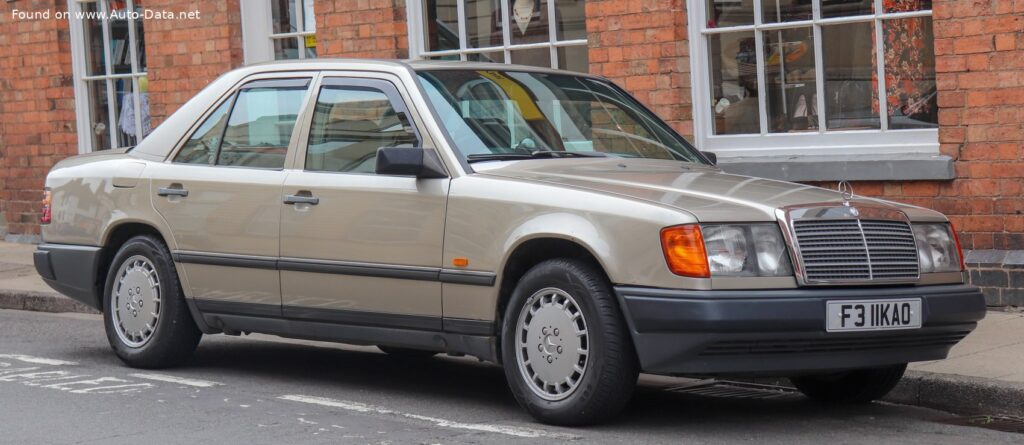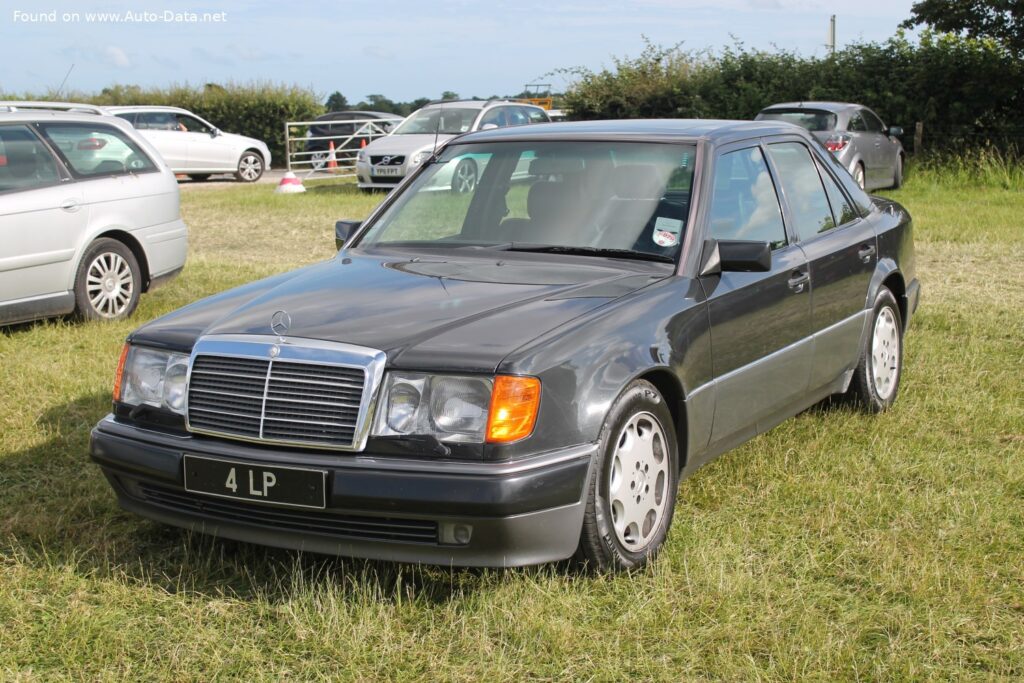
The Mercedes-Benz W124, particularly the 250 D variant produced from 1989 to 1993, represents a pivotal era for the German automaker. This generation, known for its robust engineering and understated elegance, solidified Mercedes-Benz’s reputation for building durable, high-quality vehicles. The W124 was a mid-size car, positioned between the smaller W201 and the larger S-Class (W126), and offered a compelling blend of comfort, performance, and practicality. The 250 D, with its fuel-efficient diesel engine, was a popular choice in European markets, where diesel power was favored for its economy and longevity.
The Mercedes-Benz W124 250 D: A Legacy of Engineering
The W124 was a significant departure from its predecessor, the W201, offering increased interior space, improved ride quality, and enhanced safety features. Introduced in 1985, the W124 underwent a substantial facelift in 1989, bringing cosmetic and mechanical updates. The 250 D, part of this facelifted range, continued the tradition of Mercedes-Benz diesel engines – known for their reliability and fuel efficiency. While not a performance-oriented model, the 250 D provided ample power for comfortable cruising and everyday driving. It was a car built to last, embodying the Mercedes-Benz philosophy of “engineered to meet and exceed expectations.”
Engine & Performance
The heart of the W124 250 D is its 2.5-liter inline-five cylinder diesel engine, designated OM 602 D 25 / 602.912. This naturally aspirated engine produces 94 horsepower at 4600 rpm and 158 Nm (116.53 lb.-ft.) of torque between 2600 and 3100 rpm. The engine utilizes precombustion chamber injection, a technology common in Mercedes-Benz diesels of the era, to improve combustion efficiency and reduce emissions. While acceleration figures aren’t particularly brisk – 0 to 100 km/h (0-62 mph) takes 16.5 seconds, and 0 to 60 mph is achieved in 15.7 seconds – the engine prioritizes fuel economy and durability over outright speed. Fuel consumption is rated at 8.9 l/100 km (26.4 US mpg) in urban conditions and 5.4 l/100 km (43.6 US mpg) on the open road. The engine’s longitudinal front-mounted layout and rear-wheel drive configuration contribute to the car’s balanced handling characteristics. A five-speed manual transmission was standard, providing drivers with precise control over the powertrain.
Design & Features
The W124 250 D is a four-door sedan with a classic, understated design. The body lines are clean and elegant, reflecting the design language of the late 1980s and early 1990s. The interior is spacious and well-appointed, with comfortable seating for five passengers. The focus was on practicality and durability, with high-quality materials used throughout the cabin. Safety was also a key consideration, and the W124 featured an Anti-lock Braking System (ABS) as standard equipment, a relatively advanced feature for the time. The suspension system, comprised of wishbones at the front and an independent multi-link setup at the rear, provides a comfortable and controlled ride. The steering system utilizes a cone worm with recirculation balls, offering precise and responsive handling. The car rides on 195/65 R15 tires mounted on 6.5J x 15 inch wheels.
Technical Specifications
| Brand | Mercedes-Benz |
| Model | W124 |
| Generation | W124 (facelift 1989) |
| Type (Engine) | 250 D (94 Hp) |
| Start of production | September, 1989 |
| End of production | July, 1993 |
| Powertrain Architecture | Internal Combustion engine |
| Body type | Sedan |
| Seats | 5 |
| Doors | 4 |
| Fuel consumption (urban) | 8.9 l/100 km (26.4 US mpg) |
| Fuel consumption (extra urban) | 5.4 l/100 km (43.6 US mpg) |
| Fuel Type | Diesel |
| Acceleration 0 – 100 km/h | 16.5 sec |
| Acceleration 0 – 62 mph | 16.5 sec |
| Acceleration 0 – 60 mph | 15.7 sec |
| Maximum speed | 175 km/h (108.74 mph) |
| Weight-to-power ratio | 14.8 kg/Hp |
| Weight-to-torque ratio | 8.8 kg/Nm |
| Power | 94 Hp @ 4600 rpm |
| Torque | 158 Nm @ 2600-3100 rpm (116.53 lb.-ft.) |
| Engine layout | Front, Longitudinal |
| Engine Model/Code | OM 602 D 25 / 602.912 |
| Engine displacement | 2497 cm3 (152.38 cu. in.) |
| Number of cylinders | 5 |
| Engine configuration | Inline |
| Cylinder Bore | 87 mm (3.43 in.) |
| Piston Stroke | 84 mm (3.31 in.) |
| Compression ratio | 22:1 |
| Number of valves per cylinder | 2 |
| Fuel injection system | Precombustion chamber injection |
| Engine aspiration | Naturally aspirated |
| Valvetrain | SOHC |
| Engine oil capacity | 7 l (7.4 US qt | 6.16 UK qt) |
| Coolant capacity | 9.5 l (10.04 US qt | 8.36 UK qt) |
| Kerb Weight | 1390 kg (3064.43 lbs.) |
| Max. weight | 1970 kg (4343.11 lbs.) |
| Max load | 580 kg (1278.68 lbs.) |
| Fuel tank capacity | 70 l (18.49 US gal | 15.4 UK gal) |
| Length | 4740 mm (186.61 in.) |
| Width | 1740 mm (68.5 in.) |
| Height | 1428 mm (56.22 in.) |
| Wheelbase | 2800 mm (110.24 in.) |
| Front track | 1501 mm (59.09 in.) |
| Rear track | 1491 mm (58.7 in.) |
| Drivetrain | Rear wheel drive |
| Number of gears | 5 gears, manual transmission |
The Mercedes-Benz W124 250 D remains a highly regarded vehicle among enthusiasts and collectors. Its combination of durability, comfort, and fuel efficiency, coupled with its timeless design, ensures its continued relevance in the classic car market. It stands as a testament to Mercedes-Benz’s commitment to building vehicles that are not only luxurious but also engineered to withstand the test of time.