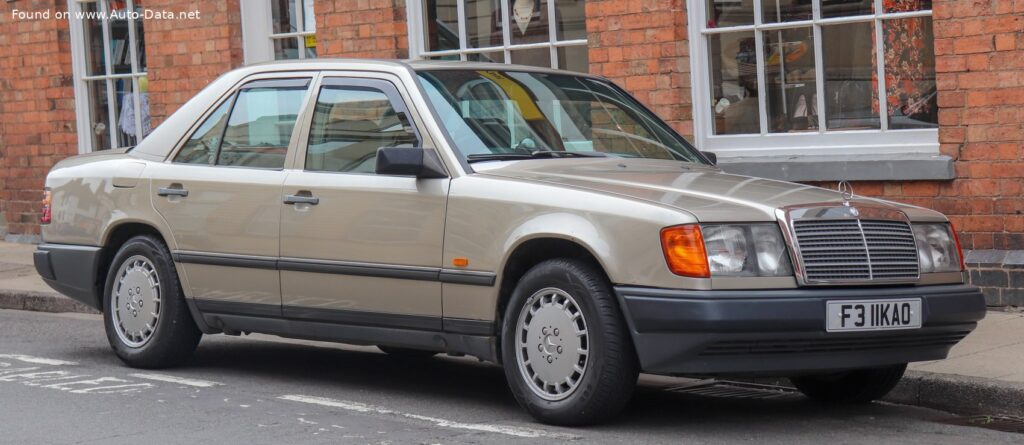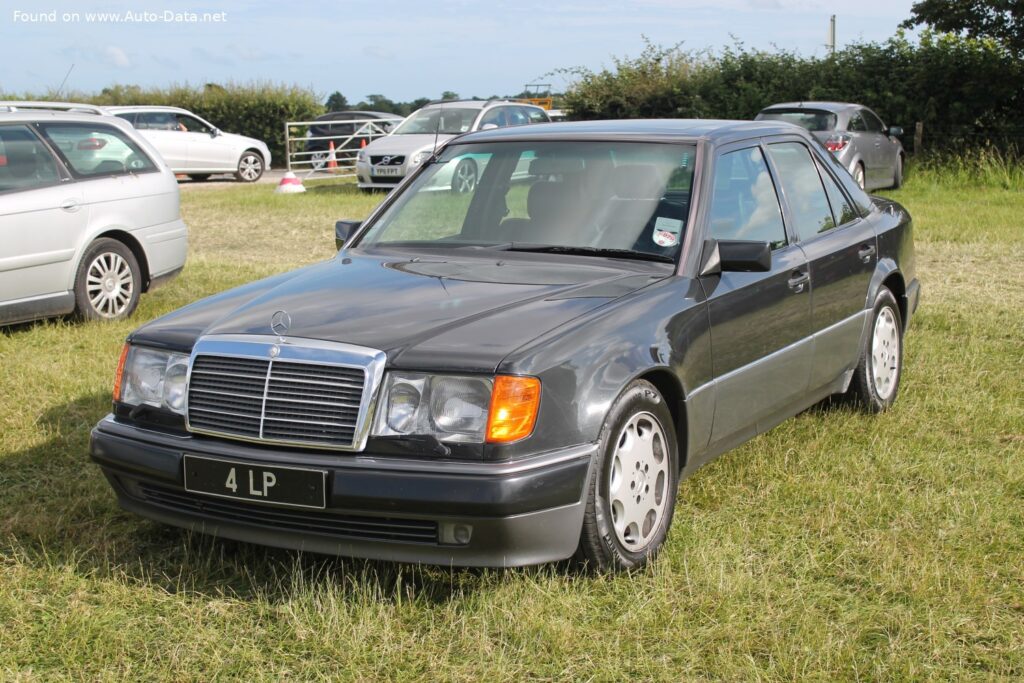
The Mercedes-Benz W124, particularly the 260 E model produced from 1989 to 1992, represents a pivotal point in the manufacturer’s mid-size sedan lineage. Positioned as a successor to the W123, the W124 aimed to blend luxury, performance, and, crucially, enhanced safety – a growing concern for consumers in the late 1980s. The 260 E, with its 2.6-liter inline-six engine, was a popular choice, offering a balance between fuel efficiency and respectable power. While not initially a high-volume seller in the United States compared to some of its competitors, the W124 established a reputation for robust build quality and longevity, becoming a sought-after classic among enthusiasts.
The Mercedes-Benz W124 260 E: A Refined Sedan
The W124 series, launched in 1985, was a significant departure from its predecessor, featuring a more modern and aerodynamic design. The 1989 facelift brought subtle but important revisions, including updated interior trim, improved safety features, and refinements to the engine range. The 260 E specifically targeted buyers seeking a comfortable and capable sedan with a sophisticated engine. It occupied a space between the more economical four-cylinder models and the higher-performance six and eight-cylinder variants. The W124, in general, was designed with a focus on passenger safety, incorporating features like crumple zones and a robust passenger safety cell, setting a new standard for its time.
Engine & Performance
The heart of the 260 E is its M103 E 26 inline-six engine, a 2.6-liter (2597 cm³) naturally aspirated powerplant. This engine produced 160 horsepower at 5800 rpm and 220 Nm (162.26 lb.-ft.) of torque at 4600 rpm. The M103 engine was known for its smoothness and reliability, utilizing multi-port fuel injection and a double overhead camshaft (DOHC) valvetrain. Power is delivered to the rear wheels via a five-speed manual transmission, although an automatic transmission was also available. Acceleration from 0 to 100 km/h (0-62 mph) takes 9.8 seconds, while 0 to 60 mph is achieved in approximately 9.3 seconds. The 260 E boasts a top speed of 215 km/h (133.59 mph). The engine’s power-to-weight ratio is 8.9 kg/Hp, and its torque-to-weight ratio is 6.5 kg/Nm, contributing to a responsive driving experience.
Design & Features
The W124 260 E is a four-door sedan with a classic, understated Mercedes-Benz aesthetic. Its design prioritizes functionality and elegance over overt sportiness. The body is characterized by clean lines, a relatively upright stance, and a spacious interior. The interior is well-appointed, featuring comfortable seating for five passengers and a focus on build quality. Key features included power steering, ventilated front disc brakes, and an Anti-lock Braking System (ABS), which was a significant safety advancement for the era. The suspension utilizes a wishbone setup at the front and an independent multi-link suspension at the rear, providing a comfortable ride and good handling characteristics. The 260 E’s dimensions are substantial, measuring 4740 mm (186.61 in) in length, 1740 mm (68.5 in) in width, and 1428 mm (56.22 in) in height. The wheelbase is 2800 mm (110.24 in), contributing to a stable and composed ride.
Technical Specifications
| Brand | Mercedes-Benz |
| Model | W124 |
| Generation | W124 (facelift 1989) |
| Type (Engine) | 260 E (160 Hp) |
| Start of production | September, 1989 |
| End of production | October, 1992 |
| Powertrain Architecture | Internal Combustion engine |
| Body type | Sedan |
| Seats | 5 |
| Doors | 4 |
| Fuel consumption (urban) | 14.5 l/100 km (16.2 US mpg, 19.5 UK mpg, 6.9 km/l) |
| Fuel consumption (extra urban) | 8 l/100 km (29.4 US mpg, 35.3 UK mpg, 12.5 km/l) |
| Fuel Type | Petrol (Gasoline) |
| Acceleration 0 – 100 km/h | 9.8 sec |
| Acceleration 0 – 62 mph | 9.8 sec |
| Acceleration 0 – 60 mph | 9.3 sec |
| Maximum speed | 215 km/h (133.59 mph) |
| Weight-to-power ratio | 8.9 kg/Hp |
| Weight-to-torque ratio | 6.5 kg/Nm |
| Power | 160 Hp @ 5800 rpm |
| Power per litre | 61.6 Hp/l |
| Torque | 220 Nm @ 4600 rpm (162.26 lb.-ft. @ 4600 rpm) |
| Engine layout | Front, Longitudinal |
| Engine Model/Code | M 103 E 26 / 103.940 |
| Engine displacement | 2597 cm³ (158.48 cu. in.) |
| Number of cylinders | 6 |
| Engine configuration | Inline |
| Cylinder Bore | 82.91 mm (3.26 in.) |
| Piston Stroke | 80.19 mm (3.16 in.) |
| Compression ratio | 9.2:1 |
| Number of valves per cylinder | 4 |
| Fuel injection system | Multi-port manifold injection |
| Engine aspiration | Naturally aspirated engine |
| Valvetrain | DOHC |
| Engine oil capacity | 6.5 l (6.87 US qt | 5.72 UK qt) |
| Coolant | 9 l (9.51 US qt | 7.92 UK qt) |
| Kerb Weight | 1420 kg (3130.56 lbs.) |
| Max. weight | 1990 kg (4387.2 lbs.) |
| Max load | 570 kg (1256.63 lbs.) |
| Fuel tank capacity | 70 l (18.49 US gal | 15.4 UK gal) |
| Length | 4740 mm (186.61 in.) |
| Width | 1740 mm (68.5 in.) |
| Height | 1428 mm (56.22 in.) |
| Wheelbase | 2800 mm (110.24 in.) |
| Front track | 1501 mm (59.09 in.) |
| Rear track | 1491 mm (58.7 in.) |
| Drivetrain Architecture | Rear wheel drive |
| Number of gears and type of gearbox | 5 gears, manual transmission |
| Front suspension | Wishbone |
| Rear suspension | Independent multi-link suspension |
| Front brakes | Ventilated discs |
| Rear brakes | Disc |
| Assisting systems | ABS (Anti-lock braking system) |
| Steering type | Cone worm with recirculation balls |
| Power steering | Hydraulic Steering |
| Tires size | Front: 195/65 R15, Rear: 195/65 R15 |
| Wheel rims size | Front: 6.5J x 15, Rear: 6.5J x 15 |
The Mercedes-Benz W124 260 E remains a highly regarded vehicle, celebrated for its engineering, durability, and timeless design. It represents a significant chapter in Mercedes-Benz history, bridging the gap between classic luxury and modern automotive technology.