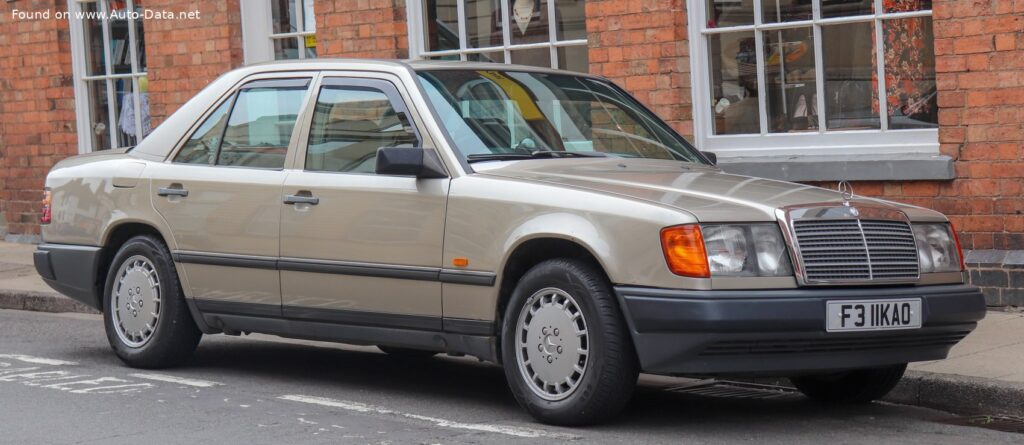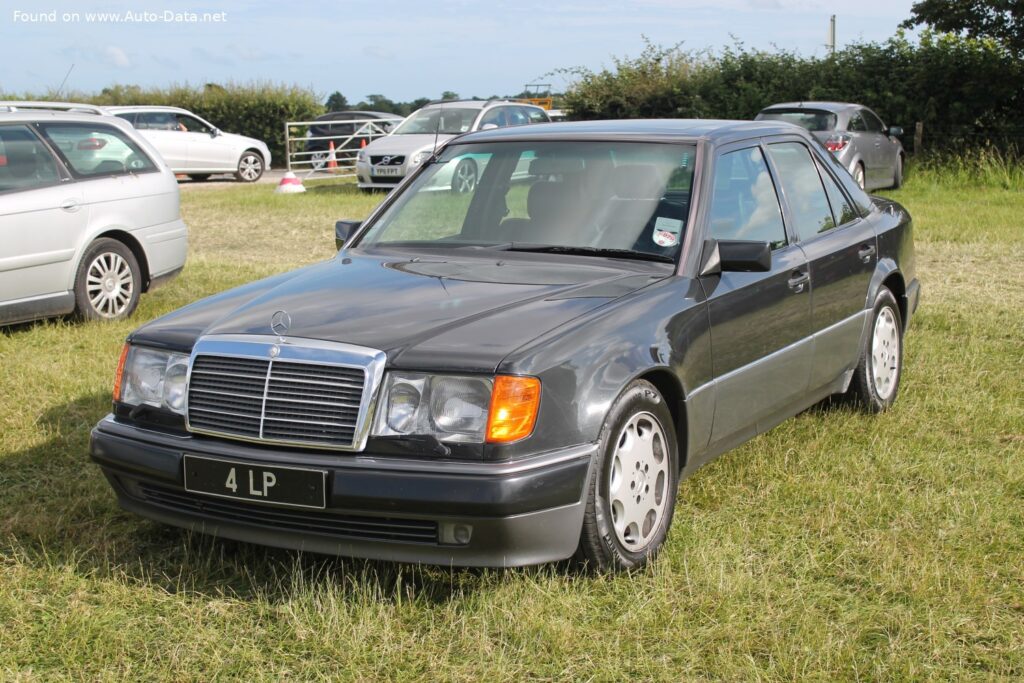
The Mercedes-Benz W124 400 E, produced from 1991 to 1993, represents a high-performance variant of the popular W124 sedan. Positioned as a luxury executive car, the 400 E aimed to deliver a blend of refinement, comfort, and substantial power. It was never officially sold in the United States, but it found a strong following in Europe and other international markets as a discreetly powerful and exceptionally well-built saloon. The “400 E” designation signified its 4.0-liter engine, a significant upgrade over the other engines offered in the W124 range. This model is particularly notable for its sophisticated engineering and build quality, embodying Mercedes-Benz’s reputation for durable and reliable automobiles.
Mercedes-Benz W124 400 E: A Performance Sedan
The W124 series, produced from 1985 to 1996, was a pivotal model for Mercedes-Benz, replacing the W201. It established a new benchmark for mid-size luxury cars, known for its robust construction, advanced safety features, and comfortable ride. The 400 E, introduced as part of the 1989 facelift, was the performance flagship of the range. It catered to drivers who desired the prestige and comfort of a W124 but also demanded a more spirited driving experience. The 400 E was designed to compete with other high-performance saloons of the era, such as the BMW E34 540i and the Jaguar XJ6.
Engine & Performance
The heart of the 400 E is its M119 E 42 4.2-liter V8 engine. This naturally aspirated powerplant produced 279 horsepower at 5700 rpm and 400 Nm (295 lb-ft) of torque at 3900 rpm. The engine featured multi-port fuel injection and a double overhead camshaft (DOHC) valvetrain, contributing to its smooth power delivery and responsiveness. Power per liter was an impressive 66.5 hp/l for its time. The engine was paired with a four-speed automatic transmission, delivering power to the rear wheels. This combination allowed the 400 E to accelerate from 0 to 100 km/h (0-62 mph) in 7.2 seconds and achieve a top speed of 250 km/h (155 mph), electronically limited. The weight-to-power ratio of 5.8 kg/hp further enhanced its performance characteristics. Fuel consumption was rated at 15 l/100 km (15.7 US mpg) in urban conditions and 9.4 l/100 km (25 US mpg) on the open road.
Design & Features
The W124 400 E retained the elegant and understated styling of the standard W124 sedan. However, subtle visual cues distinguished it from its siblings. These included a more refined front grille, body-colored side moldings, and unique alloy wheels. The interior was appointed with high-quality materials, including leather upholstery, wood trim, and a comprehensive array of comfort and convenience features. Safety was a key consideration in the W124’s design, and the 400 E was equipped with anti-lock braking system (ABS) as standard. The car offered seating for five passengers and a spacious trunk with a minimum capacity of 520 liters (18.36 cu ft). The W124’s robust build quality and attention to detail contributed to its reputation for longevity and reliability. The car’s suspension, featuring wishbone front suspension and an independent multi-link rear suspension with a transverse stabilizer, provided a comfortable and controlled ride.
Technical Specifications
| Brand | Mercedes-Benz |
| Model | W124 |
| Generation | W124 (facelift 1989) |
| Type (Engine) | 400 E V8 (279 Hp) Automatic |
| Start of production | May, 1991 |
| End of production | July, 1993 |
| Powertrain Architecture | Internal Combustion engine |
| Body type | Sedan |
| Seats | 5 |
| Doors | 4 |
| Fuel consumption (urban) | 15 l/100 km (15.7 US mpg, 18.8 UK mpg, 6.7 km/l) |
| Fuel consumption (extra urban) | 9.4 l/100 km (25 US mpg, 30.1 UK mpg, 10.6 km/l) |
| Fuel Type | Petrol (Gasoline) |
| Acceleration 0 – 100 km/h | 7.2 sec |
| Acceleration 0 – 62 mph | 7.2 sec |
| Acceleration 0 – 60 mph | 6.8 sec |
| Maximum speed | 250 km/h (155.34 mph) – Electronically limited |
| Weight-to-power ratio | 5.8 kg/Hp |
| Weight-to-torque ratio | 4.1 kg/Nm |
| Power | 279 Hp @ 5700 rpm |
| Power per litre | 66.5 Hp/l |
| Torque | 400 Nm @ 3900 rpm (295.02 lb.-ft. @ 3900 rpm) |
| Engine layout | Front, Longitudinal |
| Engine Model/Code | M 119 E 42 / 119.975 |
| Engine displacement | 4196 cm3 (256.06 cu. in.) |
| Number of cylinders | 8 |
| Engine configuration | V-engine |
| Cylinder Bore | 92 mm (3.62 in.) |
| Piston Stroke | 78.9 mm (3.11 in.) |
| Compression ratio | 11:1 |
| Number of valves per cylinder | 4 |
| Fuel injection system | Multi-port manifold injection |
| Engine aspiration | Naturally aspirated engine |
| Valvetrain | DOHC |
| Engine oil capacity | 8 l (8.45 US qt | 7.04 UK qt) |
| Coolant | 12.5 l (13.21 US qt | 11 UK qt) |
| Kerb Weight | 1620 kg (3571.49 lbs.) |
| Max. weight | 2140 kg (4717.89 lbs.) |
| Max load | 520 kg (1146.4 lbs.) |
| Trunk (boot) space – minimum | 520 l (18.36 cu. ft.) |
| Fuel tank capacity | 90 l (23.78 US gal | 19.8 UK gal) |
| Max. roof load | 100 kg (220.46 lbs.) |
| Permitted trailer load with brakes (12%) | 1900 kg (4188.78 lbs.) |
| Permitted trailer load without brakes | 750 kg (1653.47 lbs.) |
| Length | 4740 mm (186.61 in.) |
| Width | 1740 mm (68.5 in.) |
| Height | 1431 mm (56.34 in.) |
| Wheelbase | 2800 mm (110.24 in.) |
| Front track | 1501-1518 mm (59.09 – 59.76 in.) |
| Rear (Back) track | 1491-1509 mm (58.7 – 59.41 in.) |
| Minimum turning circle (turning diameter) | 11.2 m (36.75 ft.) |
| Drivetrain Architecture | The Internal combustion engine (ICE) drives the rear wheels of the vehicle. |
| Drive wheel | Rear wheel drive |
| Number of gears and type of gearbox | 4 gears, automatic transmission |
| Front suspension | Wishbone |
| Rear suspension | Independent multi-link suspension, Transverse stabilizer |
| Front brakes | Ventilated discs |
| Rear brakes | Ventilated discs |
| Assisting systems | ABS (Anti-lock braking system) |
| Steering type | Cone worm with recirculation balls |
| Power steering | Hydraulic Steering |
| Tires size | 195/65 R15; 205/60 R15; 215/55 R16 |
| Wheel rims size | 6.5J x 15; 7J x 15; 7J x 16 |
The Mercedes-Benz W124 400 E remains a highly sought-after classic car, appreciated for its blend of performance, luxury, and build quality. It represents a high point in Mercedes-Benz engineering and a testament to the brand’s commitment to creating durable and refined automobiles.