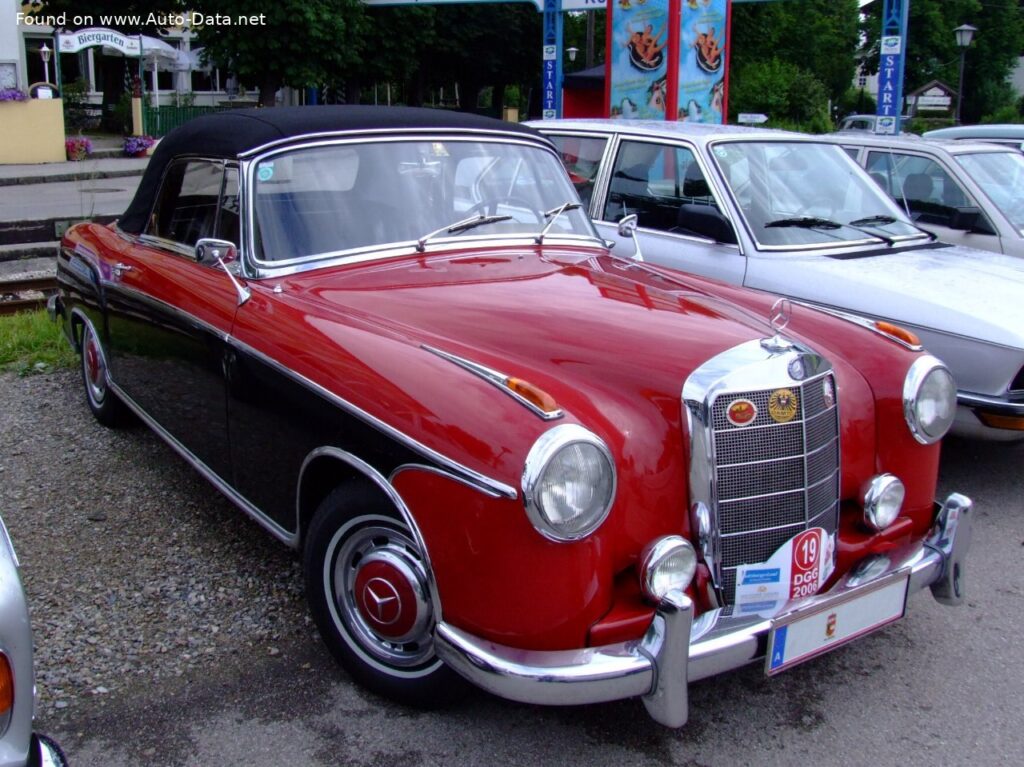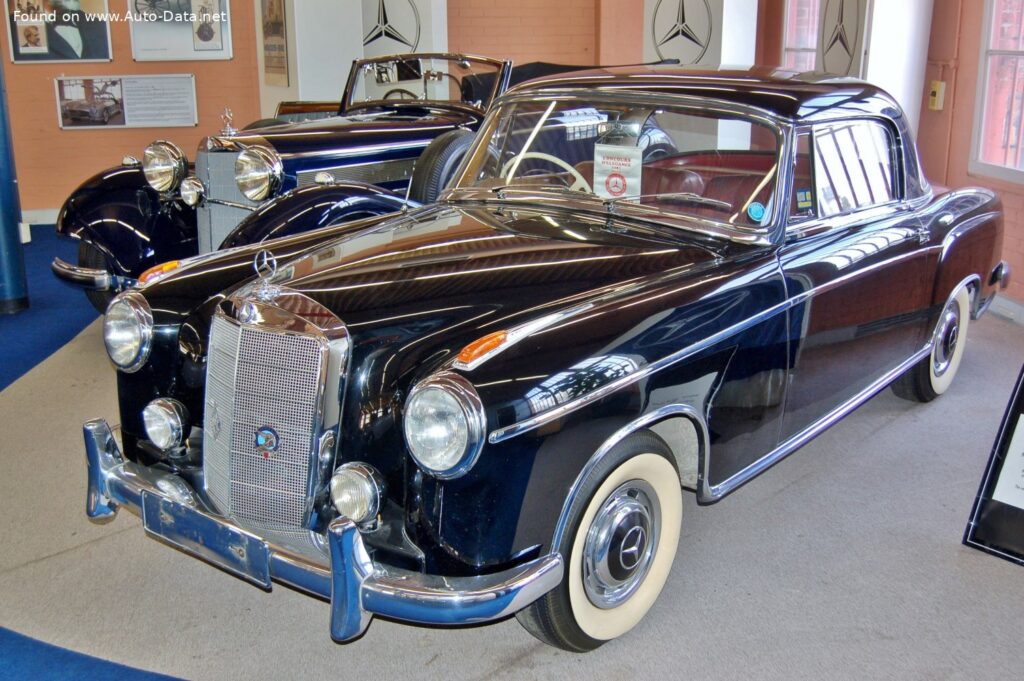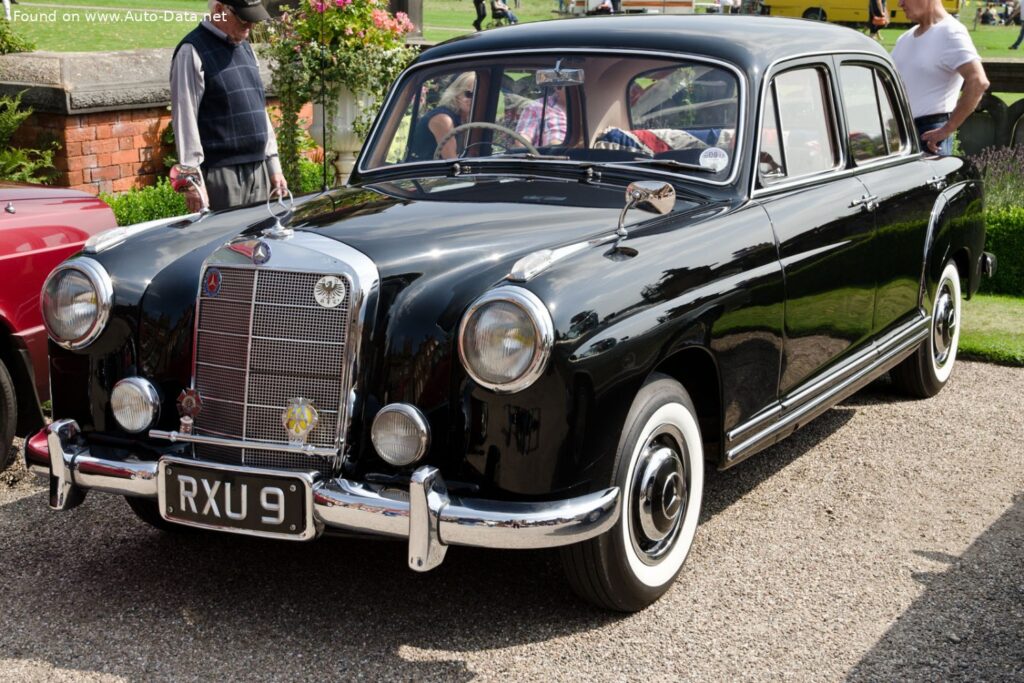
The Mercedes-Benz W128 Sedan, specifically the 220 SE model, represents a pivotal point in the evolution of post-war Mercedes-Benz design and engineering. Produced between April 1958 and August 1959, this vehicle, often referred to as the “Ponton” due to its pontoon-like, integrated body style, marked a significant departure from the earlier, more traditionally styled Mercedes-Benz automobiles. The 220 SE was positioned as a luxury sedan, aimed at discerning buyers seeking comfort, reliability, and a degree of prestige. It served as a bridge between the earlier W180 “Ponton” series and the more technologically advanced “Fintail” models that followed. While not initially a major export to the United States, the W128 represented Mercedes-Benz’s growing ambition to establish itself as a global automotive leader.
The Mercedes-Benz W128 Sedan 220 SE: A Detailed Overview
The W128 series, and the 220 SE within it, was a crucial step in modernizing Mercedes-Benz’s production techniques and design philosophy. The “Ponton” styling, characterized by its unibody construction and lack of separate, protruding fenders, was a radical change for the brand. This construction method not only improved structural rigidity but also allowed for a lower roofline and a more spacious interior. The 220 SE specifically offered a step up in refinement and performance compared to its predecessors, featuring a more powerful engine and improved suspension.
Engine & Performance
The heart of the 220 SE is its 2.2-liter (2195 cm3) inline-six cylinder engine, designated the M 127 I / 127.980. This engine produced 115 horsepower at 4800 rpm and 186 Nm (137.19 lb.-ft.) of torque at 3800 rpm. While these figures may seem modest by modern standards, they were competitive for a luxury sedan of the late 1950s. The engine employed multi-port manifold fuel injection, a relatively advanced technology for the time, contributing to smoother operation and improved fuel efficiency. Power per liter was a respectable 52.4 Hp/l. The engine’s longitudinal front-engine layout and rear-wheel drive configuration were typical for European automobiles of this era.
Performance figures reflect the car’s focus on comfortable cruising rather than outright speed. Acceleration from 0 to 100 km/h (0-62 mph) took approximately 15 seconds, while 0 to 60 mph was achieved in around 14.3 seconds. The top speed was 160 km/h (99.42 mph). The weight-to-power ratio of 11.8 kg/Hp and weight-to-torque ratio of 7.3 kg/Nm indicate a vehicle that prioritized smooth power delivery over aggressive acceleration. The 4-speed manual transmission, specifically the Hydrak unit, provided a relatively sophisticated shifting experience for the period.
Design & Features
The W128 Sedan’s design was a clear break from the pre-war aesthetic of Mercedes-Benz. The “Ponton” body style, with its integrated fenders and lower profile, gave the car a more modern and streamlined appearance. The four-door sedan configuration offered practical access for passengers, while the spacious interior comfortably accommodated five occupants. The car’s dimensions – 4750 mm (187.01 in.) in length, 1740 mm (68.5 in.) in width, and 1560 mm (61.42 in.) in height – positioned it as a substantial vehicle for its time.
Safety features, while limited by the standards of the 1950s, included a robust unibody construction that offered improved crash protection compared to body-on-frame designs. The suspension system, featuring double wishbones with a transverse stabilizer at the front and a trailing arm setup at the rear, prioritized ride comfort. Braking was handled by drum brakes on all four wheels. The steering system utilized a cone worm with recirculation balls, providing a relatively precise and responsive driving experience. The fuel tank capacity of 62 liters (16.38 US gal) provided a reasonable driving range.
Technical Specifications
| Brand | Mercedes-Benz |
| Model | Ponton |
| Generation | W128 Sedan |
| Type (Engine) | 220 SE (115 Hp) Hydrak |
| Start of production | April, 1958 |
| End of production | August, 1959 |
| Powertrain Architecture | Internal Combustion engine |
| Body type | Sedan |
| Seats | 5 |
| Doors | 4 |
| Fuel consumption (combined) | 10.9 l/100 km |
| Fuel consumption (US mpg) | 21.6 US mpg |
| Fuel consumption (UK mpg) | 25.9 UK mpg |
| Fuel consumption (km/l) | 9.2 km/l |
| Fuel Type | Petrol (Gasoline) |
| Acceleration 0 – 100 km/h | 15 sec |
| Acceleration 0 – 62 mph | 15 sec |
| Acceleration 0 – 60 mph | 14.3 sec |
| Maximum speed | 160 km/h (99.42 mph) |
| Weight-to-power ratio | 11.8 kg/Hp |
| Weight-to-torque ratio | 7.3 kg/Nm |
| Power | 115 Hp @ 4800 rpm |
| Power per litre | 52.4 Hp/l |
| Torque | 186 Nm @ 3800 rpm (137.19 lb.-ft. @ 3800 rpm) |
| Engine layout | Front, Longitudinal |
| Engine Model/Code | M 127 I / 127.980 |
| Engine displacement | 2195 cm3 (133.95 cu. in.) |
| Number of cylinders | 6 |
| Engine configuration | Inline |
| Cylinder Bore | 80 mm (3.15 in.) |
| Piston Stroke | 72.8 mm (2.87 in.) |
| Compression ratio | 8.7:1 |
| Number of valves per cylinder | 2 |
| Fuel injection system | Multi-port manifold injection |
| Engine aspiration | Naturally aspirated engine |
| Valvetrain | SOHC |
| Kerb Weight | 1360 kg (2998.29 lbs.) |
| Max. weight | 1810 kg (3990.37 lbs.) |
| Max load | 450 kg (992.08 lbs.) |
| Fuel tank capacity | 62 l (16.38 US gal | 13.64 UK gal) |
| Length | 4750 mm (187.01 in.) |
| Width | 1740 mm (68.5 in.) |
| Height | 1560 mm (61.42 in.) |
| Wheelbase | 2820 mm (111.02 in.) |
| Front track | 1430 mm (56.3 in.) |
| Rear track | 1470 mm (57.87 in.) |
| Drivetrain Architecture | Rear wheel drive |
| Number of gears and type of gearbox | 4 gears, manual transmission Hydrak |
| Front suspension | Double wishbone, Transverse stabilizer |
| Rear suspension | Trailing arm |
| Front brakes | Drum |
| Rear brakes | Drum |
| Steering type | Cone worm with recirculation balls |
The Mercedes-Benz W128 Sedan 220 SE represents a significant chapter in the company’s history. It showcased a commitment to modern design, engineering, and a growing ambition to compete in the global luxury car market. While not a high-volume seller in the United States during its production run, the W128 laid the groundwork for the brand’s future success in North America and solidified its reputation for quality and innovation.