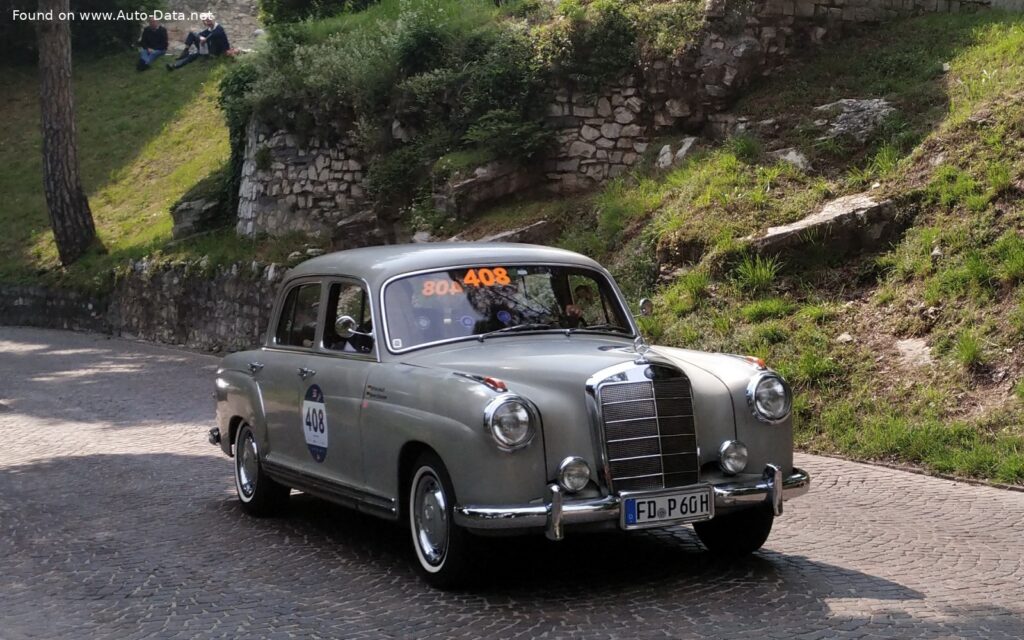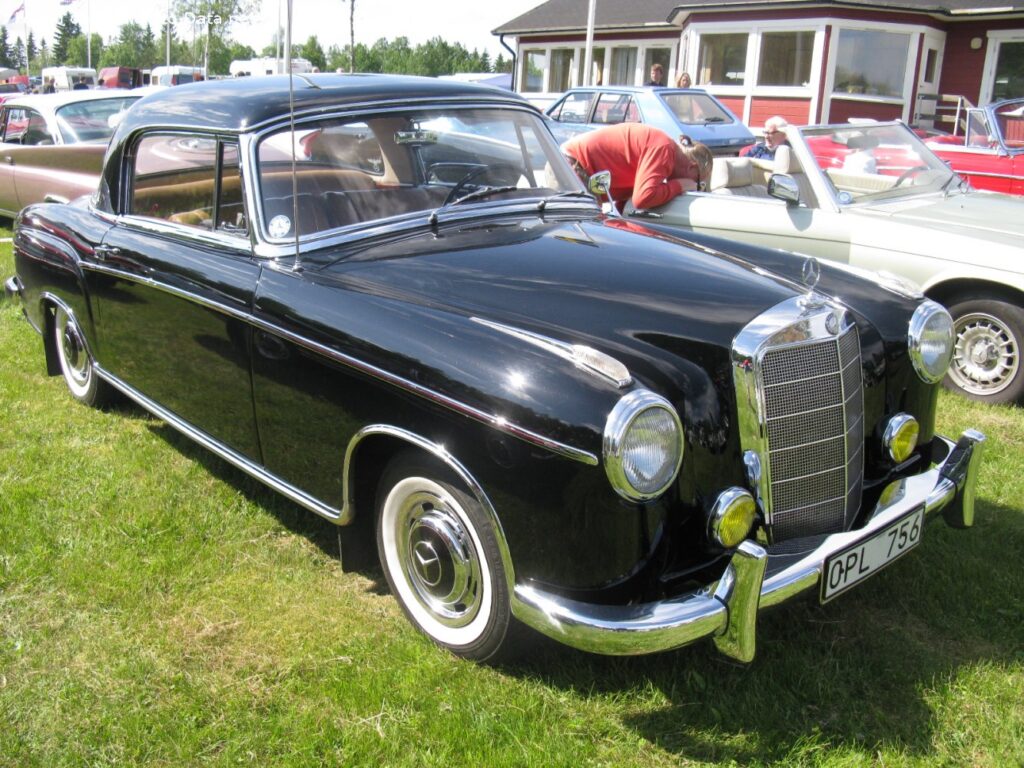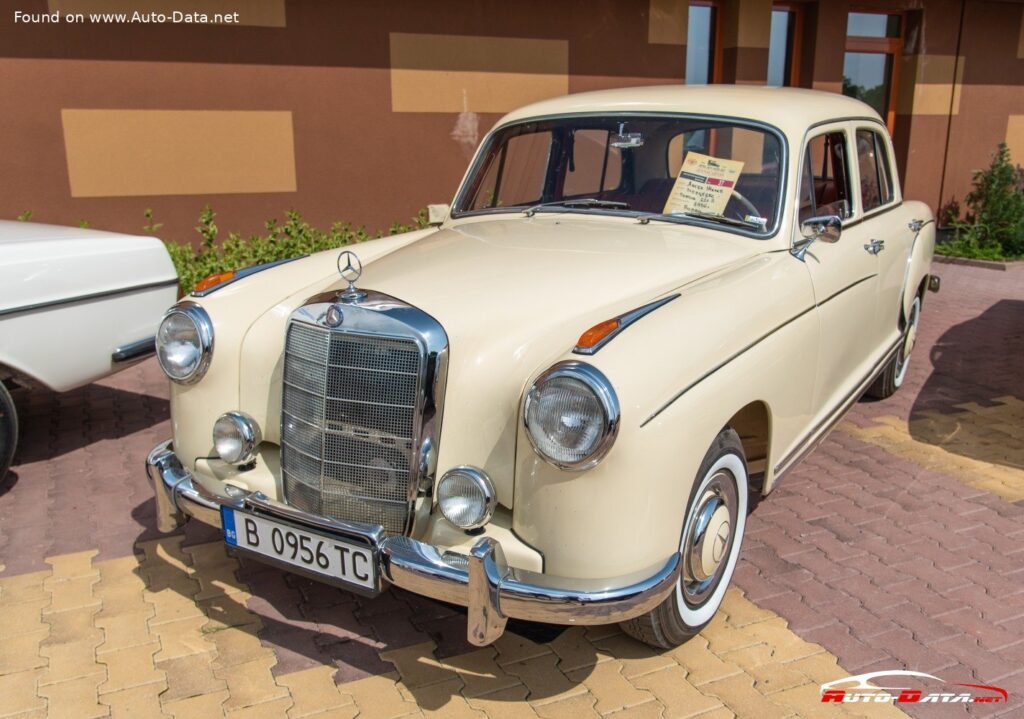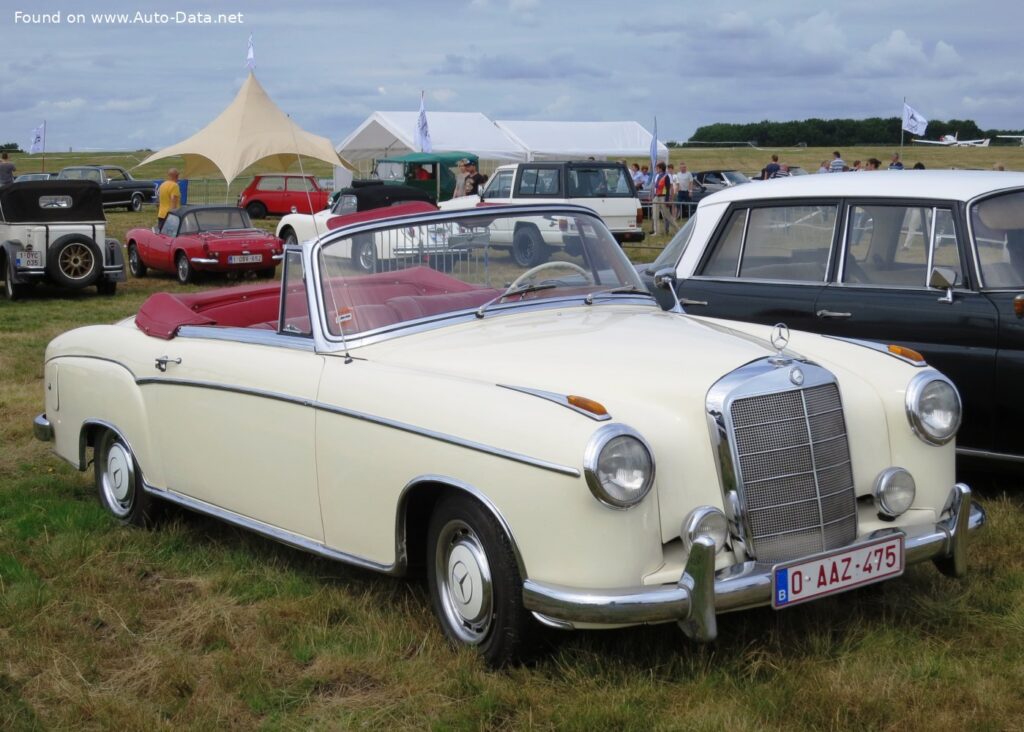
The Mercedes-Benz W180 II Cabriolet 220 S, produced between August 1957 and October 1959, represents a refined iteration of the iconic “Ponton” series. This two-door, five-seat Cabriolet was a luxury offering from Mercedes-Benz, embodying post-war German engineering and design. While not widely exported to the United States during its production run, the W180 series, and particularly the Cabriolet, holds a significant place in automotive history as a symbol of aspirational elegance and technical advancement for its time. The 220 S variant, equipped with a 2.2-liter inline-six engine producing 106 horsepower, was positioned as a premium vehicle within the Mercedes-Benz lineup, appealing to discerning customers seeking both comfort and performance.
The Mercedes-Benz W180 II Cabriolet 220 S: A Ponton Refinement
The W180 series, launched in 1954, marked a departure from the pre-war styling of Mercedes-Benz vehicles. The “Ponton” name, meaning “pontoon” in German, referred to the car’s unibody construction, a relatively new technique at the time, which integrated the body and chassis into a single structure. This design offered increased strength, reduced weight, and improved passenger safety. The W180 II, introduced in 1957, featured subtle but significant updates to the original Ponton, including a larger engine and improved interior appointments. The Cabriolet version, with its elegant folding roof, was the most exclusive body style available, representing the pinnacle of luxury within the W180 range.
Engine & Performance
The heart of the 220 S Cabriolet is its M180 III inline-six engine, displacing 2.2 liters (2195 cm³ or 133.95 cu. in.). This naturally aspirated engine, equipped with a single carburetor, produced 106 horsepower at 5200 rpm and 171 Nm (126.12 lb.-ft.) of torque at 3500 rpm. While these figures may seem modest by modern standards, they were respectable for a luxury car of the late 1950s. The engine’s longitudinal front-engine layout and rear-wheel drive configuration were typical for European automobiles of the era. Power was transmitted to the rear wheels through a four-speed manual transmission, specifically a Hydrak unit, known for its smooth operation. Acceleration from 0 to 100 km/h (0-62 mph) took approximately 17 seconds, and the car could achieve a top speed of 160 km/h (99.42 mph). The weight-to-power ratio of 13.2 kg/Hp and a weight-to-torque ratio of 8.2 kg/Nm indicate a balanced, if not particularly sporty, driving experience. Fuel consumption was rated at 10.9 l/100 km (21.6 US mpg or 25.9 UK mpg).
Design & Features
The W180 II Cabriolet 220 S boasts a classic, understated elegance. Its design is characterized by clean lines, a prominent grille, and rounded body panels. The Cabriolet’s folding soft top, when lowered, transforms the car into an open-air cruiser, enhancing the driving experience. The interior was appointed with high-quality materials, including leather upholstery and wood trim, reflecting the car’s luxury status. Safety features, while limited by the standards of the time, included robust construction thanks to the unibody design and drum brakes on all four wheels. The car’s dimensions – 4700 mm (185.04 in.) in length, 1790 mm (70.47 in.) in width, and 1530 mm (60.24 in.) in height – provided ample space for passengers and luggage. The wheelbase measured 2700 mm (106.3 in.), contributing to a comfortable ride. The front and rear track widths were 1430 mm (56.3 in.) and 1470 mm (57.87 in.) respectively. The kerb weight of 1400 kg (3086.47 lbs.) and a maximum weight of 1790 kg (3946.27 lbs.) reflect the solid build quality of the vehicle.
Technical Specifications
| Brand | Mercedes-Benz |
| Model | Ponton |
| Generation | W180 II Cabriolet |
| Type (Engine) | 220 S (106 Hp) Hydrak |
| Start of production | August, 1957 |
| End of production | October, 1959 |
| Powertrain Architecture | Internal Combustion engine |
| Body type | Cabriolet |
| Seats | 5 |
| Doors | 2 |
| Fuel consumption (combined) | 10.9 l/100 km |
| Fuel consumption (US mpg) | 21.6 US mpg |
| Fuel consumption (UK mpg) | 25.9 UK mpg |
| Fuel consumption (km/l) | 9.2 km/l |
| Fuel Type | Petrol (Gasoline) |
| Acceleration 0 – 100 km/h | 17 sec |
| Acceleration 0 – 62 mph | 17 sec |
| Acceleration 0 – 60 mph | 16.2 sec |
| Maximum speed | 160 km/h (99.42 mph) |
| Weight-to-power ratio | 13.2 kg/Hp |
| Hp/tonne | 75.7 Hp/tonne |
| Weight-to-torque ratio | 8.2 kg/Nm |
| Nm/tonne | 122.1 Nm/tonne |
| Power | 106 Hp @ 5200 rpm |
| Power per litre | 48.3 Hp/l |
| Torque | 171 Nm @ 3500 rpm (126.12 lb.-ft. @ 3500 rpm) |
| Engine layout | Front, Longitudinal |
| Engine Model/Code | M 180 III / 180.924 |
| Engine displacement | 2195 cm³ (133.95 cu. in.) |
| Number of cylinders | 6 |
| Engine configuration | Inline |
| Cylinder Bore | 80.01 mm (3.15 in.) |
| Piston Stroke | 72.8 mm (2.87 in.) |
| Compression ratio | 8.7:1 |
| Number of valves per cylinder | 2 |
| Fuel injection system | Carburettor |
| Engine aspiration | Naturally aspirated engine |
| Valvetrain | SOHC |
| Kerb Weight | 1400 kg (3086.47 lbs.) |
| Max. weight | 1790 kg (3946.27 lbs.) |
| Max load | 390 kg (859.8 lbs.) |
| Fuel tank capacity | 64 l (16.91 US gal | 14.08 UK gal) |
| Length | 4700 mm (185.04 in.) |
| Width | 1790 mm (70.47 in.) |
| Height | 1530 mm (60.24 in.) |
| Wheelbase | 2700 mm (106.3 in.) |
| Front track | 1430 mm (56.3 in.) |
| Rear track | 1470 mm (57.87 in.) |
| Drivetrain Architecture | Rear wheel drive |
| Number of gears and type of gearbox | 4 gears, manual transmission Hydrak |
| Front suspension | Double wishbone, Transverse stabilizer |
| Rear suspension | Trailing arm |
| Front brakes | Drum |
| Rear brakes | Drum |
| Steering type | Cone worm with recirculation balls |
The Mercedes-Benz W180 II Cabriolet 220 S remains a highly sought-after classic car, appreciated for its elegant design, robust engineering, and historical significance. It represents a pivotal moment in Mercedes-Benz’s history, bridging the gap between pre-war and modern automotive design and establishing the brand’s reputation for luxury and quality.