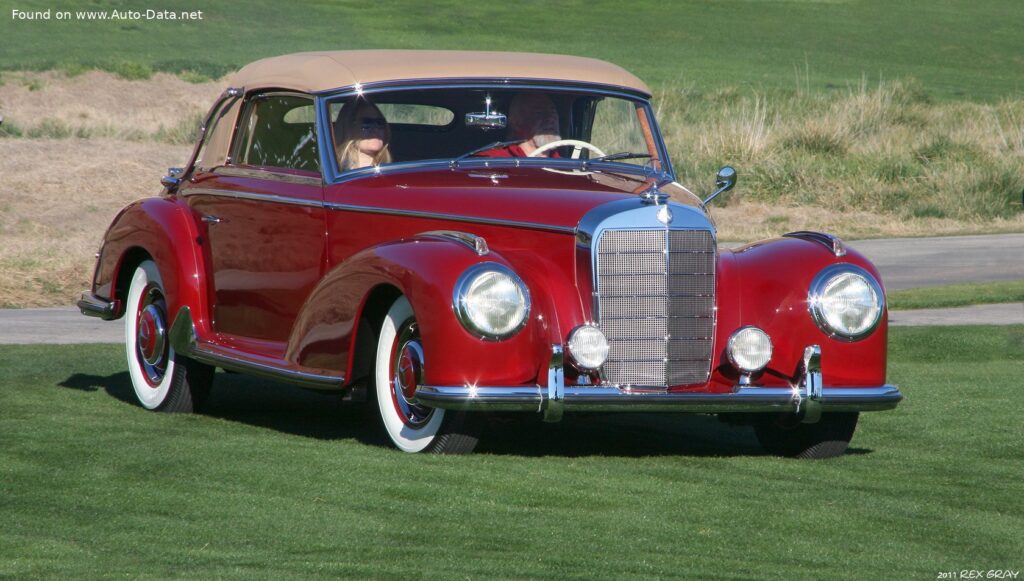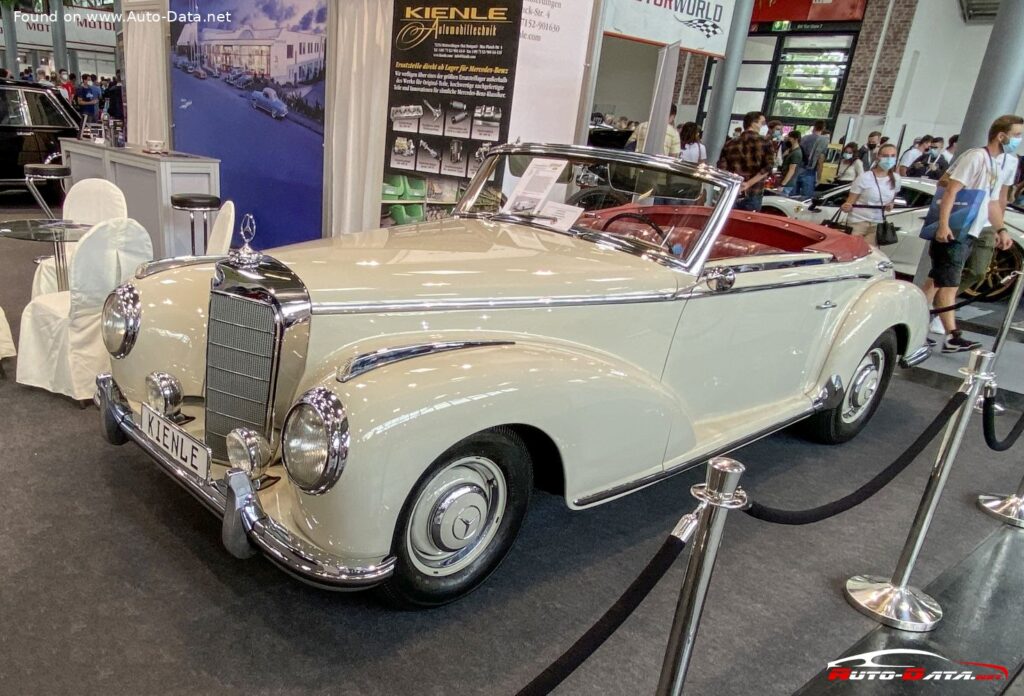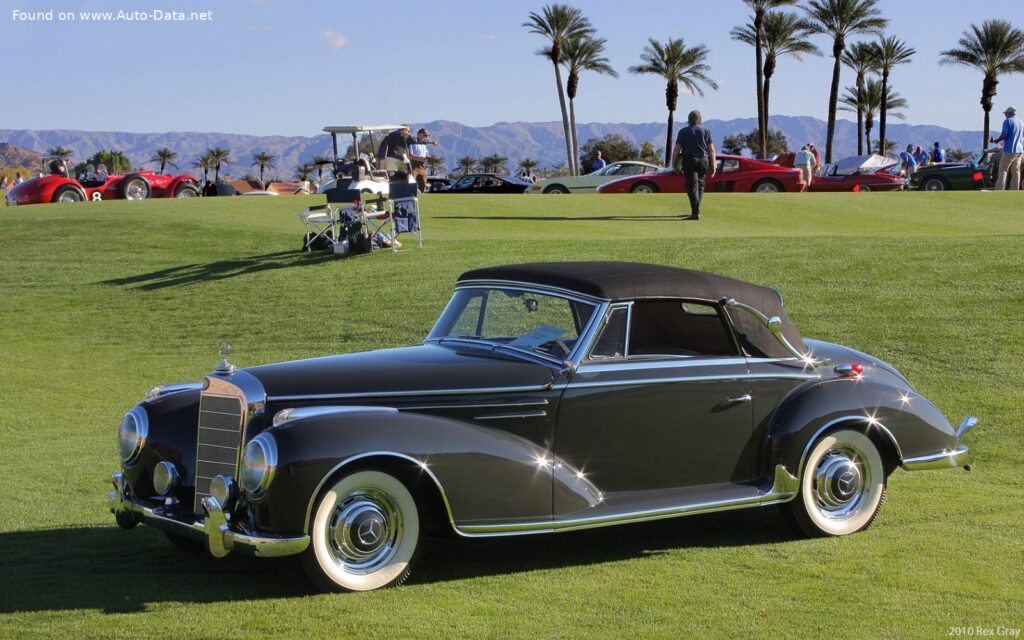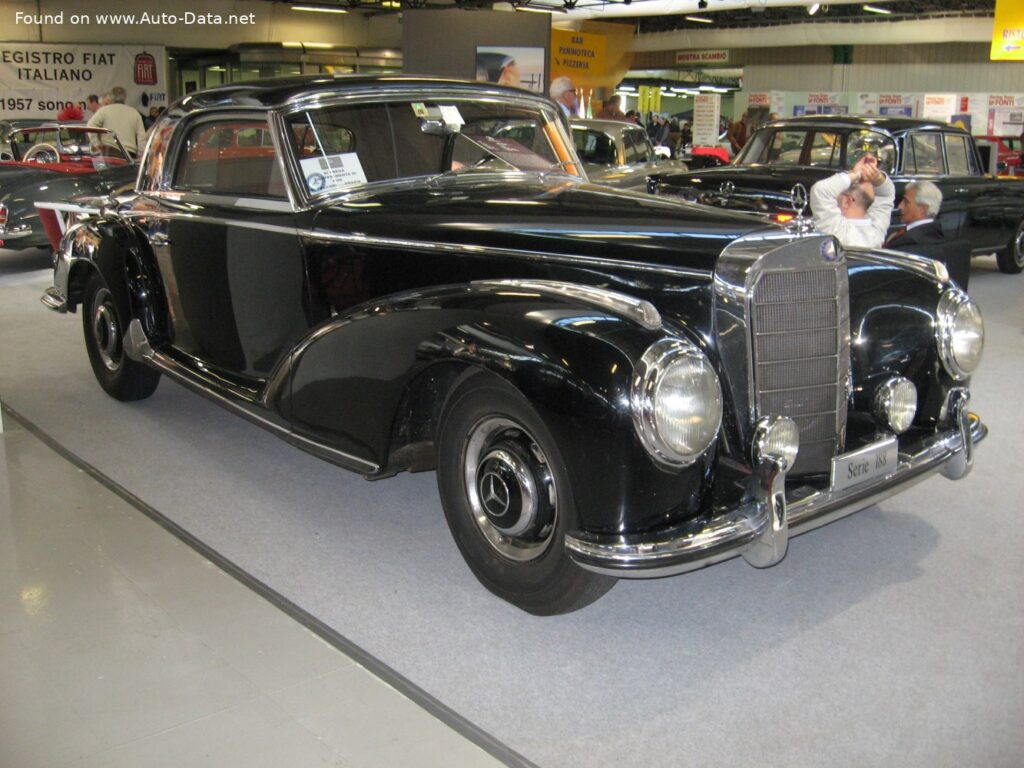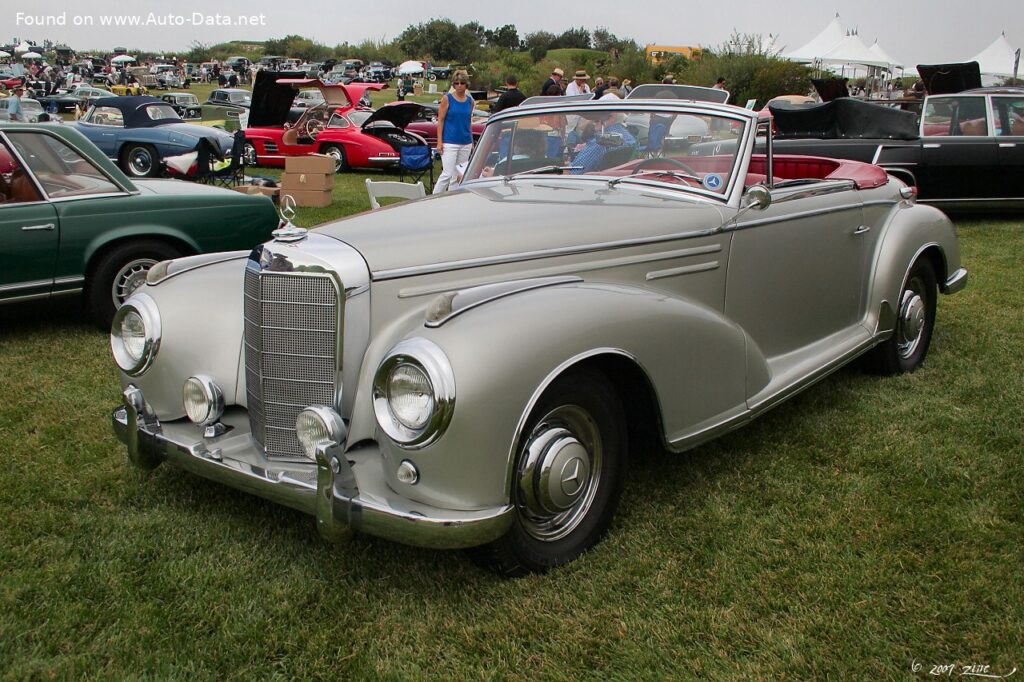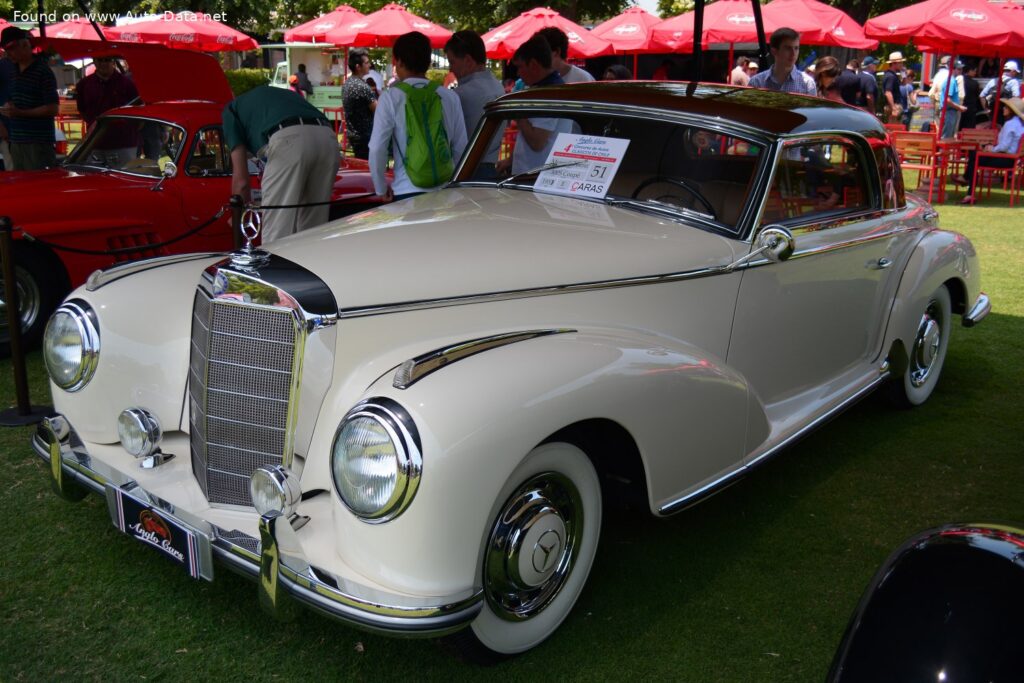
The Mercedes-Benz W188, specifically the 300 S Coupe, represents a pivotal moment in post-war German automotive engineering. Produced between September 1951 and August 1955, this vehicle wasn’t merely a luxury car; it was a statement of recovery and a technological showcase for Mercedes-Benz. The 300 S Coupe occupied a unique position in the market, aimed at discerning customers who desired both performance and refined elegance. It served as a halo car for the brand, demonstrating their capabilities and setting the stage for future models. While not a high-volume seller, its impact on Mercedes-Benz’s reputation for quality and innovation was significant.
Mercedes-Benz W188 I Coupe 300 S: A Legacy of Engineering
The W188 series, encompassing the saloon, cabriolet, and coupe variants, was the first entirely new design from Mercedes-Benz after World War II. It moved away from pre-war designs and embraced a more modern aesthetic and engineering approach. The 300 S Coupe, in particular, was a beautifully proportioned vehicle, characterized by its flowing lines and luxurious appointments. It was a direct response to the growing demand for high-performance, comfortable touring cars, particularly in the burgeoning post-war economies of Europe and North America.
Engine & Performance
At the heart of the 300 S Coupe lies the M188 3.0-liter inline-six engine. This engine, a marvel of its time, produced 150 horsepower at 5000 rpm and 230 Nm (169.64 lb.-ft.) of torque at 3800 rpm. While these figures may seem modest by modern standards, they were quite impressive for the early 1950s, delivering a power-to-weight ratio of 11.6 kg/Hp. The engine featured a single overhead camshaft (SOHC) valvetrain and utilized a carburetor fuel injection system. The longitudinal engine placement contributed to a balanced weight distribution. Acceleration from 0 to 100 km/h (0-62 mph) took approximately 15 seconds, and it could achieve a top speed of 175 km/h (108.74 mph). Fuel consumption was understandably high for the era, averaging 13.8 liters per 100 kilometers (17 US mpg).
Design & Features
The 300 S Coupe was a two-door, five-seater vehicle with a classic coupe profile. Its body was constructed using a combination of steel and aluminum, contributing to its relatively lightweight construction for the period. The interior was lavishly appointed with high-quality materials, including leather upholstery and wood trim. While modern safety features were non-existent by today’s standards, the car offered a degree of comfort and refinement that was exceptional for its time. The focus was on providing a luxurious and enjoyable driving experience. The car’s aesthetics were heavily influenced by the era’s design trends, emphasizing graceful lines and a sense of understated elegance. The independent suspension, utilizing a double wishbone setup at the front and a trailing arm configuration at the rear, provided a relatively comfortable ride, especially considering the road conditions of the time. Braking was handled by drum brakes on all four wheels.
Technical Specifications
| Brand | Mercedes-Benz |
| Model | W188 |
| Generation | W188 I Coupe |
| Type (Engine) | 300 S (150 Hp) |
| Start of production | September, 1951 |
| End of production | August, 1955 |
| Powertrain Architecture | Internal Combustion engine |
| Body type | Coupe |
| Seats | 5 |
| Doors | 2 |
| Fuel consumption (combined) | 13.8 l/100 km (17 US mpg, 20.5 UK mpg, 7.2 km/l) |
| Fuel Type | Petrol (Gasoline) |
| Acceleration 0 – 100 km/h | 15 sec |
| Acceleration 0 – 62 mph | 15 sec |
| Acceleration 0 – 60 mph | 14.3 sec |
| Maximum speed | 175 km/h (108.74 mph) |
| Weight-to-power ratio | 11.6 kg/Hp |
| Weight-to-torque ratio | 7.6 kg/Nm |
| Power | 150 Hp @ 5000 rpm |
| Power per litre | 50.1 Hp/l |
| Torque | 230 Nm @ 3800 rpm (169.64 lb.-ft. @ 3800 rpm) |
| Engine layout | Front, Longitudinal |
| Engine Model/Code | M 188 / 188.920 |
| Engine displacement | 2996 cm3 (182.83 cu. in.) |
| Number of cylinders | 6 |
| Engine configuration | Inline |
| Cylinder Bore | 85 mm (3.35 in.) |
| Piston Stroke | 88 mm (3.46 in.) |
| Compression ratio | 7.8:1 |
| Number of valves per cylinder | 2 |
| Fuel injection system | Carburettor |
| Engine aspiration | Naturally aspirated engine |
| Valvetrain | SOHC |
| Kerb Weight | 1740 kg (3836.04 lbs.) |
| Max. weight | 2000 kg (4409.25 lbs.) |
| Max load | 260 kg (573.2 lbs.) |
| Fuel tank capacity | 85 l (22.45 US gal | 18.7 UK gal) |
| Length | 4730 mm (186.22 in.) |
| Width | 1910 mm (75.2 in.) |
| Height | 1510 mm (59.45 in.) |
| Wheelbase | 2900 mm (114.17 in.) |
| Front track | 1480 mm (58.27 in.) |
| Rear (Back) track | 1525 mm (60.04 in.) |
| Drivetrain Architecture | The Internal combustion engine (ICE) drives the rear wheels of the vehicle. |
| Drive wheel | Rear wheel drive |
| Number of gears and type of gearbox | 4 gears, manual transmission |
| Front suspension | Double wishbone, Transverse stabilizer |
| Rear suspension | Trailing arm |
| Front brakes | Drum |
| Rear brakes | Drum |
| Steering type | Cone worm with recirculation balls |
The Mercedes-Benz W188 300 S Coupe remains a highly sought-after classic car, representing a significant chapter in the company’s history. Its combination of elegant design, robust engineering, and relatively high performance cemented its place as a desirable automobile of its era, and continues to be appreciated by collectors and enthusiasts today.