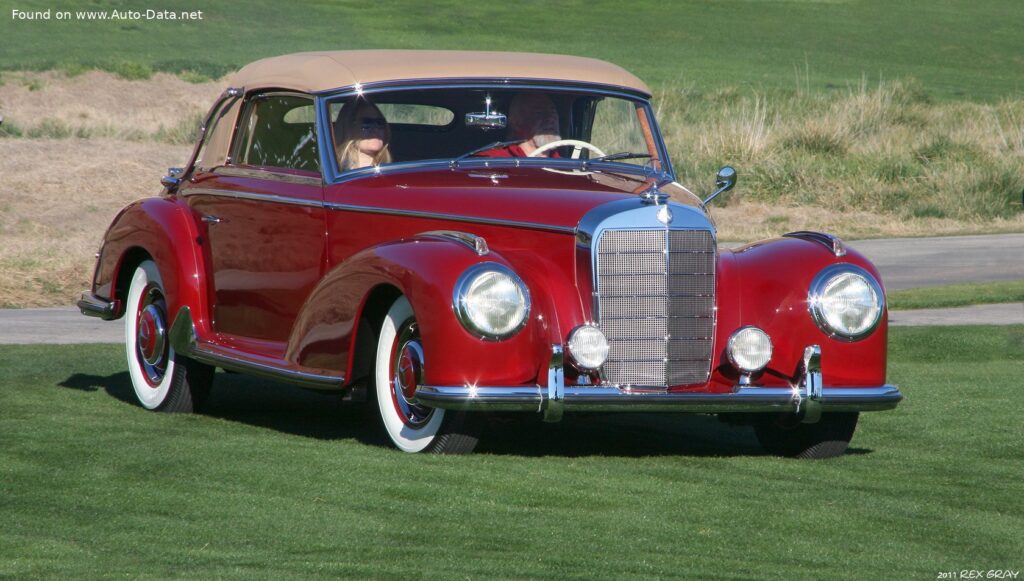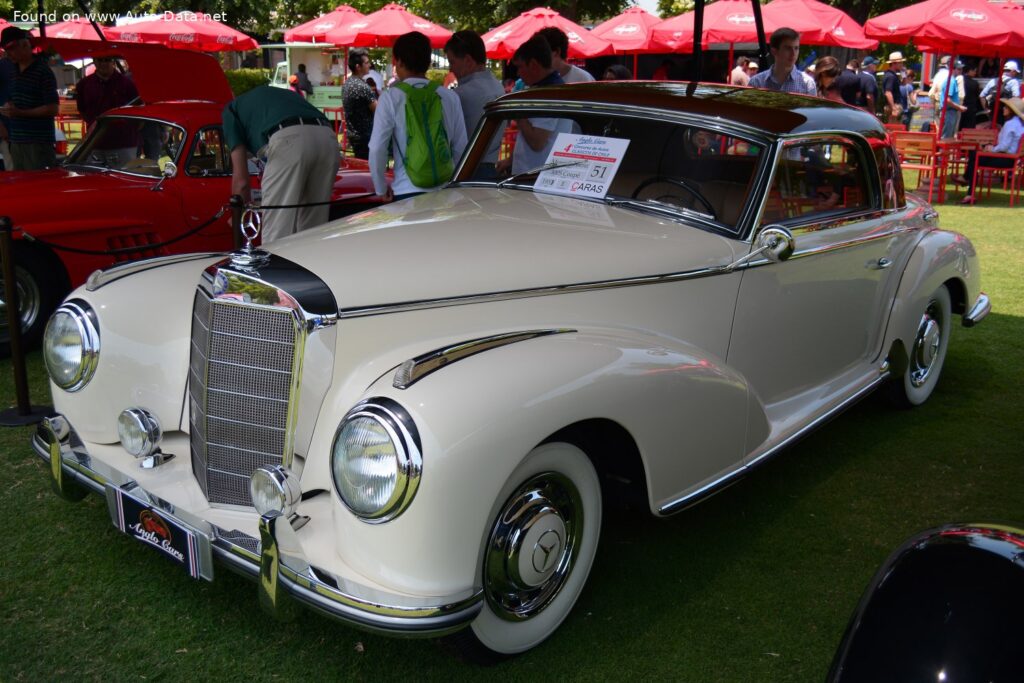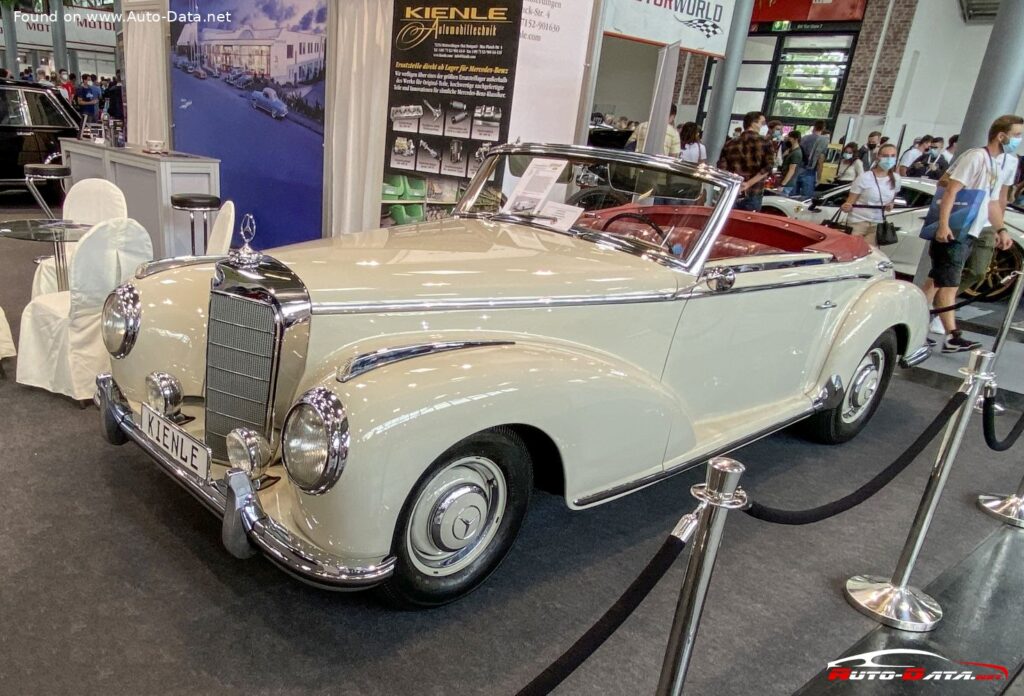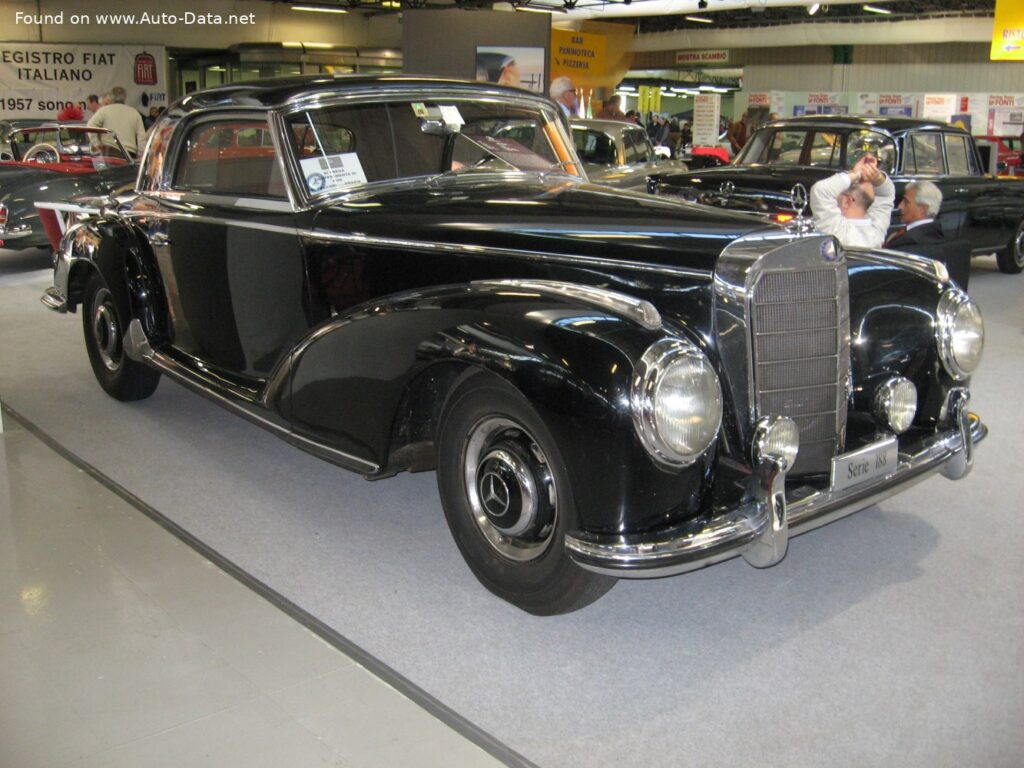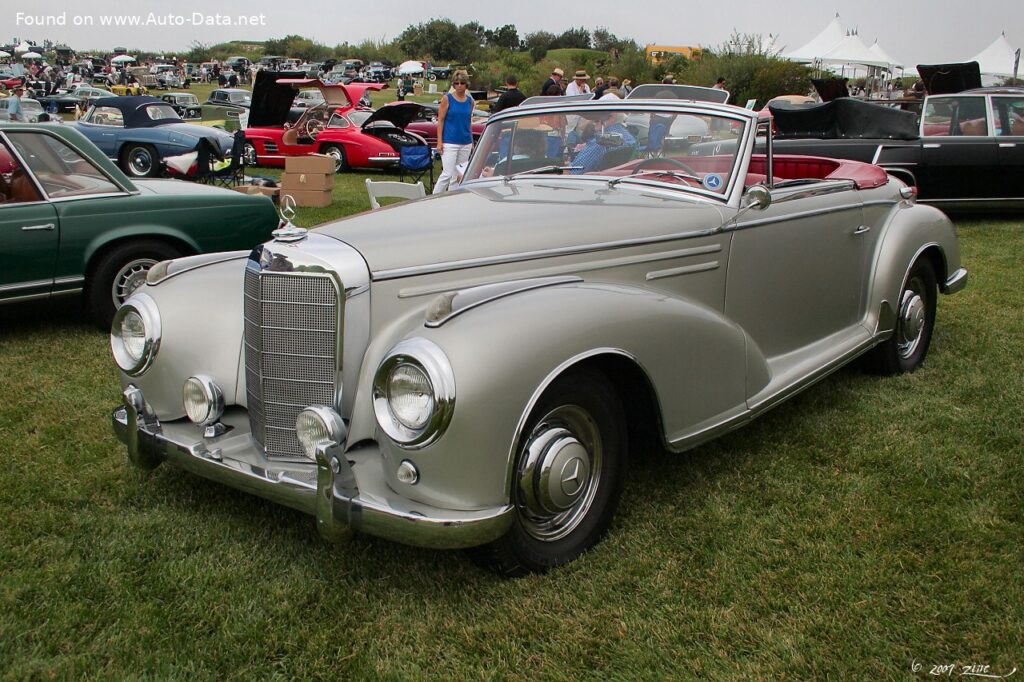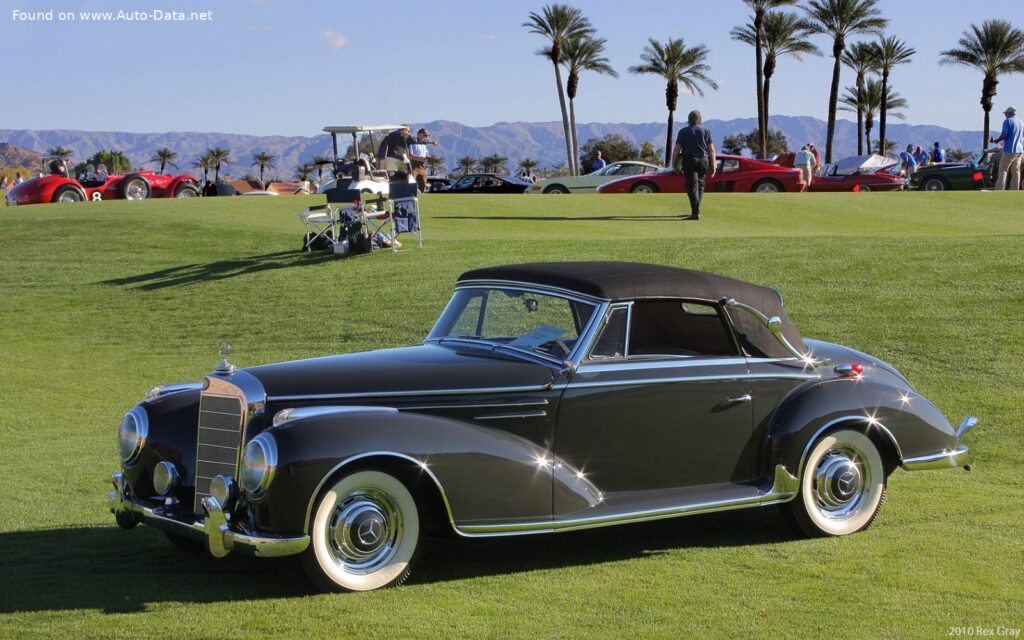
The Mercedes-Benz W188 II Cabriolet A 300 Sc represents a pinnacle of post-war German luxury and engineering. Produced between January 1956 and July 1957, this model was a refined iteration of the W188 series, building upon the foundation laid by its predecessor. The “Sc” designation denoted the presence of a gasoline direct injection system, a relatively advanced feature for the time. Positioned as the premium offering within the W188 range, the 300 Sc Cabriolet catered to a discerning clientele seeking both performance and opulent comfort. It was built on the W188 platform, a chassis known for its robust construction and sophisticated suspension.
Powertrain & Engine Architecture
The heart of the 300 Sc was the M199 inline-six cylinder engine, specifically the 199.980 variant. This 2,996 cc (182.83 cubic inches) engine was notable for its advanced direct gasoline injection system, developed by Bosch. This system, while complex for the era, offered improved fuel efficiency and increased power output compared to conventional carbureted engines. The engine produced 175 horsepower at 5,400 rpm and 255 Nm (188.08 lb-ft) of torque at 4,300 rpm. The engine featured a single overhead camshaft (SOHC) valvetrain with two valves per cylinder. The bore and stroke measured 85 mm (3.35 inches) and 88 mm (3.46 inches) respectively, resulting in a compression ratio of 8.55:1. The engine was mounted longitudinally in the front of the vehicle.
Power was transmitted to the rear wheels through a four-speed manual transmission. This transmission was chosen to complement the engine’s power characteristics and provide a more engaging driving experience, befitting the car’s luxury status. The drivetrain configuration was a traditional rear-wheel drive layout.
Fuel Injection System Details
The Bosch direct injection system utilized a high-pressure mechanical pump to deliver fuel directly into the combustion chamber. This eliminated the need for an intake manifold, reducing intake air temperatures and improving volumetric efficiency. Each cylinder had its own fuel injector, precisely metering the fuel charge for optimal combustion. The system required careful maintenance and precise adjustments to function correctly, contributing to the car’s complexity and cost.
Driving Characteristics
The 1956-1957 Mercedes-Benz 300 Sc Cabriolet offered a refined and capable driving experience for its time. While not overtly sporty, the 175 hp engine provided sufficient power for comfortable cruising and brisk acceleration. Acceleration from 0 to 100 km/h (0-62 mph) took approximately 14 seconds, and 0 to 60 mph was achieved in around 13.3 seconds. The top speed was rated at 180 km/h (111.85 mph). The direct injection system contributed to a smooth and responsive power delivery, although the engine required higher octane fuel to prevent detonation. The four-speed manual transmission allowed the driver to effectively manage the engine’s power band, providing control during both relaxed cruising and spirited driving. The car’s substantial weight (1,780 kg or 3,924.23 lbs) was noticeable, but the well-tuned suspension helped to mitigate body roll and provide a comfortable ride.
Equipment & Trim Levels
As the flagship model, the 300 Sc Cabriolet was generously equipped with luxury features. Standard appointments included plush upholstery, typically in leather, and extensive wood trim throughout the interior. The dashboard was elegantly designed, featuring a comprehensive array of gauges and controls. Power steering was not standard, but was often specified as an option. Other available options included a Becker radio, whitewall tires, and a heated rear window. The Cabriolet body style, with its fully retractable soft top, added to the car’s exclusivity and appeal. The interior was designed to accommodate five passengers, although rear seat space was somewhat limited.
Chassis & Braking
The W188 chassis was a robust and well-engineered structure, providing a solid foundation for the car’s luxurious appointments. The suspension system employed a double wishbone setup with a transverse stabilizer at the front, and a trailing arm arrangement at the rear. This configuration provided a comfortable ride and good handling characteristics. Braking was accomplished via drum brakes on all four wheels. While effective for the time, the drum brakes lacked the stopping power and fade resistance of modern disc brake systems. The steering system utilized a cone worm and recirculating ball mechanism, providing precise and responsive steering feel.
Market Reception & Comparison
The Mercedes-Benz 300 Sc Cabriolet was well-received by critics and affluent buyers alike. It was praised for its luxurious appointments, refined driving experience, and advanced technology. However, the car’s high price and complex mechanical systems limited its appeal to a relatively small segment of the market. Compared to other luxury cars of the era, such as the Cadillac Eldorado and the Rolls-Royce Silver Cloud, the 300 Sc offered a more sporting driving experience and a more modern design. Its direct injection system was a significant technological advantage, although it also added to the car’s maintenance requirements. Fuel consumption was relatively high for the time, averaging 12.5 l/100 km (18.8 US mpg).
Technical Specifications
| Brand | Mercedes-Benz |
| Model | W188 |
| Generation | W188 II Cabriolet A |
| Type (Engine) | 300 Sc (175 Hp) |
| Start of production | January, 1956 |
| End of production | July, 1957 |
| Powertrain Architecture | Internal Combustion engine |
| Body type | Cabriolet |
| Seats | 5 |
| Doors | 2 |
| Fuel consumption (combined) | 12.5 l/100 km |
| Fuel consumption (US mpg) | 18.8 US mpg |
| Fuel consumption (UK mpg) | 22.6 UK mpg |
| Fuel Type | Petrol (Gasoline) |
| Acceleration 0 – 100 km/h | 14 sec |
| Acceleration 0 – 62 mph | 14 sec |
| Acceleration 0 – 60 mph | 13.3 sec |
| Maximum speed | 180 km/h (111.85 mph) |
| Weight-to-power ratio | 10.2 kg/Hp |
| Power | 175 Hp @ 5400 rpm |
| Torque | 255 Nm @ 4300 rpm (188.08 lb.-ft. @ 4300 rpm) |
| Engine layout | Front, Longitudinal |
| Engine Model/Code | M 199 / 199.980 |
| Engine displacement | 2996 cm3 (182.83 cu. in.) |
| Number of cylinders | 6 |
| Engine configuration | Inline |
| Cylinder Bore | 85 mm (3.35 in.) |
| Piston Stroke | 88 mm (3.46 in.) |
| Compression ratio | 8.55:1 |
| Number of valves per cylinder | 2 |
| Fuel injection system | Direct injection |
| Engine aspiration | Naturally aspirated engine |
| Valvetrain | SOHC |
| Kerb Weight | 1780 kg (3924.23 lbs.) |
| Max. weight | 2040 kg (4497.43 lbs.) |
| Max load | 260 kg (573.2 lbs.) |
| Fuel tank capacity | 85 l (22.45 US gal | 18.7 UK gal) |
| Length | 4700 mm (185.04 in.) |
| Width | 1916 mm (75.43 in.) |
| Height | 1510 mm (59.45 in.) |
| Wheelbase | 2900 mm (114.17 in.) |
| Front track | 1480 mm (58.27 in.) |
| Rear track | 1525 mm (60.04 in.) |
| Drivetrain Architecture | Rear wheel drive |
| Number of gears | 4 gears, manual transmission |
| Front suspension | Double wishbone, Transverse stabilizer |
| Rear suspension | Trailing arm |
| Front brakes | Drum |
| Rear brakes | Drum |
| Steering type | Cone worm with recirculation balls |
Legacy
The Mercedes-Benz W188 II Cabriolet A 300 Sc remains a highly sought-after classic car today. Its rarity, elegant design, and advanced technology contribute to its enduring appeal. The M199 engine, while complex, is known for its durability when properly maintained. However, the direct injection system requires specialized knowledge and expertise to keep it functioning optimally. Parts availability can be challenging, and restoration costs are substantial. Despite these challenges, the 300 Sc Cabriolet represents a significant chapter in Mercedes-Benz history and continues to be cherished by collectors and enthusiasts worldwide. The car’s influence can be seen in subsequent Mercedes-Benz models, which continued to push the boundaries of automotive luxury and innovation.