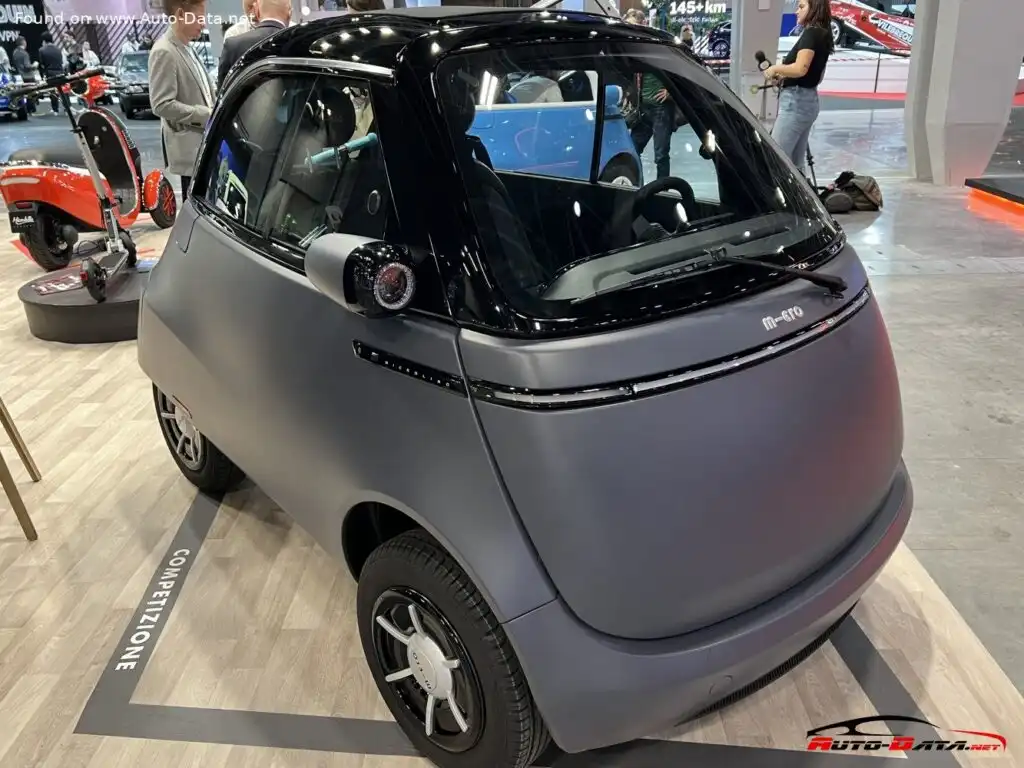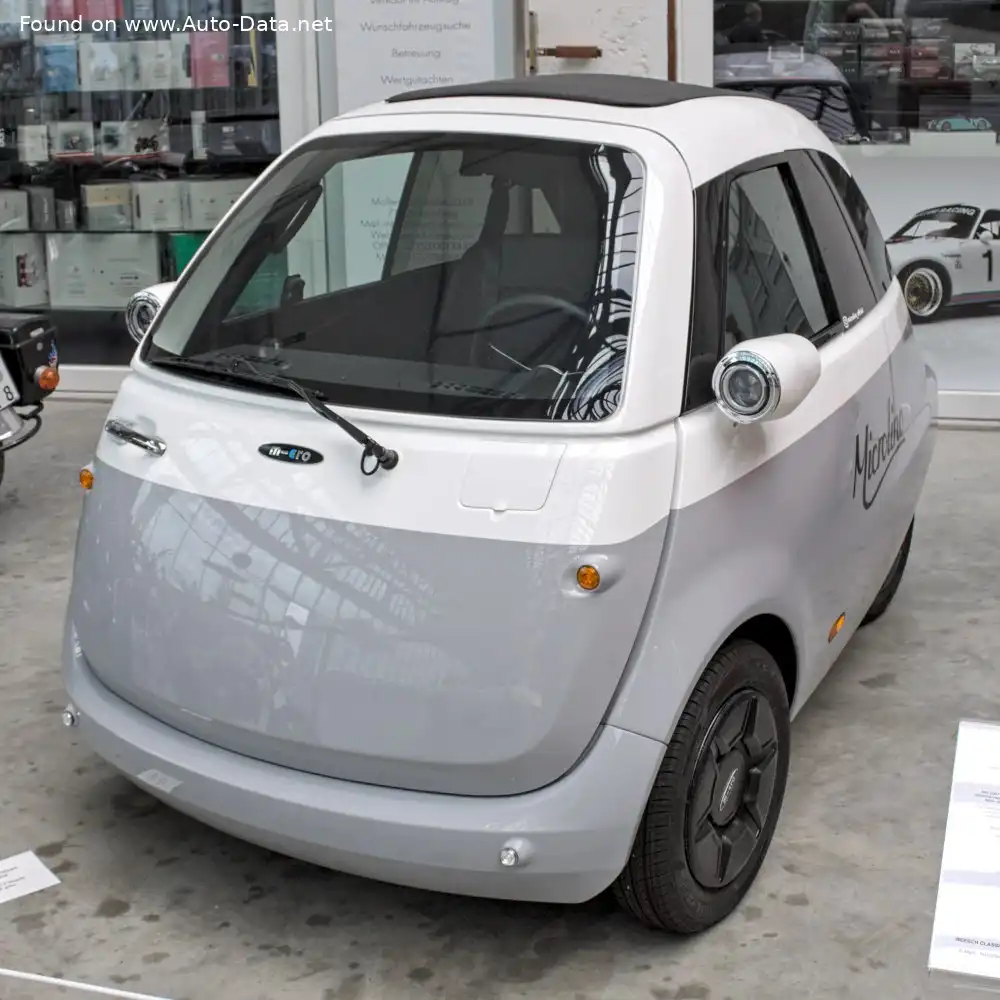
The Micro Microlino 1.0 14.4 kWh (15 hp) is a small, two-seat electric quadricycle produced by Micro Mobility Systems, a Swiss company, between 2018 and 2022. Designed as a modern reinterpretation of the BMW Isetta, the Microlino aimed to provide a practical and stylish urban mobility solution, particularly appealing to those seeking a compact and environmentally friendly vehicle. It quickly gained attention for its retro styling and focus on efficient, short-distance transportation. The Microlino 1.0 was the initial iteration of the Microlino, paving the way for subsequent models with larger battery options and increased performance.
Technical Specifications
| Brand | Micro |
| Model | Microlino |
| Generation | Microlino 1.0 |
| Type (Engine) | 14.4 kWh (15 hp) |
| Start of production | 2018 |
| End of production | 2022 |
| Powertrain Architecture | BEV (Electric Vehicle) |
| Body type | Quadricycle |
| Seats | 2 |
| Doors | 2 |
| Fuel Type | Electricity |
| Maximum speed | 90 km/h (55.92 mph) |
| Weight-to-power ratio | 38.1 kg/hp, 26.3 hp/tonne |
| Weight-to-torque ratio | 5.2 kg/Nm, 192.6 Nm/tonne |
| Gross battery capacity | 14.4 kWh |
| Battery technology | Lithium-ion (Li-Ion) |
| All-electric range | 200 km (124.27 mi) |
| Electric motor power | 15 hp |
| Electric motor torque | 110 Nm (81.13 lb.-ft.) |
| Electric motor location | Rear axle, Transverse |
| System power | 15 hp |
| System torque | 110 Nm (81.13 lb.-ft.) |
| Kerb Weight | 571 kg (1258.84 lbs.) |
| Trunk (boot) space – minimum | 300 l (10.59 cu. ft.) |
| Length | 2435 mm (95.87 in.) |
| Width including mirrors | 1500 mm (59.06 in.) |
| Height | 1459 mm (57.44 in.) |
| Drivetrain Architecture | One electric motor drives the rear wheels. |
| Drive wheel | Rear wheel drive |
| Number of gears and type of gearbox | 1 gear, automatic transmission |
| Front suspension | Independent coil spring |
| Rear suspension | Independent coil spring |
| Front brakes | Disc |
| Rear brakes | Drum |
Powertrain & Engine Architecture
The Microlino 1.0 is powered by a single electric motor located on the rear axle. This motor produces a peak output of 15 horsepower and 110 Nm (81.13 lb.-ft.) of torque. The vehicle utilizes a 14.4 kWh lithium-ion battery pack, providing an all-electric range of approximately 200 kilometers (124.27 miles) under optimal conditions. The powertrain is characterized by its simplicity, with a single-speed automatic transmission delivering power to the rear wheels. The battery pack is relatively small, contributing to the vehicle’s lightweight design. The charging port specifications were not widely publicized for the 1.0 version, but later models incorporated standard Type 2 connectors for AC charging and CCS for DC fast charging.
Driving Characteristics
The Microlino 1.0’s driving experience is defined by its nimble handling and adequate, though not exhilarating, acceleration. With only 15 horsepower, the vehicle is best suited for urban environments and short commutes. The single-speed automatic transmission provides seamless acceleration, but lacks the flexibility of a multi-gear system. The electronically limited top speed of 90 km/h (55.92 mph) reflects the vehicle’s intended use case. The rear-wheel-drive configuration contributes to a playful driving feel, but requires careful throttle control in slippery conditions. Compared to potential future, higher-powered Microlino variants, the 1.0 offers a more relaxed and economical driving experience.
Equipment & Trim Levels
The Microlino 1.0 was offered with a relatively basic level of equipment, reflecting its positioning as an affordable and minimalist urban vehicle. Standard features included basic instrumentation, comfortable seating for two, and a small trunk with a capacity of 300 liters (10.59 cu. ft.). The interior was characterized by its simple design and durable materials. Optional extras included features such as a heated windshield, upgraded upholstery, and a sound system. The vehicle’s unique door configuration – a single door on the front and a rear hatch – was a defining feature of its design. Trim levels were limited, with most customization options available as individual add-ons.
Chassis & Braking
The Microlino 1.0 features a lightweight chassis designed to maximize efficiency. The vehicle utilizes independent coil spring suspension on both the front and rear axles, providing a comfortable ride quality. The front brakes are disc brakes, while the rear brakes are drum brakes. This configuration was chosen to balance cost and performance, given the vehicle’s relatively low weight and speed. The vehicle’s compact dimensions and low center of gravity contribute to its agile handling characteristics. The overall chassis design prioritized simplicity and lightweight construction to maximize range and efficiency.
Market Reception & Comparison
The Microlino 1.0 received considerable attention from the media and public for its unique design and eco-friendly credentials. Critics praised its retro styling and practicality, but also noted its limited performance and range. Compared to other electric vehicles on the market, the Microlino 1.0 occupied a niche segment, appealing to those seeking a compact and stylish urban mobility solution. Its price point was competitive with other small electric vehicles, but its limited range and performance made it less suitable for longer journeys. The Microlino 1.0 differentiated itself from larger electric cars by focusing on simplicity, affordability, and a unique design aesthetic.
Legacy
The Microlino 1.0 served as a proof-of-concept for the Microlino platform, demonstrating the viability of a compact, retro-styled electric vehicle. While production of the 1.0 version ended in 2022, it laid the groundwork for subsequent models with larger battery packs and improved performance. The Microlino has become a popular choice in the used electric vehicle market, particularly among those seeking a unique and environmentally friendly transportation option. The vehicle’s simple powertrain and robust construction suggest good long-term reliability, although the availability of spare parts may become a concern as the vehicle ages. The Microlino 1.0 remains a significant milestone in the development of urban electric mobility.