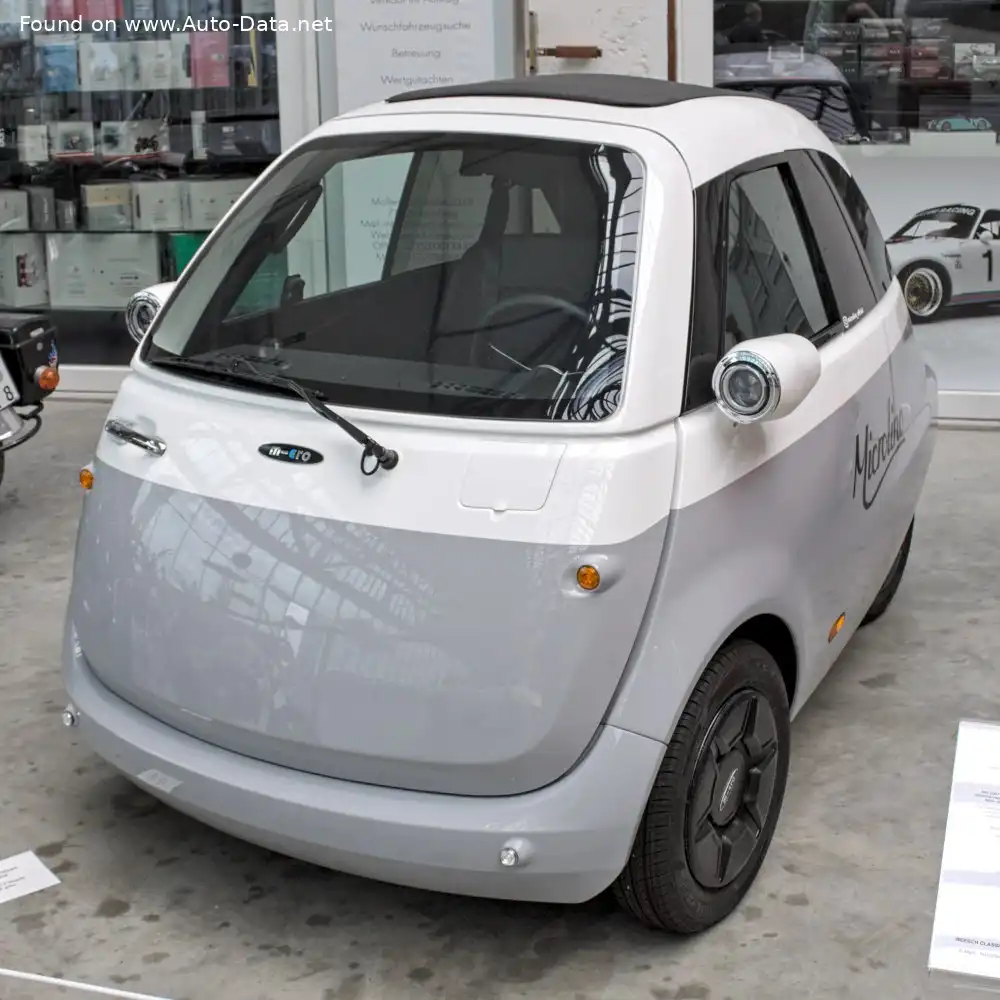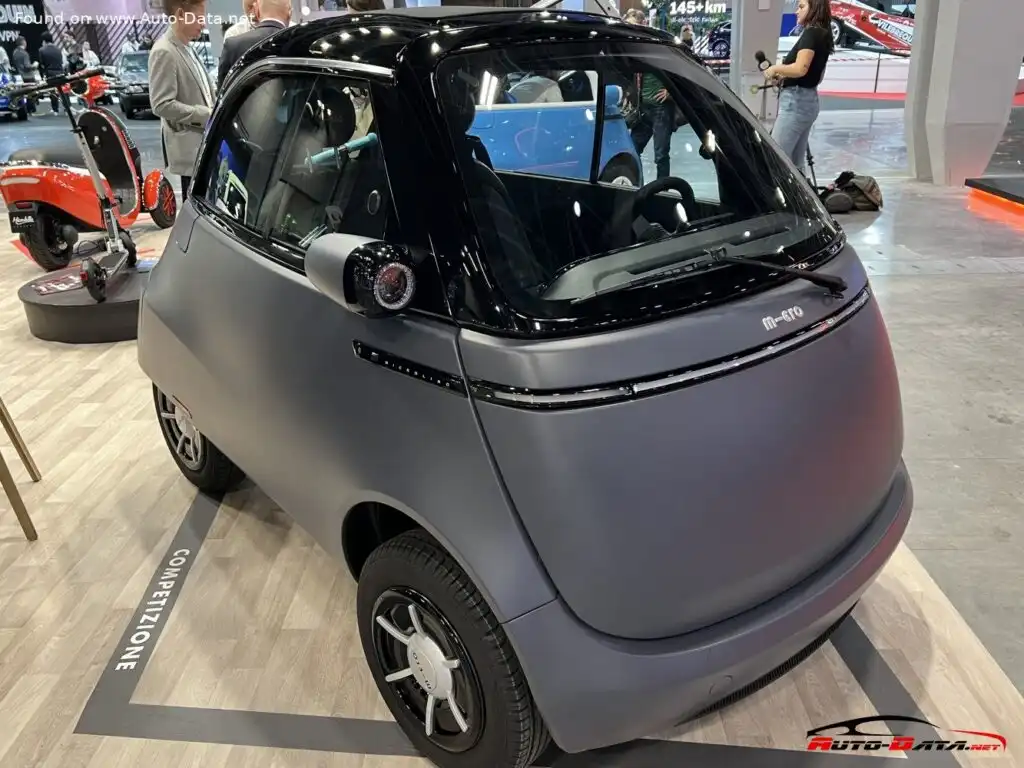
The Micro Microlino 2.0 10.5 kWh (17 hp) is a two-seat, two-door electric quadricycle produced by Micro Mobility Systems, based in Switzerland. Production began in June 2022, representing a significant step towards accessible urban mobility. The Microlino 2.0 is designed as a retro-futuristic city car, heavily inspired by the BMW Isetta, aiming to provide a sustainable and practical transportation solution for short-distance commutes. It occupies a unique niche, classified as a quadricycle rather than a traditional automobile, influencing its regulatory requirements and construction. This specific 10.5 kWh variant represents the entry-level offering in the Microlino 2.0 range, prioritizing affordability and efficiency over outright performance.
Technical Specifications
| Brand | Micro |
| Model | Microlino |
| Generation | Microlino 2.0 |
| Type (Engine) | 10.5 kWh (17 hp) |
| Start of production | June, 2022 |
| Powertrain Architecture | BEV (Electric Vehicle) |
| Body type | Quadricycle |
| Seats | 2 |
| Doors | 2 |
| Fuel Type | Electricity |
| Maximum speed | 90 km/h (55.92 mph), Electronically limited |
| Weight-to-power ratio | 30.3 kg/hp, 33 hp/tonne |
| Weight-to-torque ratio | 5.8 kg/Nm, 172.8 Nm/tonne |
| Gross battery capacity | 10.5 kWh |
| Battery technology | Lithium-ion (Li-Ion) |
| All-electric range | 177 km (109.98 mi) |
| Electric motor power | 17 hp |
| Electric motor Torque | 89 Nm (65.64 lb.-ft.) |
| Electric motor location | Rear axle, Transverse |
| System power | 17 hp |
| System torque | 89 Nm (65.64 lb.-ft.) |
| Kerb Weight | 515 kg (1135.38 lbs.) |
| Trunk (boot) space – minimum | 230 l (8.12 cu. ft.) |
| Length | 2519 mm (99.17 in.) |
| Width | 1473 mm (57.99 in.) |
| Height | 1501 mm (59.09 in.) |
| Drivetrain Architecture | One electric motor drives the rear wheels. |
| Drive wheel | Rear wheel drive |
| Number of gears and type of gearbox | 1 gear, automatic transmission |
| Front suspension | Independent coil spring |
| Rear suspension | Independent coil spring |
| Front brakes | Disc |
| Rear brakes | Drum |
Powertrain & Engine Architecture
The Microlino 2.0 10.5 kWh is powered by a single rear-mounted electric motor producing 17 horsepower and 89 Nm (65.64 lb.-ft.) of torque. The powertrain utilizes a 10.5 kWh lithium-ion battery pack, providing an all-electric range of approximately 177 kilometers (109.98 miles) under optimal conditions. The vehicle employs a single-speed automatic transmission, simplifying operation and focusing on ease of use. The electric motor is transversely mounted on the rear axle, contributing to a compact drivetrain layout. The battery management system (BMS) is crucial for optimizing battery life, performance, and safety, monitoring cell voltages, temperatures, and current flow. Charging is accomplished via standard charging ports, with charging times varying depending on the power source.
Driving Characteristics
The 17 hp output and single-speed automatic transmission of the Microlino 2.0 10.5 kWh result in modest, but adequate, performance for urban environments. Acceleration is geared towards smooth and efficient operation rather than rapid speed. The electronically limited top speed of 90 km/h (55.92 mph) reflects its intended use case – navigating city streets and short commutes. The rear-wheel-drive configuration provides a stable driving experience, while the lightweight construction (515 kg / 1135.38 lbs.) enhances agility. Compared to potential future, higher-powered Microlino variants, this base model prioritizes range and affordability over outright performance. The single-speed transmission offers simplicity, but lacks the gear ratios for optimizing efficiency at varying speeds, a trade-off made for ease of use.
Equipment & Trim Levels
The Microlino 2.0 10.5 kWh, as the entry-level trim, focuses on essential features. Standard equipment includes basic instrumentation, comfortable seating for two, and a functional interior layout. The interior is characterized by its minimalist design, emphasizing practicality and space efficiency. While not lavishly equipped, the Microlino 2.0 offers features such as LED lighting, a digital dashboard display, and basic safety equipment. Optional extras, depending on the market and configuration, may include upgraded interior materials, a premium sound system, and advanced driver-assistance systems (ADAS). The overall trim level is designed to appeal to buyers seeking a no-frills, eco-friendly transportation solution.
Chassis & Braking
The Microlino 2.0 features an independent coil spring suspension on both the front and rear axles, providing a comfortable ride quality despite its compact size. The front brakes are disc brakes, offering adequate stopping power, while the rear brakes utilize drum brakes, a cost-saving measure for the base model. The lightweight chassis construction contributes to the vehicle’s agility and efficiency. The relatively narrow track width enhances maneuverability in tight urban spaces. The suspension tuning is geared towards providing a balance between comfort and handling, prioritizing a smooth ride over sporty performance.
Market Reception & Comparison
The Microlino 2.0 has garnered significant attention for its unique design and sustainable approach to urban mobility. Critics have praised its retro styling, compact size, and environmental credentials. However, the limited range and modest performance of the 10.5 kWh variant have been noted as potential drawbacks. Compared to other electric vehicles, the Microlino 2.0 occupies a unique niche as a quadricycle, offering a lower price point and simplified regulatory requirements. Its primary competitors are other small electric vehicles and microcars designed for urban use. Fuel economy, measured in kilowatt-hours per 100 kilometers, is a key selling point, offering significantly lower running costs compared to gasoline-powered vehicles.
Legacy
The Microlino 2.0 10.5 kWh represents a pioneering effort in the development of accessible and sustainable urban transportation. Its long-term reliability will depend on the durability of its electric powertrain components and the quality of its construction. As a relatively new vehicle, its long-term maintenance costs are still being assessed. However, the simplicity of its electric drivetrain suggests that maintenance requirements should be lower than those of traditional internal combustion engine vehicles. In the used car market, the Microlino 2.0 is expected to appeal to environmentally conscious buyers seeking a practical and stylish city car. Its unique design and limited production numbers may also contribute to its collectibility over time.