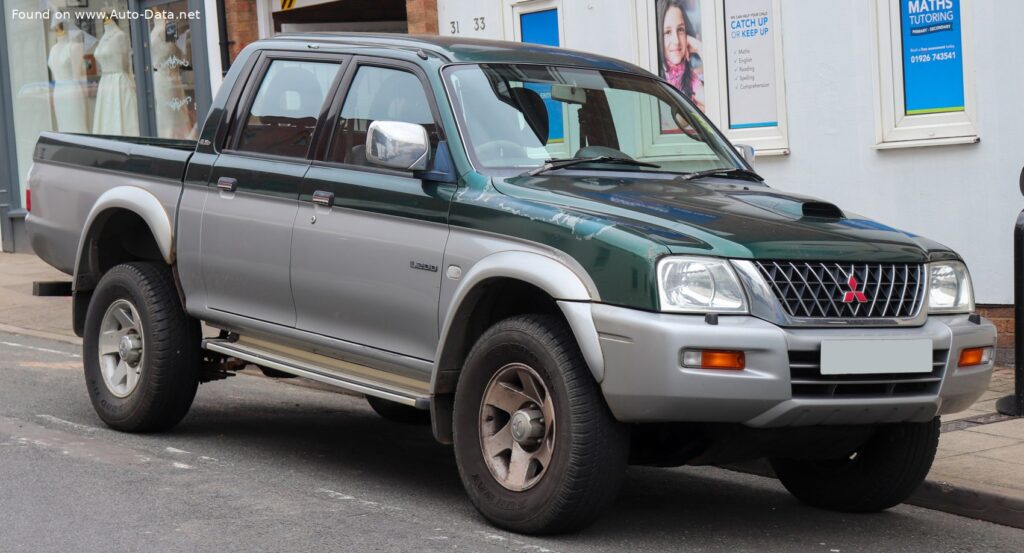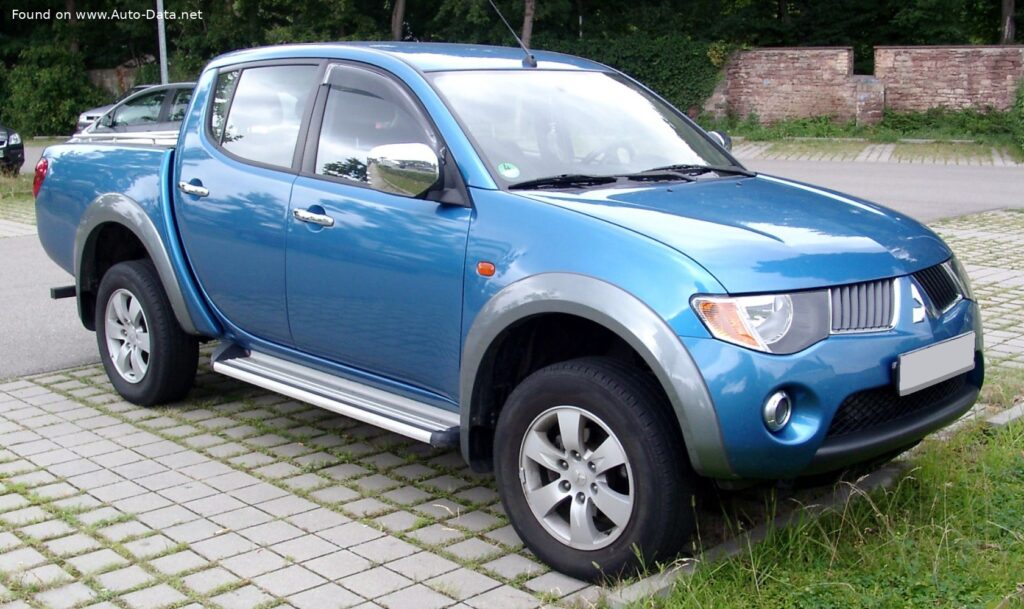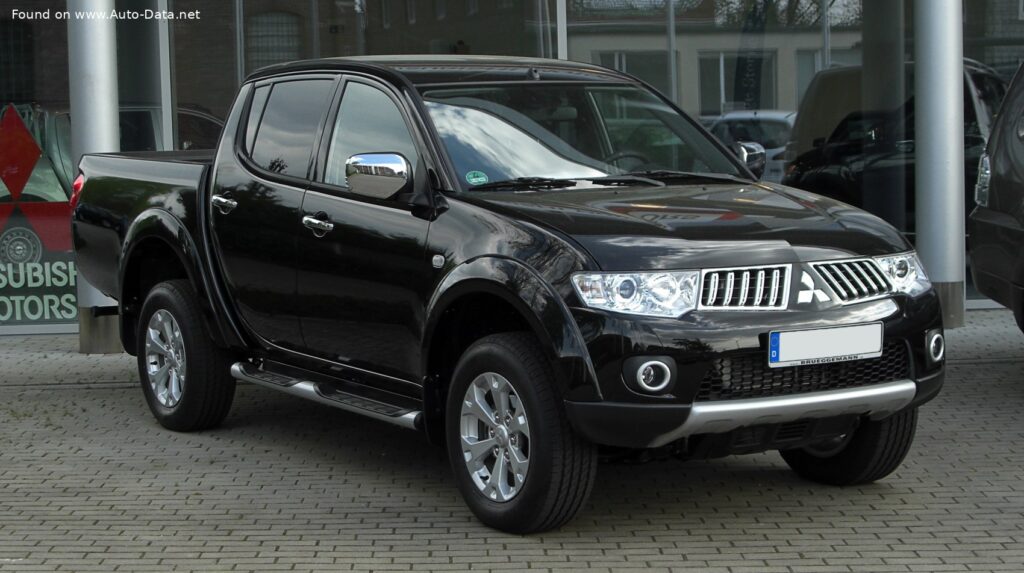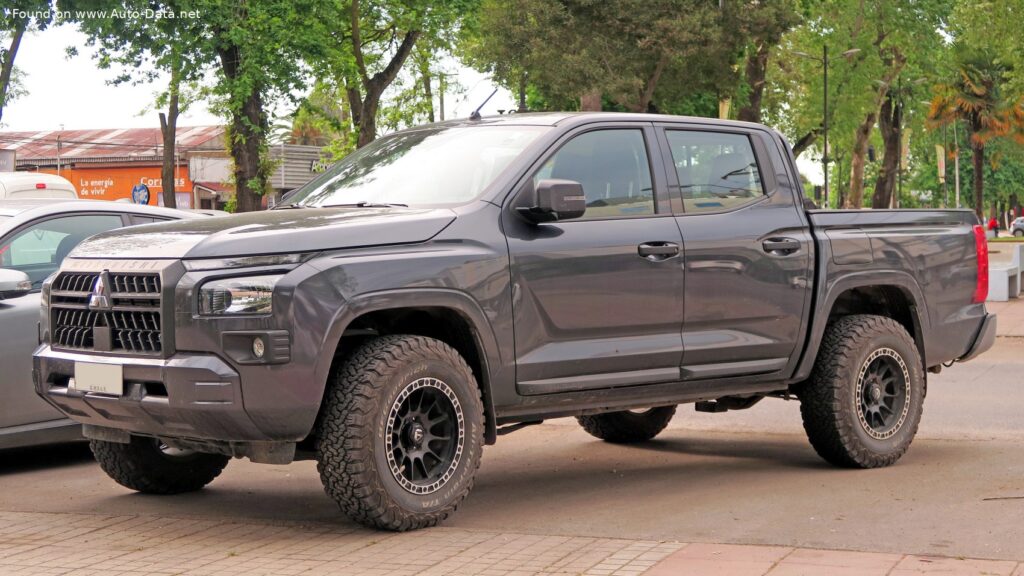
The Mitsubishi L200 VI Double Cab 2.4 MIVEC (181 Hp) 4WD: A Global Workhorse for the Modern Era
The Mitsubishi L200 VI Double Cab 2.4 MIVEC (181 Hp) 4WD represents the sixth generation of Mitsubishi Motors’ venerable mid-size pickup truck, a vehicle renowned globally for its robust utility, off-road prowess, and reliability. Introduced in 2023, this iteration of the L200, also known as the Triton in various markets such as Australia, New Zealand, and Thailand, continues its legacy as a versatile workhorse equally adept at commercial duties and recreational adventures. While the L200 nameplate is not currently sold in the United States, its design philosophy and engineering ethos are familiar to American consumers through other global pickup offerings. This latest generation brings a blend of enhanced performance, modern technology, and refined comfort to its loyal customer base across Europe, Asia, Africa, and Oceania, solidifying its position in a highly competitive segment.
The Mitsubishi L200 VI Double Cab is built upon a sturdy ladder frame chassis, a hallmark of traditional pickup truck construction, ensuring durability and high towing/payload capacities. Its double cab configuration, featuring four doors and seating for five occupants, offers a practical solution for both families and work crews, combining passenger comfort with significant cargo-carrying ability. With its fresh design and updated powertrain, the 2023 model aims to set new benchmarks for efficiency and capability in the global mid-size pickup market.
Powertrain and Performance of the Mitsubishi L200 VI Double Cab 2.4 MIVEC (181 Hp) 4WD
At the heart of the Mitsubishi L200 VI Double Cab 2.4 MIVEC (181 Hp) 4WD is a sophisticated 2.4-liter MIVEC (Mitsubishi Innovative Valve timing Electronic Control) diesel engine, designated with the internal code 4N16. This inline four-cylinder powerplant is longitudinally mounted at the front, optimized for truck applications, and features a Double Overhead Camshaft (DOHC) valvetrain with four valves per cylinder, promoting efficient breathing and power delivery. The engine’s displacement measures 2,442 cubic centimeters (149.02 cubic inches).
Equipped with a common rail diesel fuel injection system and boosted by a turbocharger with an intercooler, this engine generates a robust 181 horsepower at a relatively low 3,500 revolutions per minute. Its power output translates to an impressive 74.1 horsepower per liter, showcasing Mitsubishi’s engineering efficiency. More crucially for a pickup truck, the engine delivers a substantial 317.15 pound-feet (430 Nm) of torque, available across a broad and usable band between 2,250 and 2,500 rpm. This ample torque at lower engine speeds is vital for heavy hauling, towing, and tackling challenging off-road terrain. The engine also incorporates a Start & Stop System, contributing to improved fuel efficiency and reduced emissions, particularly in urban driving conditions, a critical feature for modern vehicles navigating stringent global emissions standards.
Power is routed through a durable 6-speed manual transmission, providing the driver with precise control over gear selection, which is often preferred for demanding tasks and off-road driving where nuanced control is paramount. The drivetrain architecture is a part-time all-wheel-drive (4×4) system, where the internal combustion engine primarily drives the rear wheels. The front wheels can be engaged as needed through an electrically or mechanically operated clutch, offering enhanced traction for off-road excursions or slippery conditions. This robust setup contributes to a weight-to-power ratio of 10.5 kilograms per horsepower (95.3 horsepower per tonne) and a weight-to-torque ratio of 4.4 kilograms per Newton-meter (226.3 Newton-meters per tonne), indicating strong performance capabilities relative to its curb weight and underscoring its ability to handle demanding tasks.
Design, Dimensions, and Features
The Mitsubishi L200 VI Double Cab boasts a contemporary and assertive design, reflecting its rugged capabilities while maintaining a modern aesthetic. Its exterior styling is characterized by sharp lines, a prominent grille, and muscular fenders, conveying a sense of strength and purpose. With a length of 209.45 inches (5320 mm), a width of 73.43 inches (1865 mm), and a height of 70.67 inches (1795 mm), it commands a significant road presence. Its generous wheelbase of 123.23 inches (3130 mm) contributes to both stable on-road handling and interior spaciousness, providing ample legroom for all five occupants. The design also prioritizes functionality, evident in its substantial front and rear overhangs of 35.04 inches (890 mm) and 51.18 inches (1300 mm), respectively, which are balanced to optimize load distribution and facilitate cargo bed access.
Off-road capability is a cornerstone of the L200’s identity, a reputation built over decades of performance in challenging environments. A substantial ground clearance of 8.98 inches (228 mm) allows it to navigate uneven terrain with confidence, minimizing the risk of underbody damage. Furthermore, impressive approach (30.4°), departure (22.8°), and ramp-over (23.4°) angles ensure that the vehicle can ascend steep inclines, descend challenging slopes, and traverse obstacles without scraping the undercarriage. These angles are critical for serious off-roading and demonstrate the L200’s commitment to delivering true go-anywhere capability. The minimum turning circle of 40.68 feet (12.4 meters) is respectable for a vehicle of its size, aiding maneuverability in tighter spaces, whether in urban environments or on narrow trails.
Suspension components are engineered for durability and comfort, striking a balance between utility and passenger refinement. The front features an independent double wishbone setup with coil springs and a transverse stabilizer, providing precise steering and a compliant ride, absorbing road imperfections effectively. At the rear, a rigid axle suspension with leaf springs is employed, a time-tested configuration known for its exceptional load-carrying capacity and robustness, essential for a working pickup that often carries heavy cargo or tows substantial trailers. Braking performance is handled by ventilated discs at the front (290 mm) and robust drum brakes at the rear (295 mm), with an Anti-lock Braking System (ABS) as a standard safety feature to prevent wheel lock-up during hard braking, enhancing control and reducing stopping distances. The hydraulic rack and pinion steering system offers direct feedback and assistance, crucial for controlling a large vehicle under varying conditions, from highway cruising to navigating rough trails. The L200 VI Double Cab is fitted with tire sizes ranging from 265/70 R16 to 265/60 R18, mounted on 7.5J x 16 or 7.5J x 18 wheel rims, providing ample grip and stability across diverse surfaces.
Technical Specifications
| Category | Specification | Metric | US Imperial |
|---|---|---|---|
| Brand | Mitsubishi | – | – |
| Model | L200 | – | – |
| Generation | L200 VI Double Cab | – | – |
| Type (Engine) | 2.4 MIVEC (181 Hp) 4WD | – | – |
| Start of production | 2023 year | – | – |
| Powertrain Architecture | Internal Combustion engine | – | – |
| Body type | Pick-up | – | – |
| Seats | 5 | – | – |
| Doors | 4 | – | – |
Performance Specs
|
|||
| Fuel Type | Diesel | – | – |
| Weight-to-power ratio | – | 10.5 kg/Hp, 95.3 Hp/tonne | – |
| Weight-to-torque ratio | – | 4.4 kg/Nm, 226.3 Nm/tonne | – |
Engine Specs
|
|||
| Power | 181 Hp @ 3500 rpm. | – | – |
| Power per liter | 74.1 Hp/l | – | – |
| Torque | 430 Nm @ 2250-2500 rpm. | – | 317.15 lb.-ft. @ 2250-2500 rpm. |
| Engine layout | Front, Longitudinal | – | – |
| Engine Model/Code | 4N16 | – | – |
| Engine displacement | – | 2442 cm3 | 149.02 cu. in. |
| Number of cylinders | 4 | – | – |
| Engine configuration | Inline | – | – |
| Cylinder Bore | – | 86 mm | 3.39 in. |
| Piston Stroke | – | 105.1 mm | 4.14 in. |
| Number of valves per cylinder | 4 | – | – |
| Fuel injection system | Diesel Commonrail | – | – |
| Engine aspiration | Turbocharger, Intercooler | – | – |
| Valvetrain | DOHC | – | – |
| Engine oil capacity | – | 6.7 l | 7.08 US qt | 5.9 UK qt |
| Coolant | – | 7.7 l | 8.14 US qt | 6.78 UK qt |
| Engine systems | Start & Stop System | – | – |
Space, Volume and Weights
|
|||
| Kerb Weight | – | 1900-1975 kg | 4188.78 – 4354.13 lbs. |
| Max. weight (GVWR) | – | 3000 kg | 6613.87 lbs. |
| Max load (Payload) | – | 1025-1100 kg | 2259.74 – 2425.08 lbs. |
| Fuel tank capacity | – | 75 l | 19.81 US gal | 16.5 UK gal |
| Permitted trailer load with brakes (12%) | – | 3500 kg | 7716.18 lbs. |
Dimensions
|
|||
| Length | – | 5320 mm | 209.45 in. |
| Width | – | 1865 mm | 73.43 in. |
| Height | – | 1795 mm | 70.67 in. |
| Wheelbase | – | 3130 mm | 123.23 in. |
| Front track | – | 1570 mm | 61.81 in. |
| Rear (Back) track | – | 1565 mm | 61.61 in. |
| Front overhang | – | 890 mm | 35.04 in. |
| Rear overhang | – | 1300 mm | 51.18 in. |
| Ride height (ground clearance) | – | 228 mm | 8.98 in. |
| Minimum turning circle (turning diameter) | – | 12.4 m | 40.68 ft. |
| Approach angle | 30.4° | – | – |
| Departure angle | 22.8° | – | – |
| Ramp-over (brakeover) angle | 23.4° | – | – |
Drivetrain, Brakes and Suspension Specs
|
|||
| Drivetrain Architecture | The Internal combustion engine (ICE) drives the rear wheels permanently, and the front wheels are driven through an electrically or mechanically operated clutch if necessary. | – | – |
Legacy and Market Impact
The Mitsubishi L200, known as the Triton in many global markets, has cultivated a formidable legacy as a truly international workhorse. Since its inception, it has been synonymous with reliability, ruggedness, and exceptional off-road capability, attributes that have endeared it to a diverse customer base ranging from farmers and construction workers to adventure enthusiasts across Europe, Asia, Africa, and Oceania. The 2023 Mitsubishi L200 VI Double Cab 2.4 MIVEC (181 Hp) 4WD continues this tradition, building upon a foundation of proven engineering while integrating modern advancements in powertrain technology, safety, and comfort.
In its primary markets, the L200 competes fiercely with other global mid-size pickup stalwarts such as the Toyota Hilux, Ford Ranger, Isuzu D-Max, and Nissan Navara. What distinguishes the L200 is often its strong value proposition, combining competitive pricing with a comprehensive feature set and Mitsubishi’s renowned Super Select 4WD-II system (though the data here specifies a part-time 4WD, Super Select is a common L200 feature in higher trims, offering versatility). Its reputation for durability in harsh conditions has made it a preferred choice in regions where infrastructure is less developed and vehicle resilience is paramount. The sixth generation, with its MIVEC diesel engine, aims to further enhance its appeal by offering improved fuel efficiency and lower emissions, critical factors in today’s environmentally conscious automotive landscape, without compromising its core capabilities.
While the L200 is not sold in the United States, its influence on the global pickup truck segment is undeniable. It represents a different philosophy of pickup design compared to the larger, often gasoline-powered trucks prevalent in the North American market. The L200’s focus on maneuverability, diesel efficiency, and robust utility in a mid-size package resonates with global consumers who demand a versatile vehicle for both commercial applications and family transport. Its consistent evolution, incorporating modern safety features, infotainment systems