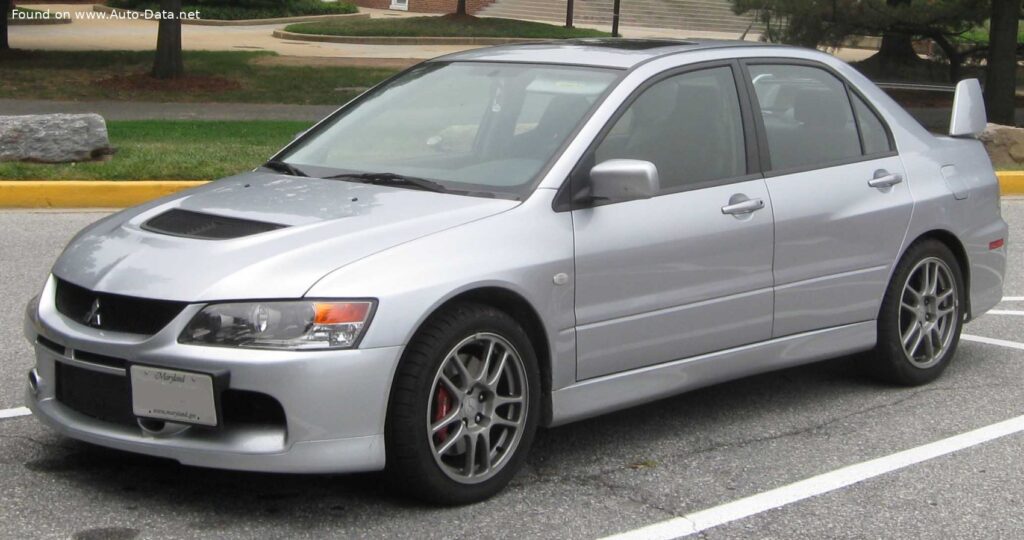
Introduction to the Mitsubishi Lancer Evolution IX 2.0 MIVEC (286 Hp) 4WD
The Mitsubishi Lancer Evolution, often simply referred to as the “Evo,” stands as a titan in the realm of high-performance sports sedans, deeply rooted in the world of rally racing. The ninth generation, known as the Lancer Evolution IX, represents a significant evolution (pun intended) of this iconic platform. Produced from 2005 to 2007, the Mitsubishi Lancer Evolution IX 2.0 MIVEC (286 Hp) 4WD variant encapsulates the pinnacle of Mitsubishi’s rally-bred engineering for its era, offering a compelling blend of raw power, sophisticated all-wheel-drive technology, and aggressive styling. Positioned as a direct competitor to Subaru’s Impreza WRX STI, the Evo IX solidified its reputation as a formidable street weapon and a highly capable track machine, beloved by enthusiasts worldwide. While its primary market was Japan and Europe, it also enjoyed a strong following and significant sales in North America, becoming a cult classic for those seeking an uncompromised driving experience.
Engine & Performance: The Heart of the Mitsubishi Lancer Evolution IX 2.0 MIVEC (286 Hp) 4WD
At the core of the Mitsubishi Lancer Evolution IX 2.0 MIVEC (286 Hp) 4WD is the legendary 4G63T engine, a 2.0-liter (121.86 cu. in.) inline-four powerplant that had been the backbone of the Evo series since its inception. For the Evolution IX, Mitsubishi introduced its MIVEC (Mitsubishi Innovative Valve timing Electronic Control) system to the engine, marking a crucial enhancement. This variable valve timing technology improved both low-end torque and high-end power delivery, making the engine more flexible and responsive across the rev range.
The turbocharged and intercooled 4G63T engine in this configuration produced a potent 286 horsepower at 6500 rpm, translating to an impressive power output of 143.2 Hp per liter. Torque figures were equally impressive, peaking at 289.12 lb.-ft. (392 Nm) at a relatively accessible 3500 rpm. This robust power and torque, combined with a curb weight of 3273.86 lbs (1485 kg), resulted in an exceptional weight-to-power ratio of 5.2 kg/Hp and a weight-to-torque ratio of 3.8 kg/Nm, highlighting the car’s explosive acceleration capabilities.
Power was meticulously managed and distributed to all four wheels via a precise 5-speed manual transmission. While some markets received a 6-speed option, the 5-speed unit was renowned for its durability and direct feel, perfectly suiting the car’s aggressive character. The Evo IX’s sophisticated drivetrain architecture, featuring a permanent all-wheel-drive system, was augmented by advanced technologies like Mitsubishi’s Active Center Differential (ACD) and Super Active Yaw Control (AYC) (though not explicitly detailed in the provided data, these were hallmark Evo features of the era). These systems intelligently distributed torque between the front and rear axles, and even between the rear wheels, to optimize traction and handling dynamics under various driving conditions, from rallying to spirited street driving.
Despite its performance focus, the Evo IX offered reasonable, if not class-leading, fuel economy for a car of its caliber. Urban driving yielded approximately 19 US mpg, while extra-urban cruising improved to around 25 US mpg, testament to the MIVEC system’s efficiency gains.
Design & Features: Rally Aesthetics Meets Functional Performance
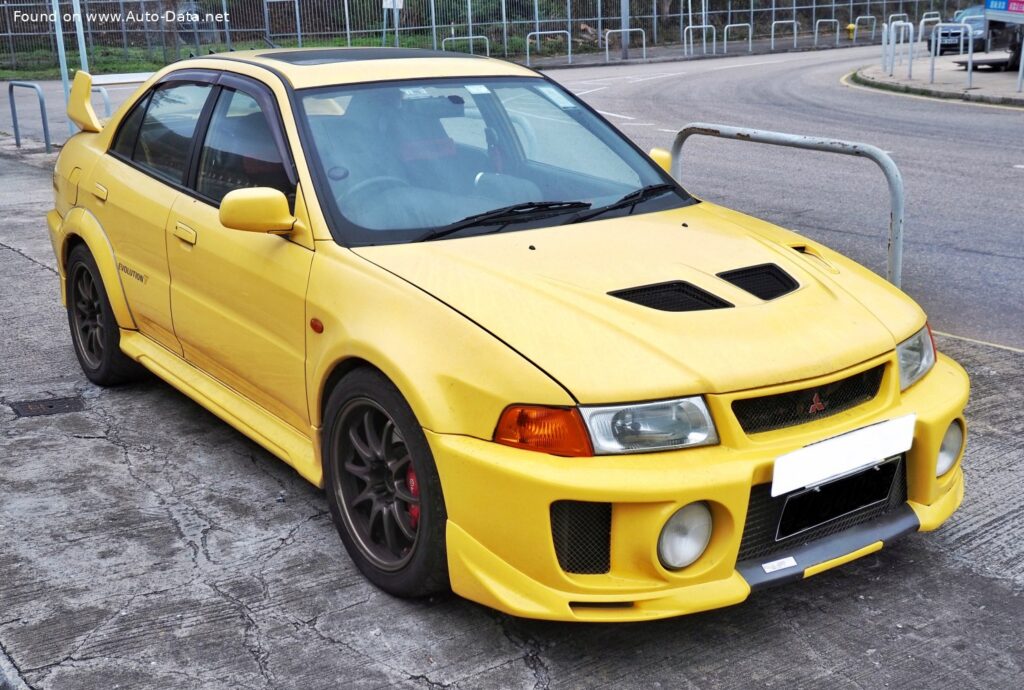
The Mitsubishi Lancer Evolution IX maintained the aggressive, purposeful aesthetic that defined the Evo lineage, wrapped in a practical four-door sedan body. Its design was not merely for show; every element served a functional purpose, reflecting its rally homologation roots. The car’s stance was wide and low, accentuated by flared fenders accommodating the performance-oriented 235/45 R17 tires mounted on 8J x 17-inch wheel rims.
Key design features included a prominent front fascia with large air intakes for engine cooling and brake ventilation, a lightweight aluminum hood with functional vents, and a distinctive rear spoiler designed to generate aerodynamic downforce at high speeds. The overall length of 178.5 inches (4534 mm), width of 69.69 inches (1770 mm), and height of 57.09 inches (1450 mm) contributed to its compact yet muscular presence. The 103.31-inch (2624 mm) wheelbase provided a stable platform for its dynamic capabilities.
Inside, the Evo IX offered seating for five, though the rear accommodations were more practical than luxurious. The cockpit was driver-focused, featuring supportive bucket seats (often Recaro in many markets) to hold occupants firmly during aggressive maneuvers. Essential driver information was clearly presented, and the hydraulic power steering system provided direct and communicative feedback, crucial for a high-performance machine.
The suspension setup was a testament to its performance pedigree: an independent MacPherson strut system with a transverse stabilizer at the front, paired with an independent multi-link suspension, also with a transverse stabilizer, at the rear. This configuration provided exceptional road holding and body control. Braking duties were handled by substantial ventilated discs all around—320 mm at the front and 300 mm at the rear—complemented by an Anti-lock Braking System (ABS) for enhanced safety and control under hard braking. The trunk space of 10.21 cu. ft. (289 liters) offered reasonable practicality for a performance sedan.
Technical Specifications: Mitsubishi Lancer Evolution IX 2.0 MIVEC (286 Hp) 4WD
| Category | Specification | US Equivalent |
|---|---|---|
General Information |
||
| Brand | Mitsubishi | |
| Model | Lancer Evolution | |
| Generation | Lancer Evolution IX | |
| Type (Engine) | 2.0 MIVEC (286 Hp) 4WD | |
| Start of production | 2005 year | |
| End of production | 2007 year | |
| Powertrain Architecture | Internal Combustion engine | |
| Body type | Sedan | |
| Seats | 5 | |
| Doors | 4 | |
Performance Specs |
||
| Fuel consumption (economy) – urban | 12.4 l/100 km | 19 US mpg |
| Fuel consumption (economy) – extra urban | 9.4 l/100 km | 25 US mpg |
| Fuel Type | Petrol (Gasoline) | |
| Weight-to-power ratio | 5.2 kg/Hp | 192.6 Hp/tonne |
| Weight-to-torque ratio | 3.8 kg/Nm | 264 Nm/tonne |
Engine Specs |
||
| Power | 286 Hp @ 6500 rpm | |
| Power per liter | 143.2 Hp/l | |
| Torque | 392 Nm @ 3500 rpm | 289.12 lb.-ft. @ 3500 rpm |
| Engine layout | Front, Transverse | |
| Engine Model/Code | 4G63T | |
| Engine displacement | 1997 cm3 | 121.86 cu. in. |
| Number of cylinders | 4 | |
| Engine configuration | Inline | |
| Cylinder Bore | 85 mm | 3.35 in. |
| Piston Stroke | 88 mm | 3.46 in. |
| Compression ratio | 8.8:1 | |
| Number of valves per cylinder | 4 | |
| Fuel injection system | Multi-port manifold injection | |
| Engine aspiration | Turbocharger, Intercooler | |
| Valvetrain | DOHC | |
| Engine oil capacity | 5.3 l | 5.6 US qt |
| Coolant | 6 l | 6.34 US qt |
Space, Volume and Weights |
||
| Kerb Weight | 1485 kg | 3273.86 lbs. |
| Trunk (boot) space – minimum | 289 l | 10.21 cu. ft. |
| Fuel tank capacity | 53 l | 14 US gal |
Dimensions |
||
| Length | 4534 mm | 178.5 in. |
| Width | 1770 mm | 69.69 in. |
| Height | 1450 mm | 57.09 in. |
| Wheelbase | 2624 mm | 103.31 in. |
| Front track | 1514 mm | 59.61 in. |
| Rear (Back) track | 1514 mm | 59.61 in. |
| Minimum turning circle (turning diameter) | 11.8 m | 38.71 ft. |
Drivetrain, Brakes and Suspension Specs |
||
| Drivetrain Architecture | Internal combustion engine (ICE) drives permanently the four wheels of the vehicle. | |
| Drive wheel | All wheel drive (4×4) | |
| Number of gears and type of gearbox | 5 gears, manual transmission | |
| Front suspension | Independent type McPherson, Transverse stabilizer | |
| Rear suspension | Independent multi-link suspension, Transverse stabilizer | |
| Front brakes | Ventilated discs, 320 mm | |
| Rear brakes | Ventilated discs, 300 mm | |
| Assisting systems | ABS (Anti-lock braking system) | |
| Steering type | Steering rack and pinion | |
| Power steering | Hydraulic Steering | |
| Tires size | 235/45 R17 | |
| Wheel rims size | 8J x 17 | |
Legacy & Market Impact of the Mitsubishi Lancer Evolution IX
The Mitsubishi Lancer Evolution IX holds a special place in automotive history, particularly as one of the last iterations of the legendary 4G63T engine before its replacement in the Evo X. It represented a refinement of a proven formula, combining the raw, visceral driving experience of earlier Evos with improved technology and a slightly more sophisticated demeanor thanks to the MIVEC system.
Its market impact was significant, solidifying Mitsubishi’s reputation as a purveyor of high-performance, rally-bred vehicles. In the global performance car scene, the Evo IX was almost universally pitted against its arch-rival, the Subaru Impreza WRX STI. This rivalry fueled a golden age of Japanese performance cars, with each model pushing the boundaries of what was achievable in a street-legal sedan. The Evo IX was lauded for its sharper steering, more aggressive handling, and a more direct connection to the driver, often considered the more hardcore of the two.
As a homologation special, the Evo IX’s existence was intrinsically linked to Mitsubishi’s success in the World Rally Championship (WRC). While the car itself was a street-legal version, its engineering and design directly benefited from the rigorous demands of professional rallying. This heritage gave it an authenticity that few other performance sedans could match, resonating deeply with enthusiasts who appreciated its no-compromise approach to speed and agility.
Today, the Mitsubishi Lancer Evolution IX 2.0 MIVEC (286 Hp) 4WD is highly sought after by collectors and performance enthusiasts. Its robust engine, advanced all-wheel-drive system, and distinctive styling ensure its status as a modern classic. The cessation of the Lancer Evolution line after the X generation only amplified the appreciation for models like the Evo IX, making them cherished pieces of automotive history that continue to command strong values in the used car market. It remains a testament to Mitsubishi’s engineering prowess and a thrilling reminder of an era when rally cars ruled the streets.