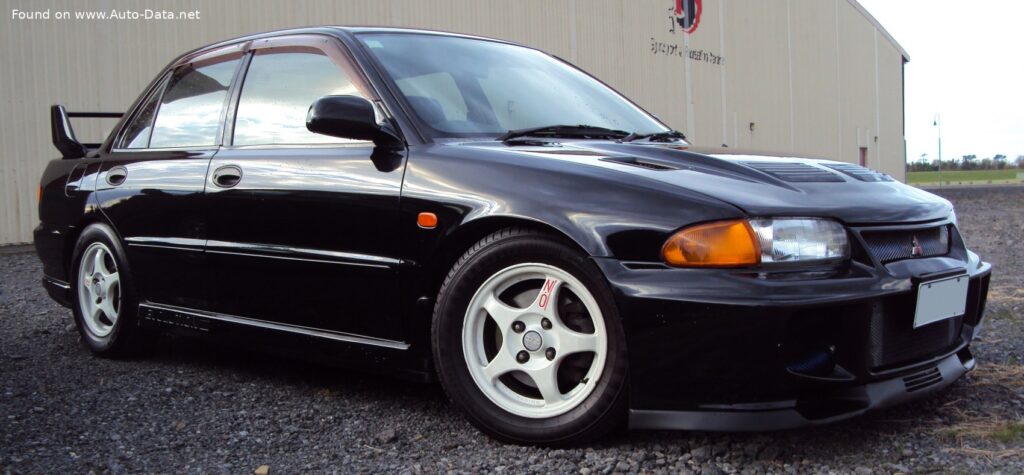
The Mitsubishi Lancer Evolution VII: A Rally Icon Unleashed
The Mitsubishi Lancer Evolution VII, often simply called the Evo VII, represents the seventh iteration in Mitsubishi’s legendary line of high-performance sports sedans. Produced from 2001 to 2003, this generation continued the Evolution’s celebrated heritage, which began in 1992. The Evo VII was engineered primarily for the Japanese Domestic Market (JDM) and European audiences, leveraging Mitsubishi’s extensive experience in the World Rally Championship (WRC). While never officially sold new in the United States, its reputation for blistering performance, advanced all-wheel-drive technology, and aggressive styling made it a highly sought-after vehicle among American enthusiasts through grey market imports and admiration from afar. It solidified its position not just as a potent street machine but also as a direct descendant of rally-winning machinery, offering a raw, uncompromised driving experience in a practical sedan package.
Engine and Performance: The Heart of the Mitsubishi Lancer Evolution VII
At the core of the Mitsubishi Lancer Evolution VII 2.0 T (280 Hp) 4WD lies the venerable 4G63T engine, a turbocharged 2.0-liter (1997 cm³) inline-four powerplant that had become synonymous with the Evolution series. This engine, renowned for its robustness and tunability, featured a double overhead camshaft (DOHC) valvetrain with four valves per cylinder and a multi-port manifold injection system. Bolstered by a turbocharger and an intercooler, it delivered an impressive 280 horsepower at 6500 rpm, a figure that often hinted at more untapped potential. The torque output was equally significant, peaking at 282.49 lb.-ft. (383 Nm) at a relatively low 3500 rpm, providing a broad and accessible powerband that made the car incredibly responsive.
This formidable powertrain, combined with a precise 5-speed manual transmission, allowed the Evo VII to achieve exhilarating performance figures. It could sprint from 0 to 60 mph in a calculated 5.8 seconds and reach 100 km/h (62 mph) in 6.1 seconds. The top speed was electronically limited to 155.34 mph (250 km/h), a common practice for Japanese performance cars of that era. The car’s weight-to-power ratio stood at an impressive 4.9 kg/Hp, or approximately 202.9 Hp per tonne, underscoring its lightweight, high-performance design philosophy. Fuel economy, while not its primary focus, was rated at a combined 21.6 US mpg (10.9 l/100 km), a reasonable figure considering its performance capabilities. The engine’s layout was front-transverse, optimizing weight distribution and enabling the sophisticated all-wheel-drive system.
Design and Features: Rally Aesthetics Meets Street Dominance
The exterior design of the Mitsubishi Lancer Evolution VII was a bold declaration of its performance intentions. Built upon the standard Lancer Cedia platform, it featured significant aesthetic and aerodynamic modifications. The sedan body, with its four doors and capacity for five occupants, maintained a practical facade, but subtle cues revealed its true nature. A prominent front bumper with large air intakes, a functional hood scoop for the intercooler, flared wheel arches accommodating wider tires, and an aggressive rear wing were all hallmarks of the Evo line. These elements were not merely cosmetic; they served crucial functions in cooling, downforce, and overall stability at high speeds.
Underneath its aggressive skin, the Evo VII boasted a highly sophisticated drivetrain and chassis. The all-wheel-drive system, a cornerstone of the Evolution series, provided exceptional traction and handling dynamics. This generation introduced the Active Center Differential (ACD) and an improved Super AYC (Active Yaw Control), which worked in concert to distribute torque optimally between the front and rear axles, and between the rear wheels, respectively. This advanced technology allowed for incredible grip and agility, particularly when pushed hard through corners, mimicking the capabilities of its WRC counterparts.
Suspension components included a Wishbone setup at the front and a Spring Strut arrangement at the rear, tuned for aggressive driving and precise feedback. Stopping power was equally impressive, with ventilated disc brakes on all four wheels, complemented by an Anti-lock Braking System (ABS) for enhanced control under severe braking. The steering was a hydraulic rack and pinion system, providing direct and communicative feedback to the driver. The car rode on 17-inch wheel rims fitted with 225/45 R17 tires, ensuring maximum contact patch and grip. Inside, the cabin was driver-focused, featuring supportive sports seats and essential instrumentation, reflecting its no-nonsense, performance-first philosophy.
Technical Specifications: Mitsubishi Lancer Evolution VII 2.0 T (280 Hp) 4WD
| Category | Specification |
|---|---|
| General Information | |
| Brand | Mitsubishi |
| Model | Lancer Evolution |
| Generation | Lancer Evolution VII |
| Type (Engine) | 2.0 T (280 Hp) 4WD |
| Start of Production | 2001 year |
| End of Production | 2003 year |
| Powertrain Architecture | Internal Combustion Engine |
| Body Type | Sedan |
| Seats | 5 |
| Doors | 4 |
| Performance Specs | |
| Fuel Consumption (Urban) | 15.4 l/100 km (15.3 US mpg) |
| Fuel Consumption (Extra Urban) | 8.3 l/100 km (28.3 US mpg) |
| Fuel Consumption (Combined) | 10.9 l/100 km (21.6 US mpg) |
| Fuel Type | Petrol (Gasoline) |
| Acceleration 0-60 mph (Calculated) | 5.8 sec |
| Acceleration 0-100 km/h | 6.1 sec |
| Maximum Speed | 250 km/h (155.34 mph) |
| Weight-to-Power Ratio | 4.9 kg/Hp (202.9 Hp/tonne) |
| Weight-to-Torque Ratio | 3.6 kg/Nm (277.5 Nm/tonne) |
| Engine Specs | |
| Power | 280 Hp @ 6500 rpm |
| Power per Liter | 140.2 Hp/l |
| Torque | 383 Nm (282.49 lb.-ft.) @ 3500 rpm |
| Engine Layout | Front, Transverse |
| Engine Model/Code | 4G63T |
| Engine Displacement | 1997 cm³ (2.0 liters / 121.86 cu. in.) |
| Number of Cylinders | 4 |
| Engine Configuration | Inline |
| Cylinder Bore | 85 mm (3.35 in.) |
| Piston Stroke | 88 mm (3.46 in.) |
| Compression Ratio | 8.8:1 |
| Number of Valves per Cylinder | 4 |
| Fuel Injection System | Multi-port manifold injection |
| Engine Aspiration | Turbocharger, Intercooler |
| Valvetrain | DOHC |
| Engine Oil Capacity | 5.1 l (5.39 US qt) |
| Coolant Capacity | 6 l (6.34 US qt) |
| Space, Volume and Weights | |
| Kerb Weight | 1380 kg (3042.38 lbs.) |
| Fuel Tank Capacity | 55 l (14.53 US gal) |
| Dimensions | |
| Length | 4455 mm (175.39 in.) |
| Width | 1770 mm (69.69 in.) |
| Height | 1450 mm (57.09 in.) |
| Wheelbase | 2625 mm (103.35 in.) |
| Front Track | 1515 mm (59.65 in.) |
| Rear (Back) Track | 1515 mm (59.65 in.) |
| Drivetrain, Brakes and Suspension Specs | |
| Drive Wheel | All-wheel drive (4×4) |
| Number of Gears and Type of Gearbox | 5 gears, Manual transmission |
| Front Suspension | Wishbone |
| Rear Suspension | Spring Strut |
| Front Brakes | Ventilated discs |
| Rear Brakes | Ventilated discs |
| Assisting Systems | ABS (Anti-lock braking system) |
| Steering Type | Steering rack and pinion |
| Power Steering | Hydraulic Steering |
| Tires Size | 225/45 R17 |
| Wheel Rims Size | 17 inches |
Legacy and Market Impact
The Mitsubishi Lancer Evolution VII occupies a significant place in automotive history, particularly within the performance sedan segment. Its primary market impact was felt across Japan, Europe, and other regions where its rally-bred capabilities resonated with enthusiasts. In these markets, it was a direct competitor to Subaru’s equally iconic Impreza WRX STI, fostering a fierce rivalry that fueled innovation and excitement among performance car aficionados. The Evo VII, like its predecessors and successors, was celebrated for its extraordinary handling, aggressive turbocharged power, and the sheer mechanical engagement it offered to drivers.
Despite its limited official availability in the United States, the Evolution VII garnered a cult following. Its reputation was built through video games, car magazines, and the burgeoning import scene, making it a dream car for many American enthusiasts who admired its raw performance and technical prowess. It represented the pinnacle of what a rally car for the road could be, offering a blend of daily usability with track-day readiness.
The Evo VII’s legacy is defined by its contribution to cementing the Evolution nameplate’s status as a global performance icon. It showcased Mitsubishi’s engineering prowess and commitment to motorsport-derived technology. While Mitsubishi’s automotive landscape has changed significantly since the Evo VII’s production, this generation remains a testament to an era when Japanese manufacturers pushed the boundaries of performance in a practical, accessible package. Today, the Mitsubishi Lancer Evolution VII is considered a modern classic, highly sought after by collectors and enthusiasts worldwide for its unique driving character, robust engine, and its indelible link to the golden age of rally-inspired street cars.