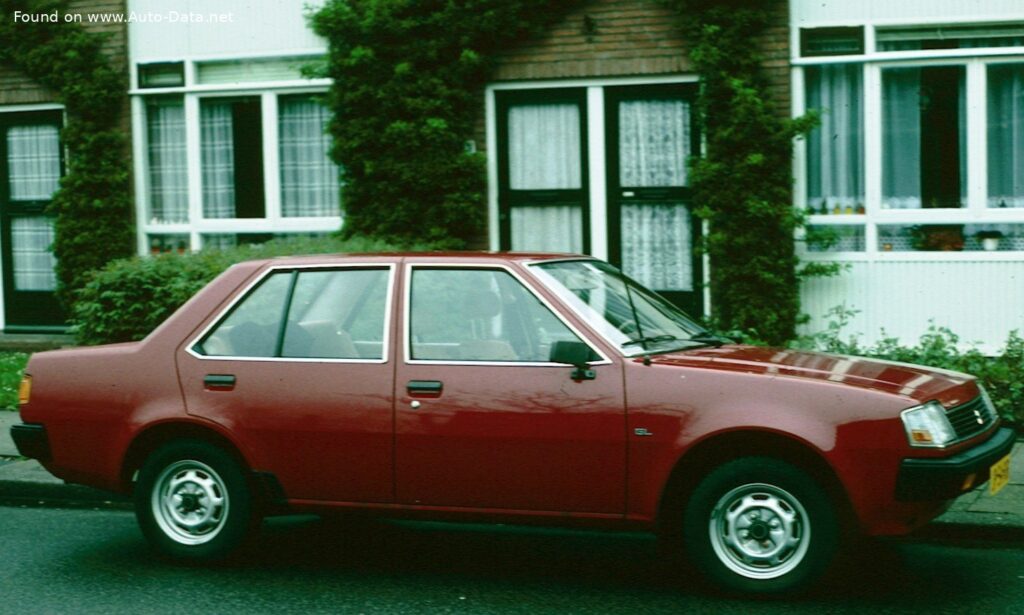
The Mitsubishi Lancer Fiore II: A Practical Contender of the Early 1980s
The Mitsubishi Lancer Fiore II represents a significant, albeit often overlooked, chapter in Mitsubishi’s history, embodying the brand’s commitment to producing reliable, economical, and practical vehicles for the mass market. Launched in 1983 as the second iteration of the Lancer Fiore sub-series, this generation served primarily as a compact sedan designed to meet the demands of budget-conscious consumers, particularly in its home market of Japan and select export territories across Asia and Europe. While not a direct competitor in the American market in this specific guise, its underlying engineering principles and market positioning were reflective of a global trend towards efficient, compact automobiles. The Fiore II, with its 1.2-liter engine producing 55 horsepower, was a testament to utility over extravagance, offering a no-frills transportation solution during a period of evolving automotive design and consumer priorities.
This particular generation of the Lancer, often referred to as the C10 series, marked a distinct shift from its predecessors, embracing front-wheel-drive architecture for improved interior packaging and fuel efficiency—a crucial factor in the early 1980s. The Lancer Fiore II carved out its niche by providing a balance of affordability, compact dimensions, and Mitsubishi’s burgeoning reputation for durability. It stood as a workhorse in an era where the automotive landscape was beginning to globalize, setting the stage for future generations of the Lancer that would eventually gain significant traction worldwide, including in North America.
Engine and Performance of the Mitsubishi Lancer Fiore II
At the heart of the Mitsubishi Lancer Fiore II 1.2 (55 Hp) was a modest yet highly functional powertrain designed for efficiency and economy. This particular variant was equipped with a 1.2-liter (approximately 73 cubic inches) naturally aspirated gasoline engine. In an era where fuel efficiency was becoming an increasingly important metric, especially in markets sensitive to fuel prices, this engine configuration was perfectly aligned with the car’s utilitarian purpose. Generating 55 horsepower, the engine provided adequate power for urban commuting and occasional highway travel, rather than exhilarating performance.
The engineering philosophy behind this engine focused on reliability and straightforward maintenance. As a naturally aspirated unit, it avoided the complexities and added costs associated with turbocharging or more advanced fuel injection systems, which were still emerging technologies for mass-market vehicles at the time. Its power delivery was linear and predictable, making the Lancer Fiore II an easy and forgiving car to drive, particularly for new drivers or those navigating congested city streets. The internal combustion engine architecture, typical of the period, emphasized robustness and longevity, characteristics that helped build Mitsubishi’s reputation for dependable vehicles.
While 55 horsepower might seem low by contemporary standards, it was entirely commensurate with the vehicle’s weight and intended market segment in the early 1980s. The vehicle was designed to be lightweight, and the engine, combined with an efficient transmission (typically a manual, though automatics were often optional), allowed for respectable fuel economy figures. This focus on efficiency and low running costs made the Lancer Fiore II an attractive proposition for families and individuals seeking dependable transportation without a significant financial burden, both in terms of initial purchase and ongoing operational expenses.
Design and Features of the Mitsubishi Lancer Fiore II
The design of the Mitsubishi Lancer Fiore II reflected the prevailing automotive aesthetics of the early 1980s: a functional, somewhat boxy, and unpretentious form. As a sedan, its body type prioritized interior space and trunk capacity within a compact footprint. The exterior featured clean lines and a straightforward silhouette, typical of Japanese practicality, eschewing flashy ornamentation in favor of a purposeful appearance. The design facilitated good outward visibility, an important safety and convenience factor, especially in urban environments.
Inside, the Lancer Fiore II offered a cabin that was designed for durability and ease of use. Materials were chosen for their robustness and ability to withstand daily wear and tear, rather than luxurious appeal. The dashboard layout was logical and uncluttered, with controls placed within easy reach of the driver. Essential instrumentation provided clear information on speed, fuel level, and engine status. While specific features varied by market and trim level, common amenities for the era would have included a basic AM/FM radio, manual winding windows, and a functional heating and ventilation system. Air conditioning, if available, would typically have been an optional extra.
Safety features, by modern standards, were rudimentary but consistent with the period. The Lancer Fiore II would have included three-point seatbelts for front occupants and lap belts for rear passengers. The body structure, while not incorporating advanced crumple zones or multiple airbags, was designed to provide a reasonable level of occupant protection for its class. The compact dimensions and light steering (especially with the advent of power steering in some models/markets) made it maneuverable in tight spaces, contributing to active safety by allowing drivers to avoid obstacles more easily. Overall, the design and features underscored the Lancer Fiore II’s role as an honest, reliable, and economical family sedan.
Technical Specifications: Mitsubishi Lancer Fiore II 1.2 (55 Hp)
| Category | Specification |
|---|---|
| Brand | Mitsubishi |
| Model | Lancer |
| Generation | Lancer Fiore II |
| Type (Engine) | 1.2 (55 Hp) |
| Start of Production | 1983 year |
| End of Production | 1984 year |
| Powertrain Architecture | Internal Combustion Engine |
| Body Type | Sedan |
| Fuel Type | Petrol (Gasoline) |
| Power | 55 Hp |
| Engine Aspiration | Naturally Aspirated Engine |
Legacy and Market Impact
The Mitsubishi Lancer Fiore II, particularly the 1.2 (55 Hp) sedan, played a crucial role in Mitsubishi’s strategy during the early 1980s as a dependable, entry-level offering. While it may not have garnered the same enthusiast following as later Lancer Evolution models, its significance lies in its contribution to Mitsubishi’s global reputation for producing reliable and cost-effective transportation. In its primary markets, which included Japan, Southeast Asia, and parts of Europe, the Fiore II was a strong contender in the highly competitive subcompact and compact sedan segments.
Its main competitors in these markets would have been a host of other Japanese and European small cars, all vying for the attention of buyers prioritizing affordability, fuel economy, and practicality. Key rivals included the Toyota Corolla (E80 series), Nissan Sunny/Sentra (B11 series), Honda Civic (third generation), and the Mazda Familia/323 (BD/BF series). From Europe, models like the Volkswagen Jetta, Opel Kadett, and Ford Escort would have offered alternative choices, though often with different market positioning and pricing. The Lancer Fiore II distinguished itself through its robust build quality, straightforward engineering, and the perceived value for money that Mitsubishi was becoming known for.
The Fiore II’s legacy is rooted in its role as a foundational vehicle. It helped solidify Mitsubishi’s presence in international markets and contributed to the brand’s image as a manufacturer of dependable, no-nonsense cars. Its front-wheel-drive platform was a forward-looking move for the time, paving the way for more efficient and spacious future models. While its production run was relatively short (1983-1984), it represented a transitional period, bridging the gap between earlier, simpler designs and the more technologically advanced vehicles that would follow. For many families in its target markets, the Lancer Fiore II was their first experience with a modern, reliable, and affordable car, cementing its place as a quiet but significant contributor to Mitsubishi’s automotive heritage.