Mitsubishi Lancer II 1.6 (84 Hp): A Global Compact Sedan for the Early 1980s
The Mitsubishi Lancer II 1.6 (84 Hp) represents a significant chapter in Mitsubishi Motors’ history, embodying the brand’s commitment to producing reliable, economical, and practical compact vehicles for a global audience. Launched in 1981 as the second generation of the Lancer nameplate, this model, specifically the 1.6-liter variant with 84 horsepower, played a crucial role in expanding Mitsubishi’s footprint in various international markets. Succeeding the original Lancer (A70 series), the Lancer II, known internally as the A170 series, brought a more contemporary design and refined engineering, positioning itself firmly in the highly competitive compact sedan segment. Its production spanned a relatively short but impactful period from 1981 to 1983, during which it solidified the Lancer’s reputation as a dependable family car. While specific trims and engine options varied by region, the 1.6-liter model was a common and popular choice, balancing performance with fuel efficiency for everyday driving needs.
Engine and Performance: The Heart of the Mitsubishi Lancer II
At the core of the Mitsubishi Lancer II‘s appeal was its straightforward yet effective powertrain, exemplified by the 1.6 (84 Hp) variant. This particular model was equipped with a naturally aspirated internal combustion engine, designed for durability and economy—hallmarks of Japanese engineering from that era. The engine, running on petrol (gasoline), produced a respectable 84 horsepower. For the early 1980s, in the compact car segment, 84 horsepower was considered adequate, providing sufficient power for daily commuting, suburban errands, and comfortable highway cruising without being overly demanding on fuel consumption.
The philosophy behind this engine was not about outright speed or exhilarating performance, but rather about reliability and cost-effectiveness. Mitsubishi engineers focused on creating a power unit that was easy to maintain, long-lasting, and capable of operating efficiently in diverse climatic and road conditions worldwide. The naturally aspirated design meant fewer complex components compared to forced-induction engines, contributing to its robustness and lower manufacturing costs. This made the Mitsubishi Lancer II 1.6 (84 Hp) an attractive option for budget-conscious families and individuals seeking a no-frills, dependable mode of transportation. While exact torque figures are not provided, an 84 Hp 1.6-liter engine of this vintage would typically deliver its power smoothly across the rev range, offering predictable acceleration suitable for its intended purpose as a practical family sedan. The powertrain architecture, being a conventional internal combustion engine, reflected the prevailing automotive technology of the time, prior to the widespread adoption of advanced electronic fuel injection systems and sophisticated emissions controls that would become standard in later decades.
Design and Features: Form and Function in the Mitsubishi Lancer II
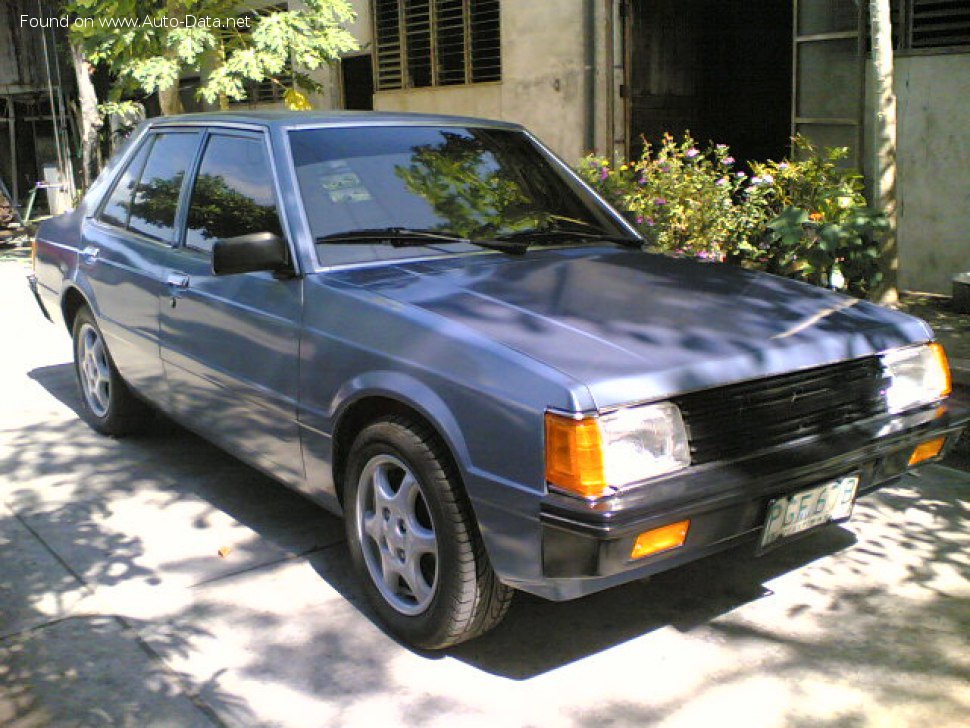
The design aesthetic of the Mitsubishi Lancer II was a clear departure from the more rounded and sometimes quirky styling of the 1970s, embracing the sharper, more angular lines that defined early 1980s automotive design. The primary body type for this specific variant was a classic sedan, a configuration that emphasized practicality, passenger comfort, and trunk space. Its three-box design, characterized by a distinct engine compartment, passenger cabin, and trunk, was a popular and universally accepted form factor for family cars globally.
Visually, the Lancer II sedan presented a clean, uncluttered profile. It featured a relatively flat hood, a prominent grille (which varied slightly by market), and large, functional rectangular headlamps that were typical of the era. The body panels were designed for ease of manufacturing and repair, contributing to the car’s affordability. Inside, the Lancer II prioritized functionality and ergonomics. The cabin, while not luxurious, was thoughtfully laid out, offering comfortable seating for up to five occupants. Materials were chosen for durability, and the dashboard design was straightforward, featuring clear instrumentation and accessible controls. Depending on the market and trim level, features might have included manual or power windows, a basic AM/FM radio, and optional air conditioning—a luxury item in many compact cars of the early 80s. Safety features, by modern standards, were rudimentary but typical for its time, primarily consisting of three-point seatbelts and a sturdy body structure designed to offer protection in collisions. The trunk offered a generous amount of cargo space, making it suitable for family trips and daily errands. This blend of functional design and practical features ensured the Mitsubishi Lancer II remained a competitive offering in its segment, particularly in markets where reliability and cost-effectiveness were paramount.
Technical Specifications: Mitsubishi Lancer II 1.6 (84 Hp)
Below is a detailed breakdown of the technical specifications for the Mitsubishi Lancer II 1.6 (84 Hp) sedan, as produced between 1981 and 1983:
| Feature | Detail |
|---|---|
| Brand | Mitsubishi |
| Model | Lancer |
| Generation | Lancer II |
| Type (Engine) | 1.6 (84 Hp) |
| Start of Production | 1981 year |
| End of Production | 1983 year |
| Powertrain Architecture | Internal Combustion engine |
| Body Type | Sedan |
| Fuel Type | Petrol (Gasoline) |
| Power | 84 Hp |
| Engine Aspiration | Naturally aspirated engine |
Legacy and Market Impact: The Enduring Influence of the Mitsubishi Lancer II
The Mitsubishi Lancer II, particularly the 1.6 (84 Hp) sedan, carved out a significant niche for itself in the global automotive landscape of the early 1980s. Its relatively short production run of just three years (1981-1983) belies its widespread impact, particularly in markets across Asia, Europe, Australia, and parts of North America (where it was sometimes sold under different names or as a captive import, such as the Dodge Colt). The Lancer II built upon the foundation laid by its predecessor, enhancing Mitsubishi’s reputation for building durable, affordable, and practical vehicles.
In its primary markets, the Lancer II was a strong competitor against other leading compact sedans of the era. Its rivals included established players like the Toyota Corolla, Honda Civic, Nissan Sunny (known as Sentra in the U.S.), Mazda 323, and European contenders such as the Ford Escort and Opel Kadett (Vauxhall Astra in the UK). What set the Lancer II apart was its combination of robust mechanicals, straightforward design, and competitive pricing. It offered a compelling value proposition for families and individuals seeking reliable transportation without unnecessary frills.
The Lancer II’s legacy is rooted in its contribution to solidifying the Lancer nameplate as a global force for Mitsubishi. While it may not have been a groundbreaking car in terms of technological innovation or performance, its consistent reliability and widespread availability helped to foster brand loyalty and introduce Mitsubishi to new customer bases. It exemplified the Japanese automotive industry’s strength in producing high-quality, mass-market vehicles that could withstand demanding conditions and offer excellent long-term ownership value. This generation of the Lancer played a vital role in Mitsubishi’s strategy of incremental improvement and global market expansion. The success of models like the Lancer II laid the groundwork for future, more technologically advanced, and performance-oriented Lancers, including the iconic Lancer Evolution series, by establishing a strong and recognizable brand identity. Even decades later, many examples of the Lancer II can still be found in various parts of the world, a testament to its inherent durability and the quality of its engineering, reflecting its historical significance as a workhorse of its era.