The Mitsubishi Lancer III 1.2 (60 Hp): An Economical Global Player
The Mitsubishi Lancer III, introduced in 1986, marked a significant evolution for Mitsubishi Motors’ compact car offering. Known internally as the C10 series, this generation built upon the Lancer’s established reputation for reliability and economy, while introducing a more contemporary design and improved driving dynamics. Positioned as a practical and affordable sedan, the Lancer III was a cornerstone of Mitsubishi’s global sales strategy, competing fiercely in the highly competitive compact segment across Asia, Europe, and select North American markets (where it was often marketed as the Mitsubishi Mirage or Dodge/Plymouth Colt, with different engine options). The specific variant under review, the Mitsubishi Lancer III 1.2 (60 Hp), represented the entry-level offering, emphasizing fuel efficiency and low operating costs, making it a popular choice for budget-conscious buyers and as a sturdy family car in many regions where smaller engine displacements were favored for taxation or fuel economy reasons.
Evolution of a Compact Icon: The Mitsubishi Lancer III
The third generation of the Mitsubishi Lancer, succeeding the A170 series (Lancer II), brought a fresh perspective to the compact car segment. Launched in 1986, it shared its platform and many mechanical components with the contemporary Mitsubishi Mirage (also known as the Colt in some markets), allowing for economies of scale and a diverse range of body styles. While the Mirage was typically offered as a hatchback, the Lancer III primarily focused on the traditional three-box sedan configuration, catering to a demographic that valued conventional styling and a separate trunk for cargo. This generation’s production run was relatively brief, concluding in 1988, before being replaced by the Lancer IV (C60/C70 series), which further refined the design and technology. Despite its short tenure, the Lancer III played a crucial role in maintaining Mitsubishi’s presence in the global compact car market, offering a no-nonsense, dependable vehicle that appealed to a wide array of international consumers.
Engine and Performance of the Mitsubishi Lancer III 1.2 (60 Hp)
The powertrain for the Mitsubishi Lancer III 1.2 (60 Hp) was designed with practicality and economy as its paramount objectives. This variant featured a modest 1.2-liter (approximately 1198 cc) inline-four cylinder gasoline engine. As a naturally aspirated unit, it relied solely on atmospheric pressure to feed air into its cylinders, a common and cost-effective approach for entry-level vehicles of the era. The engine produced a peak power output of 60 horsepower (Hp). While this figure might seem modest by today’s standards, it was entirely adequate for the Lancer III’s intended purpose in the mid-to-late 1980s.
The 60 Hp engine was primarily engineered for urban commuting and economical highway travel. Its strength lay not in blistering acceleration or high top speeds, but in its robust reliability and excellent fuel efficiency. Paired typically with a manual transmission, the driver could extract the most out of the available power, maintaining momentum and navigating city traffic with ease. For markets where fuel costs were a significant concern or where vehicle taxation favored smaller displacement engines, the 1.2-liter Lancer III was an incredibly attractive proposition. Its mechanical simplicity also contributed to lower maintenance costs and a reputation for longevity, factors that were highly valued by owners. The engine’s design likely incorporated a single overhead camshaft (SOHC) configuration with two valves per cylinder, a proven and dependable setup for small-displacement engines of the period. This configuration prioritized smooth power delivery and durability over peak performance, aligning perfectly with the Lancer III’s ethos as a dependable daily driver.
Design and Features
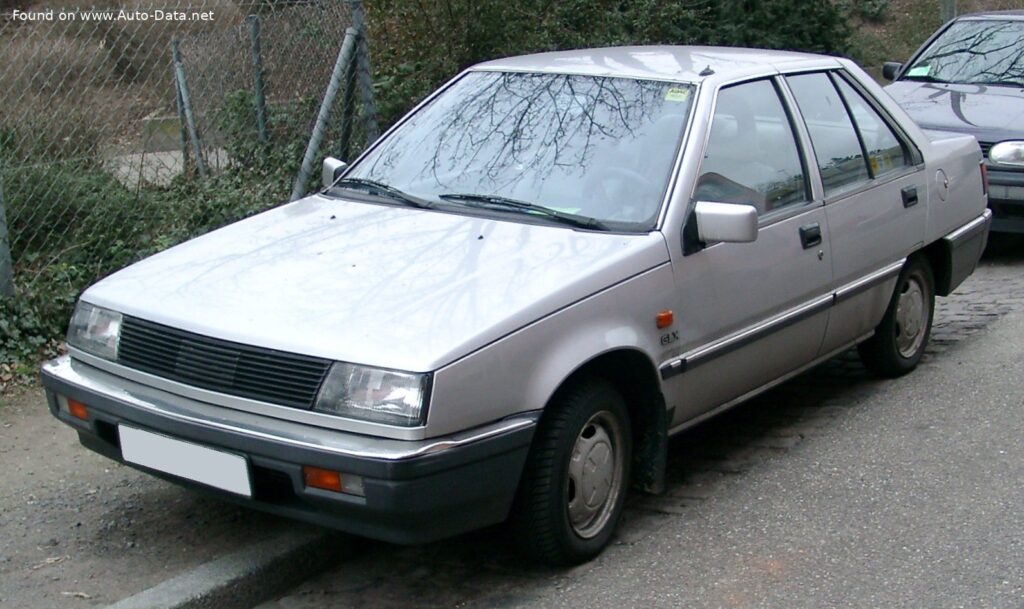
The design of the Mitsubishi Lancer III reflected the automotive aesthetic trends of the mid-1980s, characterized by cleaner lines and a focus on aerodynamic efficiency, albeit within the constraints of a traditional three-box sedan form factor. The body type was a classic sedan, featuring a distinct engine compartment, passenger cabin, and trunk. This conventional silhouette appealed to a broad customer base, particularly in markets where sedans were preferred for their perceived status and practicality.
Aesthetically, the Lancer III presented a straightforward and unpretentious exterior. Its design moved away from the more angular styling of the previous generation, adopting slightly softer edges and a more integrated bumper design. The front fascia typically featured rectangular headlights and a simple grille, projecting an image of understated competence. The glasshouse was relatively large, providing good visibility for the driver and passengers, a key safety and convenience feature. Depending on the trim level, styling cues might have included body-colored bumpers, side moldings, and steel wheels with hubcaps, common appointments for compact cars of the era.
Inside, the Mitsubishi Lancer III prioritized functionality and durability. The cabin was designed to be spacious for its class, comfortably accommodating four adults, with five possible for shorter journeys. Materials used for the upholstery and interior trim were chosen for their hard-wearing properties, capable of withstanding years of daily use. The dashboard layout was logical and user-friendly, with clearly marked controls for heating, ventilation, and the radio. Instrumentation typically consisted of an analog speedometer, tachometer (on some models), fuel gauge, and temperature gauge, providing all essential information at a glance. Basic amenities for the 1.2 Hp variant would have included manual windows, a simple heating and ventilation system, and perhaps a basic AM/FM radio. Safety features, standard for the time, included three-point seatbelts for front occupants and lap belts for rear passengers. The car’s unibody construction provided a degree of passive safety through crumple zones, designed to absorb impact energy in the event of a collision. The overall design philosophy was one of practical efficiency, offering a reliable and comfortable environment for daily commuting and family transport without unnecessary frills.
Technical Specifications: Mitsubishi Lancer III 1.2 (60 Hp) Sedan (1986-1988)
The following table outlines the key technical specifications for the Mitsubishi Lancer III 1.2 (60 Hp) sedan, as produced between 1986 and 1988. These specifications highlight the vehicle’s design as an economical and practical compact car.
| Attribute | Specification |
|---|---|
| Brand | Mitsubishi |
| Model | Lancer |
| Generation | Lancer III |
| Type (Engine) | 1.2 (60 Hp) |
| Start of Production | 1986 year |
| End of Production | 1988 year |
| Powertrain Architecture | Internal Combustion engine |
| Body Type | Sedan |
| Fuel Type | Petrol (Gasoline) |
| Power | 60 Hp |
| Engine Aspiration | Naturally aspirated engine |
| Drivetrain | Internal Combustion engine (typically Front-Wheel Drive for this generation) |
Legacy and Market Impact of the Mitsubishi Lancer III
The Mitsubishi Lancer III, particularly in its economical 1.2 (60 Hp) guise, left a significant, albeit understated, legacy in the global automotive landscape. Its primary impact stemmed from its role as a highly reliable and affordable compact sedan, reinforcing Mitsubishi’s reputation for building durable and practical vehicles. In markets across Europe, Asia, and other developing regions, the Lancer III was often a top contender for families and individuals seeking dependable transportation without a hefty price tag or high running costs.
Its main competitors were formidable, including segment stalwarts like the Toyota Corolla, Honda Civic, Nissan Sunny (Sentra in North America), Mazda 323 (Protegé), and European rivals such as the Ford Escort and Volkswagen Jetta. Against these strong contenders, the Lancer III carved out its niche by offering a compelling balance of value, fuel efficiency, and Mitsubishi’s renowned engineering for longevity. While the 1.2-liter variant might not have garnered headlines for performance, its strong suit was its unwavering reliability and ease of maintenance, which translated into loyal customers and repeat business for Mitsubishi dealerships worldwide.
Historically, the Lancer III played a crucial role in Mitsubishi’s strategy of global expansion. It demonstrated the company’s capability to produce competitive vehicles for diverse international markets, adapting to local preferences and economic conditions. Its success helped to solidify Mitsubishi’s brand recognition and laid the groundwork for future generations of the Lancer, which would eventually include the highly acclaimed, performance-oriented Lancer Evolution models. Even though the 1.2 Hp variant was at the opposite end of the performance spectrum, it shared the same fundamental engineering integrity and robust construction that would become hallmarks of the Lancer nameplate.
Today, while the Mitsubishi Lancer III 1.2 (60 Hp) is a rare sight on modern roads, it is remembered by enthusiasts and former owners as a steadfast workhorse. It represented an era when compact cars were designed with a clear focus on utility, economy, and straightforward engineering. Its contribution to Mitsubishi’s global presence and its role in providing accessible, reliable personal transportation for millions of people worldwide ensure its place as an important chapter in automotive history. Its enduring appeal in certain regions as a classic, economical daily driver speaks volumes about its inherent quality and practical design.