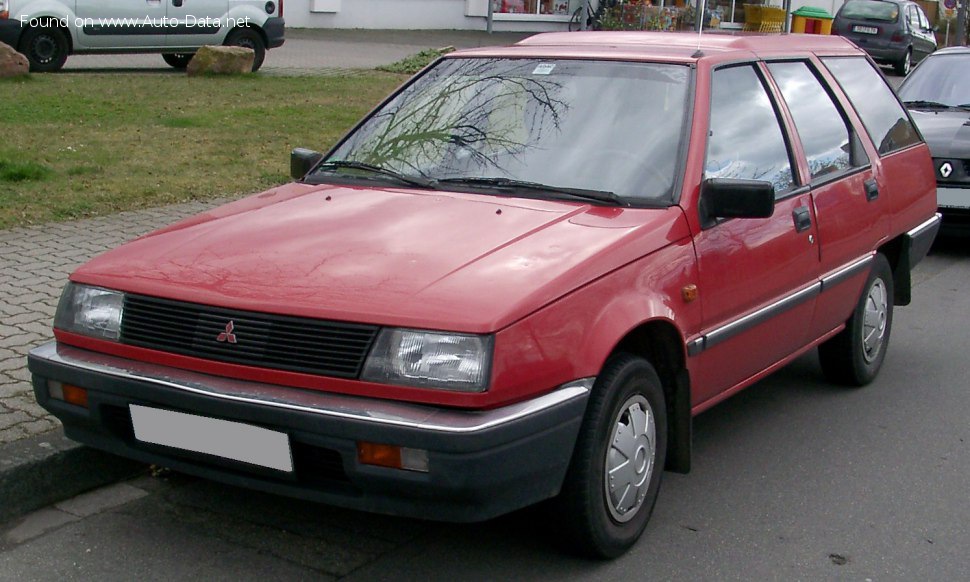
Introduction to the Mitsubishi Lancer III Wagon 1.5 (70 Hp)
The Mitsubishi Lancer, a nameplate synonymous with reliability and versatility for decades, saw its third generation emerge in 1983, bringing with it a more modern design and improved engineering. Among the various body styles offered, the station wagon, or “estate” as it’s known in many global markets, played a crucial role in Mitsubishi’s lineup, catering to families and individuals seeking practicality and cargo capacity. The specific variant under review, the Mitsubishi Lancer III Wagon 1.5 (70 Hp), produced between 1985 and 1989, represents an economical and dependable choice within this generation.
This iteration of the Lancer Wagon was a staple in numerous international markets, particularly in Europe, Asia, and Australia, where its blend of compact dimensions, sensible fuel economy, and usable interior space made it a popular option for everyday transportation. While the Lancer nameplate gained significant performance notoriety later with its Evolution models, this 1.5-liter wagon embodies the more fundamental, utilitarian aspects of Mitsubishi’s automotive philosophy during the mid-1980s. It was designed not for speed or luxury, but for consistent, no-fuss service, establishing Mitsubishi’s reputation for building durable and affordable vehicles.
Engine and Performance of the Mitsubishi Lancer III Wagon
Powertrain Architecture and Drivetrain
At the heart of the Mitsubishi Lancer III Wagon 1.5 (70 Hp) was a straightforward, naturally aspirated internal combustion engine. This 1.5-liter gasoline (petrol) unit was engineered for efficiency and longevity, prioritizing steady, predictable power delivery over high-performance thrills. In the mid-1980s, an output of 70 horsepower from a 1.5-liter engine was considered adequate for a compact station wagon. It provided sufficient motivation for daily commuting, city driving, and comfortable highway cruising, especially when unladen.
The engine’s design was typical of the era, featuring a robust four-cylinder configuration that emphasized ease of maintenance and reliability. While specific torque figures are not provided, a 70 Hp output from a naturally aspirated 1.5-liter engine would typically yield a modest torque curve, peaking at mid-range RPMs, which is ideal for urban driving and maintaining momentum without constant downshifting. This powerplant was likely paired with either a five-speed manual transmission or an optional three- or four-speed automatic, delivering power to the front wheels. This front-wheel-drive layout was a common and efficient choice for compact cars of the period, contributing to better interior packaging and improved traction in various weather conditions. The focus was clearly on providing a practical, economical, and dependable driving experience for the average consumer rather than setting any performance benchmarks.
Design and Features
Body Type and Practicality
The Mitsubishi Lancer III Wagon embraced the utilitarian design philosophy prevalent in the 1980s, characterized by its “station wagon” (or “estate”) body type. This design prioritized interior volume and cargo flexibility, making it an excellent choice for families, small businesses, or anyone needing more space than a sedan could offer. The exterior styling was functional and boxy, a hallmark of automotive design in the era, which maximized interior headroom and cargo capacity. Its relatively flat body panels and large glass areas contributed to excellent outward visibility, a practical benefit in both city traffic and on the open road.
Inside, the Lancer III Wagon was designed with durability and straightforward ergonomics in mind. While not opulent, the cabin featured hard-wearing materials built to withstand the rigors of family life and daily use. Standard features for the mid-1980s would have included basic heating and ventilation systems, perhaps an AM/FM radio, and manual window winders. Power steering would have been an option or standard on higher trims, greatly aiding maneuverability. Safety features, while rudimentary by today’s standards, would have included three-point seatbelts for front occupants and lap belts for rear passengers, along with a more rigid body structure compared to preceding decades, offering improved passive safety in the event of a collision. The rear cargo area was particularly versatile, often featuring a fold-flat rear seat bench to significantly expand luggage space, making it highly adaptable for various hauling needs.
Technical Specifications
| Category | Specification |
|---|---|
| Brand | Mitsubishi |
| Model | Lancer |
| Generation | Lancer III Wagon |
| Type (Engine) | 1.5 (70 Hp) |
| Start of production | 1985 year |
| End of production | 1989 year |
| Powertrain Architecture | Internal Combustion engine |
| Body type | Station wagon (estate) |
| Fuel Type | Petrol (Gasoline) |
| Power | 70 Hp |
| Engine aspiration | Naturally aspirated engine |
| Drivetrain | Internal Combustion engine (Front-wheel drive typically) |
Legacy and Market Impact
The Mitsubishi Lancer III Wagon, and specifically the Mitsubishi Lancer III Wagon 1.5 (70 Hp), carved out a significant niche in the global automotive landscape during its production run. It solidified Mitsubishi’s reputation for producing reliable, no-nonsense vehicles that offered excellent value for money. In markets across Europe, Asia, and Australia, it was a common sight, serving as a dependable family car, a practical workhorse for small businesses, and a popular choice for those seeking economical transportation.
Its primary competitors in the compact wagon segment of the 1980s included perennial rivals such as the Toyota Corolla Wagon, Honda Civic Wagon, Nissan Sunny/Sentra Wagon, and various offerings from European manufacturers like the Opel Kadett Caravan or Ford Escort Estate. What set the Lancer apart was its robust build quality, competitive pricing, and a strong emphasis on practicality. While it may not have boasted the most exciting performance or the most luxurious interior, its consistent reliability and low running costs made it an attractive proposition for a wide demographic.
The Lancer III Wagon’s legacy is one of quiet competence. It contributed significantly to building Mitsubishi’s brand image as a manufacturer of durable and trustworthy automobiles, laying groundwork for future successes. Many of these wagons continued to serve their owners well into the 1990s and even beyond, a testament to their inherent durability and simple, maintainable mechanicals. Today, while not a collector’s item in the same vein as some of its performance-oriented siblings, the Lancer III Wagon is remembered fondly by those who owned or drove one, representing an era where automotive design prioritized function, reliability, and accessibility above all else. It remains a classic example of a practical, global car that effectively met the everyday needs of its target market.