The Mitsubishi Lancer III Wagon 1.5 (83 Hp): A Practical Stalwart of the Late 1980s
The Mitsubishi Lancer III Wagon 1.5 (83 Hp) stands as a testament to the era when Japanese manufacturers focused on delivering reliable, economical, and highly practical transportation to a global audience. Introduced in 1988 as part of the third generation of the venerable Lancer lineup, this specific variant, with its 1.5-liter engine producing 83 horsepower, carved out a niche in the compact station wagon segment. While the Lancer nameplate has enjoyed varying degrees of success and recognition in the North American market, this particular wagon model, like many of its contemporaries, found significant traction in markets across Asia, Europe, and Oceania, where the demand for versatile family vehicles and small utility cars was consistently strong. It represented a pragmatic choice for consumers seeking a blend of sedan-like driving dynamics with the added cargo capacity of a wagon, all wrapped in Mitsubishi’s reputation for durability and value.
The third-generation Lancer, often known by its chassis code (e.g., C50 series for sedans), evolved from its predecessors with a more aerodynamic and contemporary design language, reflecting the automotive trends of the late 1980s. The wagon variant specifically capitalized on the growing need for space without the bulk or fuel consumption penalties of larger vehicles. The Mitsubishi Lancer III Wagon 1.5 (83 Hp) was not designed to be a performance leader but rather a dependable workhorse, excelling in everyday usability and cost-effectiveness. Its production run from 1988 to 1990 marked a brief but important period in the Lancer’s long history, providing a crucial option for families and small businesses alike.
Engine and Performance of the Mitsubishi Lancer III Wagon
At the heart of the Mitsubishi Lancer III Wagon 1.5 (83 Hp) was a straightforward and robust internal combustion engine. This naturally aspirated, 1.5-liter gasoline (petrol) unit was engineered for efficiency and longevity rather than outright speed. Producing 83 horsepower, the engine provided adequate power for the vehicle’s intended purpose: navigating urban environments, suburban commutes, and occasional longer trips with a full load. While 83 horsepower might seem modest by today’s standards, for a compact wagon in the late 1980s, it was competitive within its class and perfectly sufficient for most drivers’ needs.
The engine’s naturally aspirated design meant a simpler mechanical setup, contributing to its renowned reliability and lower maintenance costs. This was a significant selling point in markets where affordability and ease of repair were paramount. Power delivery was linear and predictable, making the Lancer Wagon an easy and forgiving vehicle to drive. Fuel economy was another strong suit, a critical factor for consumers during a period that had seen fluctuating fuel prices. The powertrain architecture, focused on practical application, ensured that the Lancer III Wagon could handle daily demands without excessive strain, embodying the “get in and go” philosophy that many buyers appreciated.
The engineering philosophy behind this engine was typical of Japanese manufacturers of the era: prioritize durability, fuel efficiency, and smooth operation. While specific torque figures are not provided, it can be inferred that the engine was tuned to deliver a usable torque band at lower RPMs, which is beneficial for city driving and carrying loads. This made the Mitsubishi Lancer III Wagon a practical choice for a wide range of tasks, from grocery runs to family vacations, without requiring excessive engine effort.
Design and Features
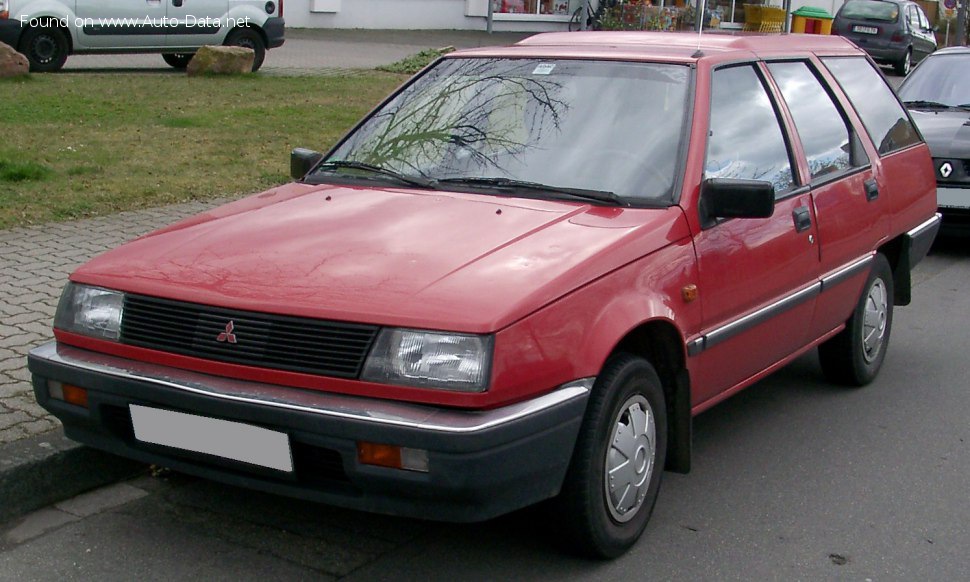
The design of the Mitsubishi Lancer III Wagon was distinctly late 1980s, characterized by clean lines and a functional aesthetic. As a station wagon (estate), its primary design objective was utility. The extended roofline and upright rear hatch provided a substantial increase in cargo volume compared to its sedan counterpart. This body type was particularly popular in markets where versatility was highly valued, offering the practicality of a small van with the comfort and handling of a passenger car.
Visually, the Lancer III Wagon featured a relatively boxy profile, which maximized interior space for both passengers and luggage. Large glass areas ensured good visibility, a crucial safety and convenience factor. While not overtly styled for sportiness or luxury, its design was inoffensive and timeless, allowing it to blend seamlessly into various environments. The interior, though likely basic by modern standards, was designed for functionality and durability, utilizing hard-wearing materials that could withstand years of family use.
Key features, typical for a compact car of its era, would have included:
- Spacious cargo area with a flat-folding rear seat for extended load capacity.
- Manual windows and locks on base models, with power options likely available on higher trims in certain markets.
- A simple, user-friendly dashboard layout with clear instrumentation.
- Basic heating and ventilation systems; air conditioning would have been an optional extra in most regions.
- Standard safety features such as seatbelts for all occupants.
- An AM/FM radio, possibly with a cassette player, for in-car entertainment.
The emphasis was on providing a reliable, no-frills vehicle that could serve multiple purposes, from daily commuting to hauling goods, making the Lancer III Wagon a highly adaptable option for a broad spectrum of buyers. Its practicality was its greatest design asset, directly addressing the needs of its target demographic.
Technical Specifications: Mitsubishi Lancer III Wagon 1.5 (83 Hp)
| Attribute | Specification |
|---|---|
| Brand | Mitsubishi |
| Model | Lancer |
| Generation | Lancer III Wagon |
| Type (Engine) | 1.5 (83 Hp) |
| Start of production | 1988 year |
| End of production | 1990 year |
| Powertrain Architecture | Internal Combustion engine |
| Body type | Station wagon (estate) |
| Fuel Type | Petrol (Gasoline) |
| Power | 83 Hp |
| Engine aspiration | Naturally aspirated engine |
Legacy and Market Impact
The Mitsubishi Lancer III Wagon 1.5 (83 Hp), despite its relatively short production run of just two years, played a significant role in Mitsubishi’s global strategy during the late 1980s. Its primary impact was felt most strongly in markets outside of North America, particularly in Europe, Asia, and Australia, where compact wagons were a popular and sensible choice for families and fleets. In these regions, the Lancer Wagon competed fiercely with other Japanese and European offerings that similarly emphasized economy, reliability, and practicality.
Competitors included well-established models such as the Toyota Corolla Wagon, Honda Civic Wagon, Nissan Sunny (Sentra) Wagon, and European rivals like the Opel Kadett Caravan (Vauxhall Astra Estate in the UK) and Ford Escort Estate. What set the Lancer apart was its consistent adherence to Mitsubishi’s core values: robust engineering, straightforward mechanics, and good value for money. It earned a reputation for being a dependable and unfussy vehicle, capable of enduring years of service with minimal fuss, a trait highly prized by budget-conscious buyers and those in regions with challenging road conditions or limited access to specialized repairs.
The Lancer III Wagon contributed to Mitsubishi’s overall brand image as a producer of reliable and practical automobiles. While not as iconic as some of its performance-oriented Lancer Evolution successors, this humble wagon laid foundational groundwork, reinforcing the brand’s presence in key international markets. It demonstrated Mitsubishi’s ability to produce a diverse range of vehicles tailored to specific market needs, from rally-bred machines to utilitarian family haulers.
Today, the Mitsubishi Lancer III Wagon 1.5 (83 Hp) is remembered as a resilient and practical classic. While not a collector’s item in the traditional sense, surviving examples are often cherished for their enduring reliability and low running costs. Its legacy lies in its quiet competence, serving as a workhorse for countless families and businesses, embodying the spirit of accessible and dependable personal transportation that defined a significant portion of the automotive landscape in the late 20th century. It stands as a reminder of an era when automotive design prioritized utility and longevity, making it a true unsung hero of the compact segment.