The Mitsubishi Lancer III Wagon 1.8 D (58 Hp): A Global Workhorse of the Mid-1980s
The Mitsubishi Lancer III Wagon, specifically the 1.8 D (58 Hp) variant, represents a significant chapter in Mitsubishi Motors’ global strategy during the mid-1980s. Launched in 1985 and produced until 1986, this generation of the Lancer, known internally as the C10 series, cemented Mitsubishi’s reputation for producing reliable, economical, and practical compact vehicles. While the Lancer nameplate has enjoyed varying degrees of success and market penetration across the globe, this particular station wagon model with its diesel powertrain was primarily targeted at European and Asian markets, where fuel efficiency, cargo capacity, and robust engineering were highly valued attributes for everyday transportation and commercial applications. The Mitsubishi Lancer III Wagon was designed to be a versatile family hauler and an economical fleet vehicle, offering a no-frills approach to motoring with an emphasis on durability and low running costs. Its introduction underscored a growing demand for diesel-powered passenger cars outside of the North American market, providing a cost-effective alternative to gasoline engines during a period of fluctuating fuel prices.
Engine & Performance: The Heart of the Mitsubishi Lancer III Wagon
Powering the Mitsubishi Lancer III Wagon 1.8 D was the naturally aspirated 4D65 diesel engine, a unit renowned for its simplicity and robustness. With a modest output of 58 horsepower (Hp), this engine was not designed for exhilarating performance but rather for dependable, fuel-efficient operation. The 1.8-liter displacement provided sufficient torque for navigating urban environments and maintaining steady speeds on highways, though acceleration was leisurely by modern standards. For a vehicle produced between 1985 and 1986, this level of power was competitive within its class of compact diesel wagons, emphasizing economy over outright speed. The naturally aspirated design meant fewer complex components compared to turbocharged diesels, contributing to the engine’s reliability and ease of maintenance.
The diesel powertrain architecture ensured excellent fuel economy, a critical selling point in markets where fuel costs were a significant concern for consumers. While specific torque figures are not provided, a naturally aspirated diesel of this size and era would typically offer a strong, flat torque curve at lower RPMs, making it suitable for carrying passengers and cargo without constant downshifting. The engine’s oil capacity was 5.6 liters (5.92 US quarts), and the cooling system held 6 liters (6.34 US quarts) of coolant, indicating a well-engineered system designed for longevity and consistent performance under various conditions. This powertrain configuration underscored Mitsubishi’s commitment to delivering practical and economical solutions for the global compact car segment.
Design & Features: Practicality Personified
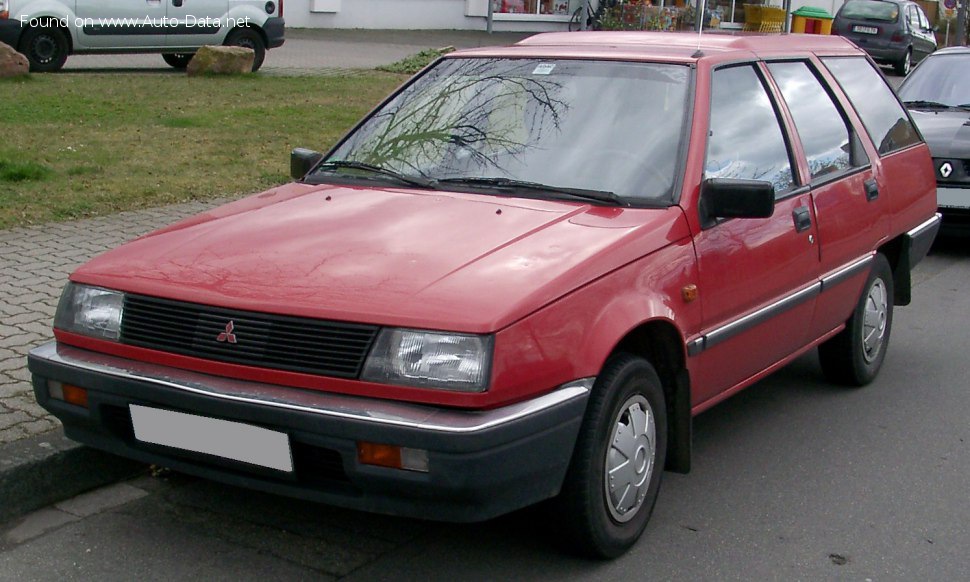
The Mitsubishi Lancer III Wagon adopted a quintessential station wagon (or estate) body type, prioritizing interior space and cargo versatility. Its design ethos was firmly rooted in the functional aesthetics of the mid-1980s: clean lines, a relatively upright stance, and a capacious rear cargo area. The station wagon body offered significant advantages over its sedan counterpart, providing easy access to a large, flexible load space, making it ideal for families, small businesses, and individuals requiring practical utility.
Typical features for a compact wagon of this era would have included durable cloth upholstery, manual window winders, a basic heating and ventilation system, and perhaps a simple AM/FM radio. While advanced infotainment or sophisticated driver-assistance systems were decades away, the Lancer III Wagon focused on fundamental automotive needs: reliable transportation, comfort for up to five occupants, and ample storage. Safety features, while rudimentary by today’s standards, would have included basic seatbelts and a robust body structure designed to meet contemporary crash standards. The design emphasized visibility, with large glass areas, and ease of maneuverability, making it a user-friendly vehicle in both city and rural settings. Its straightforward design also contributed to its reputation for easy repair and maintenance, a valuable trait for an economy vehicle.
Technical Specifications: Mitsubishi Lancer III Wagon 1.8 D (58 Hp)
| Category | Specification |
|---|---|
| Brand | Mitsubishi |
| Model | Lancer |
| Generation | Lancer III Wagon |
| Type (Engine) | 1.8 D (58 Hp) |
| Start of Production | 1985 year |
| End of Production | 1986 year |
| Powertrain Architecture | Internal Combustion Engine |
| Body Type | Station wagon (estate) |
| Fuel Type | Diesel |
| Power | 58 Hp |
| Engine Model/Code | 4D65 |
| Engine Aspiration | Naturally aspirated engine |
| Engine Oil Capacity | 5.6 liters (5.92 US quarts | 4.93 UK quarts) |
| Engine Oil Specification | Not specified |
| Coolant Capacity | 6 liters (6.34 US quarts | 5.28 UK quarts) |
Legacy & Market Impact of the Mitsubishi Lancer III Wagon
The Mitsubishi Lancer III Wagon 1.8 D (58 Hp) played a crucial role in Mitsubishi’s global strategy, particularly in markets outside of North America where diesel engines and compact station wagons held significant appeal. In Europe and parts of Asia, where fuel efficiency and practicality were paramount, this Lancer variant competed against established rivals such as the Volkswagen Golf Variant (Estate), Opel Kadett Caravan, and other Japanese offerings like the Toyota Corolla Wagon and Nissan Sunny Wagon. Its reputation was built on Mitsubishi’s hallmark qualities: reliability, affordability, and a durable build quality that ensured a long service life.
While perhaps not a groundbreaking vehicle in terms of innovation or performance, its significance lay in its ability to provide dependable, economical transportation for families and businesses. It contributed to Mitsubishi’s image as a producer of robust and sensible vehicles, capable of withstanding varied road conditions and demanding usage. For many consumers in its target markets, the Lancer III Wagon represented an accessible entry into dependable family motoring, offering the space and versatility of a larger vehicle with the running costs of a compact car. Its impact was less about setting new benchmarks and more about consistently delivering on the promise of practical, no-nonsense utility.
Today, the Lancer III Wagon, especially in its diesel configuration, is remembered as a testament to the era’s focus on utilitarian design and mechanical simplicity. It embodies a period when automotive engineering prioritized longevity and cost-effectiveness, characteristics that continue to resonate with enthusiasts and collectors of classic Japanese cars. Its presence, though often understated, helped solidify Mitsubishi’s position as a serious contender in the competitive global compact car market, paving the way for future generations of the Lancer and other successful models. The Mitsubishi Lancer III Wagon stands as a quiet but strong example of global automotive engineering meeting specific market demands with enduring practicality.