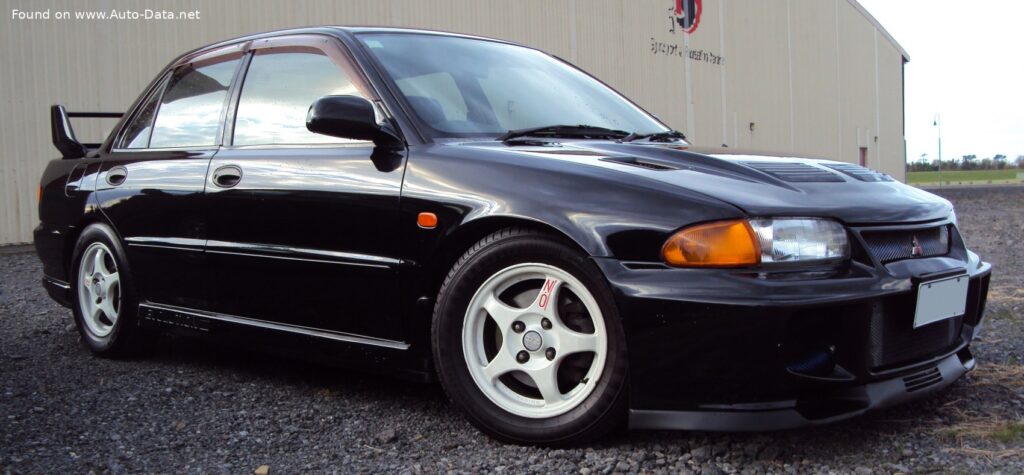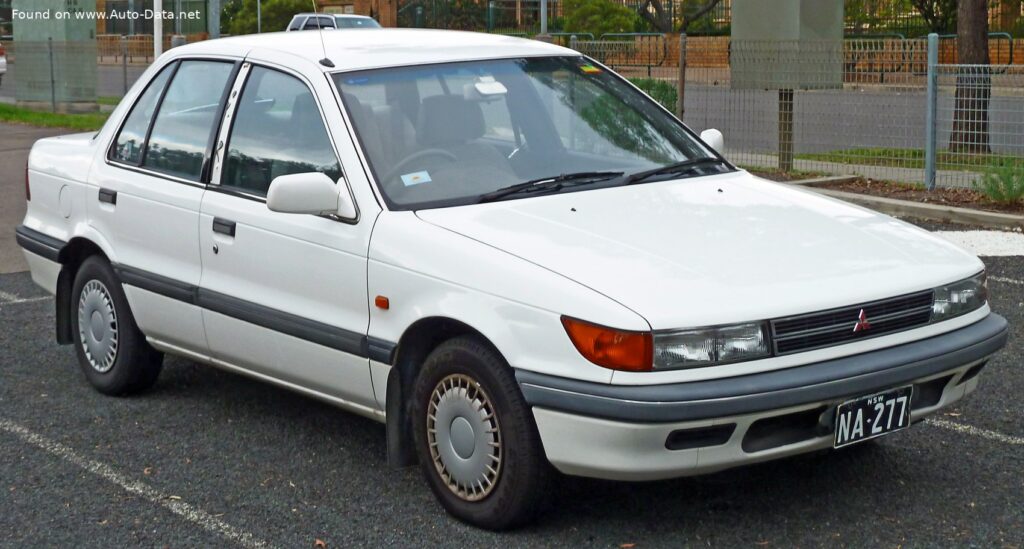
The Mitsubishi Lancer IV 1.6 (160 Hp): A Performance Icon from the Late 80s
The Mitsubishi Lancer, a nameplate synonymous with robust engineering and motorsport prowess, saw its fourth generation (C60/C70 series) introduced in 1988. Among its various iterations, the Mitsubishi Lancer IV 1.6 (160 Hp) stood out as a particularly potent and technologically advanced compact sedan for its era. Produced from 1988 to 1992, this specific model, often referred to by its chassis code or engine designation, represented Mitsubishi’s commitment to delivering accessible performance, particularly in markets outside the United States where such turbocharged, all-wheel-drive compacts were highly prized. While the Lancer name would later achieve global fame with the Evolution series, this 1.6-liter, 160 horsepower variant was a significant precursor, showcasing the foundational elements that would define Mitsubishi’s rally-bred machines.
Positioned in the highly competitive compact segment, the Lancer IV generally catered to a wide audience, offering reliability and practicality. However, the 1.6 (160 Hp) model transcended its utilitarian roots. It carved a niche for itself as a wolf in sheep’s clothing, blending a seemingly ordinary sedan body with a sophisticated powertrain, including a turbocharged engine and an all-wheel-drive system—features that were far from common in its class at the time. This unique combination made it a compelling choice for enthusiasts seeking a high-performance, yet relatively understated, daily driver.
Engine & Performance: The Heart of the Mitsubishi Lancer IV 1.6 (160 Hp)
At the core of the Mitsubishi Lancer IV 1.6 (160 Hp) was a meticulously engineered 1.6-liter (1595 cm3) inline-four engine, designated as a DOHC (Double Overhead Camshaft) unit with four valves per cylinder. This configuration was already a mark of modern engine design in the late 1980s, allowing for better breathing and higher revs compared to single overhead camshaft designs. The true marvel, however, was the integration of a turbocharger, which dramatically boosted the engine’s output. Coupled with a multi-port manifold injection system, this setup ensured precise fuel delivery and optimal combustion efficiency, contributing to its impressive performance figures.
The engine produced a robust 160 horsepower at 6000 rpm, an exceptionally high specific output of over 100 horsepower per liter for a production car of its time. Torque figures were equally compelling, with 221 Nm (163 lb-ft) available at a remarkably low 2500 rpm. This broad torque band meant that power was readily accessible across a wide range of engine speeds, making the car not only quick but also highly tractable in various driving conditions. The low-end torque was particularly advantageous for rapid acceleration and spirited driving, a characteristic often associated with turbocharged engines.
Power was channeled through a precise 5-speed manual transmission, offering the driver full control over the engine’s output. A critical feature that set this Lancer apart was its all-wheel-drive (4×4) powertrain architecture. This system provided superior traction and handling dynamics, especially in adverse weather conditions or during aggressive cornering, significantly enhancing the car’s performance capabilities and driver confidence. With a curb weight of just 2248.72 pounds (1020 kg), the Lancer IV 1.6 (160 Hp) boasted an impressive weight-to-power ratio of 6.4 kg/Hp, enabling a top speed of 133.59 mph (215 km/h). This made it one of the fastest compact sedans available in its target markets, highlighting Mitsubishi’s engineering prowess in creating high-performance, lightweight vehicles.
Design & Features of the Mitsubishi Lancer IV
The fourth-generation Mitsubishi Lancer, including the 1.6 (160 Hp) variant, featured a contemporary design for the late 1980s. It adopted a sleek, aerodynamic sedan body style with four doors and seating for five occupants. Its dimensions were compact yet practical, with a length of 166.73 inches (4235 mm), a width of 65.75 inches (1670 mm), and a height of 55.31 inches (1405 mm). The wheelbase measured 96.65 inches (2455 mm), contributing to a stable ride and nimble handling. The design was clean and understated, lacking overly aggressive styling cues, which further contributed to its “sleeper” appeal.
Inside, the Lancer IV offered a functional and ergonomic cabin. While not luxurious, the interior was well-appointed for its class, with clear instrumentation and logically placed controls. The trunk space was a respectable 13.31 cubic feet (377 liters), providing ample room for luggage or groceries, underscoring its dual role as a performance car and a practical family sedan. The fuel tank capacity was 13.21 US gallons (50 liters), offering a decent range despite the car’s performance-oriented fuel consumption figures—15 l/100 km (15.7 US mpg) in urban settings and 8.2 l/100 km (28.7 US mpg) on the highway.
From a chassis perspective, the Lancer IV 1.6 (160 Hp) was equipped with coil spring suspension at both the front and rear, providing a balance between ride comfort and handling precision. Braking duties were handled by ventilated discs at the front and solid discs at the rear, a robust setup for a car of its performance capabilities. Notably, the inclusion of ABS (Anti-lock Braking System) as an assisting system was a significant safety feature for a compact car in 1988, demonstrating Mitsubishi’s forward-thinking approach to vehicle safety. Steering was managed by a hydraulic rack and pinion system, offering direct feedback and a connected feel to the road, which was highly valued by enthusiasts. The car rode on 175/70 R13 tires, providing a good balance of grip and ride quality for its intended purpose.
Technical Specifications: Mitsubishi Lancer IV 1.6 (160 Hp)
| Category | Specification |
|---|---|
| Brand | Mitsubishi |
| Model | Lancer |
| Generation | Lancer IV |
| Type (Engine) | 1.6 (160 Hp) |
| Production Start | 1988 year |
| Production End | 1992 year |
| Powertrain Architecture | Internal Combustion engine |
| Body type | Sedan |
| Seats | 5 |
| Doors | 4 |
| Performance Specs | |
| Fuel consumption (urban) | 15 l/100 km (15.7 US mpg) |
| Fuel consumption (extra urban) | 8.2 l/100 km (28.7 US mpg) |
| Fuel Type | Petrol (Gasoline) |
| Maximum speed | 215 km/h (133.59 mph) |
| Weight-to-power ratio | 6.4 kg/Hp, 156.9 Hp/tonne |
| Weight-to-torque ratio | 4.6 kg/Nm, 216.7 Nm/tonne |
| Engine Specs | |
| Power | 160 Hp @ 6000 rpm |
| Power per liter | 100.3 Hp/l |
| Torque | 221 Nm @ 2500 rpm (163 lb-ft @ 2500 rpm) |
| Engine layout | Front, Transverse |
| Engine displacement | 1595 cm3 (97.33 cu. in.) |
| Number of cylinders | 4 |
| Engine configuration | Inline |
| Cylinder Bore | 82.3 mm (3.24 in.) |
| Piston Stroke | 75 mm (2.95 in.) |
| Compression ratio | 8:1 |
| Valves per cylinder | 4 |
| Fuel injection system | Multi-port manifold injection |
| Engine aspiration | Turbocharger |
| Valvetrain | DOHC |
| Space, Volume and Weights | |
| Kerb Weight | 1020 kg (2248.72 lbs) |
| Trunk (boot) space – minimum | 377 l (13.31 cu. ft.) |
| Fuel tank capacity | 50 l (13.21 US gal) |
| Dimensions | |
| Length | 4235 mm (166.73 in.) |
| Width | 1670 mm (65.75 in.) |
| Height | 1405 mm (55.31 in.) |
| Wheelbase | 2455 mm (96.65 in.) |
| Front track | 1430 mm (56.3 in.) |
| Rear (Back) track | 1430 mm (56.3 in.) |
| Drivetrain, Brakes and Suspension Specs | |
| Drive wheel | All wheel drive (4×4) |
| Number of gears and type of gearbox | 5 gears, manual transmission |
| Front suspension | Coil spring |
| Rear suspension | Coil spring |
| Front brakes | Ventilated discs |
| Rear brakes | Disc |
| Assisting systems | ABS (Anti-lock braking system) |
| Steering type | Steering rack and pinion |
| Power steering | Hydraulic Steering |
| Tires size | 175/70 R13 |
Legacy & Market Impact of the Mitsubishi Lancer IV 1.6 (160 Hp)
The Mitsubishi Lancer IV 1.6 (160 Hp) holds a significant place in the lineage of performance-oriented compact cars, particularly within Mitsubishi’s own history. While it predates the globally iconic Lancer Evolution series, this particular variant laid crucial groundwork. It demonstrated Mitsubishi’s capability to integrate a high-output, turbocharged engine with a sophisticated all-wheel-drive system into a compact sedan platform, a recipe that would later become legendary in the world of rally racing and high-performance street cars. For markets like Japan and parts of Europe and Asia, where such cars were highly coveted for their blend of practicality and exhilarating performance, the Lancer IV 1.6 (160 Hp) was a compelling offering.
Its primary market impact was felt among enthusiasts who appreciated its understated looks combined with its potent drivetrain. It was a car that could comfortably handle daily commutes but truly came alive on winding roads or in challenging weather conditions thanks to its AWD grip. Competitors in its segment at the time included performance versions of other Japanese compacts, such as the Honda Civic Si, Nissan Pulsar GTi-R (which arrived slightly later and was more extreme), and certain Toyota Corolla GT-S models. However, the Lancer’s unique combination of turbocharging and all-wheel drive in a sedan body gave it a distinct advantage and character.
The historical significance of the Lancer IV 1.6 (160 Hp) is rooted in its contribution to Mitsubishi’s reputation for engineering excellence in performance cars. It solidified the Lancer’s image as a platform capable of handling serious power and advanced driveline technologies. Today, these models are rare finds, particularly in their original, unmodified condition. They are sought after by collectors and enthusiasts who appreciate their role as a foundational piece in the development of the high-performance, all-wheel-drive compact segment. The 1.6 (160 Hp) Lancer IV stands as a testament to an era when Japanese manufacturers pushed the boundaries of what was possible in a compact car, delivering exhilarating performance without sacrificing everyday usability. It remains a cherished classic, a true precursor to the rally legends that would follow.