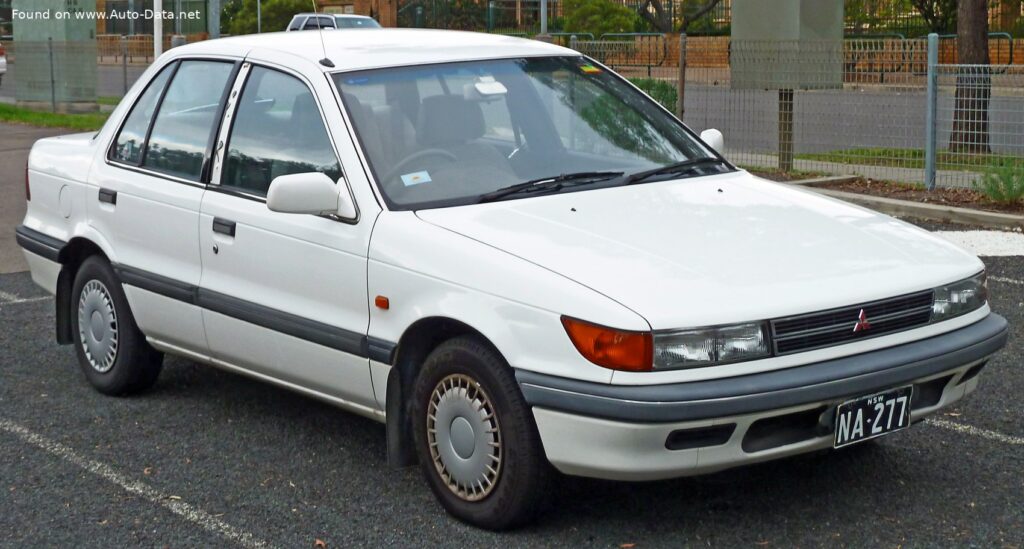
Mitsubishi Lancer IV GTi 1.8 16V (136 Hp): A Forgotten Performance Sedan
The Mitsubishi Lancer IV GTi 1.8 16V (136 Hp), produced between 1989 and 1992, represents a significant, albeit less globally recognized, chapter in the storied history of Mitsubishi’s Lancer lineage. While later generations of the Lancer, particularly the Evolution series, would achieve legendary status worldwide, this fourth-generation model, internally designated as the C60/C70 series, laid important groundwork for the brand’s performance aspirations. Primarily targeted at European and Asian markets, the Lancer IV GTi 1.8 16V (136 Hp) was a compact sedan that offered a compelling blend of practicality and spirited driving dynamics, a characteristic that defined many of its Japanese and European competitors in the late 1980s and early 1990s. It was a testament to Mitsubishi’s engineering prowess, demonstrating how a relatively small, naturally aspirated engine could deliver an engaging driving experience in a lightweight package. This model was a precursor to Mitsubishi’s more aggressive performance offerings, showcasing the brand’s commitment to injecting excitement into its mainstream vehicles, even if it didn’t officially make a significant impact on the American automotive landscape in this specific configuration.
Engine and Performance: The Heart of the Mitsubishi Lancer IV GTi 1.8 16V (136 Hp)
At the core of the Lancer IV GTi’s appeal was its advanced powertrain for the era. The vehicle was equipped with a 1.8-liter (1836 cm3 or 112.04 cu. in.) naturally aspirated inline-four engine, featuring a Double Overhead Camshaft (DOHC) valvetrain with 16 valves (four per cylinder). This sophisticated setup, combined with a multi-port manifold injection fuel system, allowed the engine to produce a respectable 136 horsepower at a peaky 6500 rpm. Its power-per-liter ratio of 74.1 HP/l was quite commendable for a non-turbocharged engine of its time. Torque output stood at 119.49 lb.-ft. (162 Nm) available at 4500 rpm, providing a lively mid-range punch.
Power was delivered to the front wheels via a precise 5-speed manual transmission, a common and enthusiast-preferred choice for compact performance cars of the period. This drivetrain architecture, coupled with a relatively low curb weight of 2248.72 lbs (1020 kg), resulted in an impressive weight-to-power ratio of 7.5 kg/Hp. This optimized power-to-weight balance translated into genuinely brisk acceleration: the Lancer IV GTi could sprint from 0 to 60 mph in a swift 7.9 seconds, with 0-100 km/h taking 8.3 seconds. Its top speed was rated at 124.27 mph (200 km/h), making it a capable performer on highways and backroads alike.
Despite its performance orientation, the Lancer IV GTi also offered reasonable fuel economy for its class. The combined fuel consumption was estimated at 29 US mpg (8.1 l/100 km), with highway cruising yielding an even more efficient 36.8 US mpg (6.4 l/100 km). In urban settings, it consumed fuel at a rate of 21.2 US mpg (11.1 l/100 km). These figures underscored Mitsubishi’s ability to engineer engines that balanced performance with everyday usability, making the GTi a practical choice for enthusiasts in its primary markets.
Design and Features of the Lancer IV GTi
The Mitsubishi Lancer IV GTi adopted a conventional yet aerodynamic sedan body type, a popular choice for compact family cars and performance variants in the late 1980s and early 1990s. It featured a four-door configuration, providing easy access for up to five occupants, making it a versatile vehicle for both daily commuting and spirited weekend drives. Its exterior design was characterized by clean lines and a somewhat understated aesthetic, typical of Japanese sedans of the era, though the GTi badging hinted at its underlying performance capabilities.
Dimensionally, the Lancer IV GTi measured 166.73 inches (4235 mm) in length, 65.75 inches (1670 mm) in width, and 55.31 inches (1405 mm) in height. The wheelbase of 96.65 inches (2455 mm) contributed to a stable ride and predictable handling characteristics. Both the front and rear tracks were identical at 56.3 inches (1430 mm), suggesting a balanced chassis setup. Inside, the sedan offered a practical trunk space of 13.31 cu. ft. (377 liters), sufficient for groceries or weekend luggage. The fuel tank capacity was 13.21 US gallons (50 liters), providing a decent range between fill-ups.
In terms of driving dynamics and safety, the Lancer IV GTi was equipped with a coil spring suspension system at both the front and rear, designed to offer a good balance between ride comfort and handling precision. Braking power was provided by ventilated discs at the front and solid discs at the rear, a capable setup for a car of its weight and performance. Notably, the vehicle also featured an Anti-lock Braking System (ABS), an advanced safety feature for its time, enhancing control during emergency braking maneuvers. Steering was managed by a responsive rack and pinion system, contributing to a direct and engaging driving feel. The car rode on 175/70 R13 tires, providing adequate grip for its performance level.
Technical Specifications: Mitsubishi Lancer IV GTi 1.8 16V (136 Hp)
| Category | Specification | US Equivalent (where applicable) |
|---|---|---|
General Information |
||
| Brand | Mitsubishi | |
| Model | Lancer | |
| Generation | Lancer IV | |
| Type (Engine) | GTi 1.8 16V (136 Hp) | |
| Start of Production | 1989 year | |
| End of Production | 1992 year | |
| Powertrain Architecture | Internal Combustion Engine | |
| Body type | Sedan | |
| Seats | 5 | |
| Doors | 4 | |
Performance Specs |
||
| Fuel Consumption (Economy) – Urban | 11.1 l/100 km | 21.2 US mpg |
| Fuel Consumption (Economy) – Extra Urban | 6.4 l/100 km | 36.8 US mpg |
| Fuel Consumption (Economy) – Combined | 8.1 l/100 km | 29 US mpg |
| Fuel Type | Petrol (Gasoline) | |
| Acceleration 0 – 60 mph | 7.9 sec | |
| Acceleration 0 – 100 km/h | 8.3 sec | |
| Maximum Speed | 200 km/h | 124.27 mph |
| Weight-to-Power Ratio | 7.5 kg/Hp | |
| Weight-to-Torque Ratio | 6.3 kg/Nm | |
Engine Specs |
||
| Power | 136 Hp @ 6500 rpm | |
| Power per liter | 74.1 Hp/l | |
| Torque | 162 Nm @ 4500 rpm | 119.49 lb.-ft. @ 4500 rpm |
| Engine Layout | Front, Transverse | |
| Engine Displacement | 1836 cm3 | 1.8 liters (112.04 cu. in.) |
| Number of Cylinders | 4 | |
| Engine Configuration | Inline | |
| Cylinder Bore | 81.5 mm | 3.21 in. |
| Piston Stroke | 88 mm | 3.46 in. |
| Compression Ratio | 10.5:1 | |
| Number of Valves per Cylinder | 4 | |
| Fuel Injection System | Multi-port manifold injection | |
| Engine Aspiration | Naturally Aspirated Engine | |
| Valvetrain | DOHC | |
Space, Volume and Weights |
||
| Kerb Weight | 1020 kg | 2248.72 lbs |
| Trunk (Boot) Space – Minimum | 377 l | 13.31 cu. ft. |
| Fuel Tank Capacity | 50 l | 13.21 US gal |
Dimensions |
||
| Length | 4235 mm | 166.73 in. |
| Width | 1670 mm | 65.75 in. |
| Height | 1405 mm | 55.31 in. |
| Wheelbase | 2455 mm | 96.65 in. |
| Front Track | 1430 mm | 56.3 in. |
| Rear (Back) Track | 1430 mm | 56.3 in. |
Drivetrain, Brakes and Suspension Specs |
||
| Drivetrain Architecture | The Internal Combustion Engine (ICE) drives the front wheels of the vehicle. | |
| Drive Wheel | Front Wheel Drive | |
| Number of Gears and Type of Gearbox | 5 gears, Manual Transmission | |
| Front Suspension | Coil Spring | |
| Rear Suspension | Coil Spring | |
| Front Brakes | Ventilated Discs | |
| Rear Brakes | Disc | |
| Assisting Systems | ABS (Anti-lock Braking System) | |
| Steering Type | Steering Rack and Pinion | |
| Tires Size | 175/70 R13 | |
Legacy and Market Impact of the Mitsubishi Lancer IV GTi 1.8 16V (136 Hp)
The Mitsubishi Lancer IV GTi 1.8 16V (136 Hp) occupied a niche in the global automotive market, particularly in regions where compact, sporty sedans were highly valued. While it wasn’t a direct competitor in the American market in this specific performance trim, its influence can be seen in the broader context of Mitsubishi’s evolving performance identity. In Europe and Asia, it faced stiff competition from a variety of “hot” compacts that blended everyday usability with enthusiast appeal. Key rivals included models like the Honda Civic Si sedan (though the Si was often hatchback-focused in some markets), the Volkswagen Jetta GLI (which offered a similar performance sedan proposition), and the Nissan Sunny GTi-R (though often in a more extreme, all-wheel-drive turbo guise in some markets, the naturally aspirated GTi variants were closer). The Lancer GTi distinguished itself with its robust DOHC engine, precise manual gearbox, and a reputation for reliability.
Historically, the Lancer IV GTi serves as an important evolutionary step for Mitsubishi. It showcased the brand’s ability to create a performance-oriented front-wheel-drive platform that was both engaging and practical. This generation of the Lancer, including its GTi variant, provided the foundation upon which the legendary Lancer Evolution series would eventually be built. While the Evo would later introduce all-wheel-drive and turbocharging, the GTi’s emphasis on a lightweight chassis, a high-revving DOHC engine, and driver engagement were core principles that carried forward. It helped establish Mitsubishi’s credibility as a manufacturer capable of producing exciting driver’s cars, paving the way for the rally-bred icons that would follow.
For enthusiasts, the Mitsubishi Lancer IV GTi 1.8 16V (136 Hp) represents a charming slice of late 80s/early 90s Japanese performance. Its relative rarity outside of its primary markets, coupled with its engaging driving characteristics, makes it a sought-after classic for those who appreciate understated performance and the mechanical purity of naturally aspirated engines from that era. It stands as a testament to a time when compact sedans could genuinely offer a thrilling driving experience without relying on forced induction, embodying the spirit of accessible performance that many automotive brands aimed for. Its legacy is not one of widespread fame but of foundational importance, a stepping stone in Mitsubishi’s journey to becoming a formidable name in performance motoring.