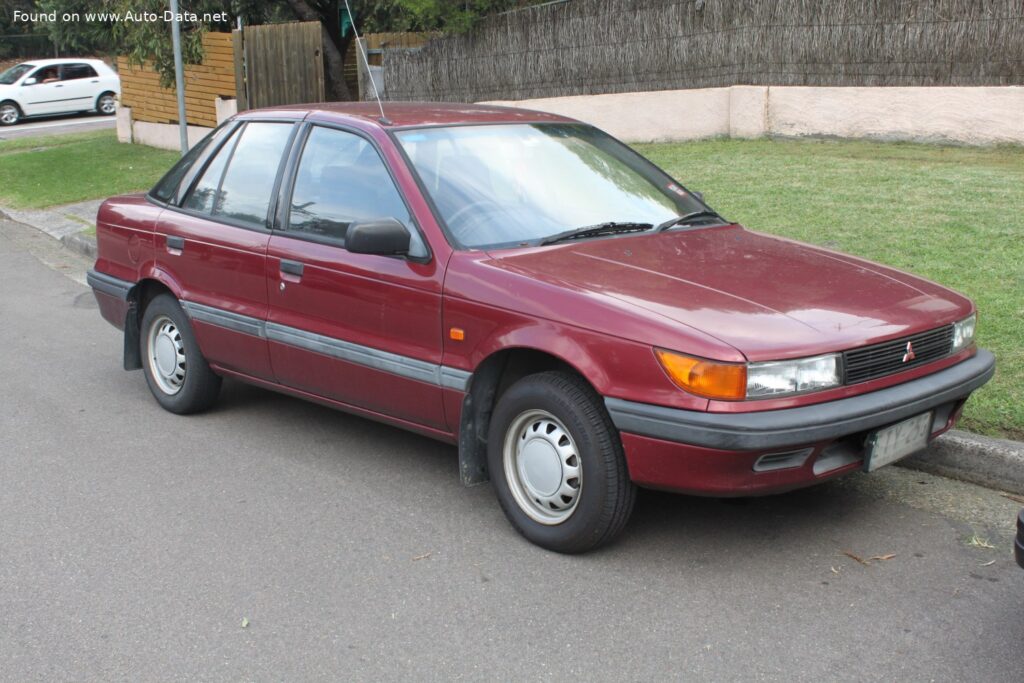
The Mitsubishi Lancer IV Hatchback: A Global Compact Workhorse
The Mitsubishi Lancer, a nameplate synonymous with reliability and versatility across multiple generations, saw its fourth iteration (known internally as the C60 series) introduced in 1988. This generation marked a significant evolution for the compact car, emphasizing aerodynamics, improved ride quality, and a broader appeal in diverse international markets. While the Lancer name might evoke images of high-performance Evolution models for some, the vast majority of Lancer sales globally were represented by more practical, economical variants. Among these, the
Mitsubishi Lancer IV Hatchback 1.3 (60 Hp)
stood out as a particularly pragmatic offering, produced from 1988 to 1992. This variant was primarily aimed at markets in Europe, Asia, and other regions where fuel efficiency, affordability, and compact dimensions were paramount, rather than the performance-oriented segments of the North American market. It served as a quintessential example of Mitsubishi’s commitment to delivering dependable, no-frills transportation for the masses, embodying the brand’s engineering prowess in creating durable, accessible vehicles for everyday use.
Engine & Performance: The Heart of the Mitsubishi Lancer IV Hatchback 1.3 (60 Hp)
At the core of the Mitsubishi Lancer IV Hatchback 1.3 (60 Hp) was its straightforward yet robust powertrain. The vehicle was equipped with a 1.3-liter (approximately 79 cubic inches) naturally aspirated gasoline engine. This powerplant was engineered for longevity and economical operation, rather than outright speed. With a peak output of 60 horsepower, the engine provided sufficient motivation for urban commuting and modest highway travel, aligning perfectly with the demands of its target demographic.
The choice of a naturally aspirated engine meant a simpler design, fewer potential points of failure, and lower manufacturing costs, which translated into a more affordable purchase price for consumers. While 60 horsepower might seem modest by today’s standards, especially in the US market where even entry-level cars boast significantly more power, it was entirely competitive within its segment in the late 1980s and early 1990s in Europe and Asia. The engine’s design focused on delivering smooth, predictable power delivery and respectable fuel economy, making it an ideal candidate for families and individuals seeking low running costs and a hassle-free ownership experience. Its internal combustion architecture was a testament to the conventional, proven engineering methods of the era, prioritizing reliability and ease of maintenance. This pragmatic approach ensured the Lancer 1.3 (60 Hp) remained a popular choice in markets where vehicle taxation and fuel prices heavily influenced purchasing decisions.
Design & Features: Practicality Meets Late-80s Styling
The Mitsubishi Lancer IV Hatchback adopted a design language characteristic of the late 1980s, moving away from the boxier aesthetics of previous generations towards a more rounded, aerodynamic silhouette. This “jelly bean” styling, as it was sometimes affectionately called, was not just about aesthetics; it contributed to better fuel efficiency and reduced wind noise, enhancing the overall driving experience. The hatchback body type was a strategic choice, offering unparalleled practicality and versatility for a compact car. Its rear liftgate provided easy access to a flexible cargo area, which could be expanded by folding down the rear seats, making it suitable for everything from grocery runs to weekend trips with luggage.
Inside, the Lancer IV Hatchback prioritized functionality and durability. While not laden with luxury features, the cabin was designed to be ergonomic and user-friendly, with controls intuitively placed. Materials were chosen for their hard-wearing qualities, capable of withstanding years of daily use. For its time, features might have included options like power windows, central locking, and a basic radio, depending on the trim level and market. Safety, while not as advanced as modern vehicles, would have included fundamental elements like seatbelts and a robust chassis structure for occupant protection. The overall design philosophy was one of sensible engineering: create a car that is dependable, easy to live with, and capable of fulfilling the diverse needs of its owners without unnecessary complexity or extravagance. This focus on practical design was a key factor in its success in global markets.
Technical Specifications
| Category | Specification |
|---|---|
| Brand | Mitsubishi |
| Model | Lancer |
| Generation | Lancer IV Hatchback |
| Type (Engine) | 1.3 (60 Hp) |
| Start of Production | 1988 year |
| End of Production | 1992 year |
| Powertrain Architecture | Internal Combustion engine |
| Body type | Hatchback |
| Fuel Type | Petrol (Gasoline) |
| Power | 60 Hp |
| Engine Aspiration | Naturally aspirated engine |
Legacy & Market Impact of the Mitsubishi Lancer IV Hatchback
The Mitsubishi Lancer IV Hatchback, particularly the 1.3 (60 Hp) variant, played a crucial role in cementing Mitsubishi’s reputation as a manufacturer of reliable and affordable compact cars worldwide. While often overshadowed in enthusiast circles by its more powerful siblings or the rally-bred Evolution models that would come later, the everyday Lancer was the true volume seller, forming the backbone of Mitsubishi’s global presence. Its impact was most significant in markets where practicality, fuel economy, and purchase price were primary considerations for consumers.
In Europe, the Lancer competed fiercely with established players in the compact segment, such as the Volkswagen Golf, Opel Kadett (later Astra), Ford Escort, and the Honda Civic. Its strengths lay in its competitive pricing, reputation for bulletproof reliability, and the versatility offered by its hatchback body style. For many European buyers, the Lancer represented a sensible alternative, offering Japanese engineering quality and a comprehensive standard equipment list for the money. Similarly, in various Asian markets, the Lancer was a perennial favorite, often serving as a reliable family car or a dependable taxi due to its low running costs and proven durability.
The 1.3-liter, 60-horsepower engine, while not exciting, was a perfect fit for these markets. It offered adequate performance for congested city streets and occasional highway use, all while delivering excellent fuel efficiency and low emissions, which were becoming increasingly important factors. This particular variant helped Mitsubishi capture a significant share of the entry-level compact market, introducing countless new customers to the brand.
The Lancer IV generation, including the humble 1.3 Hatchback, showcased Mitsubishi’s ability to adapt its products to diverse global needs. It was a car that didn’t aspire to be flashy or groundbreaking but excelled in its intended purpose: providing dependable, economical transportation. Its legacy is one of quiet competence, contributing to Mitsubishi’s global growth throughout the late 20th century and laying the groundwork for future generations of the Lancer, which would continue to evolve and cater to an even wider audience. Even today, these older Lancers are testament to a bygone era of straightforward, robust automotive engineering, and many can still be found dutifully serving their owners in various parts of the world, a testament to their enduring quality.