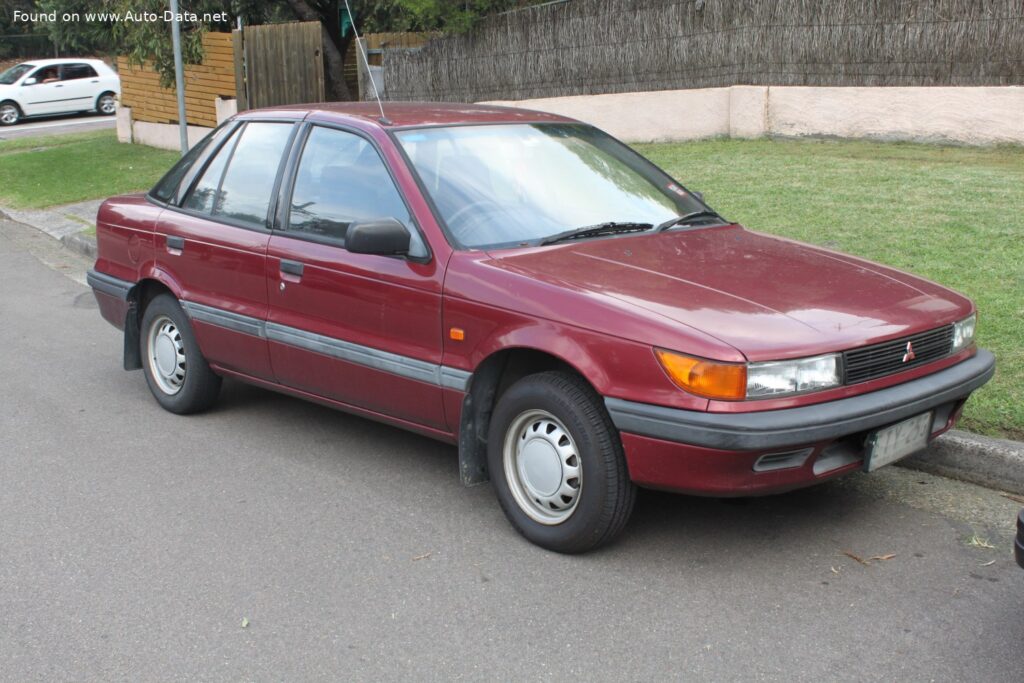
The Mitsubishi Lancer IV Hatchback 1.3 (70 Hp): A Global Compact Workhorse
The Mitsubishi Lancer IV Hatchback 1.3 (70 Hp) represents a significant chapter in Mitsubishi Motors’ long-standing commitment to the global compact car market. Produced between 1988 and 1992, this fourth-generation Lancer, specifically in its 1.3-liter hatchback configuration, was a quintessential example of the reliable, efficient, and practical transportation solutions that Japanese automakers excelled at providing during the late 20th century. While larger-engined Lancer variants often garnered more attention in markets like North America, the 1.3 (70 Hp) model carved out its niche as an economical and dependable choice in many regions, particularly across Europe and Asia, where fuel efficiency, lower taxation brackets, and urban maneuverability were paramount.
The Lancer IV, known internally by chassis codes like C60 and C70 series, built upon the success of its predecessors by offering a more refined driving experience, improved aerodynamics, and enhanced interior packaging. The hatchback body style, in particular, provided a versatile solution for individuals and small families seeking utility without the bulk of a larger vehicle. The 1.3-liter engine variant was positioned as the entry point into the Lancer lineup, emphasizing affordability and running costs over outright performance, making it a popular choice for budget-conscious buyers and fleets.
Engine and Performance: The Heart of the Mitsubishi Lancer IV Hatchback 1.3 (70 Hp)
At the core of the Mitsubishi Lancer IV Hatchback 1.3 (70 Hp) was a naturally aspirated, 1.3-liter internal combustion engine. This powertrain, characteristic of many entry-level vehicles of its era, was engineered for longevity and fuel economy rather than blistering speed. Generating a modest 70 horsepower, the engine provided adequate motivation for urban commuting and gentle highway cruising. Its design prioritized reliability and ease of maintenance, features highly valued by owners in markets where robust, no-nonsense transportation was a necessity.
The engine’s naturally aspirated configuration meant a linear power delivery, without the sudden surge associated with turbocharged units. Drivers of the 1.3 (70 Hp) model would experience a smooth, if unhurried, acceleration. While specific torque figures are not provided, a 1.3-liter engine from this period would typically produce torque in the range of 70-85 lb-ft, delivered at mid-range RPMs, making it tractable in city traffic. This power output, combined with the vehicle’s relatively light curb weight, allowed for respectable fuel efficiency, a critical factor for many buyers. The engine was typically paired with either a 5-speed manual transmission, offering direct control and maximizing efficiency, or an optional automatic transmission for added convenience in congested environments.
This powertrain architecture highlighted Mitsubishi’s engineering philosophy for its compact cars: creating robust, dependable machines that could withstand the rigors of daily use across diverse global conditions. The focus was on practicality, ensuring that the Lancer IV Hatchback 1.3 (70 Hp) could reliably serve its owners for many years with minimal fuss.
Design and Features: Functionality Meets Late ’80s Style
The design of the Mitsubishi Lancer IV Hatchback, including the 1.3 (70 Hp) variant, reflected the automotive aesthetic trends of the late 1980s and early 1990s. While still retaining some of the angularity of previous generations, the Lancer IV adopted smoother lines and a more aerodynamic profile, contributing to better fuel efficiency and reduced wind noise. The hatchback body type was a key selling point, offering a practical blend of passenger comfort and cargo flexibility. With its large rear opening and folding rear seats, the Lancer hatchback could easily accommodate groceries, luggage, or even bulkier items that would challenge a traditional sedan.
Inside, the Lancer IV Hatchback featured a straightforward and ergonomic cabin. The dashboard layout was logical, with controls positioned for easy access and readability. Materials were durable, designed to withstand years of use, reflecting the car’s utilitarian purpose. While luxury features were sparse in the base 1.3 (70 Hp) model, standard equipment typically included basic heating and ventilation systems, a simple AM/FM radio, and manual window winders. Power steering, while sometimes optional, was a common feature that enhanced urban maneuverability. Safety features, by modern standards, were rudimentary, primarily consisting of three-point seatbelts for all occupants. The overall design philosophy was one of sensible functionality, providing a comfortable and practical environment for daily driving without unnecessary embellishments.
Technical Specifications: Mitsubishi Lancer IV Hatchback 1.3 (70 Hp)
Below is a detailed breakdown of the technical specifications for the Mitsubishi Lancer IV Hatchback 1.3 (70 Hp):
| Category | Specification |
|---|---|
| Brand | Mitsubishi |
| Model | Lancer |
| Generation | Lancer IV Hatchback |
| Type (Engine) | 1.3 (70 Hp) |
| Start of Production | 1988 year |
| End of Production | 1992 year |
| Powertrain Architecture | Internal Combustion engine |
| Body Type | Hatchback |
| Fuel Type | Petrol (Gasoline) |
| Power | 70 Hp |
| Engine Aspiration | Naturally aspirated engine |
Legacy and Market Impact of the Mitsubishi Lancer IV Hatchback 1.3 (70 Hp)
The Mitsubishi Lancer IV Hatchback 1.3 (70 Hp), while not a performance icon, played a crucial role in solidifying Mitsubishi’s reputation as a manufacturer of reliable and affordable compact cars. Its impact was particularly felt in markets where economic considerations and practicality heavily influenced purchasing decisions. In Europe, for instance, where strict emissions regulations and fuel taxation favored smaller engines, the 1.3-liter Lancer was a strong competitor against domestic and other Asian rivals.
Competitors for the Mitsubishi Lancer IV Hatchback 1.3 (70 Hp) included a wide array of compact vehicles from various manufacturers. In its primary markets, it would have vied for sales with vehicles like the Honda Civic, Toyota Corolla, Nissan Sunny/Sentra, Mazda 323, Ford Escort, Opel Kadett (later Astra), and Volkswagen Golf. What set the Lancer apart was its consistent reputation for mechanical robustness and relatively low ownership costs. While perhaps not as dynamically engaging as some European rivals or as widely recognized for innovation as some of its Japanese counterparts, its steadfast dependability made it a pragmatic choice for many.
The Lancer IV generation also served as a foundational platform for Mitsubishi, underpinning various models globally. Although the 1.3-liter variant was focused on economy, this generation laid groundwork for the more performance-oriented Lancer Evolution models that would emerge in later years, demonstrating the versatility of the Lancer platform. The 1.3 (70 Hp) model, in essence, represented the bread-and-butter offering that supported the brand’s wider ambitions.
Today, the Mitsubishi Lancer IV Hatchback 1.3 (70 Hp) is remembered as a testament to the era’s focus on functional, no-frills motoring. It embodied the spirit of a reliable daily driver, contributing significantly to Mitsubishi’s global sales figures and reinforcing its image as a producer of durable and efficient automobiles. Its legacy is not one of groundbreaking technology or blistering speed, but rather of consistent, unpretentious service—a true workhorse that diligently served millions of drivers worldwide.