The Mitsubishi Lancer IX 1.5i: A European and Asian Market Stalwart
The Mitsubishi Lancer, a nameplate synonymous with durability and, in its high-performance iterations, rallying prowess, has a long and storied history across global automotive markets. The specific variant under review, the Mitsubishi Lancer IX 1.5i, represents a particular iteration of the compact sedan tailored primarily for European and Asian markets, produced between July 2009 and October 2010. While the Lancer nameplate saw various generations and market-specific models, this “Lancer IX” designation, particularly with the 1.5-liter engine, highlights its role as an accessible and economical choice in its segment. It embodied Mitsubishi’s commitment to providing reliable, practical transportation for families and individuals seeking a blend of efficiency and traditional sedan utility, distinct from the larger-engined variants often seen in North America.
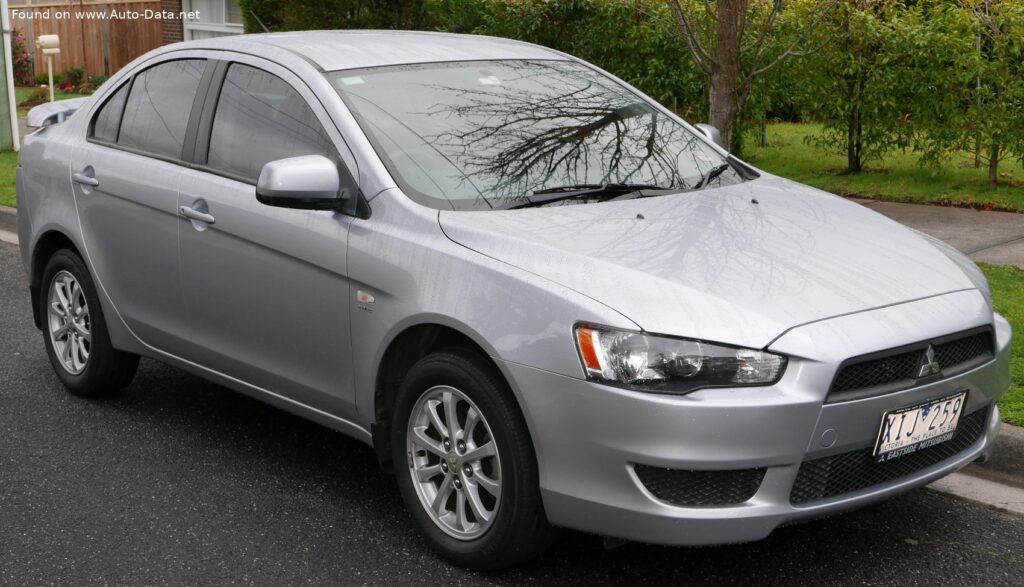
Positioned within the competitive compact sedan segment, the Lancer IX 1.5i offered a compelling package for consumers prioritizing fuel economy and a straightforward driving experience. This generation of Lancer, often referred to as the Lancer X in many global markets (or the CY/CZ platform), showcased a more aggressive and contemporary design language compared to its predecessors, drawing inspiration from Mitsubishi’s rally heritage even in its more sedate forms. Its four-door, five-seat configuration made it a practical choice for daily commutes and family duties, aligning with the core demands of its target regions.
Engine and Performance of the Mitsubishi Lancer IX 1.5i
At the heart of the Mitsubishi Lancer IX 1.5i lies the 4A91 engine, a naturally aspirated, 1.5-liter (1499 cm³) inline four-cylinder gasoline (petrol) unit. This engine was engineered for efficiency and smooth operation, reflecting its role in a segment where running costs are a primary consideration. Featuring a Double Overhead Camshaft (DOHC) valvetrain and multi-port manifold injection, the 4A91 delivered a respectable 109 horsepower (Hp) at 6000 rpm. Its maximum torque output was 143 Nm, which translates to approximately 105.47 lb-ft, available at 4000 rpm. This power delivery profile ensured adequate responsiveness for city driving and comfortable cruising on highways.
Paired exclusively with a 5-speed manual transmission, the Lancer IX 1.5i offered drivers direct engagement with the powertrain. The manual gearbox was a common choice in European and Asian markets, appealing to those who prefer greater control and often better fuel economy compared to automatic alternatives of the era. Performance figures for this variant were modest but entirely suitable for its class: acceleration from 0 to 60 mph was achieved in approximately 11 seconds, with 0 to 62 mph (100 km/h) taking 11.6 seconds. The car’s top speed was rated at 191 km/h, or about 118.68 mph.
Fuel efficiency was a key selling point for the 1.5i. The combined fuel economy was an impressive 6.4 liters per 100 kilometers, equating to approximately 36.8 US miles per gallon. In urban settings, it achieved 8.2 l/100 km (28.7 US mpg), while on extra-urban cycles, it managed 5.4 l/100 km (43.6 US mpg). These figures underscored its economic appeal, especially in regions with higher fuel prices. The vehicle met the Euro 4 emission standard, indicating its compliance with the environmental regulations prevalent during its production period.
Design and Features of the Lancer IX Sedan
The Mitsubishi Lancer IX adopted a more dynamic and aggressive styling language than its predecessors, a design philosophy that resonated well with its target audience. The sedan body type, with its four doors and five-seat configuration, emphasized practicality and family-friendly utility. Its exterior featured sharp lines, a prominent grille, and distinct headlamp designs that gave it a contemporary and somewhat sporty appearance, even in its standard trims.
Dimensionally, the Lancer IX was a compact car, measuring 4570 mm (179.92 inches) in length, 1760 mm (69.29 inches) in width, and 1505 mm (59.25 inches) in height. Its wheelbase of 2635 mm (103.74 inches) contributed to a stable ride and adequate interior space for its class. The kerb weight of the 1.5i variant was 1290 kg (2843.96 lbs), which, combined with its 109 Hp engine, resulted in a weight-to-power ratio of 11.8 kg/Hp (84.5 Hp/tonne).
In terms of chassis and safety, the Lancer IX 1.5i was equipped with a robust setup. It featured a front-wheel-drive (FWD) powertrain architecture, a common and cost-effective layout for compact sedans, offering predictable handling and good traction in various conditions. The suspension system comprised a Spring Strut setup at the front and a Wishbone configuration at the rear, providing a comfortable ride quality and stable road holding. Braking duties were handled by ventilated discs at the front and solid discs at the rear, complemented by an Anti-lock Braking System (ABS) as a standard assisting system, enhancing safety during emergency stops. The steering utilized a rack and pinion system, offering direct and responsive feedback to the driver. The vehicle rode on 205/60 R16 tires mounted on 6J x 16-inch wheel rims, a practical size for balancing grip, comfort, and replacement costs.
Technical Specifications
| Category | Specification |
|---|---|
| General Information | |
| Brand | Mitsubishi |
| Model | Lancer |
| Generation | Lancer IX |
| Type (Engine) | 1.5i (109 Hp) |
| Production Start | July, 2009 |
| Production End | October, 2010 |
| Powertrain Architecture | Internal Combustion engine |
| Body Type | Sedan |
| Seats | 5 |
| Doors | 4 |
| Performance Specs | |
| Fuel Consumption (Urban) | 8.2 l/100 km (28.7 US mpg) |
| Fuel Consumption (Extra Urban) | 5.4 l/100 km (43.6 US mpg) |
| Fuel Consumption (Combined) | 6.4 l/100 km (36.8 US mpg) |
| Fuel Type | Petrol (Gasoline) |
| Acceleration 0 – 60 mph | 11 sec |
| Acceleration 0 – 62 mph (0 – 100 km/h) | 11.6 sec |
| Maximum Speed | 191 km/h (118.68 mph) |
| Emission Standard | Euro 4 |
| Weight-to-Power Ratio | 11.8 kg/Hp (84.5 Hp/tonne) |
| Weight-to-Torque Ratio | 9 kg/Nm (110.9 Nm/tonne) |
| Engine Specs | |
| Power | 109 Hp @ 6000 rpm |
| Power per Liter | 72.7 Hp/l |
| Torque | 143 Nm @ 4000 rpm (105.47 lb-ft @ 4000 rpm) |
| Engine Layout | Front, Transverse |
| Engine Model/Code | 4A91 |
| Engine Displacement | 1499 cm³ (91.47 cu. in.) |
| Number of Cylinders | 4 |
| Engine Configuration | Inline |
| Number of Valves per Cylinder | 4 |
| Fuel Injection System | Multi-port manifold injection |
| Engine Aspiration | Naturally aspirated engine |
| Valvetrain | DOHC |
| Engine Oil Capacity | 4.2 l (4.44 US qt) |
| Coolant Capacity | 6 l (6.34 US qt) |
| Space, Volume and Weights | |
| Kerb Weight | 1290 kg (2843.96 lbs) |
| Maximum Weight | 1750 kg (3858.09 lbs) |
| Maximum Load | 460 kg (1014.13 lbs) |
| Fuel Tank Capacity | 59 l (15.59 US gal) |
| Dimensions | |
| Length | 4570 mm (179.92 in) |
| Width | 1760 mm (69.29 in) |
| Height | 1505 mm (59.25 in) |
| Wheelbase | 2635 mm (103.74 in) |
| Front Track | 1530 mm (60.24 in) |
| Rear (Back) Track | 1530 mm (60.24 in) |
| Minimum Turning Circle | 10.8 m (35.43 ft) |
| Drivetrain, Brakes and Suspension Specs | |
| Drivetrain Architecture | Front wheel drive (ICE drives front wheels) |
| Drive Wheel | Front wheel drive |
| Number of Gears and Gearbox Type | 5 gears, manual transmission |
| Front Suspension | Spring Strut |
| Rear Suspension | Wishbone |
| Front Brakes | Ventilated discs |
| Rear Brakes | Disc |
| Assisting Systems | ABS (Anti-lock braking system) |
| Steering Type | Steering rack and pinion |
| Tires Size | 205/60 R16 |
| Wheel Rims Size | 6J x 16 |
Legacy and Market Impact of the Mitsubishi Lancer IX
The Mitsubishi Lancer, in its various forms, has always held a significant place in the global automotive landscape, often celebrated for its robust engineering and reliability. The Lancer IX 1.5i, specifically, played a crucial role in Mitsubishi’s strategy to offer a competitive and economical compact sedan in markets where practicality and running costs are paramount. Unlike the North American market, which often received larger-displacement engines or focused heavily on the high-performance Evolution models, this 1.5-liter variant was a workhorse designed for the daily grind in Europe, parts of Asia, and other regions.
In its primary markets, the Lancer IX 1.5i competed fiercely with established players such as the Volkswagen Jetta, Ford Focus, Opel Astra, Toyota Corolla, and Honda Civic. While it might not have always matched the sales volumes of some of its rivals, it carved out a niche for itself by offering a distinctive blend of Japanese reliability, a somewhat sporty aesthetic derived from its rally heritage, and a no-nonsense approach to motoring. Its reputation for being a durable and dependable vehicle contributed to its appeal, particularly among buyers looking for a car that could withstand various road conditions and provide years of trouble-free ownership.
The Lancer IX’s legacy is further cemented by its contribution to Mitsubishi’s broader brand image. While the Evolution models garnered headlines for their rally success and supercar-baiting performance, the more humble Lancer variants like the 1.5i provided the volume sales and everyday practicality that sustained the brand. It represented Mitsubishi’s ability to produce well-engineered, affordable vehicles that catered to a wide range of consumer needs.
Although its production run for this specific 1.5i variant was relatively short (2009-2010), it was part of a longer-running generation of the Lancer that continued to evolve. This particular model highlighted a period where manufacturers were increasingly focused on downsized, efficient engines to meet tightening emission standards (like Euro 4) and consumer demand for better fuel economy. The Lancer IX 1.5i, therefore, stands as a testament to Mitsubishi’s adaptability and its commitment to delivering practical, dependable, and efficient transportation solutions in a highly competitive global market. Its impact, though perhaps not as flashy as its performance-oriented siblings, was significant in providing accessible mobility and maintaining Mitsubishi’s presence in key international segments.