Introduction to the Mitsubishi Lancer IX (facelift 2015)
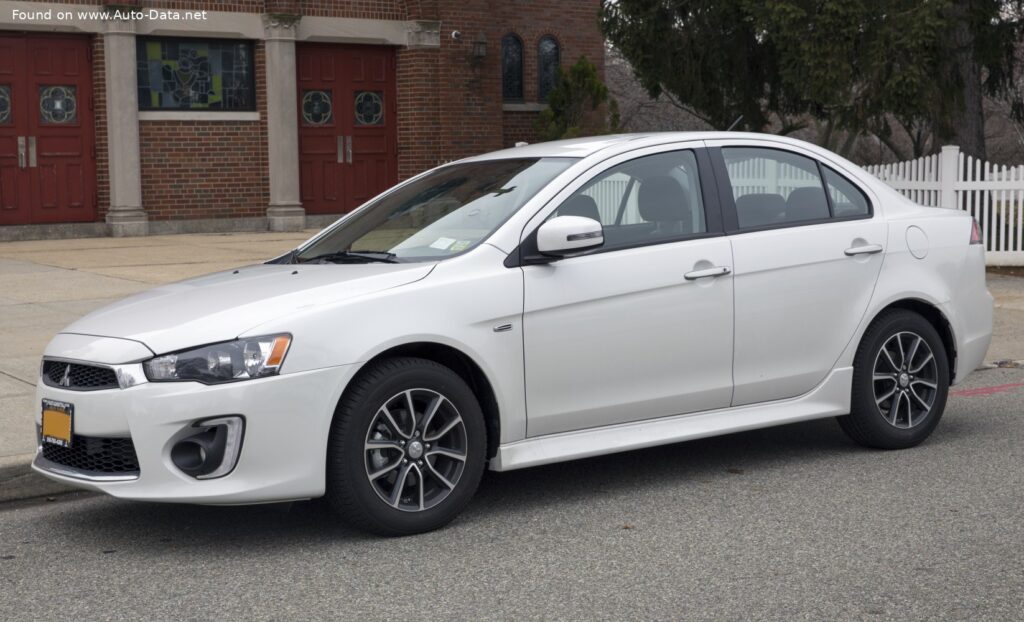
The Mitsubishi Lancer has long been a cornerstone of the global compact car market, known for its practicality, reliability, and accessible performance. The ninth generation, specifically the Mitsubishi Lancer IX (facelift 2015), represented a late-cycle refresh for a model that had been a consistent seller in various international markets, particularly in Asia, Latin America, and parts of Europe, even as its presence in the North American market began to wane. This 2015 facelift aimed to keep the Lancer competitive in its segment, offering updated styling cues and minor refinements to its established platform. Positioned as a dependable and economical sedan, the Lancer IX facelift continued to cater to buyers seeking a no-nonsense daily driver with a reputation for durability.
While the Lancer nameplate holds significant heritage, particularly through its high-performance Evolution variants, the standard Lancer IX focused on delivering a balanced package for the mainstream consumer. The 2015 refresh brought subtle but noticeable changes, helping to modernize its appearance and maintain its appeal against a backdrop of increasingly sophisticated rivals. This particular variant, equipped with the 2.0-liter engine generating 148 horsepower, offered a compelling blend of adequate power for urban and highway driving, coupled with respectable fuel efficiency, making it a pragmatic choice for many families and individual commuters.
Engine and Performance of the Mitsubishi Lancer IX (facelift 2015)
Powertrain Configuration and Output
At the heart of the Mitsubishi Lancer IX (facelift 2015) 2.0-liter model lies a robust 1998 cm3 (2.0-liter) inline-four engine, designated by the code 4B11. This naturally aspirated power plant is configured in a front, transverse layout, driving the front wheels. It features a Double Overhead Camshaft (DOHC) valvetrain with four valves per cylinder, a design choice known for optimizing airflow and enhancing engine breathing. Fuel delivery is managed by a multi-port manifold injection system, a proven technology that offers a good balance of efficiency and reliability.
The engine produces a respectable 148 horsepower at 6000 rpm, providing sufficient motivation for the compact sedan. Peak torque stands at 197 Nm (145.3 lb.-ft.) delivered at 4200 rpm. This torque curve suggests a responsive engine character, with ample pulling power available in the mid-range, ideal for everyday driving scenarios and highway passing maneuvers. Coupled with a 5-speed manual transmission, the powertrain emphasizes driver engagement and offers precise control over gear selection. The weight-to-power ratio of 8.9 kg/Hp (113 Hp/tonne) and a weight-to-torque ratio of 6.6 kg/Nm (150.4 Nm/tonne) indicate a well-balanced performance for its class, ensuring the Lancer feels sprightly without being overly aggressive.
Fuel Economy and Drivability
In terms of fuel efficiency, the 2.0-liter Lancer IX facelift delivers competitive figures for a naturally aspirated engine of its size. The combined fuel consumption is rated at 8.4 liters per 100 km, which translates to an estimated 28 US mpg. In urban driving conditions, the vehicle achieves approximately 9.8 liters per 100 km (24 US mpg), while extra-urban driving sees a more efficient 6.9 liters per 100 km (34.1 US mpg). These figures underscore the Lancer’s practical appeal as an economical commuter. The 59-liter (15.59 US gallon) fuel tank provides a considerable range between fill-ups, further enhancing its suitability for long-distance travel. The front-wheel-drive architecture, combined with a manual transmission, offers a direct and predictable driving experience, prioritizing stability and ease of maneuverability.
Design and Features
Exterior and Interior Styling
The Mitsubishi Lancer IX (facelift 2015) retains the classic sedan silhouette that has defined the model for generations. With a length of 182.09 inches, a width of 69.29 inches, and a height ranging from 58.27 to 59.25 inches, it fits squarely within the compact sedan segment. The 2015 facelift introduced subtle aesthetic enhancements designed to refresh its appearance without a complete overhaul. These typically included revised front and rear bumpers, updated grille designs, and potentially new alloy wheel options, giving it a more contemporary look. The Lancer’s design language, while not groundbreaking, was characterized by clean lines and an aerodynamic profile, contributing to its stable road presence.
Inside, the Lancer IX offers a functional and straightforward cabin designed for five occupants across four doors. The focus remains on ergonomics and durability, with controls logically placed for ease of use. While specific interior features of the facelift are not detailed, typical revisions for such updates often include new upholstery options, updated trim materials, and potentially enhanced infotainment systems, though the core architecture remains consistent with the pre-facelift model. The trunk space of 400 liters (14.13 cu. ft.) provides ample cargo capacity for daily errands and weekend trips, making it a practical choice for small families.
Chassis, Suspension, and Safety
The Lancer’s ride and handling are managed by an independent McPherson strut front suspension with coil springs and an anti-roll bar, paired with an independent multi-link spring suspension at the rear, also featuring a stabilizer. This setup provides a comfortable ride quality while maintaining competent handling characteristics. Braking performance is assured by ventilated discs at the front and solid discs at the rear, complemented by an Anti-lock Braking System (ABS) as a standard assisting system. The steering system utilizes a rack and pinion setup with electric power steering, offering light and precise control, particularly beneficial for urban driving and parking maneuvers. The vehicle rides on 205/60 R16 tires mounted on 6.5J x 16-inch wheel rims, a common size that balances ride comfort with adequate grip. With a minimum turning circle of 32.81 feet, the Lancer demonstrates good maneuverability in tight spaces.
Technical Specifications
| Category | Specification |
|---|---|
| Brand | Mitsubishi |
| Model | Lancer |
| Generation | Lancer IX (facelift 2015) |
| Type (Engine) | 2.0 (148 Hp) |
| Start of production | 2015 year |
| End of production | 2017 year |
| Powertrain Architecture | Internal Combustion engine |
| Body type | Sedan |
| Seats | 5 |
| Doors | 4 |
| Fuel consumption (economy) – urban | 9.8 l/100 km (24 US mpg) |
| Fuel consumption (economy) – extra urban | 6.9 l/100 km (34.1 US mpg) |
| Fuel consumption (economy) – combined | 8.4 l/100 km (28 US mpg) |
| Fuel Type | Petrol (Gasoline) |
| Weight-to-power ratio | 8.9 kg/Hp (113 Hp/tonne) |
| Weight-to-torque ratio | 6.6 kg/Nm (150.4 Nm/tonne) |
| Power | 148 Hp @ 6000 rpm |
| Power per liter | 74.1 Hp/l |
| Torque | 197 Nm (145.3 lb.-ft.) @ 4200 rpm |
| Engine layout | Front, Transverse |
| Engine Model/Code | 4B11 |
| Engine displacement | 1998 cm3 (121.93 cu. in.) |
| Number of cylinders | 4 |
| Engine configuration | Inline |
| Cylinder Bore | 86 mm (3.39 in.) |
| Piston Stroke | 86 mm (3.39 in.) |
| Compression ratio | 10:1 |
| Number of valves per cylinder | 4 |
| Fuel injection system | Multi-port manifold injection |
| Engine aspiration | Naturally aspirated engine |
| Valvetrain | DOHC |
| Engine oil capacity | 4.3 l (4.54 US qt) |
| Coolant | 7 l (7.4 US qt) |
| Kerb Weight | 1310 kg (2888.06 lbs.) |
| Max. weight | 1800 kg (3968.32 lbs.) |
| Max load | 490 kg (1080.27 lbs.) |
| Trunk (boot) space – minimum | 400 l (14.13 cu. ft.) |
| Fuel tank capacity | 59 l (15.59 US gal) |
| Max. roof load | 80 kg (176.37 lbs.) |
| Permitted towbar download | 55 kg (121.25 lbs.) |
| Length | 4625 mm (182.09 in.) |
| Width | 1760 mm (69.29 in.) |
| Width including mirrors | 2044 mm (80.47 in.) |
| Height | 1480-1505 mm (58.27 – 59.25 in.) |
| Wheelbase | 2635 mm (103.74 in.) |
| Front track | 1530 mm (60.24 in.) |
| Rear (Back) track | 1530 mm (60.24 in.) |
| Front overhang | 1010 mm (39.76 in.) |
| Rear overhang | 980 mm (38.58 in.) |
| Ride height (ground clearance) | 140 mm (5.51 in.) |
| Minimum turning circle (turning diameter) | 10.0 m (32.81 ft.) |
| Drivetrain Architecture | The Internal combustion engine (ICE) drives the front wheels of the vehicle. |
| Drive wheel | Front wheel drive |
| Number of gears and type of gearbox | 5 gears, manual transmission |
| Front suspension | Independent, type McPherson with coil spring and anti-roll bar |
| Rear suspension | Independent multi-link spring suspension with stabilizer |
| Front brakes | Ventilated discs |
| Rear brakes | Disc |
| Assisting systems | ABS (Anti-lock braking system) |
| Steering type | Steering rack and pinion |
| Power steering | Electric Steering |
| Tires size | 205/60 R16 |
| Wheel rims size | 6.5J x 16 |
Legacy and Market Impact
The Mitsubishi Lancer has carved out a significant niche in automotive history, largely due to its reputation for robust engineering, affordability, and the legendary status of its Evolution variants. The Mitsubishi Lancer IX (facelift 2015), while representing a later stage in the model’s lifecycle, continued this legacy in markets where compact sedans remained a popular choice. In many regions outside of North America, the Lancer was a workhorse, serving as reliable family transportation and a practical option for budget-conscious buyers. Its straightforward mechanicals and proven powertrain contributed to its reputation for low running costs and ease of maintenance, qualities highly valued in emerging markets.
During its production run from 2015 to 2017, the Lancer IX facelift faced stiff competition from a new generation of compact sedans that offered more advanced technology, sophisticated interiors, and often more dynamic styling. Key competitors in its primary markets included established players like the Toyota Corolla, Honda Civic, Nissan Sentra (or Sylphy in some regions), Hyundai Elantra, Kia Forte, and Mazda3. While some rivals had moved towards smaller, turbocharged engines and continuously variable transmissions (CVTs) for improved efficiency, the Lancer’s naturally aspirated 2.0-liter engine and manual transmission offered a more traditional and perhaps more durable approach. This appealed to a segment of buyers who prioritized proven reliability over cutting-edge innovation.
The Lancer’s market impact during this period was primarily sustained by its existing customer base and brand loyalty in specific geographies. Its role was to provide a dependable and practical option in a segment that was increasingly diversifying. As Mitsubishi Motors began to shift its global strategy towards SUVs and crossovers, the Lancer, like many traditional sedans, saw its production eventually wind down. However, the Lancer IX facelift remains a testament to Mitsubishi’s commitment to offering accessible and durable vehicles, embodying the brand’s engineering principles even in the twilight of its sedan era. Its historical significance lies in its consistent presence as a global compact sedan, providing reliable mobility to millions of drivers worldwide.