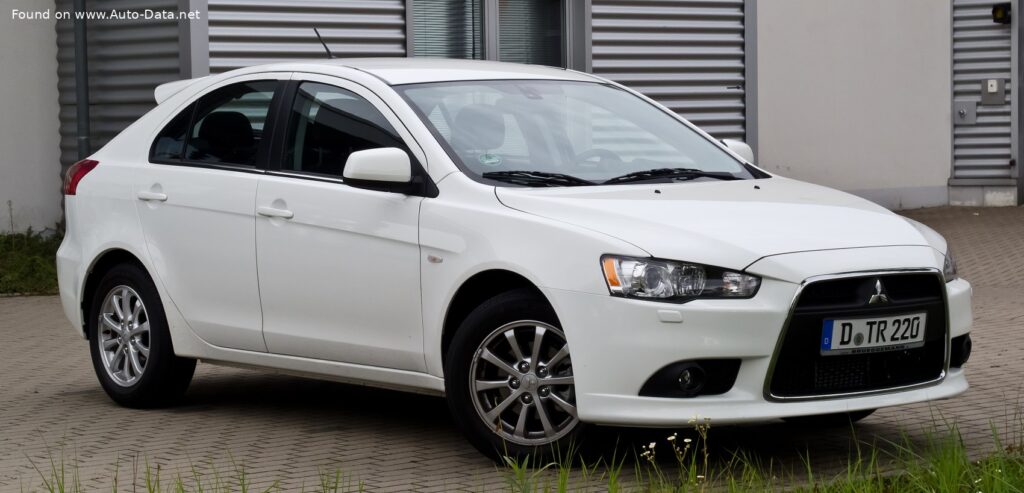
Introduction to the Mitsubishi Lancer Sportback IX (GS44S)
The Mitsubishi Lancer, a name synonymous with performance and reliability across global markets, saw numerous iterations throughout its extensive production history. Among these was the ninth-generation Lancer, internally designated as the CY/CZ platform, which introduced a versatile five-door hatchback variant known as the Mitsubishi Lancer Sportback IX (GS44S). Produced from September 2007 to May 2010, this particular model, equipped with the 1.8 MPI (Multi-Point Injection) engine delivering 143 horsepower, represented Mitsubishi’s commitment to offering a practical yet dynamically styled compact car in its primary markets, largely outside of the United States.
While the Lancer sedan, particularly its high-performance Evolution variants, garnered significant attention in North America, the Sportback model with this specific powertrain was more prevalent in European and Asian markets. It catered to consumers seeking the utility of a hatchback combined with the Lancer’s established reputation for robustness and a subtly sporty aesthetic derived from its rally-bred lineage. Positioned within the highly competitive C-segment, the Lancer Sportback IX aimed to blend everyday usability with a responsive driving experience, making it a compelling choice for families and individuals alike who valued practicality without sacrificing a degree of driving engagement. This article delves into the technical specifications, design philosophies, and market impact of the Mitsubishi Lancer Sportback IX (GS44S) 1.8 MPI (143 Hp).
Engine and Performance of the Mitsubishi Lancer Sportback IX (GS44S)
Powertrain Configuration
At the heart of the Mitsubishi Lancer Sportback IX (GS44S) 1.8 MPI (143 Hp) was Mitsubishi’s 4B10 engine, a naturally aspirated, 1.8-liter (1798 cc) inline-four gasoline unit. This engine featured a Double Overhead Camshaft (DOHC) valvetrain with four valves per cylinder, a common and efficient setup for the era. Fuel delivery was handled by a multi-point manifold injection system, ensuring precise fuel metering for optimal combustion. The engine was configured in a front, transverse layout, driving the front wheels, which is typical for compact cars in this segment, contributing to efficient packaging and predictable handling characteristics.
This 1.8-liter powerplant generated a respectable 143 horsepower at 6000 rpm, providing ample power for daily driving and highway cruising. Torque output stood at 131.29 lb.-ft. (178 Nm) delivered at 4250 rpm. This torque curve suggested a flexible engine, capable of pulling adequately from lower revs while offering a noticeable surge of power in the mid-range. Paired with a standard 5-speed manual transmission, the powertrain offered a direct and engaging driving experience, allowing the driver to fully exploit the engine’s capabilities. The choice of a manual gearbox underscored the car’s practical yet driver-focused intent.
Driving Dynamics and Efficiency
In terms of performance, the Lancer Sportback IX 1.8 MPI was capable of accelerating from 0 to 60 mph in a brisk 9.9 seconds, a competitive figure for a non-performance-oriented compact hatchback of its time. Its maximum speed reached 121.79 mph (196 km/h), making it perfectly suited for sustained highway speeds. The vehicle’s weight-to-power ratio was calculated at 10 kg per horsepower (100 Hp per tonne), indicating a balanced approach to performance and mass.
Fuel efficiency was a key consideration for vehicles in this class. The Lancer Sportback IX 1.8 MPI achieved a combined fuel consumption rating of 29.8 US mpg (7.9 l/100 km). Urban driving saw consumption figures of 22.4 US mpg (10.5 l/100 km), while extra-urban (highway) driving improved significantly to 36.8 US mpg (6.4 l/100 km). These figures, while not groundbreaking, were competitive for the late 2000s, especially for a car compliant with the Euro 4 emission standard, demonstrating Mitsubishi’s efforts in environmental responsibility for the period. The 15.59 US gallon (59-liter) fuel tank provided a commendable driving range between fill-ups, enhancing its practicality for longer journeys.
Design and Features of the Mitsubishi Lancer Sportback IX (GS44S)
Exterior and Interior Design
The Mitsubishi Lancer Sportback IX (GS44S) adopted a distinctive and assertive design language, sharing much of its front fascia with the more aggressive Lancer sedan, including the prominent “jet fighter” grille that characterized Mitsubishi vehicles of this era. Its five-door hatchback body style, however, set it apart, offering a sloping roofline that transitioned smoothly into a practical rear tailgate. This Sportback design aimed to combine the sleekness of a coupe with the versatility of a conventional hatchback, appealing to buyers who desired both style and utility.
Measuring 180.51 inches (4585 mm) in length, 69.29 inches (1760 mm) in width, and 59.65 inches (1515 mm) in height, with a wheelbase of 103.74 inches (2635 mm), the Lancer Sportback offered a substantial footprint for a compact car. These dimensions contributed to a spacious interior capable of comfortably accommodating five occupants. The Sportback’s primary advantage lay in its cargo flexibility. With the rear seats in place, it provided a respectable 12.15 cubic feet (344 liters) of trunk space. Folding the rear seats expanded this capacity significantly to an impressive 47.64 cubic feet (1349 liters), transforming it into a highly capable cargo hauler for its segment. This adaptability made it particularly attractive to younger families or those with active lifestyles.
Chassis and Safety
Underneath its stylish exterior, the Lancer Sportback IX featured a well-engineered chassis designed for a balanced ride and confident handling. The front suspension utilized an independent McPherson strut setup, known for its robustness and space efficiency, while the rear employed an independent multi-link suspension system. This sophisticated rear arrangement contributed to superior ride comfort and improved road holding compared to simpler torsion beam designs often found in competitors. The front and rear tracks were identical at 60.24 inches (1530 mm), contributing to stability.
Braking performance was handled by ventilated discs at the front and solid discs at the rear, a capable setup for a vehicle of its weight and performance. An Anti-lock Braking System (ABS) was standard, enhancing safety by preventing wheel lock-up during hard braking and maintaining steering control. The steering system was a hydraulic rack and pinion type, providing direct feedback and a natural feel to the driver, a characteristic often appreciated by enthusiasts. The minimum turning circle of 32.81 feet (10 meters) ensured decent maneuverability in urban environments. The vehicle rode on 205/60 R16 tires mounted on 6.5JJ x 16-inch wheel rims, a practical size offering a good balance of grip, ride comfort, and replacement cost. The kerb weight of the vehicle stood at 3152.61 lbs. (1430 kg), with a maximum gross weight of 4188.78 lbs. (1900 kg), allowing for a maximum load of 1036.17 lbs. (470 kg).
Technical Specifications: Mitsubishi Lancer Sportback IX (GS44S) 1.8 MPI (143 Hp)
| Category | Specification |
|---|---|
| Brand | Mitsubishi |
| Model | Lancer |
| Generation | Lancer Sportback IX (GS44S) |
| Type (Engine) | 1.8 MPI (143 Hp) |
| Start of Production | September, 2007 |
| End of Production | May, 2010 |
| Powertrain Architecture | Internal Combustion Engine |
| Body Type | Hatchback |
| Seats | 5 |
| Doors | 5 |
| Fuel Consumption (Urban) | 22.4 US mpg (10.5 l/100 km) |
| Fuel Consumption (Extra Urban) | 36.8 US mpg (6.4 l/100 km) |
| Fuel Consumption (Combined) | 29.8 US mpg (7.9 l/100 km) |
| Fuel Type | Petrol (Gasoline) |
| Acceleration 0 – 60 mph | 9.9 sec |
| Acceleration 0 – 100 km/h | 10.4 sec |
| Maximum Speed | 121.79 mph (196 km/h) |
| Emission Standard | Euro 4 |
| Power | 143 Hp @ 6000 rpm |
| Torque | 131.29 lb.-ft. (178 Nm) @ 4250 rpm |
| Engine Layout | Front, Transverse |
| Engine Model/Code | 4B10 |
| Number of Cylinders | 4 |
| Engine Configuration | Inline |
| Number of Valves per Cylinder | 4 |
| Fuel Injection System | Multi-port manifold injection |
| Engine Aspiration | Naturally aspirated engine |
| Valvetrain | DOHC |
| Engine Oil Capacity | 4.54 US qt (4.3 l) |
| Coolant Capacity | 7.4 US qt (7 l) |
| Kerb Weight | 3152.61 lbs. (1430 kg) |
| Max. Weight | 4188.78 lbs. (1900 kg) |
| Max Load | 1036.17 lbs. (470 kg) |
| Trunk (boot) Space – Minimum | 12.15 cu. ft. (344 l) |
| Trunk (boot) Space – Maximum | 47.64 cu. ft. (1349 l) |
| Fuel Tank Capacity | 15.59 US gal (59 l) |
| Length | 180.51 in. (4585 mm) |
| Width | 69.29 in. (1760 mm) |
| Height | 59.65 in. (1515 mm) |
| Wheelbase | 103.74 in. (2635 mm) |
| Front Track | 60.24 in. (1530 mm) |
| Rear (Back) Track | 60.24 in. (1530 mm) |
| Minimum Turning Circle | 32.81 ft. (10 m) |
| Drivetrain Architecture | Internal Combustion Engine drives front wheels |
| Drive Wheel | Front wheel drive |
| Number of Gears and Type of Gearbox | 5 gears, manual transmission |
| Front Suspension | Independent type McPherson |
| Rear Suspension | Independent multi-link suspension |
| Front Brakes | Ventilated discs |
| Rear Brakes | Disc |
| Assisting Systems | ABS (Anti-lock braking system) |
| Steering Type | Steering rack and pinion |
| Power Steering | Hydraulic Steering |
| Tires Size | 205/60 R16 |
| Wheel Rims Size | 6.5JJ x 16 |
Legacy and Market Impact of the Mitsubishi Lancer Sportback IX (GS44S)
Market Positioning and Competitors
The Mitsubishi Lancer Sportback IX (GS44S) 1.8 MPI (143 Hp) carved out a niche in the highly competitive compact segment, particularly in markets where hatchbacks were a dominant force, such as Europe and parts of Asia. While the Lancer name carried a strong association with rally heritage and performance, especially in its Evolution guise, the Sportback variant focused on offering a more practical and accessible package. It competed directly with established players like the Ford Focus, Opel Astra, Volkswagen Golf, Mazda3 hatchback, and Honda Civic hatchback. Against these rivals, the Lancer Sportback often stood out with its distinctive, aggressive styling and Mitsubishi’s reputation for building durable, reliable vehicles.
Its market impact was characterized by its ability to provide a compelling alternative to more conventional offerings. For buyers who appreciated a slightly more assertive aesthetic than the mainstream European hatchbacks, but still required the versatility of a five-door, the Sportback was a strong contender. The 1.8 MPI engine, while not a powerhouse, offered a good balance of performance for everyday driving and reasonable fuel economy, making it an economical choice for many consumers. Its independent multi-link rear suspension also gave it a slight edge in ride comfort and handling dynamics compared to some competitors that still used simpler rear torsion beam setups.
Enduring Appeal and Significance
The legacy of the Mitsubishi Lancer Sportback IX (GS44S) 1.8 MPI (143 Hp) is one of quiet competence and thoughtful design. It represented a crucial part of Mitsubishi’s global strategy to diversify the Lancer lineup beyond the sedan. It demonstrated the brand’s ability to adapt its core platform to suit varying regional preferences, offering a functional and stylish hatchback that retained the Lancer’s underlying robustness. While it may not have achieved the iconic status of its performance-oriented siblings, the Sportback played a vital role in expanding the Lancer’s appeal to a broader demographic.
Today, the Lancer Sportback IX is remembered as a reliable and practical used car, offering good value for money. Its solid build quality, proven powertrain, and versatile interior continue to make it a practical choice. The model’s existence underscores Mitsubishi’s commitment to offering a comprehensive range of vehicles, leveraging shared platforms to create distinct products that resonated with specific market needs. It stands as a testament to the Lancer’s enduring adaptability and Mitsubishi’s engineering prowess in developing a compact car that blended practicality, efficiency, and a touch of sporty flair for its era.