Mitsubishi Lancer V 1.5 CB3A (115 Hp)
The Mitsubishi Lancer V, introduced in 1992, represented a significant evolution in Mitsubishi’s long-running compact car lineage. Known internally by its chassis codes, the fifth-generation Lancer, particularly the Mitsubishi Lancer V 1.5 CB3A (115 Hp) variant, served as a cornerstone of the brand’s global sales strategy throughout the mid-1990s. This iteration built upon the Lancer’s reputation for reliability, practicality, and affordability, offering a more refined driving experience and updated styling compared to its predecessors. Positioned in the highly competitive compact sedan segment, it aimed to capture a broad market share, appealing to families, commuters, and entry-level buyers seeking a dependable and economical vehicle.
While the Lancer nameplate has enjoyed varying degrees of success and market presence across the globe, the CB3A variant, with its 1.5-liter engine, was a common sight in many international markets, including parts of Asia, Europe, and Oceania. In the United States, the Lancer name was briefly retired in favor of the Mirage sedan during this period, though the underlying platform shared many similarities. The Lancer V was lauded for its functional design, efficient powertrain options, and a robust build quality that underscored Mitsubishi’s engineering prowess during the era. This article delves into the specific characteristics of the 1.5 CB3A (115 Hp) model, examining its technical specifications, design philosophies, and its lasting impact on the automotive landscape.
Engine and Performance of the Mitsubishi Lancer V 1.5 CB3A (115 Hp)
At the heart of the Mitsubishi Lancer V 1.5 CB3A (115 Hp) lay a sophisticated (for its time) 1.5-liter (1496 cm3 or 91.29 cu. in.) inline four-cylinder engine. This naturally aspirated powerplant was a testament to Mitsubishi’s engineering focus on combining efficiency with respectable performance in a compact package. Featuring a Double Overhead Camshaft (DOHC) valvetrain with four valves per cylinder, it was designed to optimize air intake and exhaust flow, a feature not universally standard in entry-level compacts of the early 1990s. This advanced valvetrain contributed significantly to its impressive output of 115 horsepower at a brisk 6000 rpm, yielding a healthy 76.9 horsepower per liter.
Torque delivery was also commendable for its displacement, with 135 Nm (99.57 lb-ft) available at 4000 rpm, providing a good balance of low-end responsiveness for city driving and mid-range pull for highway cruising. Fuel was delivered via a multi-port manifold injection system, ensuring precise fuel metering and combustion efficiency. Mated to a standard 5-speed manual transmission, the front-wheel-drive Lancer V 1.5 CB3A offered an engaging and direct driving experience. Performance figures included a 0-60 mph acceleration time of 11.9 seconds (0-100 km/h in 12.5 seconds) and a top speed of 105.63 mph (170 km/h). While not a performance car, these numbers were competitive within its segment, offering sufficient power for daily commuting and occasional longer trips without feeling underpowered. The engine’s high compression ratio of 10.5:1 further underscored its design for efficiency and power output.
Design and Features
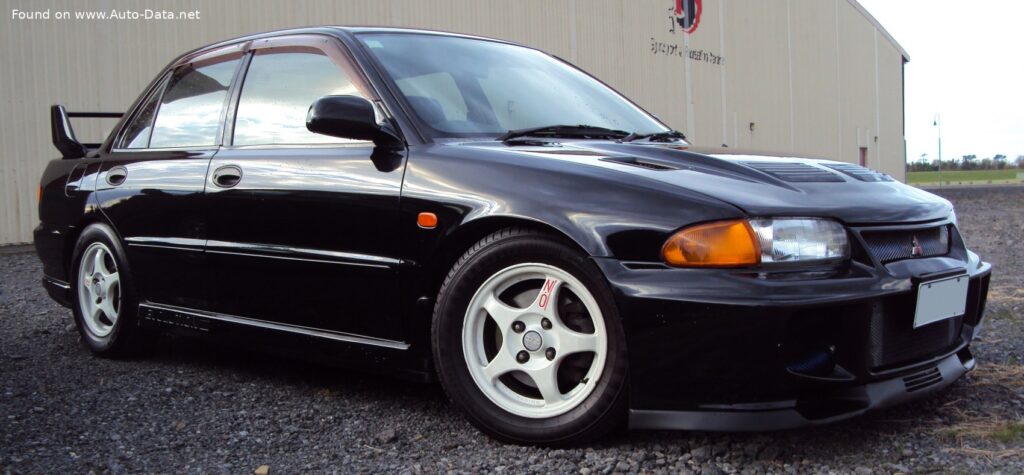
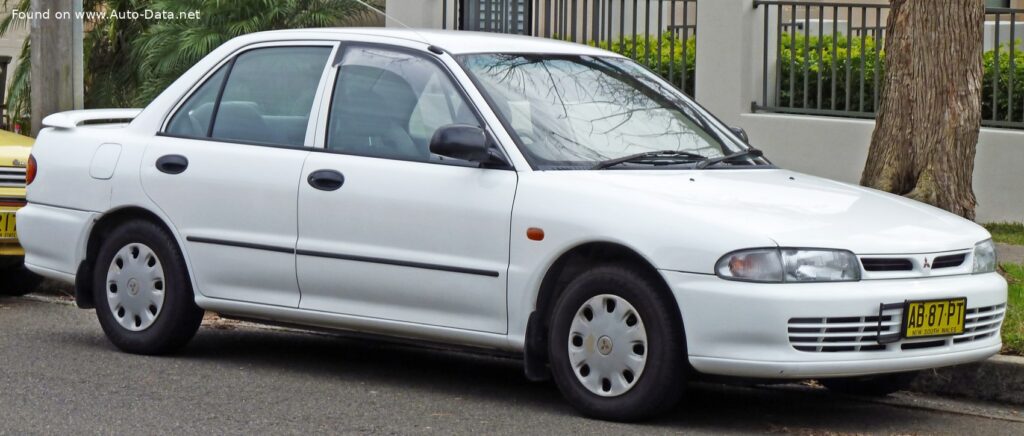
The Mitsubishi Lancer V, including the 1.5 CB3A variant, adopted a clean, aerodynamic, and functional design language typical of early 1990s Japanese compact sedans. Its four-door, five-seat sedan body type emphasized practicality and passenger comfort. With a length of 168.31 inches (4275 mm), a width of 66.54 inches (1690 mm), and a height of 54.53 inches (1385 mm), the Lancer V was sized perfectly for urban maneuverability while still offering a reasonable interior space. The 98.43-inch (2500 mm) wheelbase contributed to a stable ride and adequate legroom for its class.
Inside, the Lancer V prioritized ergonomics and durability. While specific luxury features varied by market and trim level, the core interior design focused on straightforward controls and comfortable seating for five occupants. The trunk space of 11.3 cubic feet (320 liters) was sufficient for typical grocery runs or luggage for a short trip, complementing its role as a practical family vehicle. Standard features for the era included hydraulic power steering, making parking and low-speed maneuvers easier. The suspension system comprised a Wishbone setup at the front and a Spring Strut at the rear, a common and effective configuration for compact cars of the time, balancing ride comfort with predictable handling. Braking duties were handled by front disc brakes and rear drum brakes, a reliable setup for a vehicle of its weight and performance. The 155/80 R13 tires provided a comfortable ride and adequate grip for everyday driving conditions.
Technical Specifications: Mitsubishi Lancer V 1.5 CB3A (115 Hp)
| Category | Specification | US Equivalent / Notes |
|---|---|---|
| General Information | ||
| Brand | Mitsubishi | |
| Model | Lancer | |
| Generation | Lancer V | |
| Type (Engine) | 1.5 CB3A (115 Hp) | |
| Start of Production | 1992 year | |
| End of Production | 1996 year | |
| Powertrain Architecture | Internal Combustion engine | |
| Body type | Sedan | |
| Seats | 5 | |
| Doors | 4 | |
| Performance Specs | ||
| Fuel Type | Petrol (Gasoline) | |
| Acceleration 0 – 60 mph | 11.9 sec | Calculated by Auto-Data.net |
| Acceleration 0 – 100 km/h | 12.5 sec | |
| Maximum speed | 170 km/h | 105.63 mph |
| Weight-to-power ratio | 8.2 kg/Hp | 122.3 Hp/tonne |
| Weight-to-torque ratio | 7 kg/Nm | 143.6 Nm/tonne |
| Engine Specs | ||
| Power | 115 Hp @ 6000 rpm | |
| Power per liter | 76.9 Hp/l | |
| Torque | 135 Nm @ 4000 rpm | 99.57 lb-ft @ 4000 rpm |
| Engine layout | Front, Transverse | |
| Engine displacement | 1496 cm3 | 1.5 Liters (approx), 91.29 cu. in. |
| Number of cylinders | 4 | |
| Engine configuration | Inline | |
| Cylinder Bore | 75 mm | 2.95 in. |
| Piston Stroke | 84.8 mm | 3.34 in. |
| Compression ratio | 10.5:1 | |
| Number of valves per cylinder | 4 | |
| Fuel injection system | Multi-port manifold injection | |
| Engine aspiration | Naturally aspirated engine | |
| Valvetrain | DOHC | |
| Space, Volume and Weights | ||
| Kerb Weight | 940 kg | 2072.35 lbs |
| Max. weight (GVWR) | 1450 kg | 3196.7 lbs |
| Max load | 510 kg | 1124.36 lbs |
| Trunk (boot) space – minimum | 320 l | 11.3 cu. ft. |
| Fuel tank capacity | 50 l | 13.21 US gal |
| Dimensions | ||
| Length | 4275 mm | 168.31 in. |
| Width | 1690 mm | 66.54 in. |
| Height | 1385 mm | 54.53 in. |
| Wheelbase | 2500 mm | 98.43 in. |
| Front track | 1450 mm | 57.09 in. |
| Rear (Back) track | 1460 mm | 57.48 in. |
| Drivetrain, Brakes, and Suspension | ||
| Drivetrain Architecture | The Internal combustion engine (ICE) drives the front wheels of the vehicle. | |
| Drive wheel | Front wheel drive | |
| Number of gears and type of gearbox | 5 gears, manual transmission | |
| Front suspension | Wishbone | |
| Rear suspension | Spring Strut | |
| Front brakes | Disc | |
| Rear brakes | Drum | |
| Steering type | Steering rack and pinion | |
| Power steering | Hydraulic Steering | |
| Tires size | 155/80 R13 |
Legacy and Market Impact
The Mitsubishi Lancer V, and specifically the 1.5 CB3A (115 Hp) variant, played a crucial role in Mitsubishi’s global presence during the mid-1990s. While it may not have garnered the same enthusiast following as its high-performance Evolution counterparts, it was a workhorse that built Mitsubishi’s reputation for producing reliable, economical, and well-engineered compact cars. In markets where it was sold, it competed fiercely with established rivals such as the Honda Civic, Toyota Corolla, Nissan Sentra (known as Sunny in some markets), and various European compacts like the Opel Astra or Ford Escort.
Its primary market impact stemmed from its blend of affordability, fuel efficiency, and a comfortable, practical interior. The 1.5-liter DOHC engine, while modest in displacement, offered a lively performance for its class and was known for its durability, contributing to lower ownership costs. This made the Lancer V a popular choice for first-time car buyers, small families, and fleet operators in many regions. Its robust build quality ensured longevity, and many examples remained on the road for well over a decade, a testament to its engineering.
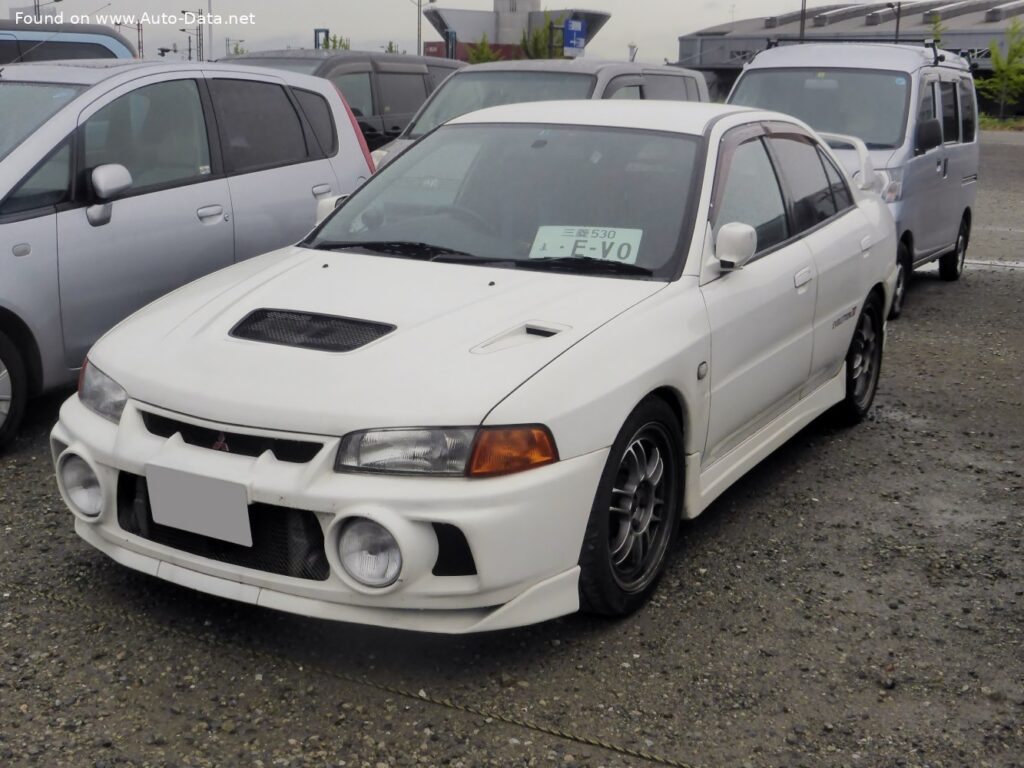
Furthermore, the Lancer V’s platform served as the foundation for the rally-bred Lancer Evolution series, cementing the Lancer nameplate’s dual identity: a dependable commuter car and a formidable performance machine. While the 1.5 CB3A was far removed from the turbocharged, all-wheel-drive rally homologation specials, its existence as a solid, mass-market compact sedan provided the volume and mainstream appeal that allowed Mitsubishi to invest in its more niche, high-performance ventures. The Lancer V generation helped maintain Mitsubishi’s foothold in the crucial compact segment, paving the way for future generations that would continue to evolve the Lancer legacy.
In retrospect, the Mitsubishi Lancer V 1.5 CB3A (115 Hp) stands as a quintessential example of 1990s Japanese automotive engineering: practical, reliable, efficient, and unpretentious. It was a car designed to meet the everyday needs of a global clientele, and in that mission, it succeeded admirably, leaving a lasting, if understated, mark on the automotive landscape.