Introduction to the Mitsubishi Lancer VI 1.3 12V GL,GLX (75 Hp) Automatic
The Mitsubishi Lancer, a nameplate synonymous with reliability and accessible motoring across various global markets, entered its sixth generation in 1995. While the Lancer name has been associated with everything from rally-bred performance machines to practical family sedans, the specific variant under examination here, the Mitsubishi Lancer VI 1.3 12V GL,GLX (75 Hp) Automatic, represented the more economical and utilitarian end of the spectrum. Produced from 1995 to 2000, this generation of Lancer, internally designated as the CK/CM/CN/CP series, continued Mitsubishi’s tradition of offering a robust and dependable compact car.
Primarily aimed at markets where fuel efficiency, low running costs, and ease of use were paramount, such as parts of Asia, Europe, and other developing regions, this particular 1.3-liter automatic model was designed to be a pragmatic daily driver. Unlike its more performance-oriented siblings or the higher-displacement models often seen in North America, this Lancer VI variant carved out its niche as a no-frills, dependable sedan. It offered a compelling package for buyers seeking a straightforward vehicle for urban commuting and family transport, embodying the practical virtues that Mitsubishi had cultivated over decades.
Engineering and Performance of the Mitsubishi Lancer VI
At the heart of the Mitsubishi Lancer VI 1.3 12V GL,GLX (75 Hp) Automatic lies a modest yet capable powertrain designed for efficiency and longevity. The vehicle is propelled by a 1.3-liter (1299 cm³ or 79.27 cu. in.) naturally aspirated, inline four-cylinder engine. This power unit features a Single Overhead Camshaft (SOHC) valvetrain with 3 valves per cylinder, a common and cost-effective design for the era that prioritizes smooth operation and ease of maintenance. Fuel delivery is managed by a multi-port manifold injection system, ensuring consistent fuel atomization and combustion.
This engine produces a respectable 75 horsepower at 6000 rpm, with a power-per-liter output of 57.7 Hp/l. Torque peaks at 108 Nm (79.66 lb.-ft.) at a relatively low 3000 rpm, indicating a design focused on accessible low-end grunt for city driving rather than high-revving performance. The engine’s front, transverse layout, coupled with front-wheel drive, is a classic compact car configuration, optimizing interior space and manufacturing simplicity.
Mated to this engine is a 4-speed automatic transmission. While not cutting-edge even for its time, this gearbox provided a smooth and convenient driving experience, especially in congested urban environments where manual shifting could become tedious. Performance figures reflect its practical orientation: acceleration from 0 to 60 mph is achieved in approximately 15 seconds (15.8 seconds for 0-100 km/h), and the top speed is rated at 99.42 mph (160 km/h). These numbers clearly position the vehicle as a commuter car rather than a speed demon, perfectly aligned with its intended market.
Fuel economy was a key selling point for this variant. In urban conditions, it consumed approximately 10.6 liters per 100 kilometers (22.2 US mpg), while on the open road (extra urban), consumption improved significantly to 6.5 liters per 100 kilometers (36.2 US mpg). These figures, combined with a 50-liter (13.21 US gallon) fuel tank, offered a decent cruising range for its class, making it an economical choice for everyday use.
Design and Features
Body Type and Exterior Design
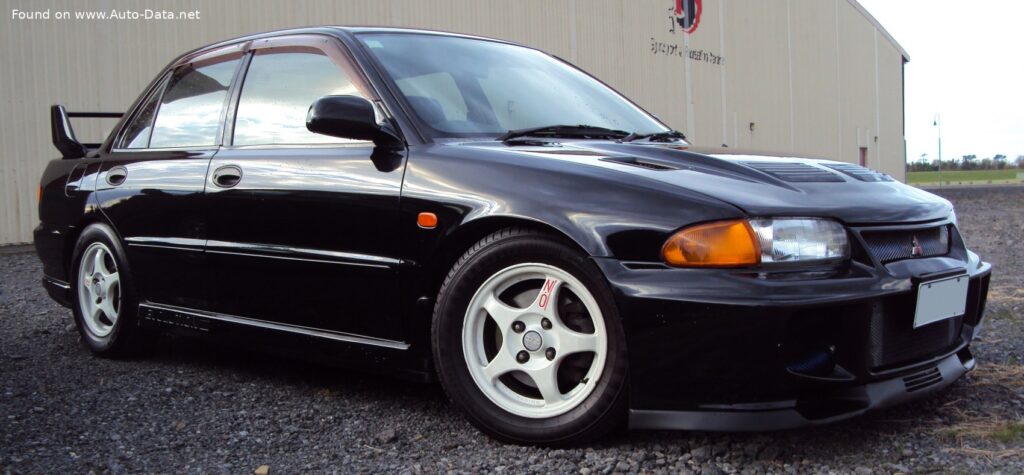
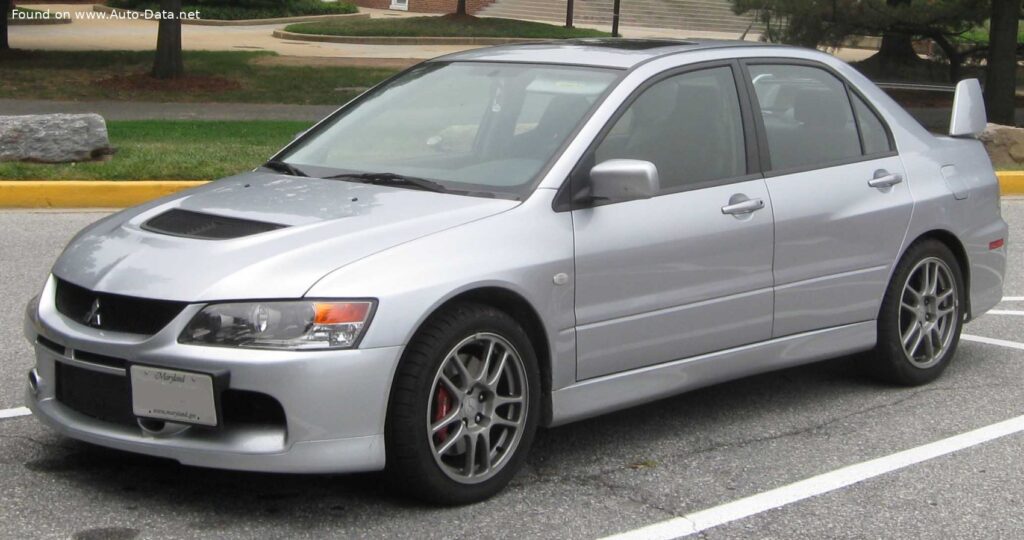
The Mitsubishi Lancer VI 1.3 12V GL,GLX (75 Hp) Automatic was offered exclusively as a four-door sedan, a body style that remained immensely popular in its target markets. Its design language was characteristic of mid-1990s Japanese compact cars: understated, aerodynamic, and functional. The exterior featured clean lines, a relatively low beltline, and large glass areas, contributing to good outward visibility and a spacious feel inside. At 169.09 inches (4295 mm) in length, 66.54 inches (1690 mm) in width, and 54.92 inches (1395 mm) in height, the Lancer VI was compact enough for city maneuverability yet offered sufficient interior volume for five occupants. The 98.43-inch (2500 mm) wheelbase provided a stable ride for its segment.
Interior and Comfort
Inside, the Lancer VI prioritized practicality and durability. The cabin offered seating for five, with a straightforward dashboard layout that was intuitive and easy to use. Materials were chosen for their robustness and ease of cleaning, reflecting the car’s role as an everyday workhorse. While not luxurious, the GL and GLX trims typically offered essential creature comforts for the era, such as air conditioning, a basic audio system, and power steering. The hydraulic power steering system, coupled with a rack and pinion setup, provided light and predictable steering, making parking and low-speed maneuvers effortless.
Safety and Practicality
Safety features for the Lancer VI in this configuration were standard for its time and market. This generally included three-point seatbelts for all occupants. Depending on the specific market and trim level, features like a driver’s airbag might have been available. The sedan body offered a generous trunk capacity of 420 liters (14.83 cu. ft.), making it practical for groceries, luggage, or family outings. The vehicle’s suspension setup, featuring a wishbone front suspension and spring strut rear suspension, provided a comfortable and compliant ride, absorbing road imperfections effectively. Braking duties were handled by disc brakes at the front and drum brakes at the rear, a common and reliable combination for a vehicle of this size and performance.
Technical Specifications
| Category | Specification | US Equivalent (where applicable) |
|---|---|---|
| Brand | Mitsubishi | |
| Model | Lancer VI 1.3 12V GL,GLX (75 Hp) Automatic | |
| Generation | Lancer VI | |
| Production Years | 1995 – 2000 | |
| Body Type | Sedan | |
| Seats / Doors | 5 / 4 | |
| Engine & Performance | ||
| Engine Type | Internal Combustion Engine | |
| Engine Layout | Front, Transverse | |
| Engine Displacement | 1299 cm³ | 79.27 cu. in. |
| Power | 75 Hp @ 6000 rpm | 75 Hp @ 6000 rpm |
| Power per Liter | 57.7 Hp/l | |
| Torque | 108 Nm @ 3000 rpm | 79.66 lb.-ft. @ 3000 rpm |
| Number of Cylinders | 4, Inline | |
| Valvetrain | OHC (Single Overhead Camshaft) | |
| Number of Valves per Cylinder | 3 | |
| Bore x Stroke | 71 mm x 82 mm | 2.8 in. x 3.23 in. |
| Compression Ratio | 9.5:1 | |
| Fuel Injection System | Multi-port manifold injection | |
| Engine Aspiration | Naturally aspirated | |
| Fuel Type | Petrol (Gasoline) | |
| Acceleration 0-60 mph | 15 seconds (approx.) | 15 seconds (approx.) |
| Acceleration 0-100 km/h | 15.8 seconds | |
| Maximum Speed | 160 km/h | 99.42 mph |
| Fuel Consumption (Urban) | 10.6 l/100 km | 22.2 US mpg |
| Fuel Consumption (Extra Urban) | 6.5 l/100 km | 36.2 US mpg |
| Dimensions & Weight | ||
| Length | 4295 mm | 169.09 in. |
| Width | 1690 mm | 66.54 in. |
| Height | 1395 mm | 54.92 in. |
| Wheelbase | 2500 mm | 98.43 in. |
| Front Track | 1450 mm | 57.09 in. |
| Rear Track | 1460 mm | 57.48 in. |
| Kerb Weight | 995 kg | 2193.6 lbs. |
| Maximum Weight (GVWR) | 1485 kg | 3273.86 lbs. |
| Max Load | 490 kg | 1080.27 lbs. |
| Trunk (Boot) Space | 420 liters | 14.83 cu. ft. |
| Fuel Tank Capacity | 50 liters | 13.21 US gal |
| Weight-to-Power Ratio | 13.3 kg/Hp | |
| Weight-to-Torque Ratio | 9.2 kg/Nm | |
| Drivetrain, Brakes & Suspension | ||
| Drivetrain Architecture | Front-wheel drive (ICE drives front wheels) | |
| Drive Wheel | Front-wheel drive | |
| Gearbox Type | 4 gears, automatic transmission | |
| Front Suspension | Wishbone | |
| Rear Suspension | Spring Strut | |
| Front Brakes | Disc | |
| Rear Brakes | Drum | |
| Steering Type | Steering rack and pinion | |
| Power Steering | Hydraulic Steering | |
| Tires Size | 175/70 R13 | |
| Wheel Rims Size | 13 inches | |
Legacy and Market Impact
The Mitsubishi Lancer VI, particularly in its economical 1.3-liter automatic guise, played a crucial role in Mitsubishi’s global strategy during the late 1990s. While it might not have garnered the headlines of its fire-breathing Evolution counterparts, this workhorse sedan was the backbone of Mitsubishi’s sales in many international markets. Its reputation was built on a foundation of unpretentious reliability, straightforward mechanics, and commendable fuel efficiency for its era.
In regions like Southeast Asia, parts of Europe, and Australia, the Lancer VI competed fiercely with established rivals such as the Toyota Corolla, Honda Civic, and Nissan Sunny (known as Sentra in some markets). What set the Lancer apart was often its perceived robustness and a slightly more understated design than some of its flashier competitors. It appealed to a broad demographic, from young families seeking dependable transport to fleet operators prioritizing low maintenance and running costs.
The GL and GLX trims of the Lancer VI 1.3-liter automatic embodied the philosophy of providing maximum utility without unnecessary complexity. This made it a popular choice for first-time car buyers or those looking for a second family car. Its ease of driving, thanks to the automatic transmission and power steering, made it particularly appealing in congested urban environments.
Historically, this generation of Lancer also laid the groundwork for future models, demonstrating Mitsubishi’s commitment to producing a diverse range of vehicles under a single nameplate. While the North American market often received more powerful engine options and sometimes different body styles, this 1.3-liter variant served as a testament to Mitsubishi’s global adaptability, catering to specific market needs where economy and practicality were the driving forces behind purchasing decisions. Its legacy endures as a testament to solid engineering and a focus on delivering dependable, affordable transportation to millions worldwide.