Mitsubishi Lancer VI 1.5 (110 Hp): A Comprehensive Overview
The Mitsubishi Lancer VI 1.5 (110 Hp) represents the sixth generation of Mitsubishi’s highly successful compact car line, produced from 1996 to 2000. Known internally by chassis codes such as CJ, CK, and CM, this generation solidified the Lancer’s reputation as a dependable, economical, and practical vehicle in the global compact sedan segment. While the Lancer nameplate has seen various iterations and market applications worldwide, this specific 1.5-liter, 110-horsepower variant was particularly popular in Asian and European markets, offering a compelling blend of efficiency and adequate performance for daily driving. It served as a core model in Mitsubishi’s lineup, appealing to a broad demographic looking for a reliable and affordable family sedan.
The Lancer VI Generation: Global Reach and Market Positioning
The sixth-generation Lancer, often referred to as the Lancer Cedia in some markets (though the Cedia typically refers to the subsequent generation), built upon the strong foundation of its predecessors. It was designed to be a global car, adaptable to various regional preferences and regulations. In North America, some versions of this generation were marketed under the Mitsubishi Mirage nameplate, particularly the sedan variants, sharing platforms and components. The Mitsubishi Lancer VI 1.5 (110 Hp) specifically positioned itself as a sensible choice for consumers prioritizing fuel economy and low running costs without completely sacrificing driving enjoyment. Its compact dimensions made it well-suited for urban environments, while its sedan body offered practical passenger and cargo capacity.
Engine and Performance Characteristics of the Mitsubishi Lancer VI 1.5 (110 Hp)
At the heart of the Mitsubishi Lancer VI 1.5 (110 Hp) lies a robust and efficient 1.5-liter (1468 cm3 or 89.58 cu. in.) inline four-cylinder gasoline engine. This naturally aspirated powerplant was engineered for reliability and smooth operation, characteristic of Japanese automotive manufacturing during this era. It features a multi-port manifold injection system, ensuring precise fuel delivery and optimal combustion efficiency. With a compression ratio of 9.5:1 and four valves per cylinder, the engine was designed to extract a healthy amount of power from its relatively small displacement.
The engine produces a respectable 110 horsepower at 6000 rpm, translating to a power-per-liter output of 74.9 Hp/l. This figure was competitive for its class in the late 1990s, offering sufficient thrust for both city commuting and highway cruising. Torque output is equally important for real-world drivability, and the Lancer VI delivers 137 Nm (101.05 lb.-ft.) at a relatively low 3000 rpm. This early peak torque ensures responsive acceleration from a standstill and good flexibility in mid-range gears, reducing the need for constant downshifts.
Power is sent to the front wheels through a precise 5-speed manual transmission, a common and favored choice for its direct engagement and efficiency. The front-wheel-drive architecture, combined with the transverse engine layout, contributed to efficient packaging and predictable handling characteristics. With a curb weight of 2248.72 lbs (1020 kg), the Lancer VI 1.5 boasts a weight-to-power ratio of 9.3 kg/Hp (107.8 Hp/tonne) and a weight-to-torque ratio of 7.4 kg/Nm (134.3 Nm/tonne). These figures highlight its lightweight construction, which further enhances its agility and fuel economy. While not a performance car in the vein of its Lancer Evolution brethren, this variant provided a spirited and economical driving experience for its intended audience.
Design and Features of the Mitsubishi Lancer VI Sedan
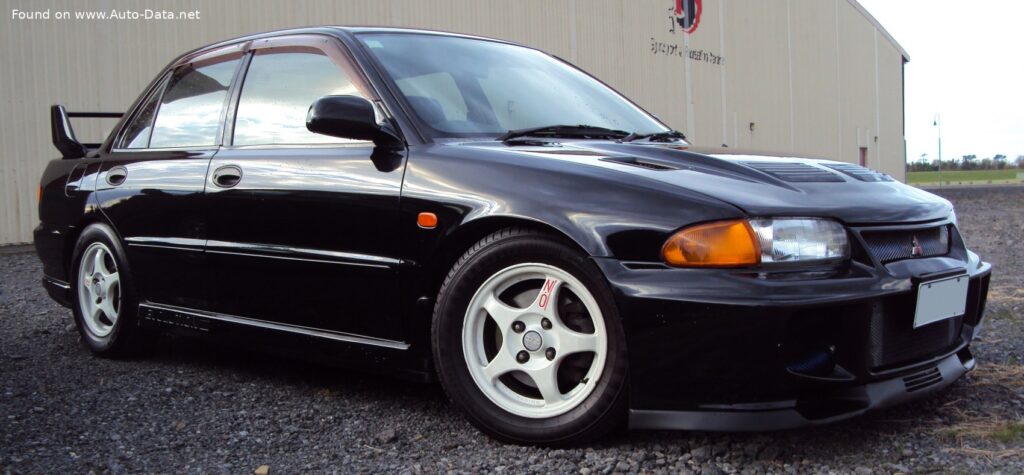
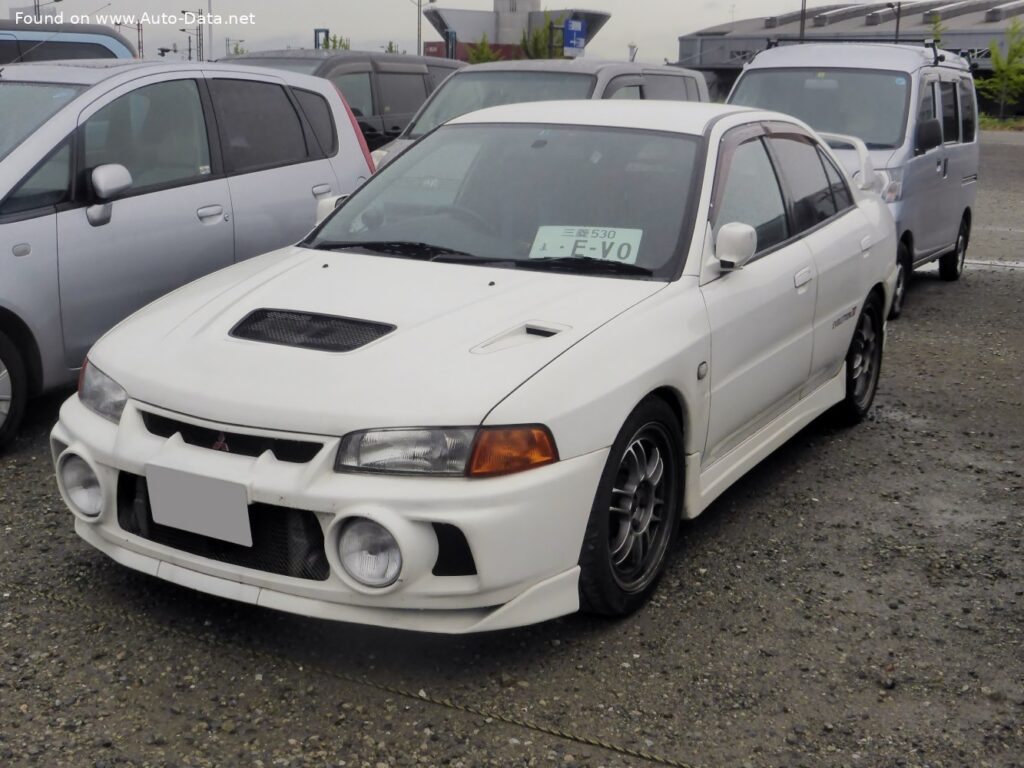
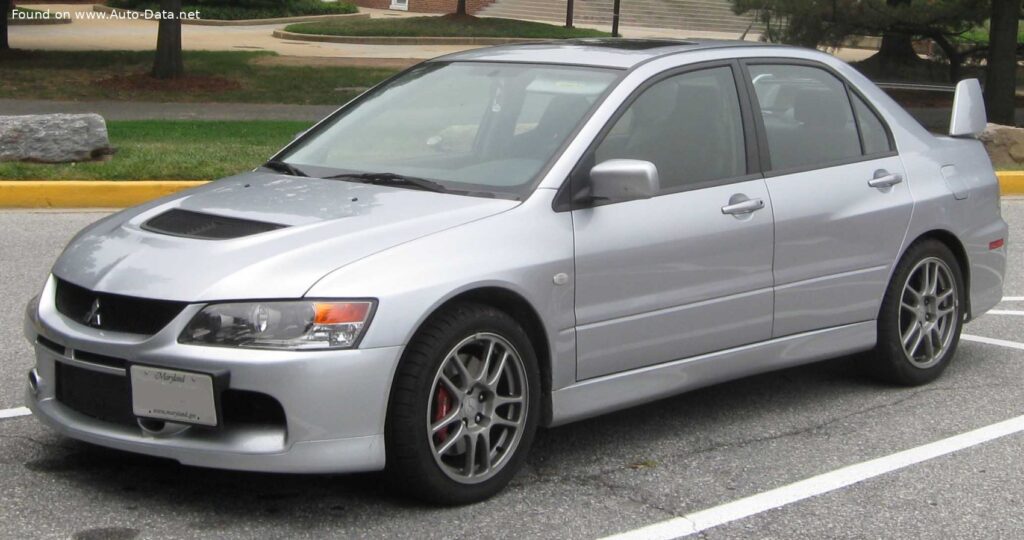
The sixth-generation Mitsubishi Lancer sedan showcases a design aesthetic typical of late 1990s Japanese compact cars: clean, understated, and functional. Its four-door sedan body style offers practical ingress and egress for five occupants. The exterior design features smooth lines and a moderately aerodynamic profile, designed to minimize drag and improve fuel efficiency.
Dimensionally, the Lancer VI is a compact vehicle well-suited for urban environments. It measures 168.9 inches (4290 mm) in length, 66.54 inches (1690 mm) in width, and 54.92 inches (1395 mm) in height. The wheelbase of 98.43 inches (2500 mm) provides a stable ride and contributes to a reasonably spacious cabin for its class. The front track is 57.09 inches (1450 mm), and the rear track is 57.48 inches (1460 mm), ensuring a balanced stance on the road.
Inside, the Lancer VI prioritizes ergonomics and functionality. While specific interior features would vary by trim level and market, the general layout was user-friendly, with controls placed intuitively. The five-seat configuration provides comfortable seating for average-sized adults, particularly in the front. For cargo, the trunk offers a generous minimum volume of 14.83 cu. ft. (420 liters), which was competitive for a compact sedan of its time, making it suitable for family trips or substantial grocery runs.
Safety features for the era included standard equipment like ABS (Anti-lock Braking System), which was a significant advancement for compact cars in the late 90s, enhancing braking control during emergency maneuvers. The vehicle’s suspension system consists of a wishbone setup at the front and a spring strut design at the rear, a common and effective combination for achieving a balance of ride comfort and handling stability. Braking is handled by ventilated discs at the front for improved heat dissipation and drum brakes at the rear, a cost-effective and sufficient solution for the vehicle’s weight and performance. The steering system is a rack and pinion type, assisted by hydraulic power steering, providing a direct and communicative feel to the driver. The car came equipped with 185/70 R13 tires, balancing grip and ride comfort.
Technical Specifications: Mitsubishi Lancer VI 1.5 (110 Hp)
| General Information | |
|---|---|
| Brand | Mitsubishi |
| Model | Lancer |
| Generation | Lancer VI |
| Type (Engine) | 1.5 (110 Hp) |
| Start of Production | 1996 year |
| End of Production | 2000 year |
| Powertrain Architecture | Internal Combustion engine |
| Body type | Sedan |
| Seats | 5 |
| Doors | 4 |
| Performance Specs | |
| Fuel Type | Petrol (Gasoline) |
| Weight-to-power ratio | 9.3 kg/Hp, 107.8 Hp/tonne |
| Weight-to-torque ratio | 7.4 kg/Nm, 134.3 Nm/tonne |
| Engine Specs | |
| Power | 110 Hp @ 6000 rpm. |
| Power per liter | 74.9 Hp/l |
| Torque | 137 Nm @ 3000 rpm. (101.05 lb.-ft. @ 3000 rpm.) |
| Engine layout | Front, Transverse |
| Engine displacement | 1468 cm3 (89.58 cu. in.) |
| Number of cylinders | 4 |
| Engine configuration | Inline |
| Cylinder Bore | 75.5 mm (2.97 in.) |
| Piston Stroke | 82 mm (3.23 in.) |
| Compression ratio | 9.5:1 |
| Number of valves per cylinder | 4 |
| Fuel injection system | Multi-port manifold injection |
| Engine aspiration | Naturally aspirated engine |
| Space, Volume and Weights | |
| Kerb Weight | 1020 kg (2248.72 lbs.) |
| Max. weight | 1500 kg (3306.93 lbs.) |
| Max load | 480 kg (1058.22 lbs.) |
| Trunk (boot) space – minimum | 420 l (14.83 cu. ft.) |
| Fuel tank capacity | 50 l (13.21 US gal) |
| Dimensions | |
| Length | 4290 mm (168.9 in.) |
| Width | 1690 mm (66.54 in.) |
| Height | 1395 mm (54.92 in.) |
| Wheelbase | 2500 mm (98.43 in.) |
| Front track | 1450 mm (57.09 in.) |
| Rear (Back) track | 1460 mm (57.48 in.) |
| Drivetrain, Brakes and Suspension Specs | |
| Drivetrain Architecture | The Internal combustion engine (ICE) drives the front wheels of the vehicle. |
| Drive wheel | Front wheel drive |
| Number of gears and type of gearbox | 5 gears, manual transmission |
| Front suspension | Wishbone |
| Rear suspension | Spring Strut |
| Front brakes | Ventilated discs |
| Rear brakes | Drum |
| Assisting systems | ABS (Anti-lock braking system) |
| Steering type | Steering rack and pinion |
| Power steering | Hydraulic Steering |
| Tires size | 185/70 R13 |
Legacy and Market Impact
The Mitsubishi Lancer VI, particularly variants like the 1.5 (110 Hp) sedan, played a crucial role in maintaining Mitsubishi’s presence in the highly competitive global compact car market during the late 1990s. Its reputation was largely built on its strong points of reliability, fuel efficiency, and affordability. These attributes made it a popular choice for budget-conscious buyers and families in many regions, especially in Southeast Asia, Australia, and parts of Europe, where its combination of practical size and economical operation was highly valued.
In its primary markets, the Lancer VI faced stiff competition from established rivals such as the Toyota Corolla, Honda Civic, Nissan Sentra (known as Sunny in some markets), and European contenders like the Opel Astra and Ford Escort (later replaced by the Focus). The Lancer distinguished itself through its robust mechanicals and a slightly sportier image than some of its more staid competitors, even in its non-Evolution forms. While the 1.5-liter engine might not have set any performance records, its balance of power and economy was often preferred over larger, thirstier engines in markets with higher fuel costs.
The Lancer VI also indirectly benefited from the halo effect of its high-performance sibling, the Lancer Evolution. Although mechanically distinct, the association with the rally-bred Evo models imbued even the standard Lancer with a perception of engineering prowess and durability. This helped Mitsubishi maintain a loyal customer base and attract new buyers who appreciated the brand’s motorsport heritage.
Historically, the Lancer VI represents a transitional period for Mitsubishi, bridging the gap between the more angular designs of the early 90s and the increasingly rounded aesthetics of the early 2000s. Its enduring presence on roads worldwide years after its production ceased is a testament to its fundamental reliability and straightforward engineering. It remains a significant chapter in the Lancer lineage, embodying the practical, dependable, and occasionally spirited qualities that defined Mitsubishi’s compact offerings for decades.