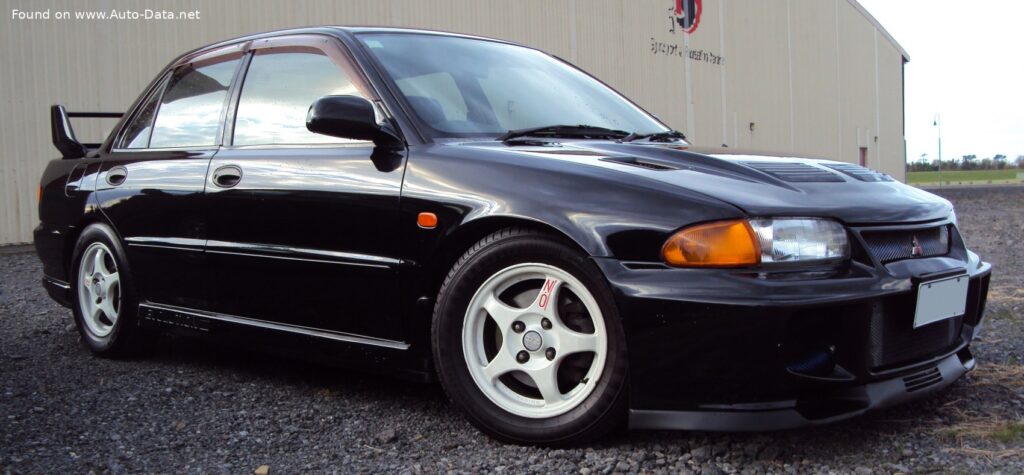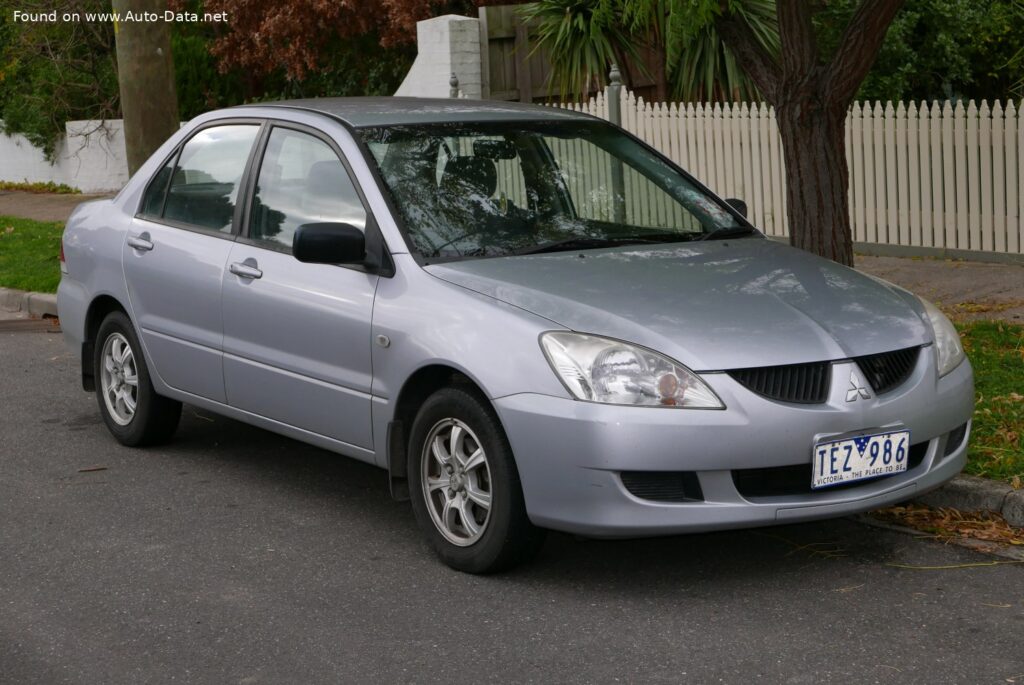
The Mitsubishi Lancer VIII 1.3i 16V (82 Hp): An Economical Global Compact
The Mitsubishi Lancer, a nameplate synonymous with durability and, in its high-performance variants, rally pedigree, has a long and storied history across various global markets. The eighth generation, known internally as the Cedia in some regions but more broadly as the Lancer VIII, represented a significant evolution for the compact sedan. Produced from 2000 to 2007, with this particular 1.3i 16V (82 Hp) variant specifically manufactured between 2003 and 2005, it served as a practical and economical offering in its primary markets, predominantly Europe and parts of Asia. While the Lancer nameplate did find a home in the United States, typically with larger, more powerful engines and often emphasizing sportier trims, this 1.3-liter model was a quintessential example of a no-frills, reliable family sedan designed for efficiency and affordability in regions where smaller displacement engines were favored due to taxation and fuel costs. The Mitsubishi Lancer VIII 1.3i 16V (82 Hp) was a testament to Mitsubishi’s commitment to providing accessible transportation without sacrificing core engineering principles.
Engine and Performance of the Mitsubishi Lancer VIII 1.3i 16V (82 Hp)
At the heart of this particular Mitsubishi Lancer VIII was the venerable 4G13 engine, a naturally aspirated 1.3-liter (1299 cubic centimeters or 79.27 cubic inches) inline-four gasoline unit. This powerplant was engineered with a single overhead camshaft (SOHC) and 16 valves (four per cylinder), optimizing airflow for improved efficiency and a smoother power delivery. Fuel was supplied via a multi-port manifold injection system, a common and reliable technology for the era, ensuring precise fuel metering. With a compression ratio of 10:1, the engine produced a modest but entirely adequate 82 horsepower at 5000 revolutions per minute (rpm). Torque output stood at 88.51 lb-ft (120 Nm) peaking at 4000 rpm, providing sufficient pulling power for urban commuting and highway cruising.
Power was channeled to the front wheels through a 5-speed manual transmission, a setup chosen for its simplicity, reliability, and contribution to fuel economy. This drivetrain architecture, where the internal combustion engine drives the front wheels, was standard for compact sedans of its class, offering predictable handling and efficient packaging. In terms of outright performance, the Mitsubishi Lancer VIII 1.3i 16V (82 Hp) was not designed for blistering acceleration. It could achieve 0 to 60 miles per hour in approximately 13 seconds (calculated from 0-100 km/h in 13.7 seconds), with a top speed of 106.25 mph (171 km/h). These figures underscored its role as a practical rather than a performance-oriented vehicle. Its weight-to-power ratio of 14.2 kg/Hp (70.4 Hp/tonne) further highlighted its focus on efficiency.
Fuel economy was a key selling point for this variant. The combined fuel consumption was rated at an impressive 36.2 US miles per gallon (6.5 liters per 100 kilometers). In urban driving, it returned 27.7 US mpg (8.5 l/100 km), while extra-urban (highway) driving saw figures as high as 44.4 US mpg (5.3 l/100 km). These numbers made the 1.3i Lancer an attractive option for buyers prioritizing low running costs and environmental consciousness, particularly in markets with high fuel prices. The engine oil capacity was 3.3 liters (3.49 US quarts), and the cooling system held 5 liters (5.28 US quarts) of coolant, indicating straightforward maintenance requirements typical of Mitsubishi vehicles from this period.
Design and Features of the Mitsubishi Lancer VIII
The Mitsubishi Lancer VIII, in its 1.3i 16V (82 Hp) sedan configuration, presented a clean, understated design that prioritized functionality and interior space. As a four-door sedan with seating for five occupants, it adhered to the conventional compact car aesthetic of the early 2000s. Its dimensions were well-proportioned for its segment: a length of 176.38 inches (4480 mm), a width of 66.73 inches (1695 mm), and a height of 56.89 inches (1445 mm). A generous wheelbase of 102.36 inches (2600 mm) contributed significantly to interior roominess and ride comfort, a crucial aspect for a family-oriented vehicle.
The exterior styling was conservative, featuring smooth lines and a somewhat rounded profile, moving away from the sharper edges of previous generations. This design philosophy aimed for broad appeal and a timeless look rather than a radical statement. The front and rear tracks, both measuring 57.87 inches (1470 mm), provided a stable stance on the road. The vehicle rode on 195/60 R15 tires mounted on 6J x 15-inch wheel rims, a practical choice offering a good balance of comfort and grip, suitable for various road conditions.
Inside, the Lancer VIII offered a functional and ergonomic cabin. While not luxurious, the materials and layout were durable and user-friendly, designed to withstand the rigors of daily use. The trunk space was a respectable 15.19 cubic feet (430 liters), providing ample room for luggage or groceries, further enhancing its appeal as a family car. The fuel tank capacity of 13.21 US gallons (50 liters) ensured a decent cruising range, especially given its excellent fuel economy.
From a chassis and safety perspective, the Lancer VIII employed a robust suspension system. The front utilized a spring strut setup, a common and effective design for compact cars, offering a good balance of handling and ride comfort. The rear featured a transverse stabilizer, which helped to manage body roll and improve stability during cornering. Braking duties were handled by ventilated discs at the front and solid discs at the rear, complemented by an Anti-lock Braking System (ABS), a key safety feature for the time, preventing wheel lock-up during hard braking. The steering system was a hydraulic power-assisted rack and pinion setup, providing responsive and predictable control for the driver.
Technical Specifications: Mitsubishi Lancer VIII 1.3i 16V (82 Hp)
| Category | Specification | Value |
|---|---|---|
| General Information | ||
| Brand | Mitsubishi | |
| Model | Lancer | |
| Generation | Lancer VIII | |
| Type (Engine) | 1.3i 16V (82 Hp) | |
| Production Start | 2003 | |
| Production End | 2005 | |
| Powertrain Architecture | Internal Combustion Engine | |
| Body Type | Sedan | |
| Seats | 5 | |
| Doors | 4 | |
| Performance Specifications | ||
| Fuel Consumption (Urban) | 27.7 US mpg (8.5 l/100 km) | |
| Fuel Consumption (Extra Urban) | 44.4 US mpg (5.3 l/100 km) | |
| Fuel Consumption (Combined) | 36.2 US mpg (6.5 l/100 km) | |
| Fuel Type | Petrol (Gasoline) | |
| Acceleration 0-60 mph | 13 seconds | |
| Maximum Speed | 106.25 mph (171 km/h) | |
| Weight-to-Power Ratio | 14.2 kg/Hp, 70.4 Hp/tonne | |
| Weight-to-Torque Ratio | 9.7 kg/Nm, 103 Nm/tonne | |
| Engine Specifications | ||
| Power | 82 Hp @ 5000 rpm | |
| Power per Liter | 63.1 Hp/l | |
| Torque | 88.51 lb-ft @ 4000 rpm (120 Nm) | |
| Engine Layout | Front, Transverse | |
| Engine Model/Code | 4G13 | |
| Engine Displacement | 1.3 Liters (1299 cm³ / 79.27 cu. in.) | |
| Number of Cylinders | 4 | Inline |
| Cylinder Bore | 2.8 inches (71 mm) | |
| Piston Stroke | 3.23 inches (82 mm) | |
| Compression Ratio | 10:1 | |
| Valves per Cylinder | 4 | |
| Fuel Injection System | Multi-port manifold injection | |
| Engine Aspiration | Naturally aspirated | |
| Valvetrain | OHC | |
| Engine Oil Capacity | 3.3 Liters (3.49 US qt) | |
| Coolant Capacity | 5 Liters (5.28 US qt) | |
| Space, Volume and Weights | ||
| Curb Weight | 2568.39 lbs (1165 kg) | |
| Maximum Weight | 3858.09 lbs (1750 kg) | |
| Maximum Load | 1289.7 lbs (585 kg) | |
| Trunk (Boot) Space – Minimum | 15.19 cu. ft. (430 l) | |
| Fuel Tank Capacity | 13.21 US gal (50 l) | |
| Dimensions | ||
| Length | 176.38 inches (4480 mm) | |
| Width | 66.73 inches (1695 mm) | |
| Height | 56.89 inches (1445 mm) | |
| Wheelbase | 102.36 inches (2600 mm) | |
| Front Track | 57.87 inches (1470 mm) | |
| Rear Track | 57.87 inches (1470 mm) | |
| Drivetrain, Brakes and Suspension | ||
| Drivetrain Architecture | ICE drives front wheels | |
| Drive Wheel | Front-wheel drive | |
| Number of Gears | 5 | Manual transmission |
| Front Suspension | Spring Strut | |
| Rear Suspension | Transverse stabilizer | |
| Front Brakes | Ventilated discs | |
| Rear Brakes | Disc | |
| Assisting Systems | ABS (Anti-lock braking system) | |
| Steering Type | Steering rack and pinion | |
| Power Steering | Hydraulic Steering | |
| Tire Size | 195/60 R15 | |
| Wheel Rims Size | 6J x 15 | |
Legacy and Market Impact of the Mitsubishi Lancer VIII
The Mitsubishi Lancer VIII, particularly in its economical 1.3i 16V (82 Hp) guise, carved out a significant niche for itself in various international markets, distinct from its North American presence. While the Lancer nameplate in the U.S. was often associated with larger engine options and, famously, the high-performance Evolution models, this 1.3-liter variant highlighted the Lancer’s global versatility as a practical, affordable, and fuel-efficient compact sedan. In regions like Europe, Southeast Asia, and Australia, where it was more commonly sold, it competed fiercely against established players in the C-segment, such as the Honda Civic, Toyota Corolla, Ford Focus, Opel Astra (Vauxhall Astra in the UK), and Volkswagen Jetta. Its primary appeal lay in its reputation for reliability, low running costs, and straightforward mechanics, which were highly valued by families and budget-conscious buyers.
The Mitsubishi Lancer VIII 1.3i 16V (82 Hp) was not a car that sought to redefine automotive luxury or cutting-edge performance. Instead, it excelled as a dependable workhorse, offering a comfortable and safe means of transportation. Its relatively large trunk space and comfortable seating for five made it a practical choice for daily commutes, school runs, and longer family trips. The robust engineering, a hallmark of Mitsubishi vehicles, ensured a long service life and good resale value in its target markets. The availability of a 5-speed manual transmission further solidified its position as an economical choice, offering drivers greater control over fuel consumption compared to early automatic transmissions of the era.
Historically, this generation of the Lancer, while perhaps overshadowed by its more aggressive Evolution siblings in enthusiast circles, played a crucial role in Mitsubishi’s global sales strategy. It demonstrated the brand’s ability to produce a broad range of vehicles, from economical daily drivers to rally-bred machines, all under a single, globally recognized nameplate. The Lancer VIII, with its sensible design and focus on practicality, reinforced Mitsubishi’s image as a producer of durable and trustworthy vehicles. Its legacy is one of quiet competence and widespread accessibility, serving as a reliable backbone for countless households and businesses across continents, proving that a car doesn’t need to be flashy to be impactful and successful in its intended market.