The Mitsubishi Lancer VIII 1.6i 16V (98 Hp) Automatic: A Global Compact Sedan
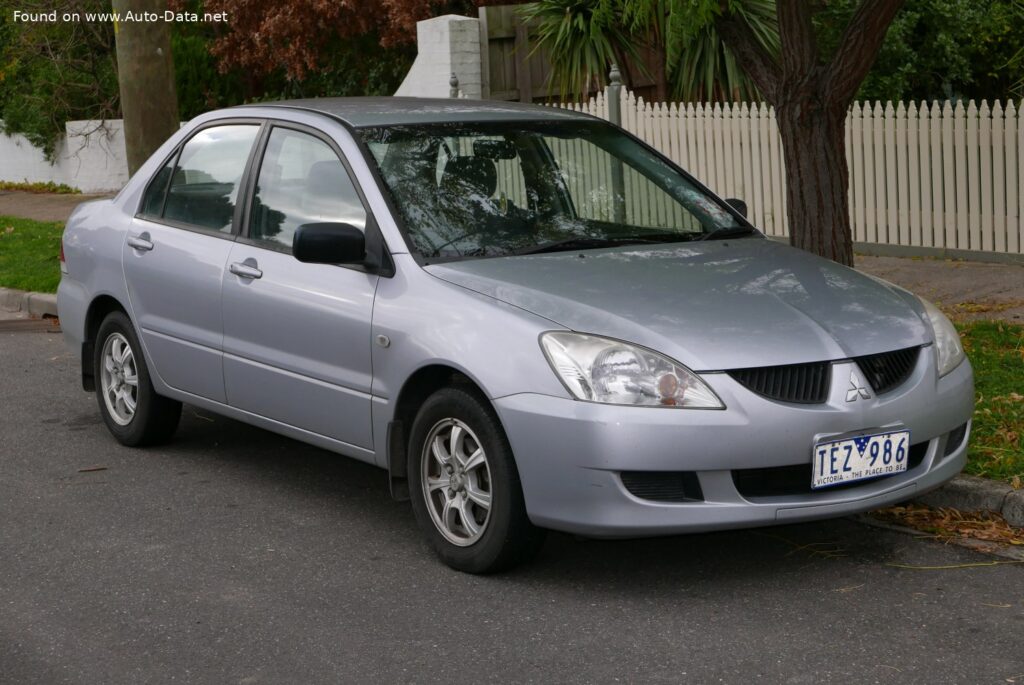
The Mitsubishi Lancer, a nameplate with a rich history in the automotive world, saw its eighth generation (often referred to internally as the Cedia in some markets, though widely known as the Lancer) introduced in 2000. The specific variant under review, the Mitsubishi Lancer VIII 1.6i 16V (98 Hp) Automatic, produced from 2003 to 2007, represented a practical and economical offering within Mitsubishi’s global compact sedan lineup. While the Lancer gained significant notoriety in the United States primarily through its high-performance Evolution variants, this particular 1.6-liter automatic model was a cornerstone of Mitsubishi’s sales strategy in European, Asian, and other international markets, where efficiency, reliability, and affordability were paramount for daily commuting and family transport. This generation of the Lancer aimed to blend a comfortable ride with a spacious interior and Mitsubishi’s reputation for dependable engineering, positioning it as a strong competitor in the fiercely contested compact segment.
Engine and Performance Characteristics of the Mitsubishi Lancer VIII
At the heart of the 2003-2007 Mitsubishi Lancer VIII 1.6i 16V Automatic was a robust and proven 4G18 engine. This naturally aspirated, inline four-cylinder gasoline (petrol) engine featured a multi-port manifold injection system and an Overhead Camshaft (OHC) valvetrain, a common and reliable configuration for its time. With an engine displacement of 1,584 cubic centimeters (96.66 cubic inches), it delivered a respectable 98 horsepower at 5,000 revolutions per minute. Torque output stood at 110.63 lb.-ft. (150 Nm) at 4,000 rpm, providing adequate pulling power for city driving and highway cruising.
Power was delivered to the front wheels via a conventional 4-speed automatic transmission, emphasizing ease of use and comfort over outright performance. This powertrain architecture, while not designed for spirited driving, offered a smooth and predictable driving experience. Performance figures reflected its commuter-oriented nature: the Lancer VIII 1.6i 16V Automatic could accelerate from 0 to 60 mph in a calculated 12.9 seconds, reaching a maximum speed of approximately 109.36 mph (176 km/h). These numbers placed it squarely within the expectations for a compact sedan of its era, particularly one focused on economy and utility.
Fuel efficiency was a key selling point for this variant in its primary markets. The combined fuel consumption was rated at 29.8 US mpg (7.9 l/100 km), with urban driving yielding around 22.8 US mpg (10.3 l/100 km) and extra-urban (highway) driving achieving an impressive 36.8 US mpg (6.4 l/100 km). These figures demonstrated the engine’s capability to offer economical operation, a significant factor for buyers in regions with higher fuel costs.
Design and Features
The Mitsubishi Lancer VIII adopted a conservative yet contemporary design for its generation, focusing on practicality and a clean aesthetic. As a 4-door sedan with seating for five occupants, it offered a conventional and widely accepted body style. The exterior dimensions were well-proportioned for the compact segment, measuring 176.38 inches in length, 66.73 inches in width, and 56.89 inches in height, with a wheelbase of 102.36 inches. These dimensions contributed to a relatively spacious interior for its class and a stable ride.
Inside, the Lancer VIII prioritized functionality and comfort. While specific interior features varied by market and trim level, the general design emphasized user-friendliness with clear instrumentation and accessible controls. The trunk space was generous for a compact sedan, offering 15.19 cubic feet (430 liters) of cargo volume, making it suitable for family trips or daily errands. The vehicle’s curb weight of 2,612.48 lbs. (1185 kg) contributed to its overall efficiency and manageable driving dynamics.
From a chassis perspective, the Lancer VIII featured a front spring strut suspension and a rear transverse stabilizer, a setup designed to balance ride comfort with predictable handling. Braking was handled by ventilated discs at the front and solid discs at the rear, augmented by an Anti-lock Braking System (ABS) as a crucial safety feature for improved control during emergency stops. The steering system utilized a hydraulic rack and pinion setup, providing direct feedback to the driver. The car came equipped with 195/60 R15 tires on 6J x 15 wheel rims, a standard size that offered a good balance of grip and ride quality.
Technical Specifications
| Category | Specification | US Equivalent |
|---|---|---|
General Information |
||
| Brand | Mitsubishi | Mitsubishi |
| Model | Lancer | Lancer |
| Generation | Lancer VIII | Lancer VIII |
| Type (Engine) | 1.6i 16V (98 Hp) Automatic | 1.6i 16V (98 Hp) Automatic |
| Start of production | 2003 year | 2003 |
| End of production | 2007 year | 2007 |
| Powertrain Architecture | Internal Combustion engine | Internal Combustion engine |
| Body type | Sedan | Sedan |
| Seats | 5 | 5 |
| Doors | 4 | 4 |
Performance Specifications |
||
| Fuel consumption (economy) – urban | 10.3 l/100 km | 22.8 US mpg |
| Fuel consumption (economy) – extra urban | 6.4 l/100 km | 36.8 US mpg |
| Fuel consumption (economy) – combined | 7.9 l/100 km | 29.8 US mpg |
| Fuel Type | Petrol (Gasoline) | Gasoline |
| Acceleration 0 – 60 mph | 12.9 sec | 12.9 sec |
| Maximum speed | 176 km/h | 109.36 mph |
| Weight-to-power ratio | 12.1 kg/Hp, 82.7 Hp/tonne | 26.68 lbs/Hp, 82.7 Hp/ton |
| Weight-to-torque ratio | 7.9 kg/Nm, 126.6 Nm/tonne | 17.42 lbs/lb.-ft., 126.6 lb.-ft./ton |
Engine Specifications |
||
| Power | 98 Hp @ 5000 rpm. | 98 Hp @ 5000 rpm. |
| Power per liter | 61.9 Hp/l | 61.9 Hp/l |
| Torque | 150 Nm @ 4000 rpm. | 110.63 lb.-ft. @ 4000 rpm. |
| Engine layout | Front, Transverse | Front, Transverse |
| Engine Model/Code | 4G18 | 4G18 |
| Engine displacement | 1584 cm3 | 96.66 cu. in. (1.6 Liters) |
| Number of cylinders | 4 | 4 |
| Engine configuration | Inline | Inline |
| Cylinder Bore | 76 mm | 2.99 in. |
| Piston Stroke | 87.3 mm | 3.44 in. |
| Compression ratio | 10:1 | 10:1 |
| Number of valves per cylinder | 4 | 4 |
| Fuel injection system | Multi-port manifold injection | Multi-port manifold injection |
| Engine aspiration | Naturally aspirated engine | Naturally aspirated engine |
| Valvetrain | OHC | OHC |
| Engine oil capacity | 3.3 l | 3.49 US qt |
| Coolant | 5 l | 5.28 US qt |
Space, Volume and Weights |
||
| Curb Weight | 1185 kg | 2612.48 lbs. |
| Max. weight | 1750 kg | 3858.09 lbs. |
| Max load | 565 kg | 1245.61 lbs. |
| Trunk (boot) space – minimum | 430 l | 15.19 cu. ft. |
| Fuel tank capacity | 50 l | 13.21 US gal |
Dimensions |
||
| Length | 4480 mm | 176.38 in. |
| Width | 1695 mm | 66.73 in. |
| Height | 1445 mm | 56.89 in. |
| Wheelbase | 2600 mm | 102.36 in. |
| Front track | 1470 mm | 57.87 in. |
| Rear (Back) track | 1470 mm | 57.87 in. |
Drivetrain, Brakes and Suspension Specifications |
||
| Drivetrain Architecture | The Internal combustion engine (ICE) drives the front wheels of the vehicle. | Front-wheel drive, Internal Combustion Engine |
| Drive wheel | Front wheel drive | Front wheel drive |
| Number of gears and type of gearbox | 4 gears, automatic transmission | 4-speed automatic transmission |
| Front suspension | Spring Strut | Spring Strut |
| Rear suspension | Transverse stabilizer | Transverse stabilizer |
| Front brakes | Ventilated discs | Ventilated discs |
| Rear brakes | Disc | Disc |
| Assisting systems | ABS (Anti-lock braking system) | ABS (Anti-lock braking system) |
| Steering type | Steering rack and pinion | Steering rack and pinion |
| Power steering | Hydraulic Steering | Hydraulic Steering |
| Tires size | 195/60 R15 | 195/60 R15 |
| Wheel rims size | 6J x 15 | 6J x 15 |
Legacy and Market Impact of the Mitsubishi Lancer VIII
The Mitsubishi Lancer VIII 1.6i 16V Automatic played a significant role in solidifying Mitsubishi’s position in the global compact car market, particularly outside of North America. In markets like Europe, Southeast Asia, and Australia, where this specific powertrain configuration was more prevalent, the Lancer was celebrated for its reliability, low running costs, and practical design. It competed fiercely with established rivals such as the Toyota Corolla, Honda Civic, Nissan Sentra (known as Sunny in some regions), and the Ford Focus. While not always leading in terms of cutting-edge technology or dynamic performance, its reputation for durability and value for money made it a popular choice for families and budget-conscious buyers.
In the United States, the Lancer nameplate during this period was often overshadowed by the high-performance Lancer Evolution, which garnered enthusiast attention. However, the standard Lancer models, including those with larger 2.0-liter and 2.4-liter engines, continued to offer a practical alternative in the compact sedan segment, albeit with different specifications than the 1.6-liter variant discussed here. The Lancer VIII, in its various forms, continued Mitsubishi’s tradition of offering well-engineered, dependable vehicles that could withstand diverse driving conditions.
The 1.6i 16V Automatic variant contributed to the Lancer’s legacy as a sensible, no-frills transporter. It embodied the philosophy of providing accessible personal mobility without unnecessary complexity. Its straightforward mechanicals and proven engine design ensured ease of maintenance and a long service life, characteristics highly valued by consumers globally. Even after its production ceased in 2007, many examples of this generation continued to serve reliably on roads worldwide, a testament to Mitsubishi’s engineering prowess in building robust and enduring compact cars.