Mitsubishi Lancer VIII Wagon 1.6 i 16V (98 Hp)
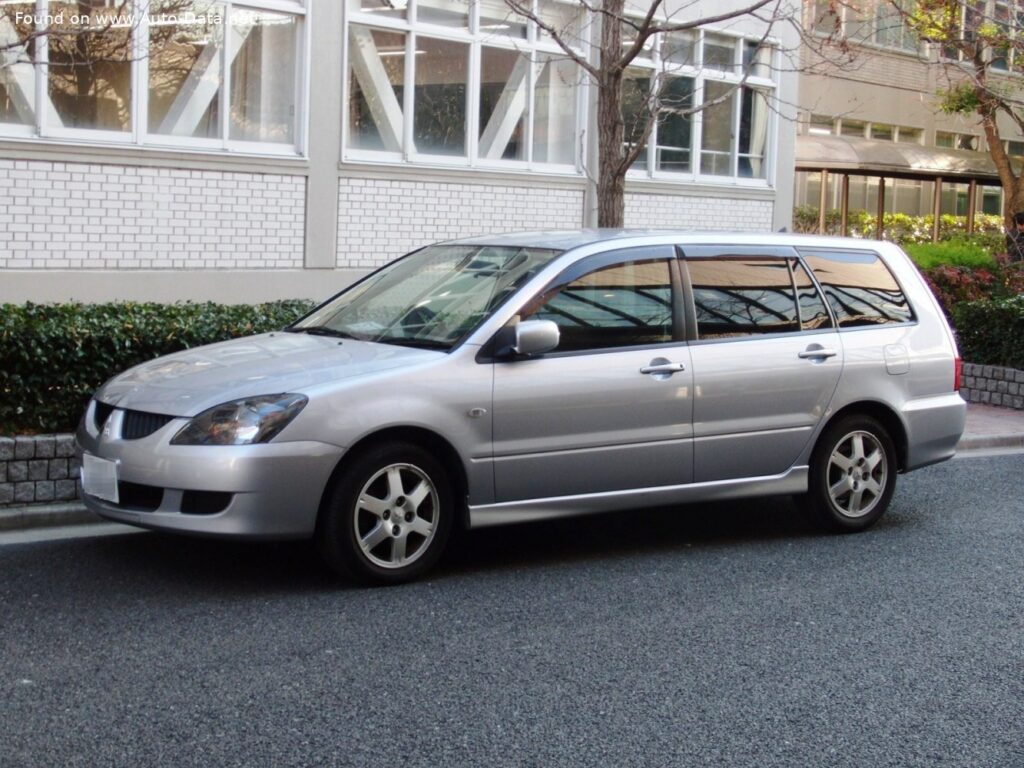
The Mitsubishi Lancer VIII Wagon 1.6 i 16V (98 Hp) represents a practical and economical variant of Mitsubishi’s highly successful Lancer lineup, specifically tailored for markets outside of North America, predominantly Europe and parts of Asia. Produced from 2003 to 2009, this generation, known internally as the Cedia Lancer in some regions, evolved the Lancer’s design and engineering to offer a more refined and family-friendly package. While its sedan counterpart often garnered attention for its rally-bred Evolution variants, the station wagon (or estate) version focused squarely on utility, reliability, and fuel efficiency, catering to a demographic seeking a versatile daily driver. This particular model, equipped with a 1.6-liter naturally aspirated engine, aimed to provide a balance of adequate performance for everyday driving with commendable economy, making it a competitive choice in the compact family car segment of its time.
Engine & Performance of the Mitsubishi Lancer VIII Wagon
At the heart of the Mitsubishi Lancer VIII Wagon 1.6 i 16V lies Mitsubishi’s venerable 4G18 engine, a 1.6-liter (1584 cm3 or 96.66 cu. in.) inline four-cylinder unit. This naturally aspirated, multi-port manifold injected engine features an Overhead Camshaft (OHC) valvetrain with four valves per cylinder, a configuration known for its balance of simplicity, reliability, and efficiency. It delivers a modest but sufficient 98 horsepower at 5000 rpm, paired with 110.63 lb.-ft. of torque peaking at 4000 rpm. This powertrain architecture is front, transversely mounted, and drives the front wheels, a common and efficient layout for compact family vehicles.
Power is transmitted through a 5-speed manual transmission, offering direct engagement and allowing the driver to extract the most from the engine’s output. While not designed for blistering speed, the Lancer VIII Wagon 1.6 i 16V achieves a 0-60 mph acceleration in a respectable 12 seconds, reaching a top speed of 112.47 mph (181 km/h). These figures place it firmly within the expected performance parameters for a practical compact wagon of its era.
Fuel economy was a key selling point for this variant. The combined cycle consumption is rated at 33.6 US mpg (7 l/100 km), with urban driving yielding 26.4 US mpg (8.9 l/100 km) and extra-urban driving reaching an impressive 40.6 US mpg (5.8 l/100 km). With a 13.21 US gallon (50 l) fuel tank, this provided a decent cruising range, enhancing its appeal as a long-distance family vehicle. The engine’s compression ratio of 10:1 further optimized combustion efficiency for regular gasoline.
Design & Features
The Mitsubishi Lancer VIII Wagon adopted a styling language that was contemporary for the early 2000s, characterized by clean lines and a functional aesthetic. Measuring 176.57 inches (4485 mm) in length, 66.73 inches (1695 mm) in width, and 58.27 inches (1480 mm) in height, the wagon provided a substantial footprint for its class. Its 102.36-inch (2600 mm) wheelbase contributed to a stable ride and generous interior space for five occupants.
As a five-door station wagon, versatility was paramount. The Lancer VIII Wagon offered a minimum trunk capacity of 14.13 cu. ft. (400 liters), which could expand to a capacious 42.38 cu. ft. (1200 liters) with the rear seats folded down. This made it highly practical for families, small businesses, or individuals needing to transport significant cargo, from groceries to sports equipment. The kerb weight of 2998.29 lbs (1360 kg) and a maximum permissible weight of 3924.23 lbs (1780 kg) underscored its robust construction and load-carrying capability, with a maximum load capacity of 925.94 lbs (420 kg).
The chassis was designed for comfortable and predictable handling. It featured a Spring Strut front suspension and a Transverse stabilizer at the rear, a setup that balanced ride comfort with adequate road holding. Braking performance was handled by ventilated discs at the front and solid discs at the rear, augmented by an Anti-lock Braking System (ABS), a crucial safety feature for its time, preventing wheel lock-up during hard braking. Steering was managed by a hydraulic rack and pinion system, providing direct feedback and ease of maneuverability. The car was typically fitted with 195/60 R15 tires on 6J x 15 wheel rims, offering a good compromise between grip and ride comfort.
Technical Specifications
| Category | Specification |
|---|---|
| Brand | Mitsubishi |
| Model | Lancer |
| Generation | Lancer VIII Wagon |
| Type (Engine) | 1.6 i 16V (98 Hp) |
| Start of Production | 2003 year |
| End of Production | 2009 year |
| Powertrain Architecture | Internal Combustion engine |
| Body Type | Station wagon (estate) |
| Seats | 5 |
| Doors | 5 |
| Fuel Consumption (Urban) | 26.4 US mpg (8.9 l/100 km) |
| Fuel Consumption (Extra Urban) | 40.6 US mpg (5.8 l/100 km) |
| Fuel Consumption (Combined) | 33.6 US mpg (7 l/100 km) |
| Fuel Type | Petrol (Gasoline) |
| Acceleration 0-60 mph | 12 seconds |
| Maximum Speed | 112.47 mph (181 km/h) |
| Power | 98 Hp @ 5000 rpm |
| Torque | 110.63 lb.-ft. @ 4000 rpm |
| Engine Layout | Front, Transverse |
| Engine Model/Code | 4G18 |
| Engine Displacement | 1.6 Liters (1584 cm3, 96.66 cu. in.) |
| Number of Cylinders | 4 |
| Engine Configuration | Inline |
| Cylinder Bore | 2.99 in. (76 mm) |
| Piston Stroke | 3.44 in. (87.3 mm) |
| Compression Ratio | 10:1 |
| Valves per Cylinder | 4 |
| Fuel Injection System | Multi-port manifold injection |
| Engine Aspiration | Naturally aspirated engine |
| Valvetrain | OHC |
| Engine Oil Capacity | 3.49 US qt (3.3 l) |
| Coolant Capacity | 5.28 US qt (5 l) |
| Kerb Weight | 2998.29 lbs (1360 kg) |
| Max. Weight | 3924.23 lbs (1780 kg) |
| Max Load | 925.94 lbs (420 kg) |
| Trunk Space (Minimum) | 14.13 cu. ft. (400 l) |
| Trunk Space (Maximum) | 42.38 cu. ft. (1200 l) |
| Fuel Tank Capacity | 13.21 US gal (50 l) |
| Length | 176.57 in. (4485 mm) |
| Width | 66.73 in. (1695 mm) |
| Height | 58.27 in. (1480 mm) |
| Wheelbase | 102.36 in. (2600 mm) |
| Front Track | 57.87 in. (1470 mm) |
| Rear Track | 57.87 in. (1470 mm) |
| Drivetrain Architecture | Front wheel drive. Internal Combustion engine. |
| Drive Wheel | Front wheel drive |
| Number of Gears & Type | 5 gears, manual transmission |
| Front Suspension | Spring Strut |
| Rear Suspension | Transverse stabilizer |
| Front Brakes | Ventilated discs |
| Rear Brakes | Disc |
| Assisting Systems | ABS (Anti-lock braking system) |
| Steering Type | Steering rack and pinion |
| Power Steering | Hydraulic Steering |
| Tire Size | 195/60 R15 |
| Wheel Rims Size | 6J x 15 |
Legacy & Market Impact
The Mitsubishi Lancer VIII Wagon, particularly the 1.6 i 16V variant, carved out a significant niche in its target markets, primarily Europe and Asia, where compact station wagons were highly valued for their blend of practicality and manageable size. Unlike its high-performance Lancer Evolution siblings, this wagon variant was not about speed or track prowess, but rather about delivering reliable, economical, and spacious transportation for families and individuals. It stood as a testament to Mitsubishi’s commitment to offering a diverse lineup that catered to a wide range of consumer needs.
In its primary markets, the Lancer VIII Wagon competed against well-established rivals such as the Volkswagen Golf Variant, Ford Focus Wagon, Opel Astra Caravan, and the Toyota Corolla Wagon. Against these competitors, the Lancer often distinguished itself through its reputation for robust engineering, impressive reliability, and a competitive price point. While perhaps not always leading in terms of interior design flair or cutting-edge technology compared to some European rivals, its straightforward mechanics and proven durability resonated strongly with buyers looking for a dependable workhorse.
The 1.6-liter engine, while not powerful, contributed to its reputation for efficiency and low running costs, which was a critical factor for many buyers in regions where fuel prices and taxation on larger engines were significant considerations. Its simple and effective drivetrain, combined with a manual transmission, offered an engaging and economical driving experience that many preferred.
Although not widely sold in the United States in this specific wagon configuration, the Lancer nameplate itself held a global presence, often associated with rally heritage and performance. The Lancer VIII Wagon, however, broadened this image, showcasing Mitsubishi’s capability to produce competent and practical family vehicles. Its legacy lies in its quiet but persistent contribution to Mitsubishi’s global sales, offering a no-nonsense, versatile option for those who prioritized utility and longevity over flash and high performance. Many examples of this generation continue to ply roads in Europe and Asia, a testament to their enduring build quality and the practical value they offered during their production run. The Lancer VIII Wagon, therefore, remains an important chapter in the Lancer’s diverse history, underscoring its role as a truly global platform adapted to various market demands.