The Mitsubishi Lancer VIII Wagon: A Practical Global Performer
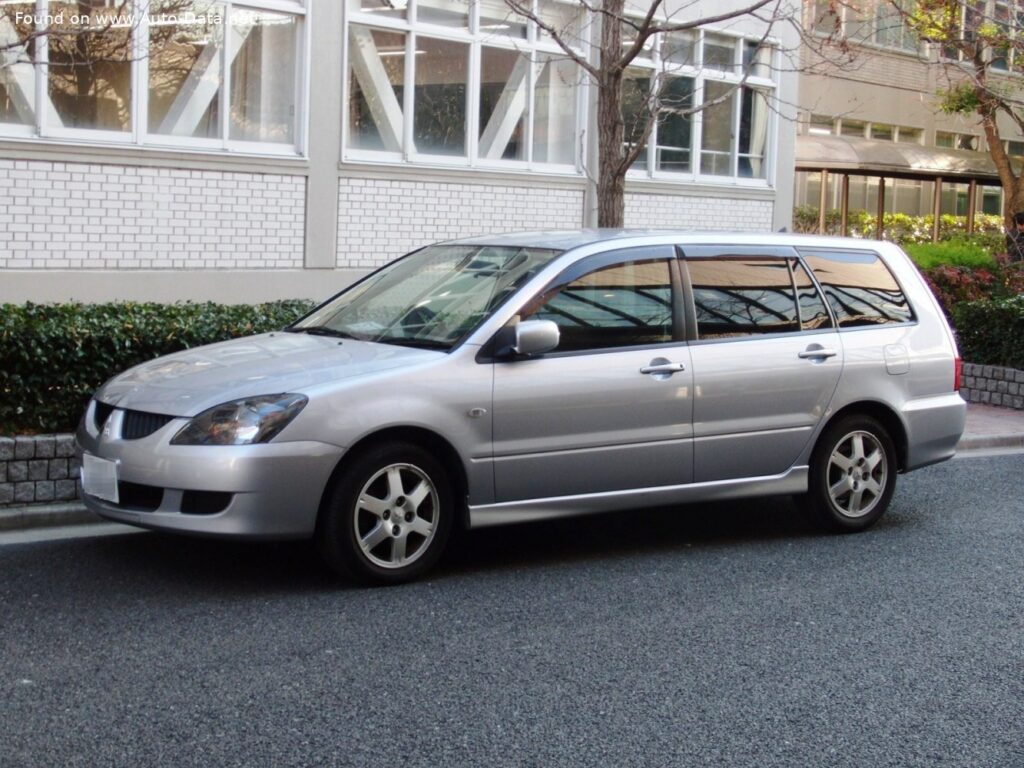
The Mitsubishi Lancer, a nameplate synonymous with both rally-bred performance and reliable everyday transportation, has seen numerous iterations across its long history. Among them, the eighth generation, particularly in its station wagon guise, known as the Mitsubishi Lancer VIII Wagon, carved out a significant niche in markets outside of North America. Produced from 2003 to 2009, the Lancer VIII Wagon 1.6 i 16V (98 Hp) Automatic variant represented a sensible, family-oriented offering within the compact segment, prioritizing practicality, efficiency, and Mitsubishi’s renowned durability for buyers in Europe, Asia, and other global markets where the demand for versatile estates remained strong.
This generation of the Lancer Wagon, often based on the Cedia platform, offered a compelling package for consumers seeking a vehicle that could comfortably accommodate passengers and cargo without sacrificing fuel economy or ease of maneuverability. While the Lancer sedan, especially its Evolution variants, gained significant traction in performance circles worldwide, the Lancer VIII Wagon focused on a different demographic, providing a spacious and understated alternative in a highly competitive market segment.
Engine and Performance of the Mitsubishi Lancer VIII Wagon
At the heart of the Mitsubishi Lancer VIII Wagon 1.6 i 16V (98 Hp) Automatic lies Mitsubishi’s venerable 4G18 engine. This inline four-cylinder, naturally aspirated gasoline powerplant, with a displacement of 1584 cubic centimeters (approximately 1.6 liters), was engineered for reliability and economical operation. Featuring a multi-port manifold injection system and an OHC (Overhead Camshaft) valvetrain with 16 valves (four per cylinder), the engine produced a modest but adequate 98 horsepower at 5000 rpm. Torque output was equally pragmatic, reaching 110.63 lb.-ft. (150 Nm) at 4000 rpm, providing sufficient pulling power for daily driving and light loads.
Power was delivered to the front wheels via a conventional 4-speed automatic transmission. This setup, while not geared for spirited driving, contributed to a smooth and predictable driving experience, well-suited to urban commutes and highway cruising. Performance figures reflect this focus on practicality: the Lancer VIII Wagon accelerated from 0 to 60 mph in 14.3 seconds, with a top speed of 108.74 mph (175 km/h). These numbers positioned it squarely as a competent workhorse rather than a performance machine, aligning with its role as a family and utility vehicle.
Fuel efficiency was a key selling point for the 1.6-liter variant. The combined fuel economy was rated at 28.7 US mpg (8.2 l/100 km), with urban consumption at 22 US mpg (10.7 l/100 km) and extra-urban figures reaching 34.6 US mpg (6.8 l/100 km). These figures were competitive for its class during its production years, offering a cost-effective ownership proposition for buyers in regions with higher fuel prices.
Design and Features
The design of the Mitsubishi Lancer VIII Wagon was characterized by its functional and understated aesthetic, typical of compact station wagons of its era. With a five-door body type and seating for five occupants, its primary objective was to maximize interior space and versatility. The exterior dimensions—a length of 176.57 inches (4485 mm), a width of 66.73 inches (1695 mm), and a height of 58.27 inches (1480 mm)—contributed to its maneuverability in city environments while providing a substantial footprint for stability.
One of the most compelling features of the Lancer VIII Wagon was its cargo capacity. With the rear seats in place, it offered a respectable 14.13 cubic feet (400 liters) of trunk space. When the rear seats were folded down, this expanded significantly to an impressive 42.38 cubic feet (1200 liters), transforming the wagon into a highly capable hauler for luggage, sports equipment, or larger purchases. This flexibility made it an ideal choice for families and individuals requiring ample storage.
Inside, the cabin was designed for durability and ease of use. While not luxurious, the materials and layout were practical and ergonomic, reflecting Mitsubishi’s reputation for building robust vehicles. Standard features for its time included power windows, air conditioning, and a functional audio system. Safety equipment was also a consideration, with an Anti-lock Braking System (ABS) provided as standard, enhancing driver control during emergency braking. The vehicle’s structure was designed to meet contemporary safety standards, offering reasonable protection for occupants.
The chassis and suspension setup further underscored its practical nature. The front suspension utilized a spring strut design, known for its balance of comfort and handling, while the rear featured a transverse stabilizer, contributing to ride stability. Braking was handled by ventilated discs at the front and solid discs at the rear, providing adequate stopping power. Hydraulic power steering with a rack and pinion system offered predictable and responsive steering feel, making the wagon easy to navigate.
Technical Specifications
| Category | Specification | Value (US/Imperial) |
|---|---|---|
| Brand | Mitsubishi | |
| Model | Lancer | |
| Generation | Lancer VIII Wagon | |
| Type (Engine) | 1.6 i 16V (98 Hp) Automatic | |
| Start of Production | 2003 year | |
| End of Production | 2009 year | |
| Powertrain Architecture | Internal Combustion engine | |
| Body type | Station wagon (estate) | |
| Seats | 5 | |
| Doors | 5 | |
| Performance Specs | ||
| Fuel consumption (economy) – urban | 10.7 l/100 km | 22 US mpg |
| Fuel consumption (economy) – extra urban | 6.8 l/100 km | 34.6 US mpg |
| Fuel consumption (economy) – combined | 8.2 l/100 km | 28.7 US mpg |
| Fuel Type | Petrol (Gasoline) | |
| Acceleration 0 – 60 mph | 14.3 sec | |
| Maximum speed | 175 km/h | 108.74 mph |
| Weight-to-power ratio | 13.9 kg/Hp | 72.1 Hp/tonne |
| Weight-to-torque ratio | 9.1 kg/Nm | 110.3 Nm/tonne |
| Engine Specs | ||
| Power | 98 Hp @ 5000 rpm | |
| Power per liter | 61.9 Hp/l | |
| Torque | 150 Nm @ 4000 rpm | 110.63 lb.-ft. @ 4000 rpm |
| Engine layout | Front, Transverse | |
| Engine Model/Code | 4G18 | |
| Engine displacement | 1584 cm3 | 96.66 cu. in. |
| Number of cylinders | 4 | |
| Engine configuration | Inline | |
| Cylinder Bore | 76 mm | 2.99 in. |
| Piston Stroke | 87.3 mm | 3.44 in. |
| Compression ratio | 10:1 | |
| Number of valves per cylinder | 4 | |
| Fuel injection system | Multi-port manifold injection | |
| Engine aspiration | Naturally aspirated engine | |
| Valvetrain | OHC | |
| Engine oil capacity | 3.3 l | 3.49 US qt |
| Coolant | 5 l | 5.28 US qt |
| Space, Volume and Weights | ||
| Kerb Weight | 1360 kg | 2998.29 lbs. |
| Max. weight | 1780 kg | 3924.23 lbs. |
| Max load | 420 kg | 925.94 lbs. |
| Trunk (boot) space – minimum | 400 l | 14.13 cu. ft. |
| Trunk (boot) space – maximum | 1200 l | 42.38 cu. ft. |
| Fuel tank capacity | 50 l | 13.21 US gal |
| Dimensions | ||
| Length | 4485 mm | 176.57 in. |
| Width | 1695 mm | 66.73 in. |
| Height | 1480 mm | 58.27 in. |
| Wheelbase | 2600 mm | 102.36 in. |
| Front track | 1470 mm | 57.87 in. |
| Rear (Back) track | 1470 mm | 57.87 in. |
| Drivetrain, Brakes and Suspension Specs | ||
| Drivetrain Architecture | The Internal combustion engine (ICE) drives the front wheels of the vehicle. | |
| Drive wheel | Front wheel drive | |
| Number of gears and type of gearbox | 4 gears, automatic transmission | |
| Front suspension | Spring Strut | |
| Rear suspension | Transverse stabilizer | |
| Front brakes | Ventilated discs | |
| Rear brakes | Disc | |
| Assisting systems | ABS (Anti-lock braking system) | |
| Steering type | Steering rack and pinion | |
| Power steering | Hydraulic Steering | |
| Tires size | 195/60 R15 | |
| Wheel rims size | 15X6J | |
Legacy and Market Impact of the Mitsubishi Lancer VIII Wagon
The Mitsubishi Lancer VIII Wagon, particularly the 1.6 i 16V Automatic variant, played a crucial role in Mitsubishi’s global portfolio, especially in markets where station wagons were a preferred choice for families and businesses. While the Lancer sedan, especially its high-performance Evolution derivatives, often captured headlines, the wagon quietly served as a pillar of practicality and reliability for the brand. It was never officially sold in the United States in this configuration, where the Lancer nameplate was predominantly associated with sedans, and the wagon market was significantly smaller and dominated by different offerings.
In its primary markets, such as Europe, Australia, and parts of Asia, the Lancer VIII Wagon competed against a formidable array of compact estates. Key rivals included the Toyota Corolla Wagon, Honda Civic Wagon (or its regional equivalents like the Stream), Mazda 323/Familia Wagon, Ford Focus Wagon, Opel Astra Wagon, and the Volkswagen Golf Variant. Against these competitors, the Lancer VIII Wagon distinguished itself through its competitive pricing, robust build quality, and a reputation for excellent long-term reliability—a hallmark of Mitsubishi vehicles.
Its impact was largely felt by offering a straightforward, no-frills solution to transportation needs. It wasn’t designed to be flashy or groundbreaking in terms of technology, but rather to be a dependable, fuel-efficient, and supremely practical vehicle. This approach resonated with a significant segment of buyers who valued utility and low running costs over performance or premium features. The generous cargo space, combined with sensible dimensions and a proven powertrain, made it a popular choice for families, small businesses, and anyone needing versatile transportation.
Over its production run from 2003 to 2009, the Lancer VIII Wagon solidified Mitsubishi’s standing as a producer of dependable and functional vehicles. While it might not hold the same iconic status as its rally-bred siblings, its legacy is one of quiet competence and enduring value. It represented a commitment to providing practical mobility solutions, embodying the essence of a reliable family car that could tackle diverse demands with unassuming efficiency. Today, these wagons are still appreciated in their respective markets for their durability and low cost of ownership, a testament to Mitsubishi’s engineering principles of the era.