
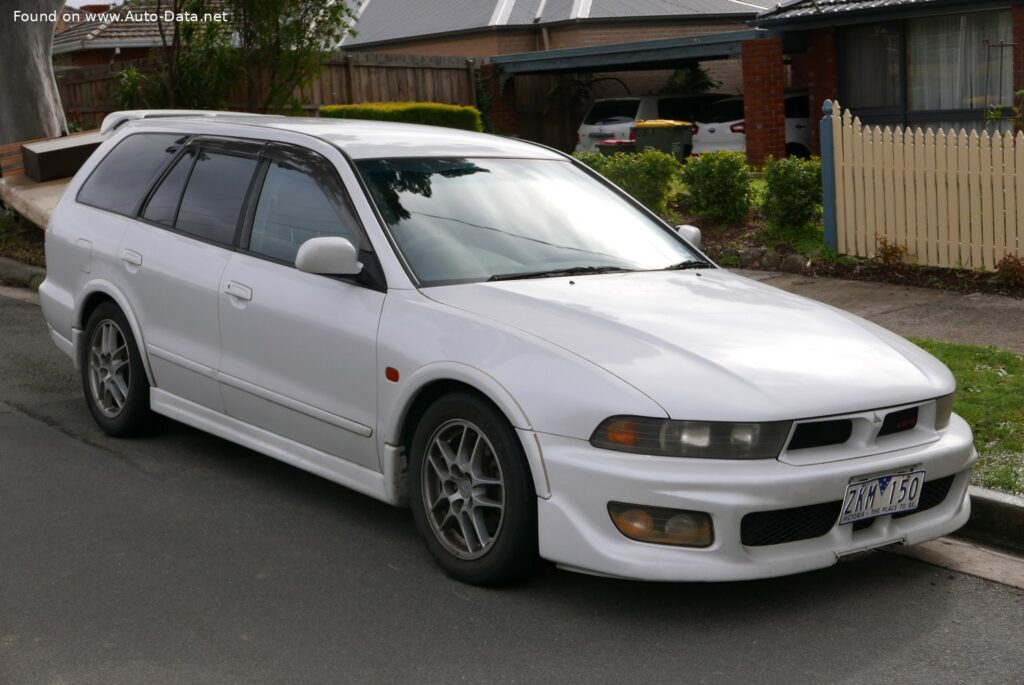
Introduction: The Mitsubishi Legnum (EAO) 1.8i Viento (140 Hp)
The Mitsubishi Legnum (EAO) represented a significant offering from the Japanese automaker during the late 1990s and early 2000s. Primarily intended for the Japanese Domestic Market (JDM) and select international markets, the Legnum was the station wagon variant of the venerable eighth-generation Mitsubishi Galant (EA series). While the Galant sedan had a presence in North America, the Legnum wagon was never officially imported to the United States, making it a distinctive model for enthusiasts of Japanese automotive engineering. This particular iteration, the Mitsubishi Legnum (EAO) 1.8i Viento (140 Hp), highlighted Mitsubishi’s commitment to combining practicality with advanced engine technology and a comfortable driving experience within a family-friendly package. Produced from 1997 to 2002, the Legnum (EAO) series showcased Mitsubishi’s design language and technological advancements of the era, offering a compelling alternative in the competitive mid-size wagon segment.
The “Viento” designation typically indicated a specific trim level within Mitsubishi’s lineup, often implying a balance of features, comfort, and a slightly more refined aesthetic. For the Legnum, it positioned the 1.8i Viento as a well-equipped, efficient, and practical choice for families or individuals seeking the utility of a wagon without sacrificing modern amenities or a pleasant driving dynamic. Its front-wheel-drive architecture and naturally aspirated engine were geared towards reliable, everyday performance, making it a workhorse in its primary markets.
Engine & Performance: Powering the Mitsubishi Legnum (EAO)
Under the hood of the Mitsubishi Legnum (EAO) 1.8i Viento (140 Hp) lay a sophisticated 1.8-liter (1834 cm³ or 111.92 cu. in.) inline four-cylinder engine. This powertrain was a testament to Mitsubishi’s engineering prowess, particularly its early adoption of Gasoline Direct Injection (GDI) technology. With a compression ratio of 12:1, this naturally aspirated engine produced a respectable 140 horsepower at 6000 rpm and 133.5 lb.-ft. (181 Nm) of torque at a relatively low 3750 rpm. The power per liter stood at 76.3 Hp/l, indicating a well-optimized and efficient design for its time.
The engine featured a front, transverse layout, driving the front wheels through a 5-speed manual transmission. This configuration, coupled with the relatively high torque output for its displacement, provided the Legnum Viento with ample power for urban driving and highway cruising. The direct injection fuel system was a notable feature, contributing to both fuel efficiency and improved throttle response, a hallmark of GDI technology. Each cylinder benefited from a four-valve configuration, enhancing breathing and combustion efficiency. The combination of a robust engine, a precise manual gearbox, and a front-wheel-drive setup offered a balanced and predictable driving experience, prioritizing reliability and economy over outright performance, yet still capable of spirited driving when called upon.
Considering its curb weight of 3417.17 lbs (1550 kg), the Legnum 1.8i Viento had a weight-to-power ratio of 11.1 kg/Hp (90.3 Hp/tonne) and a weight-to-torque ratio of 8.6 kg/Nm (116.8 Nm/tonne). These figures suggest that the vehicle was adequately powered for its segment, capable of comfortable acceleration and maintaining momentum, especially within the confines of Japanese traffic and road conditions. The use of petrol (gasoline) as fuel, along with a 15.85 US gallon (60 liter) fuel tank, ensured a practical range for daily commutes and longer journeys.
Design & Features: The Practicality of the Mitsubishi Legnum (EAO)
The Mitsubishi Legnum (EAO) was designed as a 5-door, 5-seat station wagon, emphasizing utility and family practicality. Its exterior dimensions were generous for a mid-size wagon of its era: 186.61 inches (4740 mm) in length, 69.29 inches (1760 mm) in width, and 57.87 inches (1470 mm) in height. These dimensions contributed to a spacious interior, offering comfortable seating for five adults and a substantial cargo area, a primary advantage of the wagon body style. The wheelbase measured 103.74 inches (2635 mm), providing a stable ride and contributing to interior volume.
The design language of the Legnum mirrored that of its Galant sedan sibling, featuring clean lines and a somewhat understated yet elegant aesthetic. The front fascia typically included distinctive Mitsubishi badging and headlights that blended seamlessly with the grille. The wagon’s roofline gently sloped towards the rear, maintaining a dynamic profile while maximizing interior headroom and cargo space. The wide front track of 60.04 inches (1525 mm) and rear track of 59.84 inches (1520 mm) contributed to the vehicle’s stable stance and handling characteristics.
In terms of features, the Legnum 1.8i Viento was equipped with a suspension system featuring coil springs on both the front and rear axles, designed to offer a comfortable ride while maintaining adequate handling. Braking power was provided by ventilated disc brakes at both the front and rear, an important safety feature for a family vehicle, further augmented by an Anti-lock Braking System (ABS) as standard. The steering system utilized a hydraulic rack and pinion setup, providing direct and responsive steering feedback. The vehicle rode on 225/50 R16V tires, a relatively wide and low-profile tire choice for a wagon of its class, suggesting a focus on grip and road holding. Overall, the Legnum (EAO) combined practical design with a suite of features aimed at enhancing both safety and driving comfort.
Technical Specifications: Mitsubishi Legnum (EAO) 1.8i Viento (140 Hp)
| Category | Specification | US Equivalent |
|---|---|---|
| Brand | Mitsubishi | |
| Model | Legnum | |
| Generation | Legnum (EAO) | |
| Type (Engine) | 1.8i Viento (140 Hp) | |
| Start of production | 1997 year | |
| End of production | 2002 year | |
| Powertrain Architecture | Internal Combustion engine | |
| Body type | Station wagon (estate) | |
| Seats | 5 | |
| Doors | 5 | |
Performance Specs |
||
| Fuel Type | Petrol (Gasoline) | |
| Weight-to-power ratio | 11.1 kg/Hp | 90.3 Hp/tonne |
| Weight-to-torque ratio | 8.6 kg/Nm | 116.8 Nm/tonne |
Engine Specs |
||
| Power | 140 Hp @ 6000 rpm. | |
| Power per liter | 76.3 Hp/l | |
| Torque | 181 Nm @ 3750 rpm. | 133.5 lb.-ft. @ 3750 rpm. |
| Engine layout | Front, Transverse | |
| Engine displacement | 1834 cm3 | 111.92 cu. in. |
| Number of cylinders | 4 | |
| Engine configuration | Inline | |
| Cylinder Bore | 81 mm | 3.19 in. |
| Piston Stroke | 89 mm | 3.5 in. |
| Compression ratio | 12:1 | |
| Number of valves per cylinder | 4 | |
| Fuel injection system | Direct injection | |
| Engine aspiration | Naturally aspirated engine | |
Space, Volume and Weights |
||
| Kerb Weight | 1550 kg | 3417.17 lbs. |
| Max. weight | 1825 kg | 4023.44 lbs. |
| Max load | 275 kg | 606.27 lbs. |
| Fuel tank capacity | 60 l | 15.85 US gal |
Dimensions |
||
| Length | 4740 mm | 186.61 in. |
| Width | 1760 mm | 69.29 in. |
| Height | 1470 mm | 57.87 in. |
| Wheelbase | 2635 mm | 103.74 in. |
| Front track | 1525 mm | 60.04 in. |
| Rear (Back) track | 1520 mm | 59.84 in. |
Drivetrain, Brakes and Suspension Specs |
||
| Drivetrain Architecture | The Internal combustion engine (ICE) drives the front wheels of the vehicle. | |
| Drive wheel | Front wheel drive | |
| Number of gears and type of gearbox | 5 gears, manual transmission | |
| Front suspension | Coil spring | |
| Rear suspension | Coil spring | |
| Front brakes | Ventilated discs | |
| Rear brakes | Ventilated discs | |
| Assisting systems | ABS (Anti-lock braking system) | |
| Steering type | Steering rack and pinion | |
| Power steering | Hydraulic Steering | |
| Tires size | 225/50 R16V | |
Legacy & Market Impact: The Mitsubishi Legnum (EAO) in its Segment
The Mitsubishi Legnum (EAO) 1.8i Viento (140 Hp) carved out a niche in the Japanese and other Asian/Oceanian markets as a reliable, practical, and somewhat upscale mid-size station wagon. Its primary competition included established rivals like the Subaru Legacy Wagon, Toyota Caldina, Honda Orthia (and later Stream/Odyssey for larger family needs), and Nissan Wingroad/AD Van. What set the Legnum apart, particularly in its higher-trim levels and with its advanced GDI engine technology, was its blend of sophisticated engineering, comfortable interior, and a driving experience that leaned towards refinement.
While not a performance hero like its VR-4 sibling (which featured a twin-turbo V6 and all-wheel drive), the 1.8i Viento variant of the Legnum played a crucial role in offering a more fuel-efficient and accessible option for a broader customer base. Its GDI engine, while common in Japan, was still relatively advanced for a mass-market vehicle in the late 1990s, demonstrating Mitsubishi’s commitment to efficiency and emissions reduction ahead of many competitors. This technology contributed to its reputation as a modern and forward-thinking family vehicle.
The Legnum’s enduring legacy is tied to its robust construction and understated appeal. In markets where it was sold, it was appreciated for its practicality, generous cargo capacity, and comfortable ride quality, making it an ideal choice for families and those needing versatile transport. Its direct connection to the Galant sedan meant it benefited from a shared platform, which often translated to reliable mechanicals and readily available parts. Although it never achieved the iconic status of some of Mitsubishi’s rally-bred machines, the Legnum represented the brand’s competency in producing well-rounded, dependable family vehicles. Today, these cars are occasionally found in markets outside of Japan as grey imports, valued by enthusiasts for their unique JDM flavor, solid engineering, and the utility they offer, continuing to serve as a testament to Mitsubishi’s diverse product portfolio during a prolific era for the company.
