The Mitsubishi Minica V 0.66 16V PG (50 Hp): A Quintessential Kei Car
The Mitsubishi Minica V, specifically the 0.66 16V PG (50 Hp) variant, represents the fifth generation of Mitsubishi’s long-running Minica nameplate, a model series deeply rooted in Japan’s unique “Kei car” segment. Produced from 1993 to 1999, this diminutive 3-door hatchback was engineered with a singular focus: to provide efficient, economical, and highly maneuverable transportation within the strict regulatory framework governing Kei vehicles in Japan. While never officially imported to the United States, the Minica V embodies the ingenuity and practicality that defined Japanese automotive design for its domestic market, showcasing how maximum utility could be extracted from minimal dimensions and engine displacement. This particular iteration, with its 0.66-liter, 16-valve engine, offered a blend of modest performance and exceptional fuel economy, making it a popular choice for urban dwellers and those seeking low-cost mobility in its home country.
Engineering for the Everyday: The Mitsubishi Minica V Powertrain
At the heart of the Mitsubishi Minica V 0.66 16V PG (50 Hp) lies a powertrain specifically designed to meet the stringent requirements of the Kei car class, which mandated engine displacement not exceeding 660 cubic centimeters (0.66 liters). This model featured a compact, naturally aspirated 659 cm3 (40.21 cu. in.) inline-four engine, an impressive configuration for its size, boasting 16 valves (four per cylinder) and an OHC (Overhead Camshaft) valvetrain. While many contemporary vehicles were transitioning to electronic fuel injection, the Minica V in this specification utilized a carbureted fuel injection system, a simpler and more cost-effective solution for a vehicle in its segment during the early to mid-1990s. This setup allowed the engine to produce a respectable 50 horsepower at a high 7500 rpm and 41.3 lb.-ft. of torque at 5500 rpm, demonstrating a focus on high-revving efficiency to compensate for its small displacement.
The engine was mounted transversally at the front, driving the front wheels through a 5-speed manual transmission. This front-wheel-drive architecture was typical for Kei cars, maximizing interior space and simplifying the drivetrain. Performance figures, while not exhilarating by larger vehicle standards, were entirely adequate for urban environments. The Minica V 0.66 16V PG could reach a top speed of 68.35 mph (110 km/h), making it suitable for city streets and occasional short highway stints. However, its true strength lay in its remarkable fuel economy. With a combined consumption rating of 58.8 US mpg (4 L/100 km), the Minica V offered exceptional operating costs, a crucial factor for its target audience. The vehicle’s lightweight construction, with a kerb weight of just 1455.05 lbs (660 kg), contributed significantly to both its fuel efficiency and its agile handling characteristics, resulting in a favorable weight-to-power ratio of 13.2 kg/Hp.
Compact Ingenuity: Design and Features of the Mitsubishi Minica V
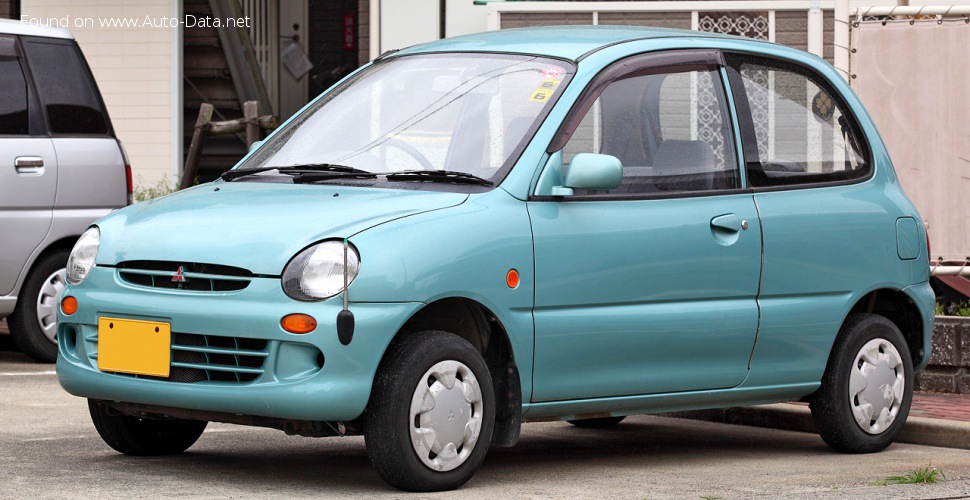
The design of the Mitsubishi Minica V was a masterclass in packaging efficiency, dictated by the Kei car regulations that capped maximum length, width, and height. As a 3-door hatchback, it offered a practical and accessible body style for urban use. Its diminutive external dimensions—a length of 129.72 inches (3295 mm), a width of 54.92 inches (1395 mm), and a height of 57.68 inches (1465 mm)—allowed it to navigate narrow streets and fit into the smallest parking spaces with ease. Despite its compact footprint, the Minica V was engineered to comfortably accommodate four occupants, a testament to clever interior design and space utilization. The wheelbase of 89.76 inches (2280 mm) and a tight turning circle of 27.56 feet (8.4 m) further enhanced its maneuverability.
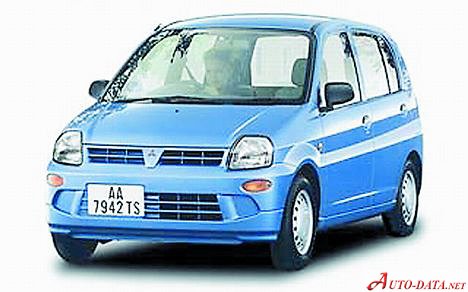
Visually, the Minica V adopted a clean, unpretentious aesthetic, typical of the Kei segment during the 1990s. Its design prioritized functionality over stylistic extravagance, featuring large glass areas for good visibility and a simple, aerodynamic profile. Inside, the cabin was straightforward and ergonomic, focusing on durability and ease of use. While basic by modern standards, the Minica V provided all the essential amenities for daily driving. In terms of chassis and safety, the Minica V employed a robust setup for its class. It featured a Spring Strut front suspension and a Coil spring rear suspension, offering a comfortable ride for its size. Braking was handled by front disc brakes and rear drum brakes, a common configuration for economical vehicles of the era. Notably, the inclusion of ABS (Anti-lock Braking System) as an assisting system was a significant safety feature for a Kei car in the 1990s, enhancing control during emergency braking. Steering was managed by a rack and pinion system, aided by hydraulic power steering, making low-speed maneuvers effortless on its small 135/80 R12 S tires.
Technical Specifications: Mitsubishi Minica V 0.66 16V PG (50 Hp)
| Category | Specification | Value |
|---|---|---|
General Information |
||
| Brand | Mitsubishi | |
| Model | Minica | |
| Generation | Minica V | |
| Type (Engine) | 0.66 16V PG (50 Hp) | |
| Start of production | 1993 year | |
| End of production | 1999 year | |
| Powertrain Architecture | Internal Combustion engine | |
| Body type | Hatchback | |
| Seats | 4 | |
| Doors | 3 | |
Performance Specifications |
||
| Fuel consumption (economy) – combined | 4 l/100 km | 58.8 US mpg | 70.6 UK mpg | 25 km/l |
| Fuel Type | Petrol (Gasoline) | |
| Maximum speed | 110 km/h | 68.35 mph |
| Weight-to-power ratio | 13.2 kg/Hp | 75.8 Hp/tonne |
| Weight-to-torque ratio | 11.8 kg/Nm | 84.8 Nm/tonne |
Engine Specifications |
||
| Power | 50 Hp @ 7500 rpm. | |
| Power per liter | 75.9 Hp/l | |
| Torque | 56 Nm @ 5500 rpm. | 41.3 lb.-ft. @ 5500 rpm. |
| Engine layout | Front, Transverse | |
| Engine displacement | 659 cm3 | 0.7 liters | 40.21 cu. in. |
| Number of cylinders | 4 | |
| Engine configuration | Inline | |
| Cylinder Bore | 60 mm | 2.36 in. |
| Piston Stroke | 58.3 mm | 2.3 in. |
| Compression ratio | 10:1 | |
| Number of valves per cylinder | 4 | |
| Fuel injection system | Carburettor | |
| Engine aspiration | Naturally aspirated engine | |
| Valvetrain | OHC | |
Space, Volume and Weights |
||
| Kerb Weight | 660 kg | 1455.05 lbs. |
| Fuel tank capacity | 32 l | 8.45 US gal | 7.04 UK gal |
Dimensions |
||
| Length | 3295 mm | 129.72 in. |
| Width | 1395 mm | 54.92 in. |
| Height | 1465 mm | 57.68 in. |
| Wheelbase | 2280 mm | 89.76 in. |
| Front track | 1215 mm | 47.83 in. |
| Rear (Back) track | 1215 mm | 47.83 in. |
| Minimum turning circle (turning diameter) | 8.4 m | 27.56 ft. |
Drivetrain, Brakes and Suspension Specifications |
||
| Drivetrain Architecture | The Internal combustion engine (ICE) drives the front wheels of the vehicle. | |
| Drive wheel | Front wheel drive | |
| Number of gears and type of gearbox | 5 gears, manual transmission | |
| Front suspension | Spring Strut | |
| Rear suspension | Coil spring | |
| Front brakes | Disc | |
| Rear brakes | Drum | |
| Assisting systems | ABS (Anti-lock braking system) | |
| Steering type | Steering rack and pinion | |
| Power steering | Hydraulic Steering | |
| Tires size | 135/80 R12 S | |
Legacy and Market Impact of the Mitsubishi Minica V
The Mitsubishi Minica V, particularly the 0.66 16V PG (50 Hp) variant, played a significant role within the highly competitive Japanese Kei car market during the 1990s. The Kei car segment is unique globally, shaped by specific government regulations that offer tax and insurance benefits for vehicles adhering to strict limits on engine displacement and body dimensions. This framework fostered an environment where manufacturers like Mitsubishi pushed the boundaries of compact engineering to deliver highly practical and affordable vehicles. The Minica V was a direct competitor to other popular Kei models of its time, such as the Suzuki Alto, Daihatsu Mira, and Honda Life, each vying for market share among consumers seeking maximum efficiency and utility in congested urban settings.
Its reputation was built on reliability, exceptional fuel economy, and low running costs, making it an ideal choice for first-time car buyers, small families, and businesses requiring nimble city transportation. The Minica V’s robust 16-valve engine, despite its small size, offered a surprisingly sprightly performance for its class, especially when paired with the precise 5-speed manual transmission. Its compact dimensions and tight turning radius made it incredibly easy to park and maneuver through Japan’s often narrow streets and dense traffic. The inclusion of features like optional ABS, while standard on larger vehicles, was a notable selling point for a Kei car, highlighting Mitsubishi’s commitment to safety even in its entry-level offerings.
The Minica series, and the fifth generation in particular, contributed to Mitsubishi’s consistent presence in the Kei car segment, solidifying its image as a producer of dependable and economical vehicles. While its direct impact outside of Japan was minimal due to its specialized nature, the Minica V stands as an excellent example of Japanese automotive engineering optimized for a specific market. It demonstrated how innovative design and efficient powertrains could create a highly functional and beloved vehicle that perfectly met the needs of its target consumers. The Minica V’s legacy is one of pragmatic engineering, providing accessible personal mobility and contributing to the rich tapestry of Japan’s automotive culture until its eventual discontinuation, paving the way for future generations of Kei cars that continued to evolve the segment’s core principles of efficiency and compact utility.