Introduction to the Mitsubishi Minica V 0.66 i 20V SR-Z (64 Hp) Automatic
The Mitsubishi Minica is a venerable nameplate in the Japanese automotive landscape, a testament to enduring design and engineering tailored for the unique demands of the Kei car segment. The fifth generation, known as the Minica V, produced from 1993 to 1999, represented a significant evolution in Mitsubishi’s long-running compact car series. This particular variant, the Mitsubishi Minica V 0.66 i 20V SR-Z (64 Hp) Automatic, stood out as a performance-oriented model within the stringent Kei car regulations, offering a compelling blend of spirited driving dynamics and urban practicality. While never officially sold in the United States, the Minica V, and Kei cars in general, played a crucial role in providing affordable, efficient, and maneuverable transportation within Japan’s densely populated urban centers. Its design and engineering were specifically crafted to meet the tax and parking benefits afforded to vehicles under a certain size and engine displacement, making it a cornerstone of Japanese daily life.
The Mitsubishi Minica V 0.66 i 20V SR-Z (64 Hp) Automatic: Engineering for the Kei Segment
At the heart of the Mitsubishi Minica V 0.66 i 20V SR-Z (64 Hp) Automatic lay a remarkably sophisticated powertrain for its class. The “0.66 i 20V SR-Z” designation highlights its key attributes: a 0.66-liter (659 cm3 or 40.21 cu. in.) inline four-cylinder engine, equipped with a multi-port manifold injection system and a turbocharger. What truly set this engine apart was its advanced valvetrain: a Double Overhead Camshaft (DOHC) configuration featuring five valves per cylinder (20 valves in total for the four cylinders). This was an engineering marvel for such a small displacement, designed to maximize airflow and combustion efficiency, thereby extracting every possible ounce of power within the strict 660 cm3 Kei car limit.
This high-revving engine produced a peak power output of 64 horsepower at a lofty 7000 rpm, a testament to its free-breathing design and the effectiveness of its turbocharger. Torque figures were equally impressive for its size, reaching 97 Nm (approximately 71.54 lb.-ft.) at a relatively low 3500 rpm, which contributed significantly to its urban drivability. The power was delivered to the front wheels via a smooth 4-speed automatic transmission, prioritizing convenience and ease of use in stop-and-go city traffic. With a curb weight of just 1587.33 lbs. (720 kg), the Minica V SR-Z boasted an excellent weight-to-power ratio of 11.3 kg/Hp (88.9 Hp/tonne) and a weight-to-torque ratio of 7.4 kg/Nm (134.7 Nm/tonne), allowing for nimble acceleration and a surprisingly sprightly feel despite its modest power figures. The front, transverse engine layout and front-wheel-drive architecture were standard for efficient packaging and traction in this segment.
Design and Features of the Minica V
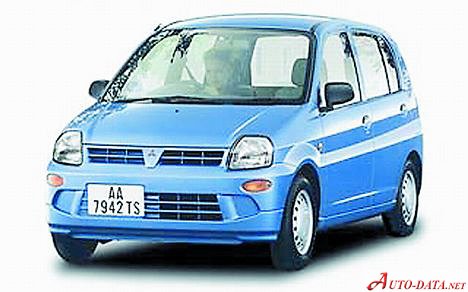
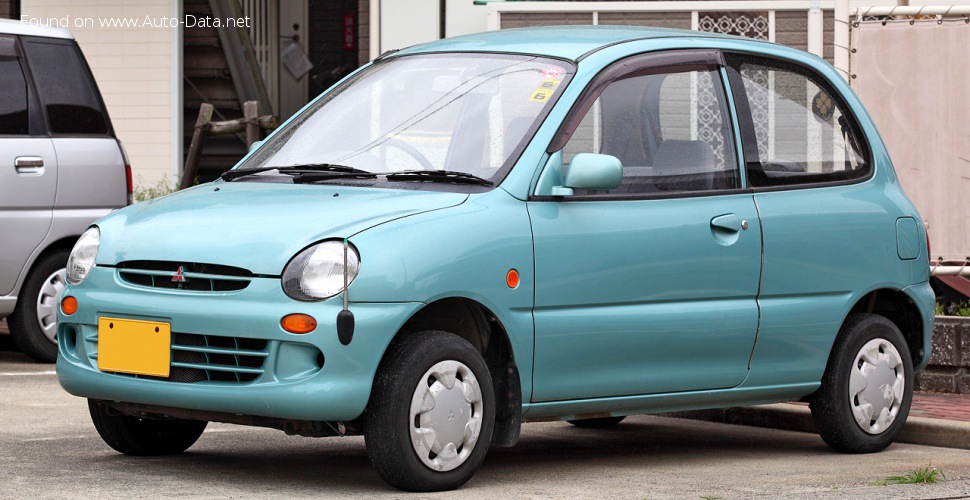
The Mitsubishi Minica V maintained the traditional hatchback body type, offering a practical 3-door configuration and seating for four occupants. Its dimensions were meticulously crafted to comply with Kei car regulations, which mandated a maximum length of 3295 mm (129.72 inches), a width of 1395 mm (54.92 inches), and a height of 1475 mm (58.07 inches). The compact wheelbase of 2260 mm (88.98 inches) and a tight minimum turning circle of 8.4 meters (27.56 feet) ensured exceptional maneuverability, making it ideal for navigating narrow city streets and fitting into tight parking spaces—a critical advantage in Japan.
Despite its small footprint, Mitsubishi engineers focused on maximizing interior volume and utility. The design emphasized tall windows and a relatively upright seating position to enhance visibility and create a sense of spaciousness within the cabin. For its era, the Minica V featured a well-appointed interior, often with a focus on practical materials and ergonomic controls. Safety features for the SR-Z variant included an Anti-lock Braking System (ABS), a significant addition for a compact car of its time, enhancing braking stability. The steering system utilized a precise rack and pinion setup, contributing to the car’s agile handling characteristics. Suspension consisted of spring struts at the front and coil springs at the rear, a common and effective setup for balancing ride comfort and handling in a lightweight vehicle. Braking was handled by disc brakes upfront and drum brakes at the rear, providing adequate stopping power for its size and performance. It rode on 13-inch wheels fitted with 155/65 R13 H tires, a common size for compact cars that balanced grip and ride comfort.
Technical Specifications: Mitsubishi Minica V 0.66 i 20V SR-Z (64 Hp) Automatic
| Category | Specification |
|---|---|
| General Information | |
| Brand | Mitsubishi |
| Model | Minica |
| Generation | Minica V |
| Type (Engine) | 0.66 i 20V SR-Z (64 Hp) Automatic |
| Start of Production | 1993 year |
| End of Production | 1999 year |
| Powertrain Architecture | Internal Combustion engine |
| Body type | Hatchback |
| Seats | 4 |
| Doors | 3 |
| Performance Specs | |
| Fuel Type | Petrol (Gasoline) |
| Weight-to-power ratio | 11.3 kg/Hp, 88.9 Hp/tonne |
| Weight-to-torque ratio | 7.4 kg/Nm, 134.7 Nm/tonne |
| Engine Specs | |
| Power | 64 Hp @ 7000 rpm |
| Power per liter | 97.1 Hp/l |
| Torque | 97 Nm @ 3500 rpm (71.54 lb.-ft. @ 3500 rpm) |
| Engine layout | Front, Transverse |
| Engine displacement | 659 cm3 (40.21 cu. in.) |
| Number of cylinders | 4 |
| Engine configuration | Inline |
| Cylinder Bore | 60 mm (2.36 in.) |
| Piston Stroke | 58.3 mm (2.3 in.) |
| Compression ratio | 8.5:1 |
| Number of valves per cylinder | 5 |
| Fuel injection system | Multi-port manifold injection |
| Engine aspiration | Turbocharger |
| Valvetrain | DOHC |
| Space, Volume and Weights | |
| Kerb Weight | 720 kg (1587.33 lbs.) |
| Fuel tank capacity | 32 l (8.45 US gal) |
| Dimensions | |
| Length | 3295 mm (129.72 in.) |
| Width | 1395 mm (54.92 in.) |
| Height | 1475 mm (58.07 in.) |
| Wheelbase | 2260 mm (88.98 in.) |
| Front track | 1215 mm (47.83 in.) |
| Rear (Back) track | 1215 mm (47.83 in.) |
| Minimum turning circle (turning diameter) | 8.4 m (27.56 ft.) |
| Drivetrain, Brakes and Suspension Specs | |
| Drivetrain Architecture | The Internal combustion engine (ICE) drives the front wheels of the vehicle. |
| Drive wheel | Front wheel drive |
| Number of gears and type of gearbox | 4 gears, automatic transmission |
| Front suspension | Spring Strut |
| Rear suspension | Coil spring |
| Front brakes | Disc |
| Rear brakes | Drum |
| Assisting systems | ABS (Anti-lock braking system) |
| Steering type | Steering rack and pinion |
| Tires size | 155/65 R13 H |
| Wheel rims size | 13 |
Legacy and Market Impact
The Mitsubishi Minica, with its long production run spanning multiple generations, established itself as a cornerstone of the Kei car market in Japan. The Minica V, particularly variants like the 0.66 i 20V SR-Z, represented the pinnacle of performance and technological advancement within its segment during the 1990s. Its primary role was to provide efficient, economical, and urban-friendly transportation for Japanese consumers, benefiting from significant tax reductions, lower insurance premiums, and preferential parking regulations afforded to Kei vehicles.
In its home market, the Minica V faced stiff competition from other established Kei car manufacturers, including the Suzuki Alto, Daihatsu Mira, and Subaru Vivio. Each competitor offered its own blend of practicality and, in some cases, performance-oriented variants. The Minica SR-Z distinguished itself with its highly advanced 20-valve turbocharged engine, a feature that signaled Mitsubishi’s engineering prowess and commitment to pushing the boundaries of what was possible within the Kei car framework. This focus on sophisticated engine technology gave it a reputation for being a more premium or enthusiast-oriented option among its peers.
The Minica V contributed to the broader narrative of the Kei car as an essential segment of the Japanese automotive industry. It showcased how compact dimensions and small engines could still deliver a satisfying driving experience, especially when paired with advanced technology like multi-valve heads and turbocharging. Its blend of reliable mechanicals, practical design, and efficient operation ensured its popularity throughout its production run. While the Mitsubishi Minica V 0.66 i 20V SR-Z (64 Hp) Automatic may not have achieved global recognition, its impact on Japanese urban mobility and its demonstration of innovative engineering within regulatory constraints solidify its place as an important, albeit niche, vehicle in automotive history. Its legacy lies in its efficient design and the clever engineering employed to maximize performance and utility from a tiny footprint, embodying the spirit of Japanese automotive ingenuity.