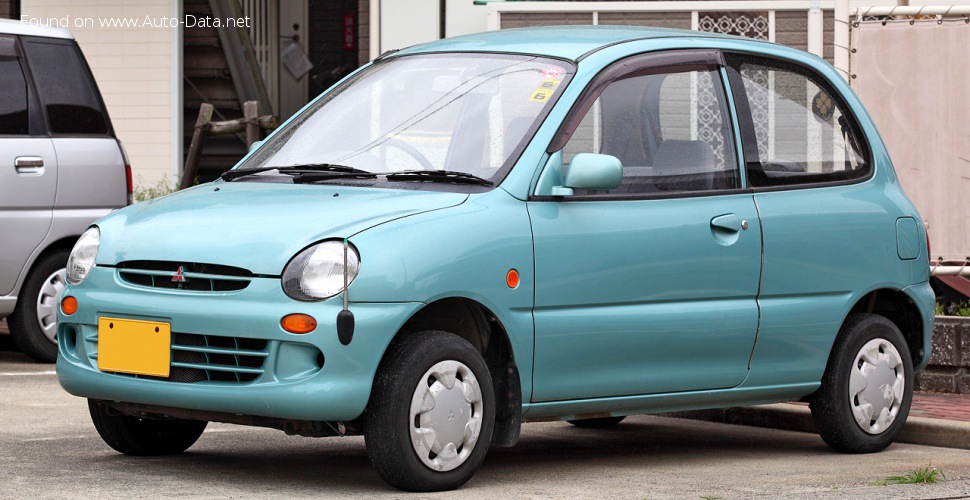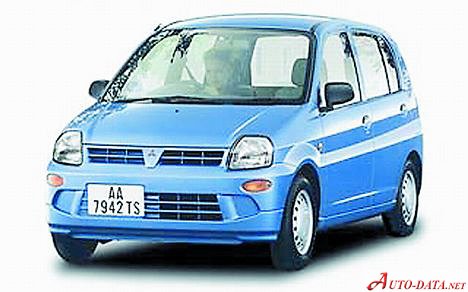
The Mitsubishi Minica VI: A Quintessential Kei Car for the Japanese Market
The Mitsubishi Minica VI, specifically the 0.7 i 12V 4WD (50 Hp) variant, represents a significant chapter in the long-running history of Mitsubishi’s Kei car lineup. Produced from 1999 to 2007, this sixth-generation Minica was a prime example of the Japanese domestic market (JDM) Kei car segment, a unique vehicle class designed to meet specific government regulations regarding size, engine displacement, and power output. These regulations offer tax and insurance benefits to owners, making Kei cars incredibly popular in Japan’s often congested urban environments and narrow rural roads. While never officially sold in the United States, the Minica VI served as a practical, efficient, and surprisingly capable compact vehicle for Japanese consumers, embodying the ingenuity required to maximize utility within strict dimensional constraints. Its all-wheel-drive capability further enhanced its appeal in regions experiencing challenging weather conditions, offering a level of grip and stability uncommon in such a diminutive package.
Engine and Performance of the Mitsubishi Minica VI
At the heart of the Mitsubishi Minica VI 0.7 i 12V 4WD (50 Hp) lies a meticulously engineered powertrain, tailored to the stringent requirements of the Kei car category. The engine is a naturally aspirated, inline three-cylinder unit with a displacement of 657 cubic centimeters (approximately 40.09 cubic inches or 0.7 liters). This compact powerplant generates a modest but effective 50 horsepower at a relatively high 6500 revolutions per minute, indicative of its high-revving nature designed to extract maximum power from its small displacement. The power per liter stands at a respectable 76.1 Hp/l, showcasing Mitsubishi’s ability to optimize efficiency within the limitations.
Torque output for this engine is 62 Newton meters (or approximately 45.73 lb.-ft.) delivered at 4000 rpm. While these figures may seem low by American automotive standards, they are perfectly adequate for the Minica VI’s lightweight construction and intended urban application. The engine’s layout is front, transverse, a common configuration for front-wheel-drive and all-wheel-drive compact cars, optimizing packaging space. Fueling is handled by a multi-port manifold injection system, ensuring precise fuel delivery for efficiency and smooth operation. With a compression ratio of 10.2:1 and four valves per cylinder, the engine is designed for optimal combustion and responsiveness, crucial for navigating stop-and-go traffic and maintaining momentum on Japan’s intricate road network.
A distinctive feature of this particular Minica VI variant is its all-wheel-drive (4×4) system. This setup, paired with a five-speed manual transmission, provides enhanced traction and stability, especially beneficial in adverse weather conditions like snow or rain, which are common in many parts of Japan. The manual transmission allows the driver direct control over the engine’s power band, making the most of the available 50 horsepower. The vehicle’s curb weight of just 1653.47 pounds (750 kg) contributes to a weight-to-power ratio of 15 kg/Hp (66.7 Hp/tonne), and a weight-to-torque ratio of 12.1 kg/Nm (82.7 Nm/tonne), highlighting its nimble characteristics despite the modest engine output.
Design and Features
The Mitsubishi Minica VI adopted a functional and practical hatchback body style, available in both 3-door and 5-door configurations to cater to varying consumer needs. The variant detailed here features a versatile design, accommodating up to five occupants. Its design prioritizes interior space and maneuverability within the confines of the Kei car regulations. With a length of 133.66 inches (3395 mm), a width of 58.07 inches (1475 mm), and a height of 59.45 inches (1510 mm), the Minica VI is incredibly compact, allowing for easy navigation through tight city streets and effortless parking in small spaces. The wheelbase measures 92.13 inches (2340 mm), contributing to its stable yet agile handling characteristics.
Despite its small exterior footprint, Mitsubishi engineers worked to maximize the interior volume. The upright seating position and relatively tall roofline provided decent headroom for occupants. The Minica VI’s design ethos was clearly utility-driven, featuring large windows for good visibility, which is a significant advantage in urban driving. The minimum turning circle of just 29.53 feet (9 meters) further underscores its exceptional maneuverability, making U-turns and parking lot navigation a breeze.
In terms of chassis and safety, the Minica VI was equipped with a robust setup for its class. The front suspension utilized coil springs, providing a comfortable and controlled ride, while the rear also featured coil springs. Braking performance was handled by ventilated discs at the front, offering superior heat dissipation and consistent stopping power, complemented by reliable drum brakes at the rear. An Anti-lock Braking System (ABS) was a notable assisting system, enhancing driver control during emergency braking situations. The steering system was a responsive rack and pinion type, contributing to the car’s direct feel and ease of handling. It rode on 135/80 R13 tires, a common size for Kei cars, balancing grip with fuel efficiency.
Technical Specifications: Mitsubishi Minica VI 0.7 i 12V 4WD (50 Hp)
| Category | Specification | US Equivalent |
|---|---|---|
| General Information | ||
| Brand | Mitsubishi | |
| Model | Minica | |
| Generation | Minica VI | |
| Type (Engine) | 0.7 i 12V 4WD (50 Hp) | |
| Start of Production | 1999 year | |
| End of Production | 2007 year | |
| Powertrain Architecture | Internal Combustion engine | |
| Body type | Hatchback | |
| Seats | 5 | |
| Doors | 3/5 | |
| Performance Specs | ||
| Fuel Type | Petrol (Gasoline) | |
| Weight-to-power ratio | 15 kg/Hp | 66.7 Hp/tonne |
| Weight-to-torque ratio | 12.1 kg/Nm | 82.7 Nm/tonne |
| Engine Specs | ||
| Power | 50 Hp @ 6500 rpm | |
| Power per liter | 76.1 Hp/l | |
| Torque | 62 Nm @ 4000 rpm | 45.73 lb.-ft. @ 4000 rpm |
| Engine layout | Front, Transverse | |
| Engine displacement | 657 cm3 | 40.09 cu. in. |
| Number of cylinders | 3 | |
| Engine configuration | Inline | |
| Cylinder Bore | 65 mm | 2.56 in. |
| Piston Stroke | 66 mm | 2.6 in. |
| Compression ratio | 10.2:1 | |
| Number of valves per cylinder | 4 | |
| Fuel injection system | Multi-port manifold injection | |
| Engine aspiration | Naturally aspirated engine | |
| Space, Volume, and Weights | ||
| Kerb Weight | 750 kg | 1653.47 lbs. |
| Max. weight (Gross Weight) | 970 kg | 2138.48 lbs. |
| Max load | 220 kg | 485.02 lbs. |
| Fuel tank capacity | 30 l | 7.93 US gal |
| Dimensions | ||
| Length | 3395 mm | 133.66 in. |
| Width | 1475 mm | 58.07 in. |
| Height | 1510 mm | 59.45 in. |
| Wheelbase | 2340 mm | 92.13 in. |
| Front track | 1300 mm | 51.18 in. |
| Rear (Back) track | 1295 mm | 50.98 in. |
| Minimum turning circle | 9 m | 29.53 ft. |
| Drivetrain, Brakes, and Suspension Specs | ||
| Drive wheel | All wheel drive (4×4) | |
| Number of gears and type of gearbox | 5 gears, manual transmission | |
| Front suspension | Coil spring | |
| Rear suspension | Coil spring | |
| Front brakes | Ventilated discs | |
| Rear brakes | Drum | |
| Assisting systems | ABS (Anti-lock braking system) | |
| Steering type | Steering rack and pinion | |
| Tires size | 135/80 R13 | |
Legacy and Market Impact
The Mitsubishi Minica, and specifically the Minica VI, holds a significant place in the history of the Japanese automotive industry, particularly within the Kei car segment. For decades, the Minica nameplate was synonymous with affordable, reliable, and practical urban transportation in Japan. Its production run from 1999 to 2007 for the sixth generation highlights its enduring appeal and Mitsubishi’s commitment to this crucial market segment. The Minica VI competed directly with other established Kei car stalwarts such as the Suzuki Alto, Daihatsu Mira, and Honda Life, each vying for market share by offering unique blends of features, styling, and efficiency.
The Minica VI’s impact was primarily felt in its ability to provide accessible personal mobility to a wide demographic in Japan. Its low running costs, favorable tax treatment, and compact dimensions made it an ideal choice for first-time buyers, small families, and businesses requiring nimble delivery vehicles. The availability of an all-wheel-drive variant, as seen in the 0.7 i 12V 4WD (50 Hp) model, further broadened its appeal, offering enhanced safety and utility in Japan’s more mountainous regions or areas prone to heavy snowfall. This capability distinguished it from many of its front-wheel-drive-only competitors, providing a niche advantage.
While the Minica nameplate eventually concluded its run in 2011 after its seventh generation, its legacy is evident in the continued evolution of Mitsubishi’s Kei car offerings, such as the eK series, often developed in partnership with Nissan. The Minica VI showcased Mitsubishi’s engineering prowess in packaging, fuel efficiency, and creating a robust, albeit small, vehicle. It was a testament to how much utility and even an advanced feature like all-wheel drive could be integrated into a vehicle under 134 inches in length and powered by an engine smaller than some motorcycles.
For enthusiasts and automotive historians outside of Japan, the Minica VI serves as a fascinating example of market-specific design and engineering. It represents a genre of vehicle that is virtually unknown in the American market, where larger vehicles dominate. However, understanding the Minica VI and its contemporaries provides valuable insight into the global automotive landscape and the diverse needs that different markets present to automakers. It was a workhorse, a daily driver, and a symbol of efficient personal transport, deeply ingrained in the fabric of Japanese daily life for over half a century.